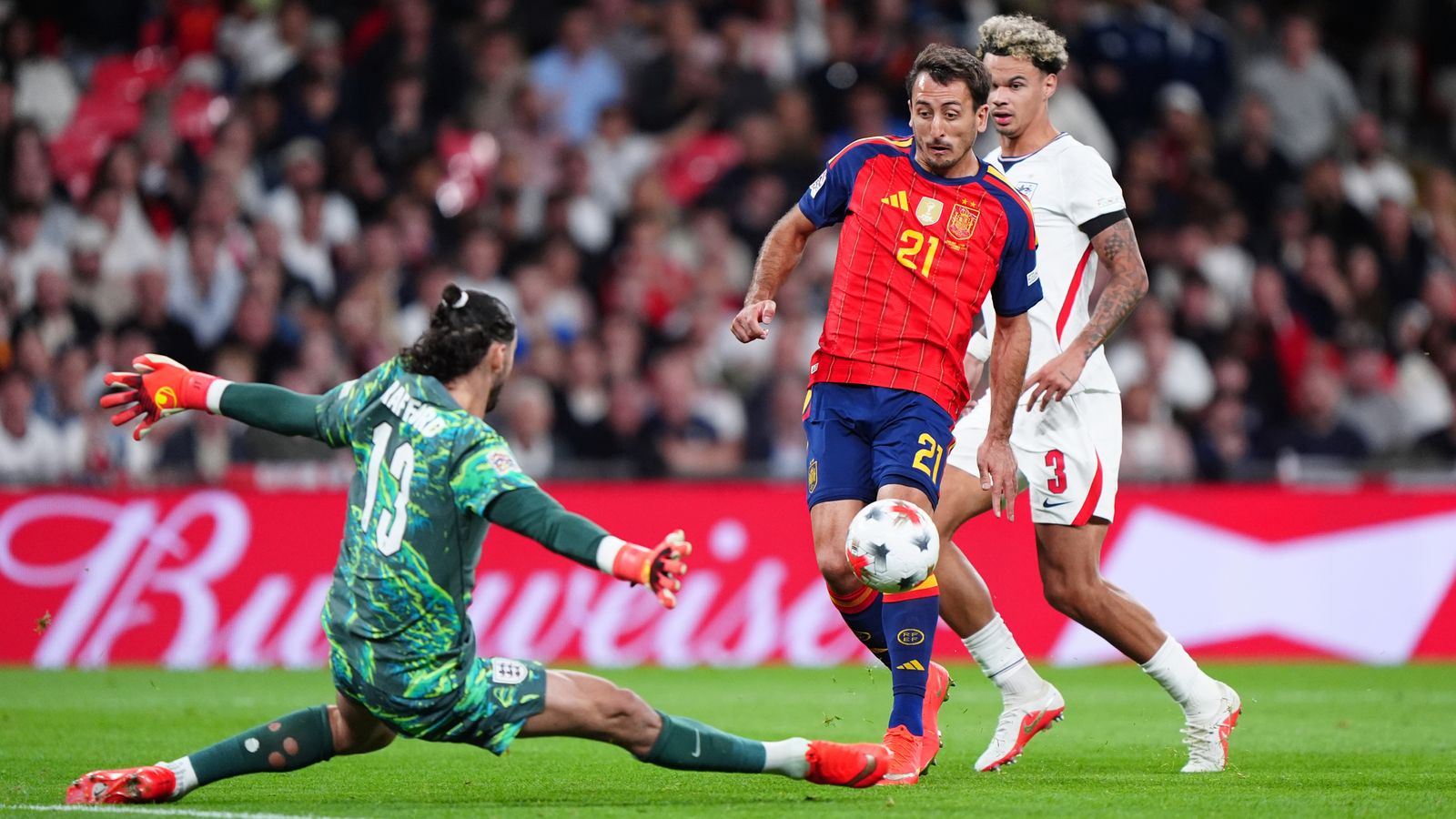
Tactical stalemate dominates World Cup final
Spain and Argentina remain scoreless at the break in today's World Cup final. The match has become a tactical slugfest defined by Spain’s aggressive possession play and a surprisingly reserved Argentinian defensive block. Neither side has managed to find the breakthrough, as the pressure of the occasion is visible on the pitch.
Spain entered this match boasting the highest average possession in the tournament, consistently exceeding 60 percent. Today, however, that possession has become predictably cyclical. They are moving the ball through the middle third with precision but dying in the final third. The lack of penetrating runs behind the Argentinian back four has allowed Lionel Scaloni’s defense to keep a compact shape.
Argentina playing the long game
Argentina has been content to absorb pressure, waiting for a transition moment that has yet to materialize. Julian Alvarez and Lautaro Martinez have been isolated targets, often forced to contest aerial balls against Spanish center-backs who have looked dominant in physical duels. It is a gamble that risks conceding territory, yet the scoreline currently rewards the strategy.
The defensive discipline shown by Argentina has been the story of the first half. They are clogging the half-spaces and forcing Spain to recycle the ball backward. While this keeps the score at 0-0, it also guarantees that Spain will maintain constant, mounting pressure. The longer this continues, the more likely a single defensive lapse becomes.
Spain missing the final gear
Spain coach Luis de la Fuente has been pacing the technical area in frustration. His team lacks the verticality required to stretch a low block. The wingers are constantly checking back to feet rather than testing the defensive line with diagonal sprints, making the Spanish attack easy to organize against.
When teams struggle against a low block, the solution usually involves shots from distance or secondary runs from a number eight. Spain has attempted three long-range efforts, but all have sailed high or found the gloves of Emi Martinez. It is a passive approach that assumes the goal will come through patience rather than individual brilliance.
Analysis of the turning points
The match turned briefly heated in the 34th minute when a heavy challenge in the center circle sparked a minor scuffle. It was the first sign of emotional fatigue from the Spanish midfield. If Spain cannot find the net within the first twenty minutes of the second half, the momentum will likely shift toward the Argentinian counter-attack.
As Sky Sports reported during the interval, the technical statistics favor Spain, but the psychological edge sits with Argentina. By denying Spain the rhythm they crave, Argentina has effectively turned the final into a grind. The question remains whether Argentina has the legs to maintain this defensive intensity for another forty-five minutes.
Managerial dilemmas for the second half
Both benches have deep options, but the timing of these substitutions will decide the outcome. Spain needs to introduce raw pace on the flanks to force the Argentinian full-backs to retreat. Currently, the full-backs are pushing up far too high for comfort.
On the flip side, Argentina needs a creative engine to move the ball out of the press more effectively. They are losing possession too quickly in the midfield, which keeps their back line under constant physical duress. A midfield sub for Argentina might be the smartest move to stabilize the base.
Critique of the tactical approach
The quality of play has been disappointingly stagnant. For a World Cup final, there has been a distinct lack of risk-taking from both sides. Coaches seem terrified of leaving gaps, which is understandable, but the neutral viewer is paying the price with low-tempo, repetitive possession.
If the match progresses to extra time, the physical toll on the Argentine defense will be severe. Their decision to play without the ball for such long stretches is a massive exertion in heat. Tactical rigidity is often the enemy of entertainment, and tonight’s match is checking every box for a dreary tactical stalemate. Hopefully, the second half brings more attacking intent.
Predictions for the final whistle
The match is set up for a late winner via a set piece or an individual mistake. Neither side is showing the clinical edge required to build a goal from open play. Expect Spain to press even harder as the clock hits 70 minutes, potentially opening the door for an Argentine breakaway.
The lack of a clinical finisher has been apparent on both sides. Spain is dominating the ball but failing to generate high-quality chances. If the current trend continues, a penalty shootout is a distinct possibility. That would be the most anticlimactic conclusion to a tournament defined by big moments.
Read Next
- Tactical breakdown: Spain vs Argentina for the World Cup crown
- Argentina vs. Spain is pure chaotic brilliance
- Spain vs Argentina is the World Cup final we deserve
- Argentina versus Spain is a tactical masterclass in a bloated format
- 🏆 World Cup 2026 — Full Coverage Hub
- 🇦🇷 Argentina World Cup 2026 — Defending Champions Hub
- 🇪🇸 Spain World Cup 2026 — La Roja Hub
- 🏆 World Cup 2026 Final — MetLife Stadium Hub