
Shaun Wright-Phillips on Strictly is a reminder of football's lost wingers

The Ballroom Shift and the Death of the Pure Touchline Winger
Watching a former Premier League winger step onto a dancefloor usually triggers lighthearted television chatter. Shaun Wright-Phillips entering BBC's Strictly Come Dancing lineup alongside Dame Sarah Storey and Tabby Stoecker fits the standard post-retirement pathway. Yet for anyone who watched English football turn the corner into the 2000s, his presence offers something far more revealing.
Wright-Phillips was never an inverted forward or a half-space playmaker. He was an uncompromising touchline sprinter who ate up grass in straight lines and forced full-backs into desperate backward recovery runs.
When he made his senior debut for Manchester City in 1999 after emerging from their youth set-up, wide play was defined by 1v1 isolation. Under Kevin Keegan, City used him as an unscripted release valve. He hugged the right touchline with literal chalk on his boots. His objective was simple: receive on the move, drop the shoulder, and beat his man on the outside.
Modern tactics have systematically dismantled that role. Today, elite managers demand wide attackers who invert, freeze defensive block shapes, and rotate into central channels to generate numerical overloads. The unscripted wide isolation dribbler has been replaced by the system operator. Wright-Phillips represents the peak of an endangered tactical species.
Keegan's Transition Engine versus Mourinho's Defensive Cage
The numbers from his first spell at Maine Road and the City of Manchester Stadium tell a story of explosive productivity. Across two stints for Manchester City, Wright-Phillips registered 276 appearances and 85 goal contributions. He helped secure the First Division title before lifting the FA Cup.
He was not merely fast; his game relied on instant micro-acceleration from a static stance. Keegan allowed him total operational freedom down the right flank. If Wright-Phillips lost possession attempting a daring double-stepover, Keegan urged him to run at his fullback again thirty seconds later.
That structural trust produced his finest form, turning him into one of the most feared transition threats in English football. He forced opposition defenders to drop their defensive lines by five yards just to guard against his initial burst. That spatial stretching created massive operating pockets for City's central midfielders.
Everything changed when Chelsea paid a reported £21 million transfer fee to sign him in 2005. Jose Mourinho was building a back-to-back title machine anchored on rigid defensive distances and strict pressing triggers. In Mourinho’s 4-3-3 structure, wide players were not permitted to roam freely or gamble on chaotic turn-overs.
Mourinho demanded that his wingers track opposition full-backs into deep secondary defensive lines. Wright-Phillips was expected to maintain strict structural symmetry rather than blow past defenders on isolation plays. The tactical collision between player profile and team system was immediate and painful.
Where Arjen Robben and Joe Cole possessed the interior footwork to unpick low blocks from central pockets, Wright-Phillips needed vertical runway. Stripped of space, his goal threat waned significantly. He often looked lost when asked to cycle possession sideways against set defensive blocks.
His 36 caps and 6 goals for England reflected a player caught between tactical eras. As Mirror Football reported, Wright-Phillips built a long career across top clubs, but his international impact remained capped. Competing against David Beckham and Aaron Lennon, he was rarely afforded the bespoke tactical framework needed to dominate.
His Chelsea spell serves as a classic cautionary tale of elite profile mismatch. Moving to Stamford Bridge yielded silverware, but it compressed his natural game. He was a wild transition stallion forced to run in a tightly controlled defensive parade.
Three Generations of Footballing DNA and System Evolution
To understand the mindset that built Wright-Phillips' game, you have to look at his family foundation. Growing up in south-east London, his football journey nearly ended before it began when Nottingham Forest released him as a teenager. His mother Sharon refused to treat the setback as a failure.
"I didn’t feel bad that Nottingham Forest let him go. It was just a learning process."
That pragmatic reaction became the bedrock of his career. Wright-Phillips credited his mother with instilling a non-negotiable drive. "Even if I was sick, she had to go to work but I would still have to clean the house," he recalled.
"I knew whatever I had to do in life, you had to work for it. Nothing comes for free, it all comes from hard work."
When he boarded the train to Manchester alone as a young player, Sharon watched her son take his first steps toward independence. "When he had to get on that train by himself for the first time, my heart ached," Sharon noted. "He learnt a lot, he took it with him and he became a man."
That internal resilience was further sharpened by his adoptive father, Arsenal legend Ian Wright, who adopted Shaun at age three. Wright provided essential mentorship, particularly when navigating hostile crowds and racial abuse on the pitch.
As Wright-Phillips explained, having an elite striker as a father helped steer him through career landmines. "It was a big benefit to have my dad to knock certain things on the head that may have touched a very bad nerve and I could’ve reacted differently," he said. "He guided me and my brother in the right direction and we’ve learned to cope with it."
His brother Bradley Wright-Phillips forged his own path, eventually pairing with Shaun at New York Red Bulls in Major League Soccer. Now, the torch has passed to a third generation: Shaun's 24-year-old son, D'Margio Wright-Phillips.
D'Margio's journey illustrates how player development has evolved over twenty-five years. Like his father, D'Margio developed in Manchester City's academy before signing for Stoke City, where he made 20 senior appearances and scored twice across three seasons. But instead of remaining in the domestic English system, D'Margio adapted to modern football's global loan network.
Following loan stints at Northampton Town and Belgian side Beerschot, D'Margio completed a permanent move to Beerschot. In Belgium, he has recorded 13 goals across 49 appearances, establishing himself in a technical continental environment.
D'Margio acknowledges the unique weight of his family heritage while carving out his own identity. "There is always going to be pressure in football no matter what sort of family you’ve got and, to be honest, I don’t really feel the pressure," D'Margio noted. "To me, it’s just my dad, my grandad and my uncle but I’m definitely aware of it."
The tactical shift across three generations of one family reflects the broader evolution of English football:
- Ian Wright: The instinctual penalty-box predator who thrived on raw goal-scoring intuition in a classic 4-4-2 setup.
- Shaun Wright-Phillips: The explosive touchline isolation winger who dominated 1v1 transition scenarios before system tactics took over.
- D'Margio Wright-Phillips: The modern hybrid attacker navigating multi-club networks, European loans, and tactical fluidity.
Footwork, Micro-Deceleration, and the Lost Art of 1v1 Isolation
There is a direct mechanical connection between Wright-Phillips' style on the pitch and his upcoming ballroom stint. High-level dribbling is not just about top speed; it is about micro-deceleration. The best 1v1 wingers lower their center of gravity, plant a heel, and force defensive hips to turn before exploding into open space.
Wright-Phillips excelled at this exact mechanical trigger. He could come to a dead stop from a full sprint in two strides, absorbing physical contact before accelerating away. That foot speed, hip rotation, and balance under pressure are the precise physical tools needed for ballroom dancing.
Yet in today's academy systems, young wingers are rarely taught to dribble with unscripted freedom. Modern positional play values ball retention over dynamic risk-taking. A winger who loses possession twice in a row trying an ambitious dodge risks getting benched for breaking team structure.
That rigid approach has made football safer, more predictable, and occasionally sterile. Players like Wright-Phillips operated with an edge of chaotic unpredictability. You knew what he wanted to do—run at you—but stopping his low-gravity shift was another matter entirely.
Having worked as a pundit for ITV, BBC, talkSPORT, and Sky Sports since retiring in 2019, Wright-Phillips is no stranger to public scrutiny. Moving from behind the microphone to the dancefloor will test a different set of reflexes under the spotlight.
As detailed in coverage of his career transition, his path from City's academy to national prominence remains remarkable. Whatever happens under the ballroom lights, his footballing legacy is secure.
He was a thrilling, flawed, relentlessly energetic winger who played with speed and courage. Modern tactics may have moved on from the pure touchline runner, but watching Wright-Phillips at full tilt remains an unforgettable chapter of Premier League history.
Pep Confidential: The Inside Story of Pep Guardiola's First Season at Bayern Munich by Marti Perarnau
Go inside the tactical mind of the Premier League's most brilliant manager.
Frequently Asked Questions
Which TV show is Shaun Wright-Phillips appearing on?
When did Shaun Wright-Phillips make his senior debut for Manchester City?
What were Shaun Wright-Phillips' stats and achievements at Manchester City?
How much did Chelsea pay to sign Shaun Wright-Phillips in 2005?
How did Jose Mourinho's tactics at Chelsea differ from Kevin Keegan's?
More Coverage
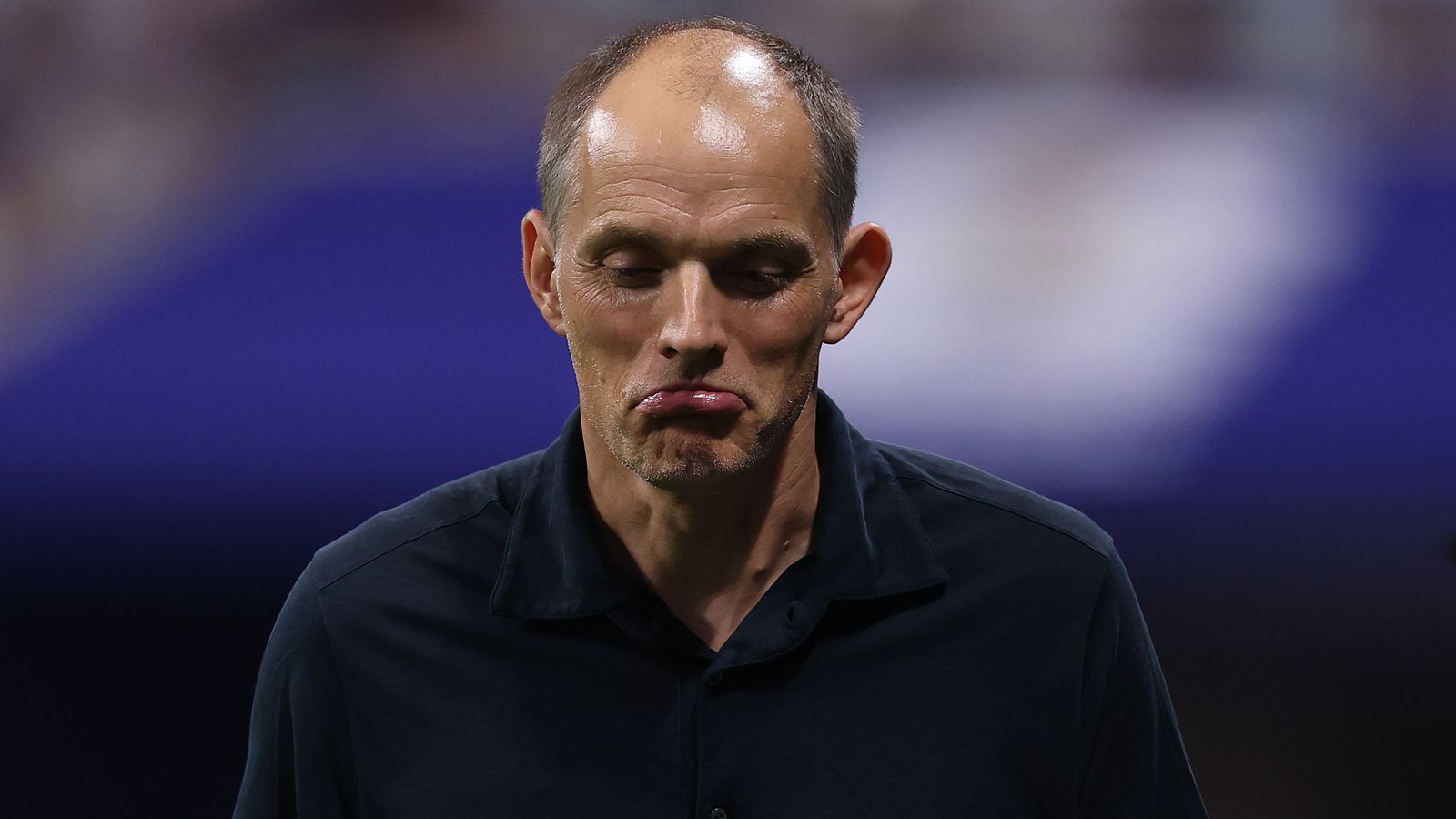
Thomas Tuchel is lying to himself about why England collapsed
19 hours agoThe Europa League is officially the most entertaining tournament in football
1 day, 11 hours ago
Floyd Samba gives Enzo Maresca the perfect blueprint for Sunderland
1 day, 11 hours ago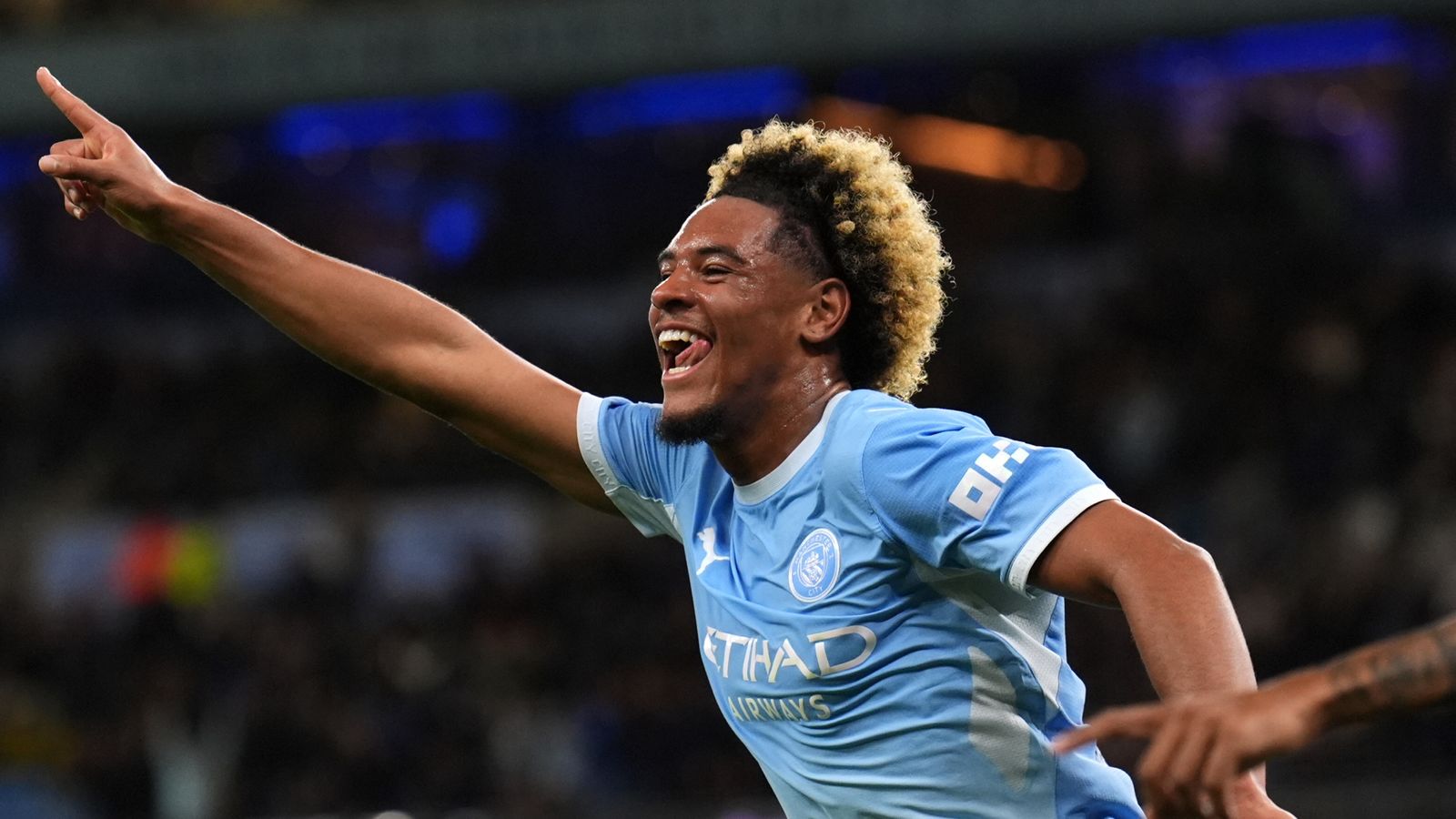
Maresca's 10-change demolition proves Man City's transition is already complete
1 day, 12 hours ago
Top 10: Top Moments
1 day, 16 hours ago
Newcastle's double-pivot collapse at Leeds exposes Jaissle's tactical flaw
1 day, 16 hours agoMore Analysis
Thomas Tuchel is lying to himself about why England collapsed
19 hours ago
Xabi Alonso returning to Anfield headlines a wild Carabao Cup draw
1 day, 22 hours ago
Arsenal's defensive nightmare gets worse while Chelsea sweat over Joao Pedro
3 days, 6 hours ago
Leeds tore Newcastle apart, and Daniel Farke's plan is finally clicking
3 days, 16 hours ago
Raheem Sterling's guilty plea marks a grim new low in a rapid career decline
3 days, 17 hours ago