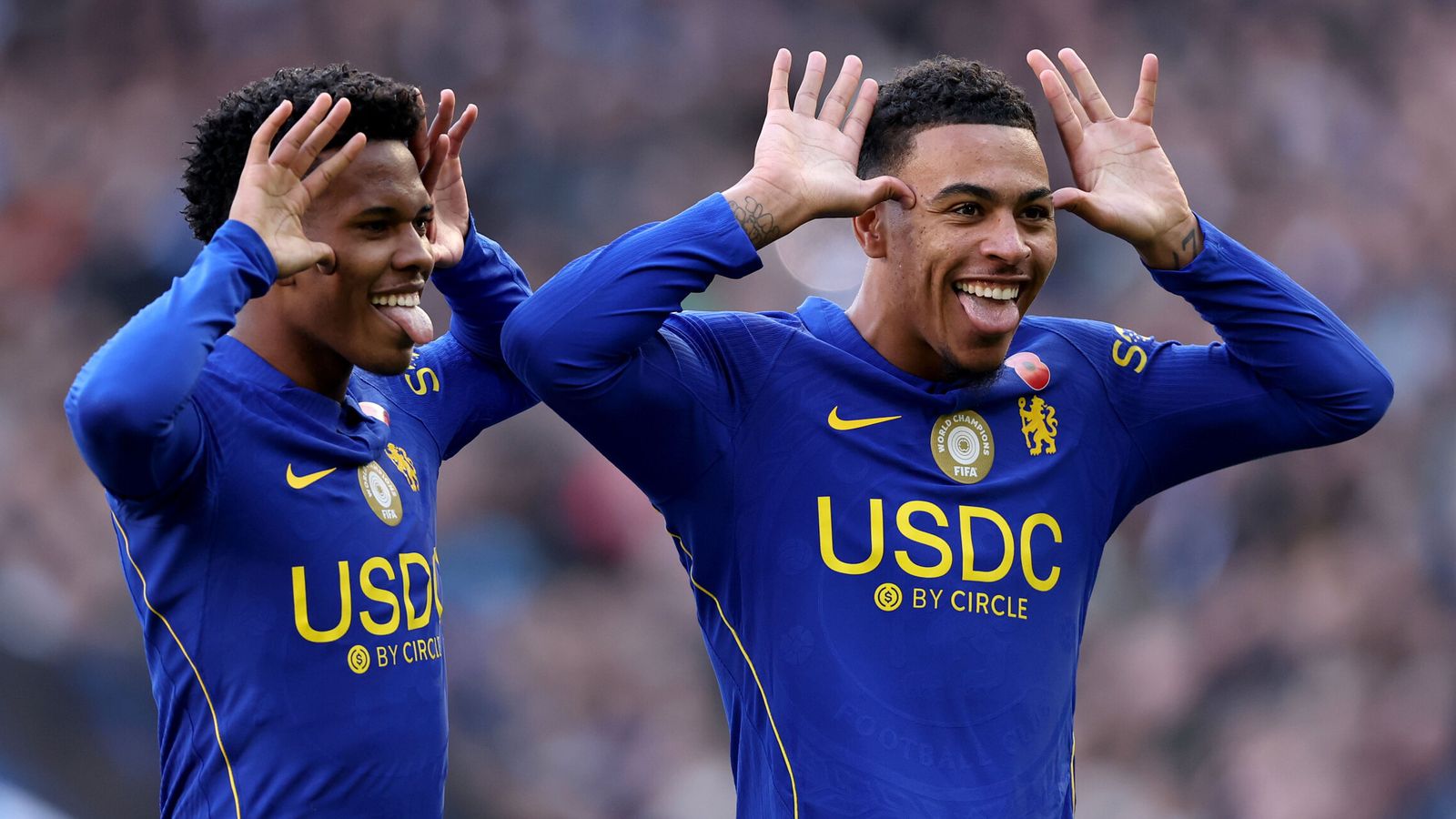
Seven seconds of Chelsea chaos exposed Carrick's Manchester United

The Anatomy of a Seven-Second Collapse
Two separate camera angles of Morgan Rogers slicing through Manchester United are currently circulating across social feeds. Neither offers any comfort to Michael Carrick. The official Premier League broadcast view depicts an open pitch where Rogers strolls through an unfathomable desert of red shirts.
Even more damning is the perspective captured by referee Peter Bankes. Through Peter Bankes' Refcam footage, the passage unfolds as a seven-second collapse of basic defensive principles. United defenders appear to bounce off an invisible barrier surrounding the Chelsea forward, backing away rather than asserting authority.
The breakdown begins with sloppy execution high up the pitch. Bruno Fernandes attempts an aimless pass into central traffic that instantly turns over possession. When Moises Caicedo takes an uncharacteristically heavy touch, the ball breaks directly toward Bryan Mbeumo.
Mbeumo possesses the physical tools to shield and retain possession under contact. Instead, he surrenders the ball straight back to Caicedo under minimal pressure. It is a soft concession that catches United completely off balance.
Tracking the Turnover Chain
Carlos Baleba acts as the nearest red shirt tasked with extinguishing the danger before it escalates. Rather than anticipating the pass into Romeo Lavia, Baleba reacts a beat too late. His desperate recovery lunge results only in an ill-timed challenge as Chelsea bypass the line cleanly.
This initial chain reaction dismantled Carrick's entire tactical shape. With Leny Yoro committed far upfield from his right-back station, the right flank stood entirely vacant. United suddenly found themselves defending vast expanses of open green turf with backwards momentum.
The breakdown followed a rapid chain of mistakes across every line. As Mirror Football reported in their match review, the move chained together four distinct errors in rapid succession:
- Fernandes concedes cheap central territory with an unforced and aimless distribution.
- Mbeumo fails to shield possession against Caicedo before Baleba mistimes his challenge on Lavia.
- Santos lunges into an empty tackle instead of tracking Rogers into the central lane.
- Maguire and Martinez part like the Red Sea to grant Rogers an unimpeded path to goal.
Modern elite football punishes structural hesitation within milliseconds. Chelsea needed nothing elaborate to cut United open. Simple forward momentum and indecision did all the heavy lifting.
Midfield Vacuums and the Phantom Slide Tackle
Once Lavia worked the ball into Rogers, the responsibility shifted to United's recovery runners. Andrey Santos sprinted back with genuine urgency, eating up ground to close down the Chelsea ball-carrier. Within strides, the Brazilian midfielder had recovered to within five yards of Rogers.
What Santos did next defies conventional coaching logic. Instead of decelerating, jockeying, and forcing Rogers onto his weaker side, Santos committed to an aggressive slide tackle across empty grass. He was never close enough to make contact with the ball.
Santos appeared to anticipate a passing lane toward Cole Palmer darting down the Chelsea right wing. Yet Refcam evidence shows Rogers never once looked up to spot Palmer's run. Rogers had his hips squared, his head lowered, and his sightline locked squarely onto the United penalty area.
Gambling on the Recovery
Throwing yourself to the deck five yards away from an advancing runner is an admission of tactical panic. It removed Santos from the play entirely. Rogers did not even need to alter his stride or execute a body feint to bypass him.
This error underlines a recurring issue in Carrick's midfield setup. Recovery runs must be disciplined rather than speculative. By diving in prematurely, Santos eliminated the only central defensive screen shielding his center-backs.
Baleba was already out of the frame following his botched intervention against Lavia. That left United with zero central midfield presence over a forty-yard corridor. Rogers simply accelerated through the vacated space without meeting a single red shirt.
A functioning double pivot must offer spatial coverage when full-backs overlap. Here, Baleba and Santos operated on completely different wavelengths. Their simultaneous failures turned a routine Chelsea transition into a four-on-three overload.
Good teams survive isolated individual errors by relying on secondary cover. United suffered three compounding technical failures before the ball even crossed the halfway line. Carrick will find it impossible to build consistency when his midfielders gamble rather than contain.
The Broken Axis of Maguire and Martinez
With the midfield bypassed, the defensive burden fell entirely on the central pairing of Harry Maguire and Lisandro Martinez. Their partnership has endured a thoroughly disastrous campaign this season. This specific goal encapsulated every recurring flaw in their collective understanding.
As Rogers gathered speed, the spatial distance between Maguire and Martinez widened into an inviting corridor. There were no intricate one-twos or deceptive dummy runs from Chelsea's forwards. Rogers simply drove directly through the vast gap separating United's two center-backs.
To understand Maguire's hesitation, one must examine the movement happening across his right shoulder. Estevao had initiated a diagonal blindside run that demanded immediate tracking. Because Yoro was stranded high up the pitch, Maguire had no full-back to whom he could pass the runner.
Maguire was caught between two fires, forced to monitor Estevao while keeping half an eye on the surging Rogers. In that scenario, central defensive orthodoxy dictates that the opposite center-back must step out aggressively. That responsibility belonged unequivocally to Martinez.
Martinez had no valid tactical justification for dropping off. Cole Palmer was threatening a run across his left flank, but Diogo Dalot had already recovered to track him step for step. Dalot had the situation under control, freeing Martinez to confront Rogers head-on.
Retreating Under Pressure
Instead of stepping up to meet the ball-carrier, Martinez backed away passively toward his own eighteen-yard box. He failed to commit, failed to engage, and refused to lay a glove on Rogers. The Argentine defender essentially rolled out a red carpet into the heart of the penalty area.
Center-backs cannot defend by retreat when an attacker is moving at full tilt with the ball under control. Martinez kept retreating until Rogers entered shooting range unmolested. It was timid, passive defending from a player signed specifically for his aggression.
The lack of vocal communication between Maguire and Martinez remains glaring. Neither player took command of the central lane, and neither pointed out Rogers' unchecked run. When two senior internationals display such disconnected spacing, the blame rests squarely on structural preparation.
Carrick wants his side to defend with an aggressive, proactive line. Yet when pressure is applied, his central defenders instinctively pull in opposite directions. That hesitation turns ordinary attacking transitions into catastrophic defensive breakdowns.
Lammens, Silent Resignation, and Carrick's Looming Test
By the time Rogers breached the penalty area, Maarten Lammens was left entirely abandoned. The Belgian shot-stopper did what he could by staying big and narrowing the shooting angles. Yet Rogers finished past him with contemptuous ease to put Chelsea ahead.
What happened immediately after the ball hit the net was arguably the most disturbing aspect of the afternoon. Rather than berating Martinez and Maguire for their amateurish positioning, Lammens offered almost no reaction whatsoever. He retrieved the ball with a flat, emotionless shrug.
Goalkeepers at Manchester United have historically held their defensive lines to vicious standards. Peter Schmeichel and David de Gea would have torn strips off center-backs who surrendered a straight central run. Lammens' silent resignation spoke volumes about the subdued mood inside this dressing room.
This lack of accountability permeates Carrick's team right now. Conceding cheap goals has shifted from an unacceptable shock to an expected routine. When players stop demanding standards from one another on the pitch, tactical instructions become irrelevant.
A detailed breakdown of the defensive breakdown demonstrates that United's issues are not bad luck. They are structural, technical, and mental failures repeating every weekend. Carrick cannot simply dismiss this as an isolated defensive mishap against Chelsea.
Tactical Reckoning Ahead of Roma
The schedule offers no breathing space for soul-searching or gradual adjustments. A European test against Roma looms next, bringing an opponent well-versed in exploiting defensive disorganization. If Carrick fields this exact central pairing with identical rest-defense rules, Roma will dismantle them just as ruthlessly.
Carrick faces urgent personnel decisions regarding his defensive setup. Persisting with Maguire and Martinez together appears unsustainable given their complete lack of positional cohesion. One of them must be rotated, or the midfield protection must be drastically reinforced.
Furthermore, Yoro cannot be granted absolute freedom to abandon his flank without reliable defensive insurance behind him. When the teenage defender pushes high, either Baleba must tuck across or Maguire must shift over early. Leaving wide corridors open against elite transition teams is tactical suicide.
United supporters have witnessed too many false dawns built on flimsy foundations. Seven seconds of viral embarrassment against Chelsea exposed every crack in Carrick's system. Unless those cracks are repaired before Roma arrive, this season risks unravelling completely.
EA SPORTS FC 25 Standard Edition - PlayStation 5
The ultimate football simulator for the 25/26 season.
Frequently Asked Questions
Who scored the opening goal against Manchester United?
How did Chelsea's attack against Manchester United start?
What four mistakes led to Morgan Rogers' goal?
Why was Manchester United's defense left open on the right flank?
What defensive error did Andrey Santos make against Morgan Rogers?
More Coverage
Ranking Newcastle's 10 biggest dilemmas heading into the January window
an hour ago
Tottenham got Archie Gray right, but Jamie O'Hara is already panicking
6 hours ago
Man United are genuinely stumbling toward a relegation nightmare
7 hours ago
Top 10: Top Moments
7 hours ago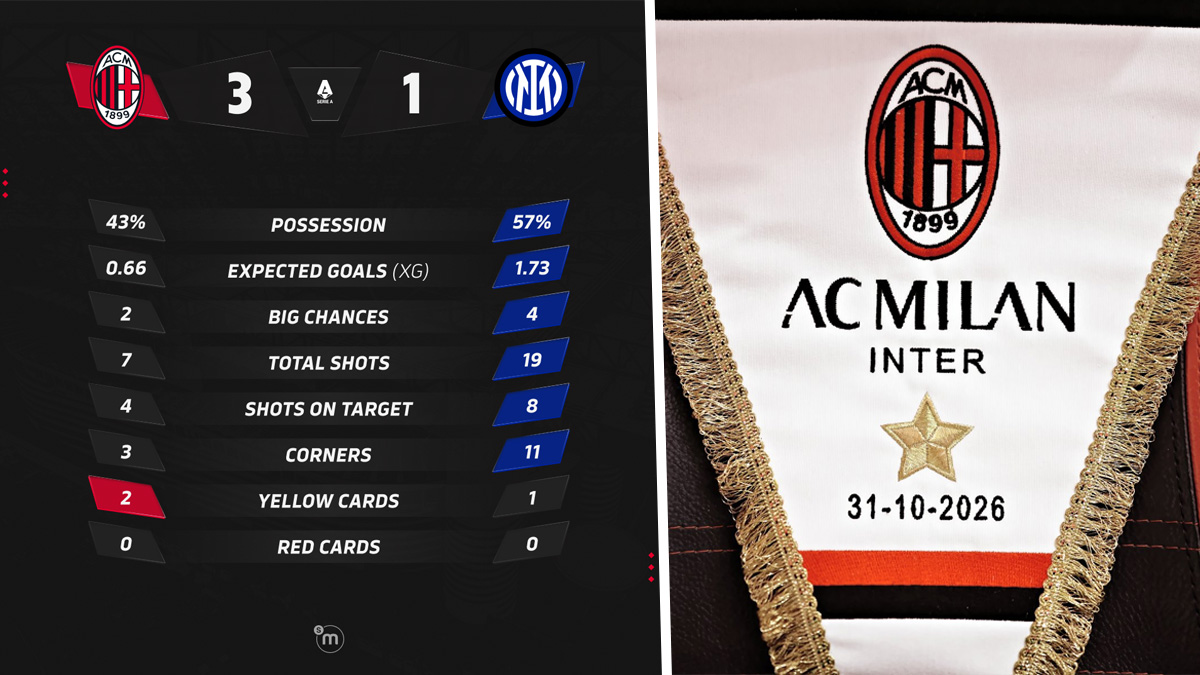
Milan cannot afford an emotional hangover against Ferencváros
9 hours ago
Top 10: Top Moments
12 hours agoMore Analysis
Man United are genuinely stumbling toward a relegation nightmare
7 hours ago
Top 10: Top Moments
7 hours ago
Top 10: Top Moments
12 hours ago
Lauren James hobbles off in Charlton rout as Chelsea face hamstring worry
1 day, 1 hour ago
Lisandro Martinez just pushed Michael Carrick to the brink
2 days, 3 hours ago