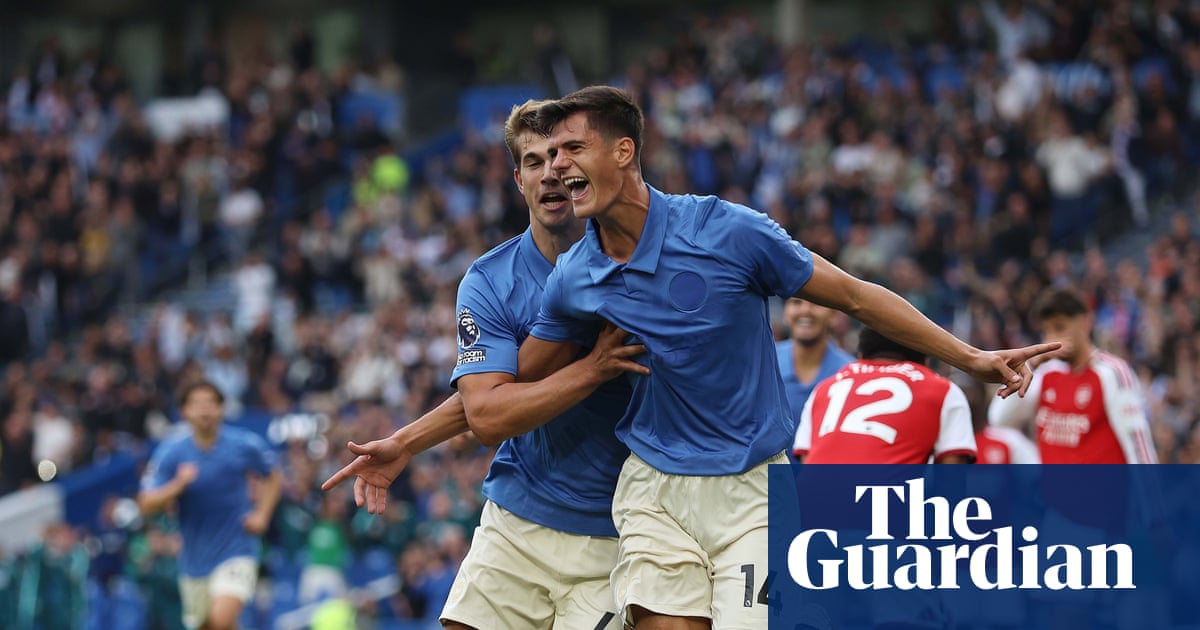
Rangers' rejected £7.5m Cozier-Duberry bid shows a club losing its head
The Panic Behind a Rejected £7.5m Opening Offer
Desperation leaves an unmistakable paper trail in football. For Rangers, that trail led straight to Brighton's inbox in the form of a rejected £7.5m opening bid for 21-year-old winger Amario Cozier-Duberry.
On paper, hunting for a talented ex-Arsenal academy product looks like forward-thinking recruitment. In reality, it shows a board operating in full fire-fighting mode after an alarming start to the campaign. As reported by BBC Sport, Brighton immediately turned down the substantial offer.
Derek McInnes inherited a disjointed squad when he took the job at Ibrox after leaving Hearts in the summer. A grim four-game winless streak at the start of the season shook the club before Sunday's 5-1 Scottish Cup win over St Mirren offered brief respite. Yet beating domestic opposition does not erase the structural damage from their early European crash.
Losing over two legs to Polish side Jagiellonia Białystok knocked Rangers straight out of the Europa League. That collapse forced them down into the Conference League play-offs while wiping away valuable European revenue. The tactical distance between their midfield line and back four looked far too wide throughout both matches.
Then came a crushing blow to their frontline. Striker Youssef Chermiti, who arrived for a club-record £8m fee last summer, suffered a devastating ACL injury. Losing Chermiti stripped McInnes of his primary focal point and left Rangers empty through the middle.
Bolton Flashbacks and the Amario Cozier-Duberry Profile
Brighton operate with ruthless analytical patience under owner Tony Bloom. They control Cozier-Duberry's future, as the young winger still has less than two years remaining on his contract at the Amex Stadium. Head coach Fabian Hurzeler gave him significant minutes during pre-season, testing his pressing triggers and defensive discipline.
Hurzeler demands extreme tracking effort from his wide attackers in high-tempo English football. Although Cozier-Duberry sat as an unused substitute during Saturday's 1-0 victory over Bologna, his reputation across the game remains sharp. Several Championship clubs are pushing to take him on loan for the upcoming year.
Brighton feel no urge to sell below their internal valuation. They understand how rapidly an explosive wide player's market value climbs after a strong Championship campaign. That patience puts Rangers at a distinct disadvantage in negotiations.
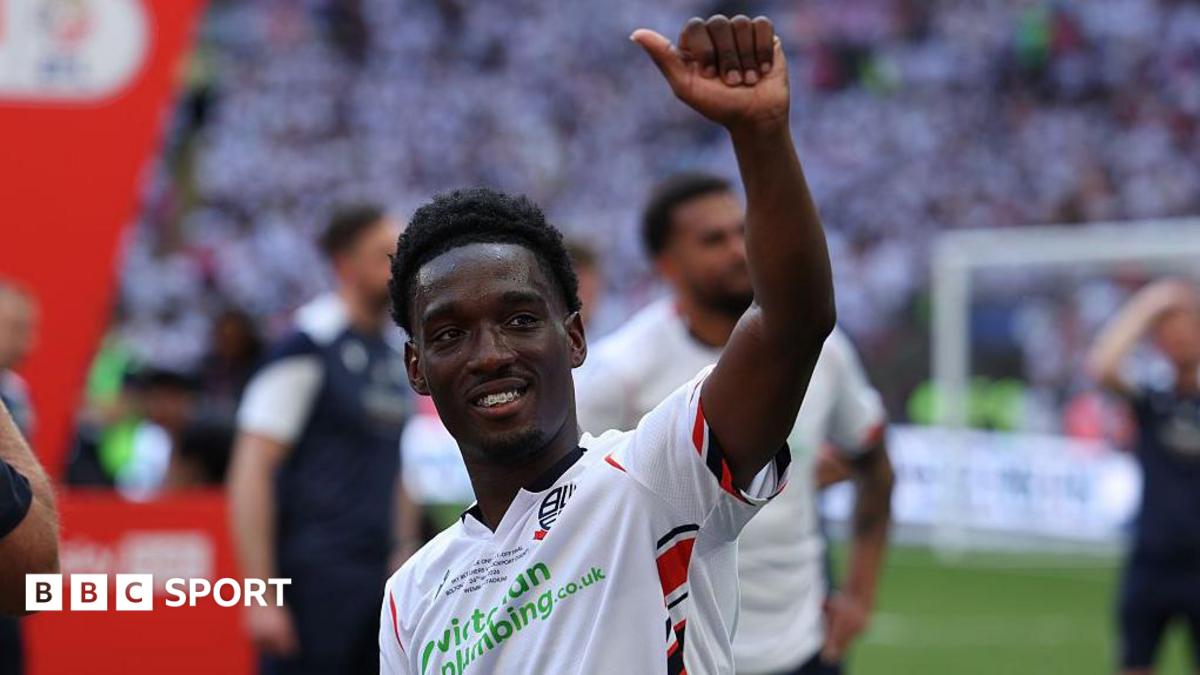
His output on loan at Bolton Wanderers last season was undeniably impressive. Cozier-Duberry logged 8 goals and 12 assists in 34 appearances, helping Bolton win the League One play-offs. Those numbers earned him a selection in the League One Team of the Season.
Game tape from his time at Bolton shows a classic isolation winger. He prefers to hug the right touchline, receiving passes on his back foot before attacking left-backs. His quick double-step freezes defenders before he cuts inside onto his stronger left foot.
Bolton manager Ian Evatt built ideal conditions for Cozier-Duberry within a fluid 3-4-2-1 system. Bolton's central midfielders consistently pulled opposition blocks inward, creating wide 1v1 situations. When defenders hesitated, Cozier-Duberry used his five-yard burst to sprint past them or slice toward the box.
League One defenders frequently gave him a three-yard buffer to protect against his pace. That extra cushion allowed him time to pick out reverse passes or curl shots toward the far corner. His acceleration off a standing start was lethal against lower-tier fullback play.
The Tactical Contradiction in Derek McInnes' System
Translating that exact style to the Scottish Premiership presents a totally different challenge. Visiting teams arriving at Ibrox rarely leave wide channels open for transition runs. Instead, opponents construct stubborn low blocks, packing nine defenders inside their own penalty box.
Cozier-Duberry has little experience navigating compact, deeply entrenched defenses. Expecting a transition-heavy winger to solve stubborn low blocks is a flawed calculation by the Rangers hierarchy. It misreads both the player's current strengths and the league's defensive reality.
McInnes was remarkably frank about his squad's shortcomings after their European exit. As Derek McInnes admitted after dropping into Conference League play-offs, his squad needed immediate help across multiple areas:
"Strengthening defensively, strengthening in wide areas was a priority. But obviously losing a player of Youssef's ability, we need to look at that one as well."
The split between managerial words and transfer strategy is stark. McInnes explicitly highlighted a fragile defensive transition and the void left by Chermiti's knee injury. Yet the board responded by aiming the bulk of their transfer funds at a touchline winger.
The loss to Jagiellonia Białystok exposed Rangers' most glaring weakness: central screening and rest defense. Polish attackers repeatedly sliced through midfield, exploiting a huge gap between the double pivot and the center-backs. Buying an expensive winger does nothing to solve that central vulnerability.
Without a structural fix in central midfield, Rangers will keep conceding dangerous counter-attacks. Opponents in Europe quickly realized that pressing Rangers' back line forces rushed passes into empty turf. As noted in recent analysis, when turnovers happen, Rangers lack the legs in midfield to stop quick forward movement.
Historical Hangovers and Financial Reality at Ibrox
Without a physical target striker like Chermiti to pin defenders, wide crosses lose much of their threat. Cozier-Duberry can deliver balls into the box all afternoon, but Rangers currently lack runners attacking the near post. Bolton provided physical forwards who occupied center-backs; Rangers currently feature an empty penalty box.
If Rangers were to complete this deal, it would mark their second-highest transfer fee in more than twenty years. Only Chermiti's arrival last summer carried a higher cost in recent memory. Long-time supporters will remember the severe financial hangovers caused by massive spending on Tore Andre Flo and Michael Ball in the early 2000s.
Heavy price tags at Ibrox bring intense pressure that can weigh down young players. Expecting a 21-year-old winger to carry the weight of a £7.5m tag while adapting to Scottish football is a risky bet. History shows that high fees in Glasgow often shorten a player's margin for error.
Some might argue that Rangers must take big swings to close the gap on domestic rivals. Adding elite English academy talent could raise the team's creative ceiling over a long season. However, taking expensive gambles on individual talent rarely works when the underlying tactical structure remains broken.
Counter-arguments also point to Cozier-Duberry's resale value if he shines in Scotland. If he develops into a star, European clubs would gladly pay double his original fee. But that outcome depends entirely on creating a tactical system where his specific gifts can flourish.
Why Brighton Play Chess While Rangers Chase Quick Fixes
Brighton's rejection highlights the gap in operational strategy between the two clubs. Brighton view Cozier-Duberry as an asset whose value will rise through carefully selected loans. Rangers are treating him as a quick fix to quiet down an anxious fanbase.
Look at the contrast in squad building. Brighton signed Cozier-Duberry after he left Arsenal's academy, built his value through lower-league football, and now hold the upper hand in talks. Rangers are trying to repair months of poor squad construction with a single major wire transfer.
If Brighton demand £10m or more to sell, Rangers should walk away instantly. That amount of capital would be far better spent across three vital squad positions. Splitting funds would allow McInnes to build a far more resilient starting lineup.
A sensible recruitment strategy would prioritize structural balance over single big-name signings. Allocating money toward a solid center-back, a physical defensive midfielder, and a proven target forward provides much higher value. Staking the budget on one raw winger leaves the rest of the pitch exposed.
Before spending record sums, McInnes must fix his team's defensive setup. Throwing huge money at talent while running a fragile pressing scheme exposes players to harsh criticism. A clear tactical framework must come first, followed by targeted signings that fit the system.
Rangers stand at a critical fork in the road early in their 2026-27 season. They can continue chasing headline names in a chaotic fashion, or they can establish a clear identity and recruit with discipline. Right now, bidding £7.5m for Cozier-Duberry looks less like a masterstroke and more like a club searching for easy answers to complex problems.
Read Next
- Why Premier League heavyweights are raiding League One for 18-year-olds
- Derek McInnes won't survive the season at Rangers
- Rangers pulling out of the Couhaib Driouech deal is absolute banter
- Why Mika Baur traded the Bundesliga for Celtic's midfield engine
- ⚽ Scottish Premiership 2025-26 — Celtic vs Rangers Hub
Official Liverpool FC Authentic EPL Knit Scarf
Wave the Red crest high at the pub or the stadium.
Frequently Asked Questions
How much did Rangers bid for Amario Cozier-Duberry?
Why are Rangers pursuing new attacking signings?
What were Amario Cozier-Duberry's stats at Bolton Wanderers?
Who is the current Rangers manager?
How did Rangers perform in European competition this season?
More Coverage

Scotland's attacking promise died in the 11th minute against Switzerland
2 days, 4 hours ago
England win in Prague but Thomas Tuchel still has tactical puzzles to solve
2 days, 7 hours ago
Ashley Sanchez's 20-goal NWSL season creates a massive USWNT tactical puzzle
2 days, 14 hours ago
Ashley Sanchez is scoring at will, but where does she fit under Emma Hayes?
2 days, 14 hours ago
Northern Ireland bullied Hungary in Belfast, but missed chances cost them
2 days, 22 hours ago
Tuchel's England look completely rattled by Man City's guilty verdict
5 days, 3 hours agoMore Analysis

Why Brighton hired a cage fighter to fix their set pieces
6 days ago
JJ Gabriel wants out, and Michael Carrick has a Brighton problem to solve
1 week, 2 days ago
Celtic back Martin O'Neill despite three straight losses and manager doubt
1 week, 2 days ago
Brighton just gave the Premier League the blueprint to beat Arsenal
1 week, 2 days ago
Celtic's financial hangover is colliding with a scary on-field slump
1 week, 2 days ago