
Portugal must bench Cristiano Ronaldo to survive Spain in Dallas
Six World Cups represents an unprecedented era of longevity. Twenty-three years at the absolute top of the game is a monument to physical preservation. Yet the numbers are starting to look like history rather than active utility.
Portugal faces Spain in Dallas on Monday night with a place in the quarter-finals on the line. The debate surrounding Cristiano Ronaldo remains identical to the one that fractured their campaign in Qatar four years ago. The striker is still the focal point, but his presence is increasingly tactical deadweight.
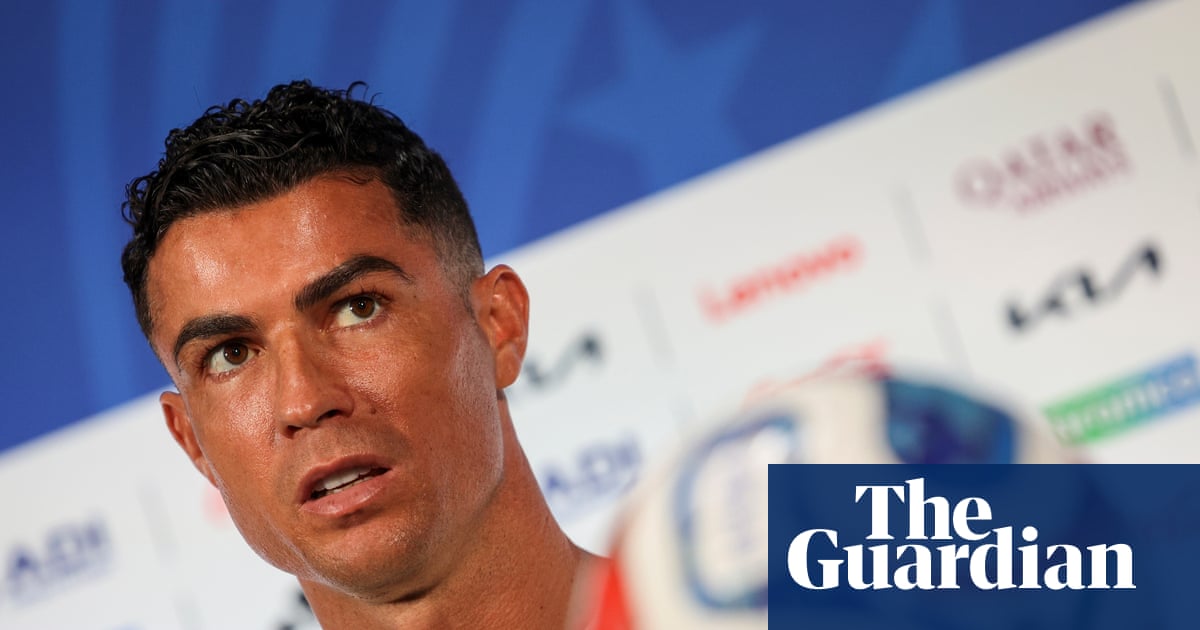
Ronaldo has confirmed this will be his final World Cup, as he shared during a press conference in Dallas. In this emotional briefing, he reflected on his path, saying: 'God has been generous to me.' It was a rare moment of humility from a player who has spent two decades fighting the dying of the light.
'God has been generous to me.'
But international football has no room for sentimentality or historical gratitude. If Roberto Martinez wants to navigate past Spain’s high-octane machine, he must make a ruthless choice. He has to bench his captain.
The evidence is clear from Portugal’s recent performances. Look closely at their 2–1 victory over Croatia in Toronto. On paper, it looks like another solid step forward for Martinez's side.
Ronaldo scored a first-half penalty, celebrating with his trademark theatrical flare. But the raw data from that match tells a much more alarming story about Portugal’s attacking structure. During his 78 minutes on the pitch, Ronaldo completed just nine passes.
Only four of those passes were completed in the attacking third. He did not register a single successful press during the entire game. When Josip Šutalo and Marin Pongračić had the ball, Ronaldo simply stood in the center circle.
This static positioning severed the connection between Vitinha and the forward line. It allowed Croatia's midfield to play out of pressure with absolute ease. Luka Modrić and Mateo Kovačić dictate games when they are allowed time on the ball.
With Ronaldo failing to close down passing lanes, Croatia regularly bypassed Portugal's initial press. The tactical cost of this passivity was paid by Bruno Fernandes. The Manchester United playmaker spent the afternoon dropping deeper and deeper just to touch the ball.
This left Portugal with a massive, vacant space in the central attacking zone. The space where games are won and lost was completely empty. Compare this static approach with what happened after the tactical shift.
Gonçalo Ramos replaced Neto late in the match, shifting the focal point of the attack. Ramos brought immediate, violent energy to the press. He forced a turnover from Pongračić within three minutes of entering the pitch.
The payoff came in the 90+3' minute. Ramos made a darting run near the front post, dragging Šutalo out of position and tapping home the winner. It was a goal born of movement, of space creation, of modern forward play.
Ronaldo simply does not make those runs anymore. He wants the ball delivered to his feet, or he wants to search for space in the penalty box during crosses. Against a disjointed Croatia, Portugal got away with it.
They even survived a late Joško Gvardiol equalizer that was narrowly ruled out by VAR. Against Spain, they will not be so lucky. Luis de la Fuente’s side is built to exploit static opponents.
Spain's Pressing Machine
Spain's 3-0 demolition of Austria in Los Angeles was a tactical masterclass in squeezing the life out of the opposition. Spain lined up in a fluid 4-2-3-1 that quickly morphed into a 3-2-5 in possession. Pedro Porro, who scored Spain's second goal in the 66th minute, pushed high up the right flank.
This allowed Lamine Yamal to drift inside and overload the half-space. With Pedri and Rodri controlling the tempo, Austria was suffocated. Rodri alone completed 89 of his 92 attempted passes.
More importantly, Spain's counter-press was immediate. The moment Austria won the ball, Dani Olmo and Mikel Oyarzabal led a coordinated hunt to win it back. Oyarzabal, who scored twice in the 36th and 89th minutes, is the antithesis of the luxury forward.
This defensive work rate is what allows Pedri to play with absolute freedom. Pedri is not a traditional ten who stays in the hole; he drops deep to form a back-three build-up when necessary. This fluid rotation makes Spain incredibly difficult to mark out of the game.
When Austria tried to sit in a low block, Spain simply circulated the ball until a gap opened between the lines. Dani Olmo’s verticality was the key, as he constantly made runs to draw the Austrian pivots away from Rodri. This created the passing lanes that led to Oyarzabal's opening goal.
If Portugal's midfield is pulled apart in the same manner, they do not have the defensive recovery pace to recover. Renato Veiga and Rúben Dias are physical center-backs, but they are vulnerable when exposed in wide spaces. A static Ronaldo offers no protection to his backline, leaving them completely exposed to these central overloads.
If Martinez starts Ronaldo on Monday, Rodri will have a peaceful evening. The Manchester City midfielder will be allowed to orchestrate play without any physical harassment. If you give Rodri three seconds on the ball, he will find Yamal.
If Yamal gets isolated against Nuno Mendes, Portugal's left flank will disintegrate. Furthermore, Pau Cubarsí and Aymeric Laporte are comfortable defending against static targets. They excel at aerial duels and physical contests.
They struggle, however, when pulled out of their central defensive zones by mobile forwards who run the channels. Ramos does that. Ronaldo does not.
The Legend's Siege Mentality
Ronaldo’s self-perception remains unchanged by the passing of time. He still views himself as the central protagonist in a drama that has run for over two decades. 'They’ve tried to kill me for 23 years,' Ronaldo remarked, as The Guardian reported ahead of the tournament's knockout stage.
'They’ve tried to kill me for 23 years.'
It is a classic Ronaldo statement. It frames legitimate tactical criticism as a personal conspiracy. The Portuguese media has long been complicit in this narrative.
Any suggestion that the team plays better without him is treated as treason. Yet the data from his international career is clear. In his 232 games, he has scored 146 goals, a record that will stand for generations.
But those goals are historical currency. They do not buy defensive stability in Dallas in 2026. In Qatar four years ago, Fernando Santos finally summoned the courage to bench Ronaldo.
The result was a blistering 6-1 win over Switzerland. Martinez, however, has shown far less tactical bravery. He has bent his entire system to accommodate the veteran.
Portugal has played with three center-backs, with asymmetrical wingbacks, and with double pivots. All of this is done to shield Ronaldo from defensive duties. It is a compromise that weakens the entire team.
It reduces Rafael Leão to a mere runner on the wing rather than a primary goal threat. It forces Vitinha to play as a defensive screen rather than a creative progressor. Against lesser opposition in the group stage, these flaws were masked by individual quality.
Against Spain, the mask will be ripped off. The real battle will be fought in the half-spaces. Spain under De la Fuente does not just keep possession for the sake of it; they look to penetrate quickly.
Dani Olmo's positioning between Portugal's defensive lines will create a massive problem for João Neves. Neves is a talented ball-winner, but he is prone to over-committing. If Neves steps up to press Olmo, Vitinha will be left alone to cover the entire width of the pitch.
This is where Rodri’s passing becomes lethal. If Portugal had a forward who could pressure Rodri, the passing lane to Olmo would be closed. Instead, Ronaldo’s passiveness will force Vitinha into a constant state of retreat.
We saw this pattern emerge during Portugal's group-stage match against Georgia, where their midfield transition was completely choked by a disciplined block. Without a high press, Portugal’s defensive line is forced to drop deep. This creates a large gap between the midfield and the defense, which Pedri will happily exploit.
In contrast, Spain's midblock is incredibly compact. They average just 32 meters between their highest defender and their lowest midfielder when out of possession. This compactness is only possible because Oyarzabal works backward to pressure the opponent's deep playmaker.
If Portugal cannot match this defensive work rate, they will be starved of the ball for long stretches. When they do win it back, they will find themselves 70 yards from Spain’s goal. They will be stuck with a striker who cannot win a footrace against Cubarsí.
The Gonçalo Ramos Alternative
The solution is staring Roberto Martinez in the face. Gonçalo Ramos is not just a younger body; he is a completely different tactical tool. At Paris Saint-Germain, Ramos has refined his role as a pressing forward.
He understands when to trigger the press and how to use his cover shadow to cut off passing lanes. With Ramos leading the line, Rafael Leão and Pedro Neto can stay wider. They do not have to constantly drift inward to support a static striker.
Ramos’s ability to run behind the defense also forces the opponent's center-backs to drop deeper. This would create the space that Bruno Fernandes needs to operate in the final third. Against Croatia, Ramos’s entry transformed the match.
His movement was direct and vertical, forcing Croatia's backline to retreat. This movement opened up the space for Cancelo to cross, leading directly to the winning goal. It is a simple equation.
Ramos makes the players around him better. Ronaldo makes the players around him work harder to cover for his limitations. Martinez must recognize that his job is to win the World Cup, not to facilitate a farewell tour.
It is also a matter of squad harmony. When one player is exempt from the defensive framework, it breeds resentment among those who are forced to run double shifts. Leão’s defensive tracking has already become a point of contention in the Portuguese press.
By playing Ramos, Martinez would send a message that performance and tactical utility outweigh reputation. It would revitalize a squad that has spent the last year looking slightly restricted. The energy of the younger generation is Portugal's greatest asset, and it must not be sacrificed to appease a single ego.
We are seeing the final days of an era, but the transition must be managed with cold, tactical calculation. Spain will not show any respect for Ronaldo’s legacy when the whistle blows on Monday. They will press, they will run, and they will exploit every weakness they can find.
Benching Ronaldo would be a public relations nightmare, of course. The media circus surrounding the decision would be intense. But football matches are won on grass, not in press conferences.
We must also consider Spain's defensive vulnerabilities. While Spain's press is elite, their defensive transition can be exposed. Marc Cucurella is a highly aggressive left-back who loves to jump out of his defensive line to challenge wingers early.
Against Austria, Cucurella committed four fouls in the first half alone. He was frequently caught out of position when Austria switched play quickly. If Portugal can exploit these moments of transition, they have the pace on the flanks to hurt Spain.
Rafael Leão is one of the most devastating 1v1 dribblers in world football. Pedro Neto possesses the raw acceleration to bypass any fullback in transition. But to exploit these transitions, Portugal needs a striker who can run the channels.
If Ronaldo is occupying the central space, Cubarsí can remain in his preferred position. This allows Laporte to cover for Cucurella's aggressive jumps. Ronaldo’s presence makes Spain's defensive rotations incredibly straightforward.
They know exactly where he will be: in the width of the penalty box, waiting for crosses. This predictability is a gift for a young defender like Cubarsí, who can use his recovery pace and positioning to neutralize the threat. In contrast, Ramos’s unpredictable movement forces defenders to constantly communicate and shift.
It creates the chaos that Leão and Fernandes thrive upon. We saw this in the 84th minute against Croatia, when Ramos ran into the left channel, dragging Pongračić with him. This created a massive pocket of space in the center.
Bruno Fernandes occupied this space before forcing a save from Livaković. That sequence did not result in a goal, but it was a tactical blueprint. It is a blueprint that Portugal cannot execute with Ronaldo on the field.
Martinez's Critical Legacy
Roberto Martinez’s career has been defined by his relationship with star players. During his time with Belgium, he was frequently criticized for failing to transition away from the golden generation when their physical decline became obvious. He kept starting Eden Hazard and Jan Vertonghen long after their prime, leading to a disastrous group-stage exit in Qatar.
It seems Martinez is repeating the exact same mistake with Portugal. The fear of managing Ronaldo’s ego appears to override his tactical instincts. This is not just a disservice to the team’s prospects; it is a disservice to the younger players who are ready to lead.
João Neves and Vitinha represent the future of Portuguese midfield play. They are energetic, technically brilliant, and suited to a modern pressing game. But they are playing with handbrakes on.
They are forced to cover the extra ground that their center-forward refuses to run. Against Spain's midfield trio of Rodri, Pedri, and Dani Olmo, this physical deficit will be fatal. Spain will simply pass around them, exploiting the fatigue that accumulates from covering for a passenger.
It is a harsh assessment, but top-level international football is a harsh environment. There is no room for sentimentality when a World Cup semi-final spot is on the line. Ronaldo’s legacy is secure.
He has won five Ballons d'Or, five Champions Leagues, and a European Championship. He does not need a ceremonial starting spot in Dallas to prove his greatness. He needs to accept that his current role should be that of a super-sub.
If Portugal is trailing in the 75th minute, there is no better player in the world to throw into the box to chase a goal. But starting him is a self-inflicted wound. Monday night in Dallas will be a referendum on Martinez’s management.
If he chooses the status quo, Spain's pressing machine will grind Portugal to pieces. If he chooses bravery, Portugal has the talent to win the whole tournament. The choice is clear.
Read Next
- England's bizarre right-back experiment will play right into Mexico's hands
- Why Premier League clubs are spending big on wide forwards this summer
- FIFA just handed the USMNT a massive World Cup lifeline against Belgium
- Why Bazoumana Touré will force Eddie Howe to abandon his favorite formula
- 🇪🇸 Spain World Cup 2026 — La Roja Hub
- 🇵🇹 Portugal World Cup 2026 — A Seleção Hub
EA SPORTS FC 24 - PlayStation 5
The definitive virtual football experience for the new era.
Frequently Asked Questions
Why is Cristiano Ronaldo's starting role for Portugal being criticized?
Where and when is the Portugal vs Spain World Cup match?
What did Cristiano Ronaldo say about his career in Dallas?
How did Gonçalo Ramos impact Portugal's match against Croatia?
How did Cristiano Ronaldo's style of play affect Bruno Fernandes?
More Coverage

Liverpool's injury crisis threatens to derail Iraola's tactical masterplan
5 days, 7 hours ago
Manor Solomon can talk all he wants, but Ireland blew Israel away
5 days, 18 hours ago
Why Thomas Tuchel's England will sweep Croatia and Czechia to reach the quarters
5 days, 20 hours ago
Tuchel's depleted England face Spain test in FIFA's new autumn window
1 week ago
Premier League transfer rumors reveal a dangerous trend of tactical panic
1 week ago
Man City head to Anfield under a cloud of 115 financial charges
1 week agoMore Analysis
Liverpool's injury crisis threatens to derail Iraola's tactical masterplan
5 days, 7 hours ago
Manor Solomon can talk all he wants, but Ireland blew Israel away
5 days, 18 hours ago
Why Thomas Tuchel's England will sweep Croatia and Czechia to reach the quarters
5 days, 20 hours ago
Tuchel's depleted England face Spain test in FIFA's new autumn window
1 week ago
Premier League transfer rumors reveal a dangerous trend of tactical panic
1 week ago