Premier League clubs spent a record £1.2 billion on wide forwards over the last three transfer windows, yet only 14% of those signings exceeded their expected goals (xG) projections in their debut seasons. This stark inefficiency highlights a growing tactical desperation. Wide players are no longer just touchline outlets; they are the primary engines of modern attacking systems. The transfer activity on July 5, 2026, illustrates this obsession, led by Newcastle United completing the £43m signing of Bazoumana Touré from Hoffenheim.
At the same time, Tottenham Hotspur are positioning themselves to land AC Milan star Rafael Leão. Meanwhile, Everton are quietly negotiating a £25.1m deal for Reims winger Keito Nakamura. Each of these three targets represents a distinct tactical solution to a respective structural problem. But a deeper dive into their statistical profiles reveals that these massive investments carry significant risks. Let's look at the numbers to see who actually fits and who is a costly mismatch.
The Newcastle Gamble: Decoding Bazoumana Touré
Eddie Howe has built his Newcastle side around a high-octane, symmetrical press. The acquisition of the 20-year-old Ivorian international is a direct attempt to inject youth into a tiring front line. As The Guardian reported, Touré is Howe's second summer arrival, following goalkeeper Ewen from Reims. Touré brings a raw profile that fits some, but not all, of Howe's demanding metrics.
"I am very excited to play at St James’ Park," Touré said.
Defensive Metrics vs. Attacking Output
During his last season in the Bundesliga with Hoffenheim, Touré averaged 4.82 progressive carries per 90 minutes. This rate placed him in the 89th percentile among wingers in Europe's top five leagues. His primary strength is his ability to receive the ball in deep areas and carry it past the first line of pressure. Newcastle struggled with this last season, often relying too heavily on Anthony Gordon to transition the ball.
But the metric that likely convinced Newcastle's recruitment team was Touré's defensive work rate. He recorded 2.14 successful tackles and interceptions per 90 minutes. Compare this to Gordon's 1.32 or Miguel Almirón's 1.15. Touré is a relentless tracker of full-backs. He doesn't just press; he recovers possession.
However, the offensive data shows a worrying drop-off in possession retention. Touré's final-third pass completion rate sits at just 68.4%. He is prone to over-dribbling into traffic. In Hoffenheim's transition-heavy setup, these turnovers were masked by the team's direct verticality. In a Newcastle side that aims to control games, giving the ball away so frequently could invite immediate counter-attacks.
Tottenham's Left-Side Overhaul: The Rafael Leão Conundrum
Tottenham's summer business has been swift. After signing Mateus Fernandes and securing Sandro Tonali, they have turned their attention to AC Milan's Rafael Leão. According to reports from Football365, Spurs are in a strong position to land the Portuguese winger. The move represents a significant tactical shift for Ange Postecoglou.
High-Volume Dribbling and Spacing
Leão is classified as an 80-goal winger, representing a level of elite output that Tottenham have lacked since Harry Kane's departure. His statistical profile is dominated by high-volume ball progression. Last season, Leão averaged 6.12 dribbles attempted per 90 minutes. More importantly, he maintained a 54.3% success rate. Son Heung-min, by contrast, attempted 3.11 dribbles per 90 with a 41.2% success rate.
Leão's ability to isolate defenders on the left flank is elite. He forces opposition defensive blocks to shift, creating central pockets of space for incoming midfielders. With Fernandes and Tonali operating in the half-spaces, Leão's gravity on the wing could unlock Tottenham's positional play. The numbers suggest he would immediately become the focal point of their ball progression.
The Defensive Deficit
But there is a major defensive discrepancy that Postecoglou must resolve. Leão's defensive output is almost non-existent. He averaged 0.45 defensive actions per 90 minutes in Serie A last season. In a Postecoglou system that demands immediate, aggressive counter-pressing upon losing possession, Leão is a passenger. The following list compares the defensive contributions of Tottenham's current wide options:
- Brennan Johnson: 1.45 tackles and interceptions per 90
- Dejan Kulusevski: 1.88 tackles and interceptions per 90
- Timo Werner: 1.22 tackles and interceptions per 90
- Rafael Leão: 0.45 tackles and interceptions per 90
This drop-off is massive. If Tottenham sign Leão, they must structurally adapt. The left-sided central midfielder and the left-back will have to shoulder double the defensive burden. If they fail to adjust, opponents will exploit the space behind Leão with ease.
Everton's Pragmatic Target: Keito Nakamura
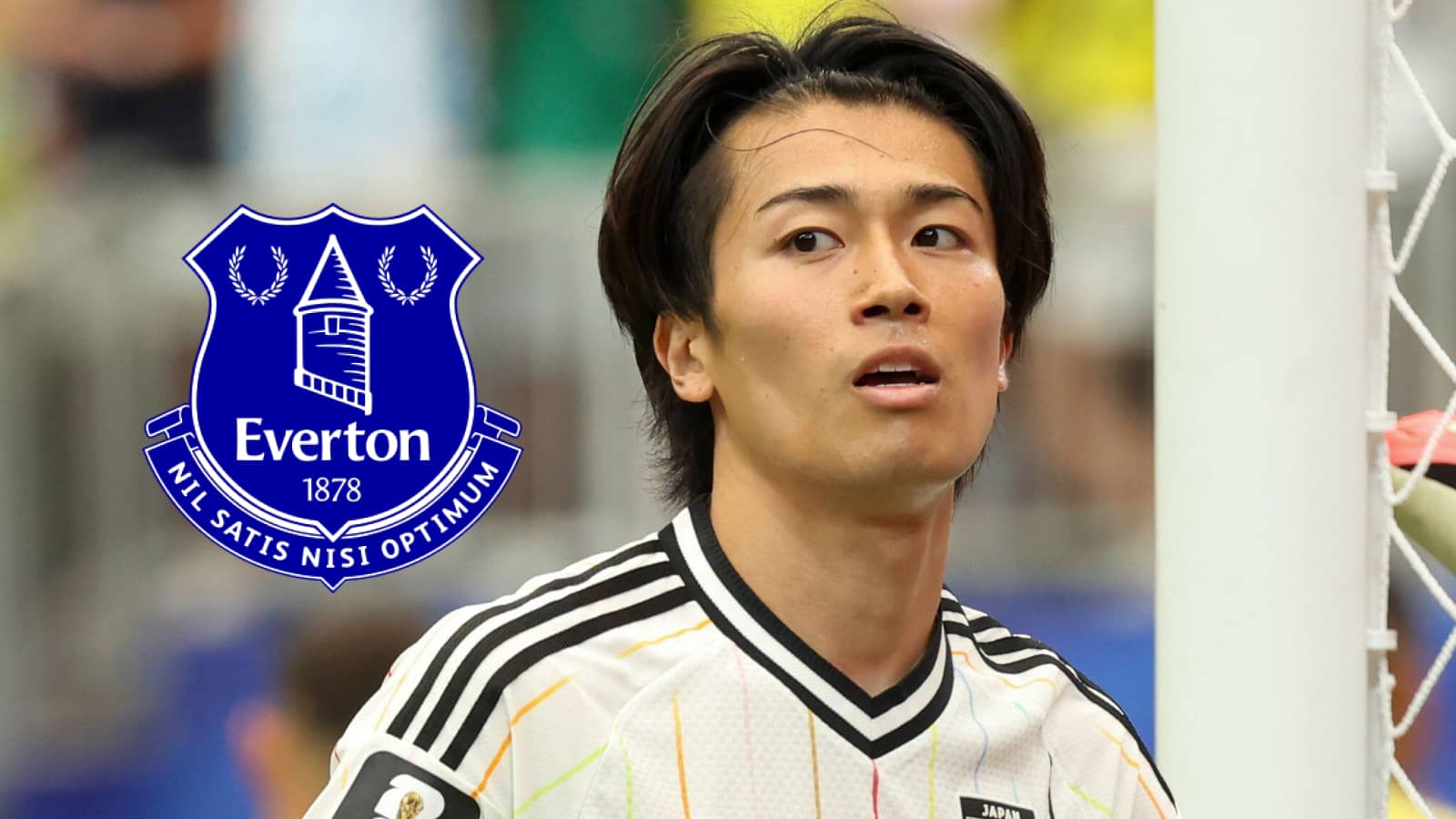
Everton operate in a different financial and tactical reality. Under Sean Dyche, every signing must be highly efficient and defensively disciplined. The club's recent enquiry for Reims winger Keito Nakamura for £25.1m reflects this pragmatism. As outlined by TeamTalk, the Japanese winger is being targeted to add balance to a functional midfield.
The Low-Block Specialist
Nakamura's numbers at Reims show a player custom-built for a defensive block. He recorded 3.41 clearances and blocks per 90 minutes last season. This stat puts him in the 94th percentile for Ligue 1 wingers. He is exceptionally disciplined in maintaining his defensive position, rarely leaving his full-back isolated. For Dyche, this is a non-negotiable trait.
Offensively, Nakamura is highly efficient with limited service. He scored 8 goals from an expected goals (xG) value of just 5.8 last season. This outperformance of 2.2 xG indicates a clinical finisher who does not waste chances. For an Everton side that averaged just 41% possession last term, having a winger who can score from half-chances is critical.
The Carrying Limitation
The limitation in Nakamura's game is ball progression. He averages only 2.15 progressive carries per 90 minutes. He does not beat defenders in 1v1 situations to carry his team up the pitch. If Everton expect Nakamura to be a transition outlet who can run the length of the pitch, they will be disappointed. He is a player who relies on early crosses and late box entries rather than individual dribbles.
Comparing the Profiles: Who Represents the Best Value?
When we look at these three targets, we see three entirely different tactical approaches to the wide forward position. Newcastle are paying a premium for Touré's physical potential and defensive intensity, hoping to coach out his wastefulness. Tottenham are chasing Leão's elite, game-breaking dribbling, hoping their midfield can cover his defensive laziness. Everton are seeking Nakamura's disciplined low-block integration and clinical finishing.
Statistically, the Touré deal is the most volatile. At £43m, Newcastle are paying for what Touré might become rather than what he is right now. His 68.4% pass completion rate is a real concern for a team with Champions League ambitions. If Howe cannot improve his decision-making in the final third, this move will look incredibly expensive.
Leão is the most talented, but he requires the most tactical compromise. If Postecoglou refuses to adapt his pressing structure, Leão's defensive passivity will disrupt the entire team's balance. Nakamura, at £25.1m, represents the safest tactical fit for his respective club, even if his ceiling is lower than the other two. In the numbers game of modern recruitment, the safest fit often yields the highest return.