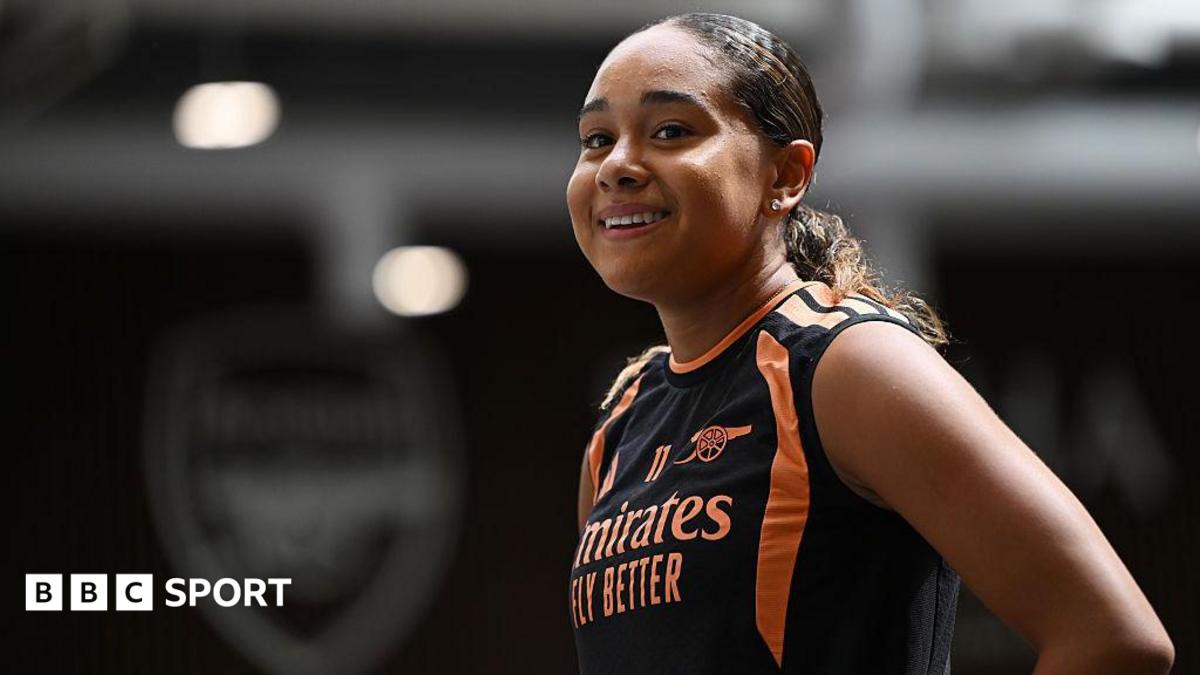
The £1 Million Threshold and the 376% Valuation Spike
When Arsenal handed Liverpool a check for £1 million in 2025, women's football crossed an unprecedented valuation threshold. Just 12 months prior, Liverpool had acquired the Canadian forward from Sporting CP for a club-record £210,000. That represents a 376% inflation in player value inside 365 days.
Market spikes of that magnitude usually signal speculative hype. Yet the underlying numbers behind Smith's single season on Merseyside justified every penny of Arsenal's outlay. In October 2025, she became the first female player in history to score a Women's Super League goal at Anfield, capping a campaign that redefined Liverpool's forward output.
Her performances earned her back-to-back PFA Women's Young Player of the Year awards in 2025 and 2026. She is the first non-English footballer to capture the honor twice. That achievement places her in rarefied statistical company across domestic football.
However, skepticism surrounded her rapid rise. Prior to arriving in North London, Smith had never spent more than a single season at any single club. Moving from Whitby to Michigan at 15 years old established a pattern of constant relocation that raised legitimate questions regarding her long-term tactical discipline.
Tracking the Historical Trajectory
Smith was not a late bloomer who popped up on analytical radars by accident. Her senior international debut for Canada arrived at age 15, making her one of the youngest cap recipients in modern international history. By the time she reached age 22 in 2026, she possessed seven years of high-level exposure.
Her father, Sean, meticulously documented this development curve from the beginning. He maintained a physical diary tracking every single goal she scored, recording the exact minute mark and match context. That level of granular statistical logging framed her career long before professional analysts got involved.
That structured tracking helped mitigate the risks of early relocation. While hopping between youth clubs across Toronto and Michigan caused friction in personal relationships, it forged an adaptable tactical profile. She learned to absorb new tactical instructions instantly across varying team structures.
The Biomechanical Breakdown: Gymnastics, Taekwondo, and Striking Speed
To understand why Arsenal paid a seven-figure fee, one must examine Smith's mechanical profile on the pitch. Modern pressing systems demand forwards who possess elite body control under heavy defensive contact. Smith's movement profile relies on an unconventional athletic background that sets her apart from traditional academy products.
As a child in Whitby, she enrolled in taekwondo to counter schoolyard bullying while simultaneously practicing competitive gymnastics. Those disciplines altered her biomechanics in ways that directly impact her football metrics today. Gymnastics developed exceptional hip flexibility and core stability through static holds like splits and planks.
That core strength allows her to absorb defensive hits while maintaining a low center of gravity. Defenders attempting to push her off the ball in tight spaces frequently fail to disrupt her balance. Her body mechanics allow her to turn rapidly without losing momentum.
Rotational Speed in the Final Third
The impact of martial arts shows up most clearly in her shot generation metrics. Taekwondo training emphasizes explosive hip rotation and rapid leg snap. That kinetic chain transfers directly into her shooting mechanics, allowing her to release shots with minimal backswing.
"Taekwondo really helped with my discipline and arguably my shooting ability in terms of its speed."
This rapid torque production gives opposing goalkeepers reduced reaction windows inside the 18-yard box. She does not require two preparatory touches to set her feet before striking. She turns and releases in a single fluid sequence.
There is, however, a negative byproduct to this instinctual striking speed. Smith occasionally suffers from low-percentage shot selection when central spaces close down. Instead of recycling possession to maintain control, she trusts her rotational power to fire from tight angles, ending promising attacking sequences prematurely.
Big-Match Conversion and the Corinthians Benchmark
High-priced transfers are ultimately judged on big-stage execution. Smith proved her big-match efficiency during the 2026 Women's Champions Cup final against Brazilian side Corinthians. Facing a disciplined low block, her off-ball movement unlocked the match's decisive opening.
Her goal against Corinthians showcased her hybrid cultural football background. With a Jamaican father and a Chilean-Peruvian mother, her game blends physical directness with subtle technical flair. She dragged central defenders out of position before attacking the vacated space behind the defensive line.
Her performance in that final validated Arsenal's tactical gamble. Scoring in a major international final at 22 years old confirmed that her productivity scales upward under maximum pressure. The numbers demonstrate that her efficiency increases as the opposition level improves.
Breaking the Relocation Cycle at Arsenal
Stability has historically been the missing variable in Smith's career trajectory. Moving continuously since her mid-teens prevented her from anchoring into a settled tactical setup. Arsenal represents the first environment where she has entered a second consecutive pre-season.
"When I stepped into the building for my second pre-season it just felt surreal. It feels like home."
Continuity benefits both player and club. In her first year at Arsenal, teammates spent months adapting to her rapid acceleration triggers. With a full season of tactical alignment complete, her combination play in tight central areas has sharpened significantly.
Her early childhood journal listed two primary objectives: winning the Ballon d'Or and lifting the World Cup. Those targets were recorded at six years old, but her statistical trajectory makes them realistic benchmarks rather than childhood fantasies.
Statistical Synthesis and System Fit
Evaluating Smith's £1m transfer requires comparing her metrics against market benchmarks. Male transfer inflation has been documented for decades, but women's football is undergoing its first exponential revaluation phase. Smith's £1m fee set a milestone that other top European clubs are now forced to benchmark against.
Here is how Smith's career benchmarks stack up across her key developmental milestones:
- £210,000 transfer fee paid by Liverpool in 2024 to set a club record.
- 376% increase in transfer valuation when Arsenal secured her signature one year later.
- 15 years old when making her senior international debut for Canada.
- 2 back-to-back PFA Women's Young Player of the Year awards in 2025 and 2026.
- 1 season required to become the first woman to score a WSL goal at Anfield in October 2025.
Her tactical fit at Arsenal hinges on her ability to operate across multiple attacking positions. She can pin center-backs as a primary central striker or isolate full-backs on the wing. That versatility forces opposing defensive coordinators to alter their coverage schemes.
Arsenal's investment was not merely a gamble on potential; it was an acquisition grounded in elite physical metrics and proven big-match conversion. At 22 years old, Olivia Smith has validated her record price tag and redefined what top-tier forward play costs in the modern game.
Read Next
- Why Arsenal's proposed Julian Alvarez swap makes no tactical sense
- Arsenal target £128m Julian Alvarez as Gabriel Martinelli nears £50m exit
- How Celtic turned a 4-0 lead into a historic Champions League disaster
- Sávio won't fix Tottenham's tactical mess against Charlton
- ⭐ UCL 2026 — Champions League Quarter-Finals Hub