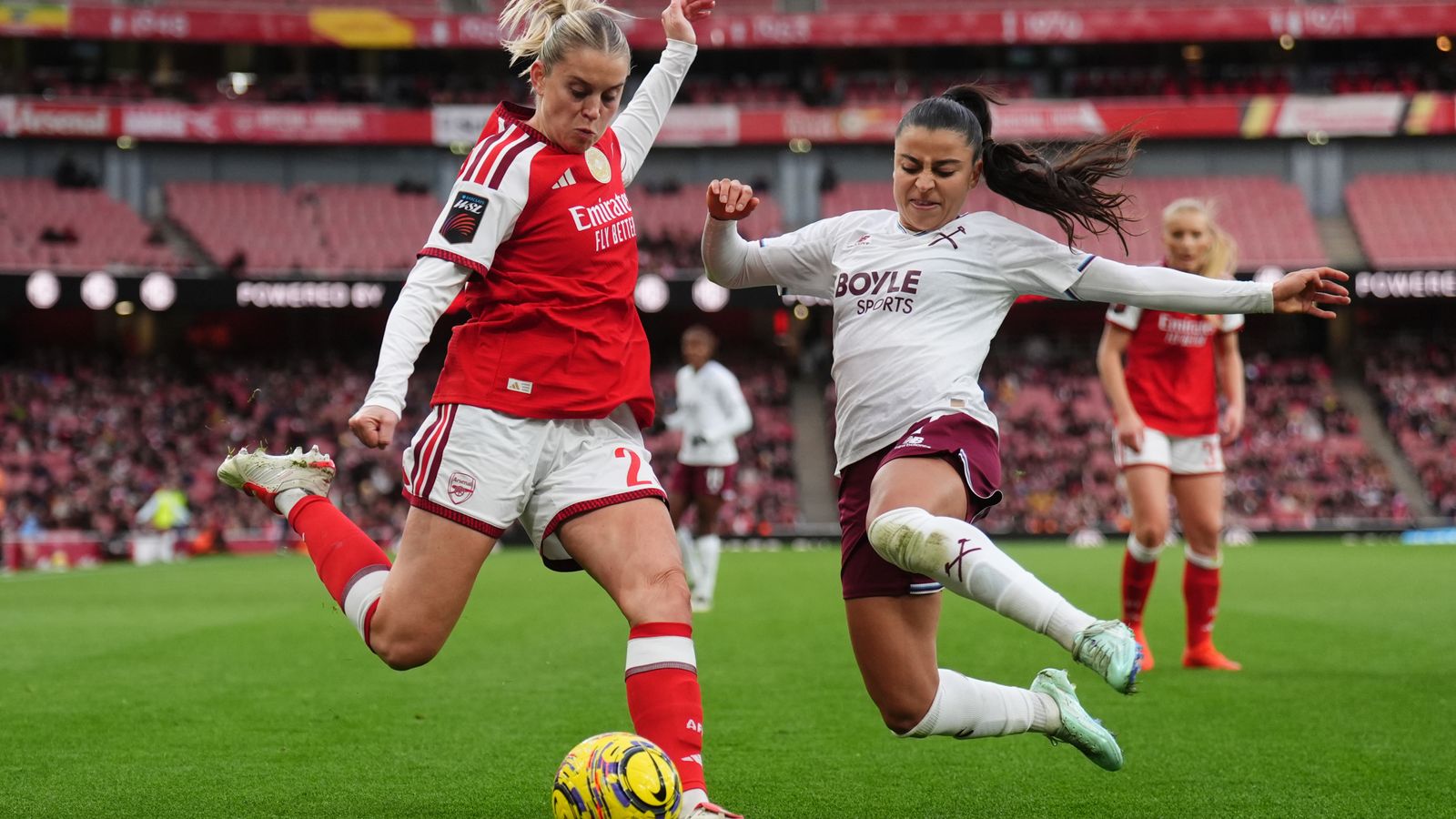
The Mechanics of a Meadow Park Stagnation
Arsenal are trapped in an offensive cul-de-sac. The boos that echoed across Meadow Park at the final whistle against West Ham were not an overreaction. They were the sound of an exasperated fanbase watching systemic inertia drag a season into the dirt.
Against West Ham, the statistical profile was damning. Arsenal ended the contest with 67 per cent possession and fired off 22 shots. Yet despite controlling the ball for over an hour, they failed to register a single big chance.
Possession without incision is merely defensive rest for an opponent. West Ham arrived with a disciplined low block and never felt their shape buckle. The Hammers had never taken a single point off Arsenal in their league history before this meeting.
That psychological barrier evaporated over ninety tedious minutes. West Ham defended their penalty box with organized spacing and minimal panic. Arsenal circulated the ball in a slow, predictable perimeter that caused zero structural distress.
The hosts came closest through sheer fortune rather than attacking design. Kyra Cooney-Cross emerged from the bench and struck a speculative drive from distance that deflected heavily off a defender before clattering off the post. That singular moment summarized Arsenal's offensive output.
When an accidental deflection off a defender's leg represents your highest-probability moment of the afternoon, the tactical structure is broken. Arsenal offered no blindside runs behind the opposition backline. They lacked the sharp, one-touch link-up play required to unlock a crowded penalty box.
The Brutal Reality of the WSL Table
The consequences of this paralysis are severe. After 11 rounds of fixtures, Arsenal sit down in sixth place with just 15 points. That is an unacceptable tally for a squad with aspirations of playing European football next season.
Six consecutive home draws in the league tell a definitive tactical story. Arsenal cannot turn territorial dominance into victories in front of their own supporters. As Sky Sports reported, the growing discontent in the stands is piling immense pressure onto Renee Slegers.
A home fixture should be an advantage, not an ordeal. Right now, Meadow Park feels suffocating for the players in red. The anxiety grows with every lateral pass that fails to pierce the defensive lines.
Meanwhile, rivals across the league are discovering ways to grind out results under adversity. Manchester United traveled to Birmingham and found themselves trailing after just four minutes when Geum-Min Lee capitalized on early defensive slackness.
United spent large portions of the match looking disjointed in attack. Goalkeeper Phallon Tullis-Joyce was forced into several vital interventions to keep Birmingham from doubling their advantage. Marc Skinner's side looked headed for a miserable afternoon.
Yet United found a way to win. Elisabeth Terland struck with ten minutes left on the clock, and Simi Awujo nodded home a dramatic winner four minutes into stoppage time. It was not an artistic masterpiece, but it produced three points.
That killer instinct is precisely what separates title contenders from mid-table drifters. United manufactured a 2-1 victory from a broken performance. Arsenal produced a lifeless 0-0 stalemate despite suffocating their opponents with the ball.
Elsewhere, the league hierarchy suffered an even bigger shock. Tottenham traveled to the Joie Stadium and shattered Manchester City's 17-game home winning run with an emphatic 3-1 victory. Spurs demonstrated that defensive resilience combined with aggressive transitions can topple anyone.
Lower down the division, desperation is fueling performances. Charlton finally secured their first point of the campaign at the 11th time of asking, battling to a 1-1 draw against Aston Villa. Keira Flannery converted a first-half penalty before Lucy Parker equalized for Villa nineteen minutes from time.
Brighton also capitalized on misfortune to defeat Everton 1-0, profiting from an early own goal by Maz Pacheco. In the latest WSL round, teams fought with desperate intensity. West Ham's clean sheet took them above Liverpool into 12th, leaving Arsenal as the day's biggest underachievers.
The Tactical Changes Slegers Must Implement
Arsenal head into their next contest knowing that cosmetic adjustments will not suffice. Slegers must make decisive structural changes to how her team operates in the final third. Repeating the same patterns against another low block will yield the exact same sterile result.
The most glaring issue is the tempo of Arsenal's buildup. Central defenders take four or five touches before committing to a pass. By the time the ball shifts toward the flanks, the opponent's defensive shift has already occurred.
Speed of circulation must increase dramatically. If the ball does not move with one-touch and two-touch rhythm, spaces between opposition midfielders and defenders never open. Slegers needs her midfielders to play on the half-turn rather than constantly facing their own goal.
Positional spacing in zone 14 has been dreadful. Too often, Arsenal's central midfielders drop deep into spaces already occupied by the center-backs. That leaves the area immediately in front of the opposition penalty box completely deserted.
To fix this, Slegers needs a clearer tactical checklist before the whistle blows:
- Enforce immediate vertical passes through central channels instead of recycling wide.
- Push central playmakers ten yards higher to pin opposing defensive pivots.
- Commit three runners into the six-yard box on every wide delivery.
Wingers also need to change their movement patterns. Staying pinned against the touchline makes defending straightforward for opposing full-backs. Arsenal need inside-out diagonal runs that pull center-backs out of the middle.
Cooney-Cross proved during her substitute cameo that directness can disrupt an opponent's rhythm. Her willingness to shoot from distance forces defenders to step out of their deep block. When defenders step out, gaps appear for attacking runners to exploit.
The Stakes, The Psychology, and The Prediction
What is at stake in the upcoming match is nothing less than the authority of the manager. Slegers has overseen an alarming regression in attacking fluidity. If Arsenal stumble again, the calls for change from the fanbase will become deafening.
The psychological hurdle at home is now towering. Players second-guess their instincts whenever an aggressive forward pass is on. Fear of turning the ball over has produced a team that takes zero creative risks.
Risk aversion is fatal in elite football. Opponents know they can arrive at Meadow Park, surrender possession, and wait for Arsenal to exhaust themselves with sideways passing. Breaking that narrative requires aggression from the opening minute.
Arsenal cannot wait until the 70th minute to show urgency. They must press high, force early turnovers in the opposition half, and convert chaotic transitions into high-quality chances. A passive opening twenty minutes will only feed into the opponent's game plan.
Defensively, Arsenal must remain alert against counter-attacks. In their desperate search for a goal, full-backs push high up the pitch, leaving vast spaces behind for opposing runners. One sloppy giveaway can turn territorial control into an embarrassing defeat.
Here is my prediction for the upcoming test. Arsenal will not suddenly transform into a free-flowing juggernaut overnight. The scar tissue from six consecutive home draws runs too deep for a sudden tactical renaissance.
However, the public fury following the West Ham draw will force a tactical recalibration from Slegers. Expect Cooney-Cross to be handed a starting role to inject tempo and direct ball-striking into the midfield.
Arsenal will abandon their endless lateral recycling in favor of early vertical deliveries into the penalty area. It will be frantic, tense, and far from aesthetically pleasing. But Arsenal will finally end their barren home run by grinding out an ugly 1-0 victory courtesy of a second-half set-piece.