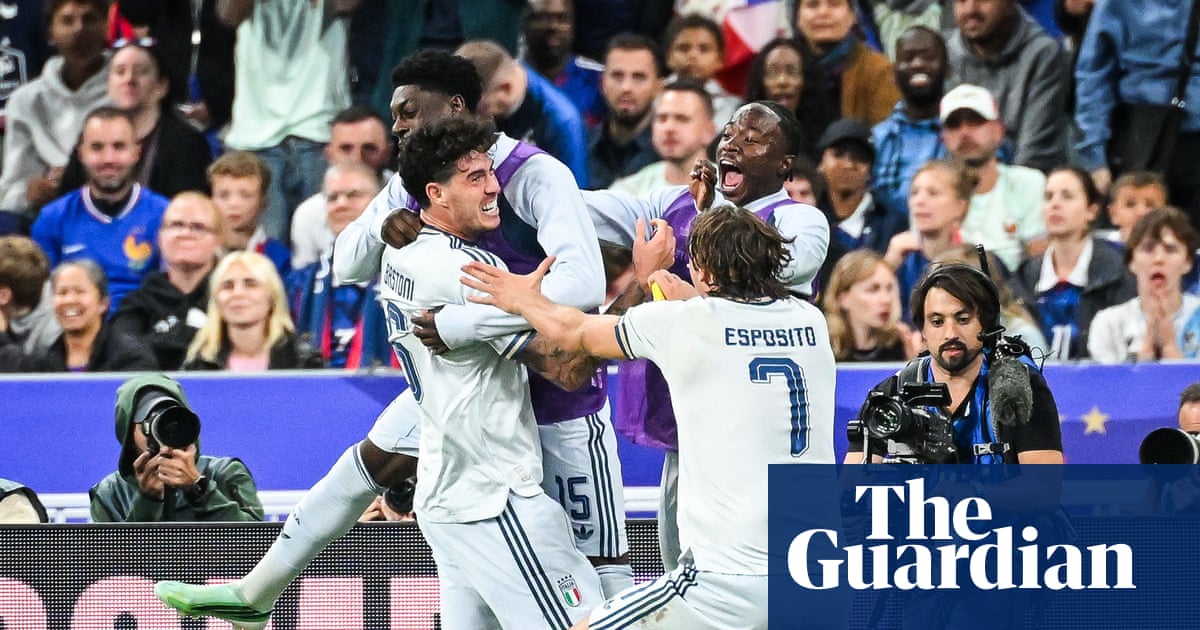
Breaking the decade-long knockout curse
Luis de la Fuente spent the afternoon before Spain's quarter-final against Belgium laughing. He recalled how, during his childhood, only three television events gathered his family around the screen: the national team, Eurovision, and the gameshow Un, dos, tres. For a nation historically paralyzed by the dread of the quarter-final barrier, this lightheartedness felt almost sacrilegious.
Yet, this relaxed posture reflects a deeper tactical shift in the Spanish camp. For over a decade, Spain's knockout campaigns were defined by sterile dominance. They passed opponents to sleep, only to fall asleep themselves when the counter-attack arrived.
The statistical record of Spain's post-2010 World Cup knockout exits is a grim indictment of their previous style. In 2018, Spain completed 1137 passes against Russia only to go home on penalties.
Four years later in 2022, they registered 1019 passes against Morocco and failed to score over 120 minutes. The possession was high, but the vertical progression was non-existent.
Under De la Fuente, the possession is still high, but the intent is different. Against Belgium, Spain maintained 68% possession but recorded three times as many shots as their opponents.
They attacked the half-spaces with direct running rather than recycling the ball through the center-backs. The result was a team that looked capable of winning in normal time, rather than playing for penalties.
This tactical flexibility has redefined their offensive identity. Spain's wingers, Lamine Yamal and Nico Williams, no longer cut inside to join a crowded midfield.
Instead, they hug the touchlines, stretching the opponent's defensive block horizontally. This creates wide gaps in the defensive channels, allowing late-arriving midfielders to exploit the half-spaces.
The anatomy of the Merino super-sub role
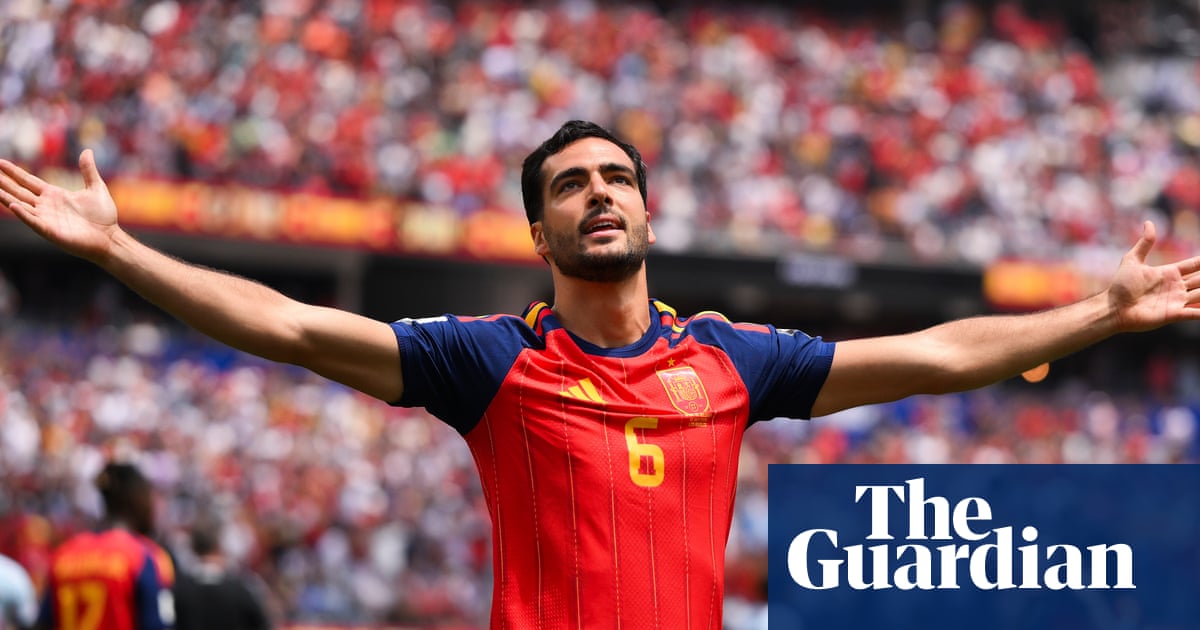
Spain's progression to the semi-finals has relied on a tactical weapon that feels almost archaic in the modern era of complex rotations. Mikel Merino has become Spain's late-game executioner from the bench. He is a direct, physical midfielder who exploits the space created when opponents drop into a low block.
The pattern is now established. Against Portugal in the Round of 16, Merino entered in the 85th minute and scored the only goal in the 91st minute for a 1-0 victory.
In the quarter-final against Belgium, De la Fuente introduced him in the 86th minute. By the 88th minute, Merino had secured a 2-1 win.
These are not random occurrences of good fortune. As detailed in The Guardian's coverage, Merino's positioning allows Spain to overload the penalty box during the final ten minutes. While the starting midfielders like Fabian Ruiz and Pedri operate as progressors, Merino acts as a second striker.
“I look behind me and I see Mikel Merino and I think: ‘I’m calm as can be,’” Luis de la Fuente said.
Merino's physical profile is the key. At 6ft 2in, he wins aerial duels in the box and secures second balls that drop from crosses.
Against Belgium, he pounced on a rebound spilled by substitute goalkeeper Senne Lammens. His quick reaction in the 88th minute showed the difference between Spain's current directness and their former pass-and-pray philosophy.
This role is demanding. It requires a player to accept a secondary status in terms of minutes while maintaining peak focus.
Merino has started only one match this tournament, the final group game against Uruguay on June 26. Yet, his impact off the bench has made him one of the tournament's most valuable assets.
His late-game interventions also carry a deep sentimental weight. In Euro 2024, his late header against Germany prompted a celebration where he ran around the corner flag.
This mirrored his father Miguel Merino's celebration at the same stadium decades earlier. Now, in the 2026 World Cup, his knack for the dramatic has returned, as Mikel Merino enjoys a happy knack of scoring late winners for his country.
The tactical vulnerability De la Fuente must address
Despite the euphoria of two late victories, Spain's tactical setup is far from flawless. Their rest defense remains highly vulnerable during defensive transitions. When Spain's fullbacks push high to support the wingers, they leave massive channels open on the flanks.
Belgium exposed this multiple times. Romelu Lukaku and Jeremy Doku found joy in the spaces behind Dani Carvajal and Alejandro Balde.
Had Belgium been more clinical in their final delivery, Spain would have been trailing before Merino's introduction. The central defensive partnership of Aymeric Laporte and Robin Le Normand lacks the recovery pace to cover these wide spaces alone.
This defensive vulnerability will be tested to the limit in the semi-final. France, Spain's next opponent, boasts the most lethal transitional attack in world football.
Kylian Mbappe and Ousmane Dembele will not waste the space that Belgium squandered. If Rodri is isolated in transition, Spain's defensive line will be exposed to direct, vertical runs.
Spain's counter-pressing must be perfect. If the first line of press is broken, De la Fuente's side must drop into a mid-block quickly.
Against Belgium, Spain's recovery runs were sluggish. They relied on tactical fouls to halt transitions, which led to yellow cards that could affect squad depth later in the tournament.
How to dismantle Deschamps' mid-block
The semi-final on July 14, 2026 will be a clash of contrasting football philosophies. Didier Deschamps' France will likely cede possession and look to exploit Spain's high defensive line. Spain must find a way to break through a compact mid-block without becoming vulnerable to the counter-attack.
The key will be the tempo of Spain's passing. If they revert to the slow, lateral circulation of the past, France will comfortably slide side-to-side and close the passing lanes.
Spain must utilize Lamine Yamal and Nico Williams to isolate France's fullbacks in 1v1 situations. This forces the French central midfielders to cover wide, opening space in the center.
This is where Merino's late-game entry could again prove decisive. If the match is tied late in the second half, France's defense will be fatigued from chasing the ball.
Merino's late runs into the box will test their concentration. The physical battle in the penalty area will decide who reaches the final.
Spain have shown they no longer fear the closing stages of knockout football. The fatalism that plagued previous generations has been replaced by a quiet confidence. While De la Fuente's giggles might have seemed relaxed, his team's execution has been cold and calculated.
France will provide the ultimate test of Spain's vertical evolution. It is a match that will not be won by passive possession, but by the team that details its transitions most effectively. Spain's defensive vulnerabilities are real, but their offensive variety is now superior to France's rigid structure.
Expect a tight, tactical affair. The match will open up in the final twenty minutes.
Spain's ability to alter the game's tempo with their bench will carry them through. We predict a narrow victory for Spain, with the decisive action once again coming late in the match.