Pull up a stool, grab a cold pint, and let's talk about the absolute chaos unfolding on the streets of Mexico City. It is July 1, 2026, and my blood pressure is currently high enough to set off car alarms. We just witnessed Mexico finally banish their forty-year knockout stage curse at the Estadio Azteca, but the morning after feels like a massive, tragic hangover.
This was supposed to be the moment the country stopped looking back at 1986 like a bitter, long-lost ex. But the moment the final whistle blew and the stadium erupted, the celebration mutated into something dangerous on the streets outside. The contrast between the sporting joy inside the concrete colossus and the disaster unfolding in the neighborhoods is jarring.
It makes you wonder about the cost of this national obsession. We wanted the victory, we screamed for the goals, but nobody wanted the price that came with it. Not like this.
The Sixty-Minute Deluge and the Quick Kill
Let's start with the football before we address the tragedy. The heavens opened over Mexico City last night, delaying kickoff by approximately one hour. The legendary Azteca pitch looked more like a water polo pool than a standard football field.
You could feel the collective heart attack of a nation vibrating through the concrete. The rain was relentless, turning the grass into a muddy swamp and raising the anxiety levels of every single fan in the stands.
But when the whistle blew, El Tri did not mess around. They went straight for the throat of a nervous Ecuador side. In the 22nd minute, Julián Quiñones found space where none existed.
He latched onto a deflected pass on the edge of the box, shrugged off a physical challenge from Piero Hincapié, and hammered it home. The stadium shook so hard I thought the roof was coming down. Quiñones showed why he is worth every penny of his salary, unleashing a low shot past Alexander Domínguez.
Nine minutes later, Raúl Jiménez rose above a static Ecuadorian defense to make it 2-0. It was a classic striker's header, powerful and precise. Ecuador looked completely shell-shocked.
Their manager's defensive strategy was a total disaster, leaving their fullbacks isolated and exposed to every overlap. Luis Chávez whipped in a beautiful, bending cross from the left corner, and Jiménez timed his run perfectly. He left Felix Torres standing like a statue.
Mexico's press was relentless in that first half. Luis Chávez controlled the middle of the pitch like a traffic cop, shutting down passing lanes. But let's be honest, Ecuador made it easy.
Their midfield gave away possession like they were handing out party favors, and their passing in the final third was atrocious. Moises Caicedo was left stranded in the center, trying to cover a massive gap that his teammates ignored.
But let's not pretend Mexico was perfect. The second half was a sluggish, defensive grind that was painful to watch. Mexico sat deep and invited pressure, which is a dangerous game when you have forty-five minutes left.
A better team than Ecuador would have punished them for such passivity. The lack of attacking intent in the second half was a frustrating reminder of Mexico's tactical limitations under pressure. They looked content to survive rather than dominate.
The Ghost of 1986 and the Quinto Partido
For forty years, Mexican football has been defined by one phrase: the fifth game. It is a psychological block that has ruined generations of talented players. Ever since the home tournament in 1986, the Round of 16 has been a brick wall.
Every four years, we get the same cycle of hope, struggle, and eventual heartbreak. The country has been haunted by memories of Bulgaria in 1994, Argentina in 2006, and the Netherlands in 2014.
This time, the expanded forty-eight team bracket meant the Round of 32 was the first hurdle. But the fans did not care about the math. To them, this match against Ecuador was the true test.
Winning it felt like lifting a curse that had haunted the country for decades. The victory was celebrated as a national exorcism, a moment of pure liberation for a football-mad nation.
Mexico has now won four straight games in this tournament. More impressively, they have not conceded a single goal. The defensive pairing of Johan Vásquez and César Montes has been rock solid.
But we must ask ourselves if this defensive record is a bit of a mirage. Ecuador's attack was toothless, and their strikers looked like they had their boots on the wrong feet. They failed to create any clear chances, making Mexico's defense look better than it actually is.
This defensive complacency could be their undoing. Sit deep against a top-tier European side, and you will get picked apart. The coach needs to address this before the next match.
Relying on clean sheets against weak opponents is a recipe for disaster. They must maintain their intensity for the full ninety minutes.
Tragedy at the Angel of Independence
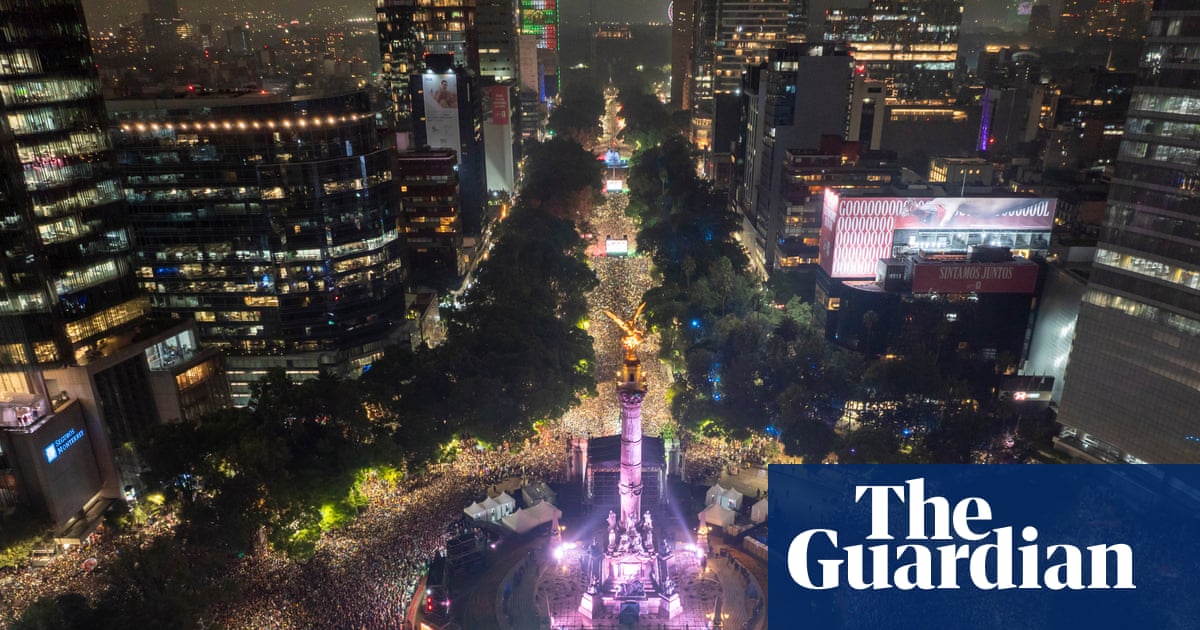
While the team celebrated on the pitch, the streets of the capital erupted. Over one million people flooded the Paseo de la Reforma. They gathered around the Angel of Independence monument, waving flags and setting off flares.
The energy was electric, but the sheer volume of people quickly turned the party into a choke point. According to the local secretariat reports, the night of triumph turned fatal.
Four fans died during the celebrations in the early hours of Wednesday. Three of the victims died of suffocation as the dense crowd surged. Paramedics rushed to the Juárez neighborhood, finding unconscious bodies near Hamburgo and Lancaster streets and Calle Berna.
As The Guardian reported, the health secretariat confirmed these details in the early hours of Wednesday. This is a massive failure of city logistics and crowd control. Mayor Clara Brugada expressed condolences and urged fans to celebrate with responsibility and care.
But where were the barricades? Why was a crowd of that size allowed to compress into such tight residential streets without proper management? The details of the victims are heartbreaking.
- A 44-year-old man who collapsed and died from suffocation in the dense crowd.
- A 19-year-old woman who suffered fatal asphyxiation during a sudden crowd surge.
- A 48-year-old woman who was unable to breathe as the gathering compressed.
- A man in his 30s who suffered a fatal cardiac arrest after being hospitalized with seizures and gastrointestinal bleeding.
It is the classic story of tournament hosts focusing on the shiny stadiums while neglecting the basic safety of their own citizens. You cannot host a global party and then act surprised when a million people show up. The federation and the city officials must answer for this lack of preparation.
They were so busy planning the VIP zones at the Azteca that they forgot about the actual fans on the streets. The lack of crowd control around the Paseo de la Reforma is unacceptable. The city knew how much was at stake.
They knew the fans would flood the monument if Mexico won. To be unprepared for that is administrative negligence.
We cannot let the euphoria of a football match blind us to these systemic failures. The families of these victims deserve more than empty condolences from politicians who failed to protect them.
The Three Lions on the Horizon
Now, the tournament moves on, and Mexico faces a massive reality check. Their next opponent is England in the Round of 16. The English media is already talking like they have a free pass to the quarterfinals.
But this England squad has its own issues, and their recent performances have been far from convincing. Mexico's clean sheet record will face its first true test.
Defending against Ecuador's disorganized front line is one thing. Stopping Jude Bellingham, Harry Kane, and Bukayo Saka is a completely different challenge. If Vásquez and Montes lose their focus for even a second, Kane will punish them.
Mexico's manager cannot rely on the same conservative setup. They need more creativity in midfield, and Chávez cannot do it all alone. Jiménez will need to convert every half-chance he gets because England will not give away cheap turnovers in the box.
This is the moment to prove that the curse is truly dead, not just temporarily sleeping. The tactical battle will be won or lost in the transitions.
If Mexico plays as defensively as they did in the second half against Ecuador, Bellingham will carve them open. The midfielders must track back and close the gaps between the lines. Otherwise, it will be another round-of-16 exit for El Tri.
The English press is already writing Mexico off, but that could be a dangerous mistake. El Tri has the home-field advantage and the momentum of a historic win. If they can fix their defensive lapses, they might pull off another upset.
Ultimately, the joy of breaking the curse is overshadowed by the loss of life. Football is a game of passion, but no game is worth a life. As the team prepares for England, the country is mourning the fans who never made it home from the party.
It is a sobering reminder of what truly matters. We can talk about tactics all night, but four families are empty today. Let's hope lessons are learned before the next whistle blows.
Read Next
- Why Mexico's historic World Cup run is built on ugly efficiency
- Why Mexico's altitude trap at the Azteca is England's ultimate nightmare
- England face a hilarious right-back crisis against the country they ignored
- Tottenham agree £100m Sandro Tonali deal as Newcastle face financial pressure
- 🏆 World Cup 2026 — Full Coverage Hub
- 🇲🇽 Mexico World Cup 2026 — El Tri Hub
- 🇪🇨 Ecuador World Cup 2026 — La Tri Hub
- 🇩🇪 WC 2026 Group E — Germany, Ecuador, El Salvador, Serbia

.jpg)