Mexico has played 360 minutes of football at the 2026 World Cup. The co-hosts have scored eight goals, collected twelve points across four matches, and allowed exactly zero goals. This defensive record is the foundation of Javier Aguirre’s third stint in charge of the national team.
The Tactical Anatomy of Aguirre's Block
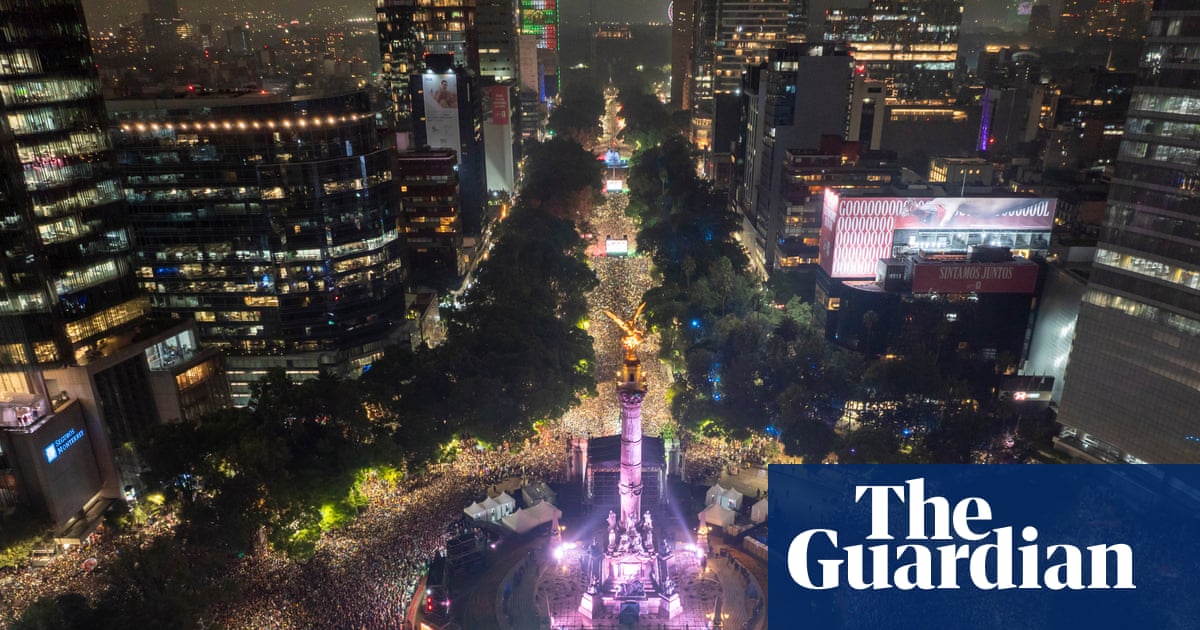
Yet, the statistics reveal a team playing a dangerous game of survival. Inside the Estadio Azteca, Mexico secured their first World Cup knockout victory in forty years by defeating Ecuador 2-0. Outside the stadium, a crowd of over a million celebrated, a massive gathering that tragically ended in three deaths from suffocation, as reported by The Guardian.
Surrendering the Ball at the Azteca
On the pitch, the atmosphere was far more clinical. Aguirre’s side surrendered the ball, finished with 43% possession, and completed only 319 passes compared to Ecuador’s 407. This was not a performance designed to entertain the home crowd.
It was a cold, calculated exercise in defensive structure. Aguirre has spent his career being called a pragmatist, but this iteration of El Tri takes his philosophy to an extreme. During the group stage, Mexico recorded a 2-0 win over South Africa, a 1-0 victory against South Korea, and a 3-0 triumph over the Czech Republic.
In none of those matches did they dominate the midfield or seek to control tempo through possession. Against Ecuador, the strategy was clear from the start. Mexico dropped into a mid-block, refusing to engage Ecuador’s center-backs.
The High PPDA Outlier
Their Passes Per Defensive Action (PPDA) in the tournament stands at 14.2. This is the highest PPDA among the teams remaining in the competition, indicating a complete refusal to press high up the pitch. Instead, Mexico waited for Ecuador to enter the middle third.
When Moisés Caicedo or John Yeboah attempted to carry the ball forward, Mexico's double pivot of Luis Romo and Edson Álvarez stepped up. Together, they logged nine interceptions and won 70% of their ground duels. Once they won the ball, they moved it vertically immediately.
The Ecuador Match: A Study in Extreme Efficiency
The match was delayed by an hour due to severe lightning. When play finally began, Mexico’s verticality caught Ecuador cold. In the 22nd minute, Julián Quiñones opened the scoring after a swift transition.
First-Half Lethality
Just nine minutes later, Raúl Jiménez doubled the lead, assisted by Quiñones after a turnover in the final third. The first-half expected goals (xG) statistics show a massive disparity. Mexico registered 0.71 xG from six shots, while Ecuador was held to a minor 0.23 xG.
Mexico did not need to control the ball to control the match. They simply made their moments count. But this clinical edge hides a worrying trend.
Mexico scored two goals from only three shots on target. Over the tournament, their shot-on-target conversion rate is an astonishing 25%. This efficiency is highly unlikely to continue over the remaining rounds of the tournament.
Let's look at the underlying creation numbers. Mexico created only 1.15 xG per ninety minutes in the group stage. This ranks them nineteenth among all forty-eight teams in the tournament.
The Second-Half Collapse
After taking the lead against Ecuador, Mexico completely stopped attacking. In the second half, they completed just 88 passes. Their pass completion rate dropped to a dismal 68% as they repeatedly cleared the ball long.
Ecuador seized control of the game, finishing with 57% possession and seven shots. This passivity nearly cost Mexico in the 74th minute. John Yeboah cut inside from the right wing and fired a shot that beat goalkeeper Luis Malagón but hit the post.
It was a stark reminder of how thin the margins are for Aguirre's team. If that shot goes in, a nervous finish was guaranteed. Piero Hincapié's red card in stoppage time put the game to bed.
But the final whistle brought relief rather than a sense of dominance. Even as authorities in Mexico City confirmed fatalities due to overcrowding, as The Guardian detailed in their coverage, the team's focus shifted. Mexico survived, but their second-half performance was incredibly defensive.
The Historical Context of the Defensive Shift
To understand why Aguirre is playing this way, one must examine Mexico's history. For seven consecutive World Cups between 1994 and 2018, Mexico exited in the Round of 16. In almost every one of those games, they tried to play expansive football.
Learning from Past Failures
They had the ball, but they did not have the defensive security. In 2002, during Aguirre's first stint, Mexico held 56% possession against the United States. They lost 2-0 on two counter-attacks.
In 2010, they had 52% possession against Argentina and lost 3-1 due to defensive errors. Aguirre has decided that possession is a liability in knockout football—and history suggests he is right. By giving up the ball, Mexico eliminates the risk of being caught in transition.
They force the opponent to break down a settled defense. It is not pretty, but it has broken a forty-year curse. This is the statistical trade-off Aguirre has accepted.
The Malagón Anomaly
Luis Malagón's performances in goal have been the quiet anchor of this run. The Club América goalkeeper has faced 11 shots on target throughout this World Cup and has saved every single one of them. This represents an unsustainable 100% save rate, a figure that defies the laws of footballing regression.
In the group stage, South Korea and the Czech Republic combined for 1.84 xG against Mexico. Malagón made three key saves in the final ten minutes against South Korea to preserve the 1-0 victory. Against the Czech Republic, he made a double save in the 67th minute when the score was still 1-0.
Comparing these numbers to other goalkeepers reveals Malagón's overperformance. Jordan Pickford has a save percentage of 76.5%, while Alisson stands at 81.2%. Malagón is playing out of his skin, but relying on flawless goalkeeping is a recipe for heartbreak.
The Warning Signs for the Round of 16
In Aguirre's 5-4-1 block, the double pivot has a demanding role. Luis Romo has emerged as the unsung hero, covering 11.4 kilometers per match. His defensive metrics are elite, winning 68% of his tackles in the defensive third.
The Midfield Shield and Romo's Resurgence
Edson Álvarez provides the aerial protection that allows Mexico to defend deep. Álvarez has won 15 of 21 aerial duels, screening the center-backs. This midfield shield forces opponents wide, where full-backs pin them against the touchline.
However, this setup leaves Romo and Álvarez with very little energy to support the attack. Against Ecuador, Romo completed only five passes in the opposition half. When Mexico wins the ball, the gap between the midfield and Raúl Jiménez is often thirty yards.
This leaves Jiménez isolated, forced to contest long clearances against multiple defenders. Up front, Julián Quiñones and Raúl Jiménez have had to make the most of limited service. Against Ecuador, they combined for the second goal in a move that showed real tactical intelligence.
Sustainability of the Front Two
Quiñones won a header from a long clearance, holding off Piero Hincapié, before slipping the ball to Romo, who set up Jiménez. Jiménez’s finish was his second of the tournament, having also scored against South Africa in the opening match. The 35-year-old striker is showing a clinical edge that many thought was gone.
He has converted two of his three shots on target in the tournament into goals. But the lack of service is a major issue. Quiñones and Jiménez have touched the ball in the opposition box only 14 times combined across four matches.
By comparison, Harry Kane and Bukayo Saka have registered 38 touches in the box. Without box entries, Mexico will struggle when they fall behind. They now advance to the Round of 16, where opposition quality rises dramatically.
If they face England, they will be playing against a side that averages 62% possession and has scored ten goals. Southgate's team is comfortable passing through low blocks and will not panic if Mexico drops deep. Furthermore, England's counter-pressing is far more intense than Ecuador's.
Against Ecuador, Mexico was able to release pressure by playing long balls to Quiñones. England's center-backs, John Stones and Marc Guéhi, are excellent in the air and will win those first contacts. Mexico will need a plan B to retain the ball under pressure.
Aguirre's pragmatism has brought Mexico historic success, but it has also brought them to a crossroads. To go further, they must prove they can do more than defend. The statistics suggest that the defensive wall is cracking, and they cannot rely on Malagón's perfection forever.
Read Next
- Why Mexico's altitude trap at the Azteca is England's ultimate nightmare
- Why Amalie Vangsgaard is the tactical gamble Aston Villa had to make
- Thomas Tuchel's right-back headache is the exact trap DR Congo needs
- Tactical rigidity broke England long before Rooney saw red in 2006
- 🏆 World Cup 2026 — Full Coverage Hub
- 🇲🇽 Mexico World Cup 2026 — El Tri Hub
- 🇪🇨 Ecuador World Cup 2026 — La Tri Hub
- 🇩🇪 WC 2026 Group E — Germany, Ecuador, El Salvador, Serbia
.jpg)