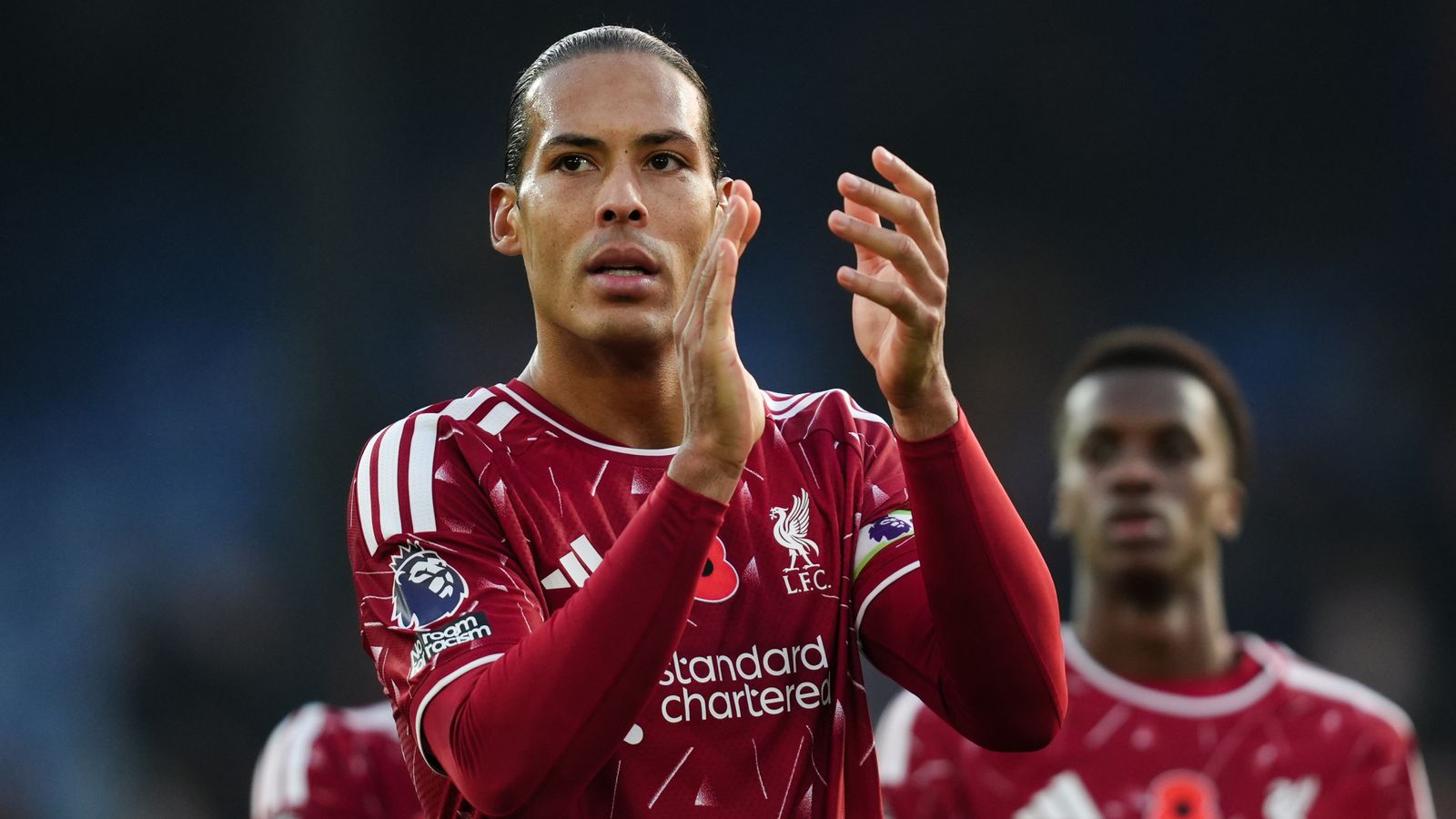
Manchester United travel to Merseyside on Sunday afternoon sitting in the Premier League relegation zone. It is a staggering reality for a club of this stature. Yet here they are, desperate for a single point to leapfrog Sunderland and Nottingham Forest on goal difference.
Mauricio Pochettino has had only days on the Carrington training pitches to arrest this slide. Michael Carrick was dismissed after the wheels came off entirely, ending an era that began with January victories over Manchester City and Arsenal. Now, Pochettino walks straight into the most hostile fixture on the English calendar.
The new-manager bounce is often treated as an inevitable psychological jolt. In reality, it rarely survives contact with elite opposition. Throwing an unconditioned squad into Anfield with zero tactical bedding-in is managerial malpractice by circumstance.
Carrick's dismissal was necessary, but the timing is ruthless. United have looked structurally broken for months, devoid of defensive compactness or coherent pressing triggers. Expecting Pochettino to fix those structural fissures over forty-eight hours of tactical walk-throughs is fantasy.
A draw lifts United out of the bottom three. That single mathematical carrot tells you everything about how low the bar has fallen.
The Tactical Dilemma Facing Pochettino
Pochettino built his reputation on aggressive front-foot pressing, territorial dominance, and intense physical conditioning. None of those principles can be installed overnight. If he asks this current group to step up and compress the pitch against Andoni Iraola's Liverpool, he invites immediate disaster.
Iraola has constructed a forward line with devastating verticality. They thrive when opponents leave space between the lines or push a high defensive line without applying genuine pressure on the ball carrier. One sloppy pass in central midfield will trigger a three-on-two break before United's full-backs can recover.
Troy Deeney highlighted this exact trap when assessing United's tactical options. If United attempt to press high after conceding early, the pitch will stretch violently. That openness plays entirely into Liverpool's hands.
Pochettino's personal record against Liverpool offers little comfort. Across his managerial career, he has managed just three wins from 19 encounters against the Anfield club. His teams have consistently struggled to handle the emotional and territorial waves that Anfield generates.
Chris Sutton was blunt in his evaluation of United's tactical bind. The former striker warned that United could easily find themselves on the receiving end of a pummelling if they fail to construct a disciplined low block. Sutton noted:
Pochettino will probably look to defend and play on the counter-attack, and they might get some chances that way, but Liverpool are going to win.
Sutton is right about the counter-attack being United's only realistic pathway. The squad that won at Anfield last season did so by absorbing relentless pressure and striking through isolated transitions. They cannot go toe-to-toe in midfield.
The central battleground will be defined by how United attempt to exit their defensive third. If Liverpool deploy a high box press, United's central midfielders must show the composure to bypass the initial wave. Too often this season, United have panicked and turned the ball over in catastrophic zones.
Liverpool's pressing under Iraola is designed to trap possession toward the touchline. Once the ball travels wide, their full-backs jump aggressively to pin the receiving winger. If United cannot execute sharp vertical switches, they will spend ninety minutes pinned inside their own half.
There is, however, an opening on the break. Liverpool's aggressive counter-press commits heavy numbers forward, leaving vast acreage behind their advanced defensive line. United took advantage of precisely that space during their previous trip to Anfield.
To repeat that smash-and-grab feat, United's attackers must be clinical. Half-chances must result in shots on target, and set-pieces must be maximized. In a fixture where you expect to concede twenty shots, wasting a transition opportunity is unpardonable.
Defensive Fragility Against Iraola's Machine
Alan Shearer pointed straight at United's leaky backline as the primary reason for their current predicament. You cannot hide bad defensive fundamentals behind tactical enthusiasm. Opponents have repeatedly exposed United's central defenders by pulling them out of shape and exploiting the vacated half-spaces.
Liverpool possess the exact tools required to exploit those weaknesses. Under Iraola, their attacking movements are designed to isolate defenders in wide areas and overload the penalty box with late-arriving runners. United's full-backs must remain disciplined, or the afternoon will turn ugly quickly.
When tracking runners, United have been negligent all season. Midfield runners consistently ghost into the penalty area untracked while the backline scrambles toward the ball. Against an expensively assembled attack, that lack of spatial awareness is fatal.
As detailed by Mirror Football's panel of pundits, seven out of eight experts believe Liverpool will cruise to victory. The consensus is overwhelming. Only Gary Neville managed to summon the optimism to predict a different outcome.
Neville is betting on the classic shock factor that a derby match occasionally produces. Yet even Neville could not bring himself to praise United's defensive solidity. He acknowledged the inevitable leaks:
I just don't think the defence is good enough, the defence will concede goals, I don't care who the manager is. But I think it'll be a draw. Probably.
The word probably is doing heroic heavy lifting in Neville's sentence. It reads like wishful thinking rather than tactical conviction. When a pundit has to hedge his own prediction with an adverb, the underlying analysis has already collapsed.
Jamie Carragher had no such hesitation when debating his television partner. Carragher predicted a 3-1 Liverpool triumph, laughing off Neville's optimism with the observation that while United theoretically can earn a draw, they almost certainly will not.
Lucas Leiva also weighed in, highlighting Liverpool's superior rhythm and emotional stability. While acknowledging that United still possess dangerous individual talents, the former midfielder predicted a controlled 2-0 win for the home side. That projection feels far closer to reality.
Roy Keane offered a typically succinct forecast, predicting a 2-1 Liverpool victory. Keane recognizes that United will fight, but fighting without tactical cohesion rarely yields points at Anfield.
Relegation pressure changes how players process risk on the pitch. When you sit in 19th place, every mistake feels catastrophic. Simple passes become hesitant, and defenders drop five yards deeper than instructed out of raw fear.
That psychological retreat is suicidal at Anfield. If United camp on the edge of their own eighteen-yard box, Liverpool will suffocate them with sustained second-ball recoveries. The pressure will mount until the backline inevitably cracks.
Ally McCoist argued that players almost always provide an initial spark for an incoming coach. That emotional lift might keep United competitive through the opening twenty minutes. But emotion is a terrible substitute for automated defensive patterns.
When Liverpool dial up the intensity after the restart, adrenaline runs dry. That is when tactical organization and physical stamina decide football matches. United currently lack both.
Carrick discovered this the hard way before his sacking. The initial high of toppling Manchester City and Arsenal dissolved into tactical incoherence once opponents figured out United's reliance on isolated individual brilliance. Pochettino will inherit those exact same systemic flaws.
The Verdict
Sunday is not about judging Pochettino's long-term suitability for Manchester United. It is an impossible assignment handed to a manager whose bags are barely unpacked. The structural decay left behind by Carrick runs far too deep to be erased in seventy-two hours.
Liverpool are playing with continuity, confidence, and tactical clarity under Iraola. They know their roles, their pressing triggers are second nature, and their attacking depth will overwhelm a fatigued United side in the final half-hour.
United might find a goal on the counter-attack through individual quality. But their defensive line cannot withstand ninety minutes of sustained territorial bombardment. Expect early resistance, followed by familiar collapse.
Liverpool will take all three points with comfort, leaving United marooned in the bottom three and Pochettino facing the scale of the crisis in front of him. My call: Liverpool 3, Manchester United 1.
Read Next
- Mauricio Pochettino is walking straight into an Anfield ambush
- Pochettino walks into Anfield with zero time and everything to prove
- Pochettino cannot fix Manchester United before Liverpool arrive on Sunday
- Man United cannot borrow their way out of another managerial crisis
- 🏆 Europa League Final 2026 — Full Coverage Hub