A Libel Writ at the High Court Escalates Selhurst Park Feud
Most Premier League rivalries grow out of geographical proximity or historic title fights. The animosity between Nottingham Forest and Crystal Palace lives inside high court filings, UEFA regulatory binders, and supporter banner workshops. On Monday, August 10, that hostility moved from executive suites straight into civil court.
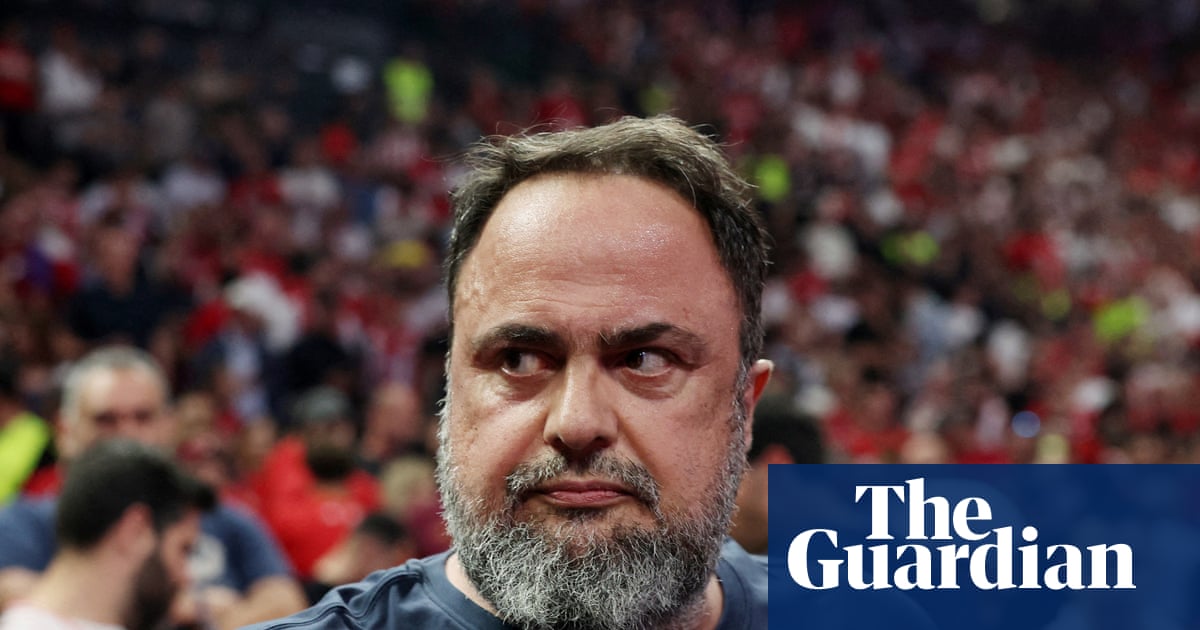
As reported by The Guardian, legal representatives for Forest owner Evangelos Marinakis lodged a defamation lawsuit against CPFC Limited and "persons unknown." The writ, filed at the High Court, stems from an offensive graphic displayed inside Selhurst Park nearly twelve months ago.
During a 1-1 draw midway through the first half of that match, Palace fans displayed a massive banner. The artwork pictured the Greek shipping magnate pointing a gun directly at the head of Forest attacker Morgan Gibbs-White.
The graphic included explicit text asserting that Marinakis was not involved in blackmail, match-fixing, drug trafficking, or corruption. Marinakis has repeatedly denied all of those allegations in previous public statements.
Football authorities already examined the incident earlier this year. The Football Association handed down a £50,000 fine to Crystal Palace in February after finding the club guilty of failing to control its spectators.
In its disciplinary ruling, the FA explicitly noted that Palace maintained a pre-existing policy to prevent illicit banners from entering the stadium. That detail proved the south London club knew the security risks beforehand yet failed to stop the display from being hoisted high in the stands.
Taking civil action against an opponent club escalates fan friction into high-stakes litigation. Marinakis is signaling that he will pursue corporate entities directly for fan conduct. It sets a combative precedent that could alter how Premier League clubs manage stadium security and supporter groups.
The Multi-Club UEFA Dossier That Triggered Boardroom Retaliation
To understand why a stadium banner ended up in front of High Court judges, one must trace the timeline back to last summer's European qualification dispute. Palace won the FA Cup, earning a direct place in the Europa League group stage. Forest finished 7th in the Premier League table, which originally placed them in the Conference League.
Forest executives refused to accept the initial qualification slate. Instead, the club drafted a detailed legal complaint to UEFA, arguing that Palace's multi-club ownership structure breached European governance rules.
UEFA officials reviewed the submission and ruled in Forest's favor. Palace suffered a devastating administrative demotion to the Conference League, while Forest stepped up into Palace's vacated Europa League slot.
What followed on the pitch was a remarkable study in sporting revenge and administrative irony. Oliver Glasner rallied Palace through the Conference League, guiding them through knockout ties all the way to lifting the trophy.
Forest used their administrative upgrade to forge a remarkable European run of their own. The East Midlands side advanced to the Europa League semi-finals before finally bowing out.
Both clubs enjoyed memorable European campaigns, but the resentment between the boardrooms only deepened. Palace supporters viewed Forest's UEFA intervention as corporate sabotage designed to strip their club of rightful fixtures.
That anger simmered among the fanbase for months. When Forest visited Selhurst Park, supporters vented their frustration through the controversial banner targeting Marinakis and Gibbs-White.
Gibbs-White himself was a delicate target for supporters to mock. The midfielder was on the verge of completing a transfer to Tottenham Hotspur last summer before Forest abruptly cancelled the deal, forcing him to remain at the City Ground.
Oliver Glasner’s Sudden Defection to the City Ground
Legal claims and UEFA complaints built the hostility, but Oliver Glasner's sudden career move set off an explosive reaction across both clubs. After delivering European silverware to Selhurst Park, the Austrian manager let his contract run down and departed.
Weeks later, Glasner stunned south London by taking the managerial seat at Nottingham Forest. The decision left Palace supporters feeling betrayed and Forest fans questioning how such a quick turnaround occurred.
Glasner cleared up the mystery this week, revealing that Marinakis personally convinced him to reverse his initial stance over a face-to-face dinner in Athens. Glasner had initially turned down Forest because the team failed to secure European football for the upcoming season.
As reported by The Guardian, Glasner explained the exact conversation that altered his career path.
“Then I had a more detailed look and there are two reasons why I changed my mind and I told him,” Glasner said. “Number one is I think there is more potential in the squad than they have shown. And number two is you, it’s your ambition, because I am very ambitious.”
Losing a manager who just delivered European silverware represents a major failure for Palace's hierarchy. Executive contract negotiations dragged on far too long, leaving the door wide open for an ambitious rival to swoop in.
Allowing Glasner to walk directly to a club currently suing you is a self-inflicted wound. Palace's executive team miscalculated both Glasner's ambition and Marinakis' relentless drive to acquire top talent.
Forest fans gain an elite strategist, but Glasner steps directly into a high-pressure environment. Managing under an aggressive owner while inheriting a squad built by previous regimes leaves zero margin for error.
Tactical Flashpoints and Pitch Fallout Ahead of October 10
Circle 10 October on the Premier League calendar. Forest head to Selhurst Park for a fixture that will test mental toughness as much as tactical organization.
The atmosphere inside Selhurst Park will be hostile. Palace fans will welcome Glasner with intense boos, while the legal drama hanging over both boardrooms will amplify every tackle and decision on the pitch.
Tactically, Glasner faces the challenge of adapting his signature system to Forest's personnel. At Palace, his 3-4-2-1 setup relied on intense central pressing, aggressive wing-backs, and fast vertical counters.
How Glasner utilizes Gibbs-White will define Forest's attacking structure. Rather than keeping him wide, Glasner will likely deploy Gibbs-White in the right half-space, letting him float behind the opposition midfield to create numerical overloads.
Palace must avoid getting caught in emotional traps. If their defenders charge out of line to deliver heavy hits, Glasner's transition mechanics will exploit the vacated spaces behind them.
Palace's new tactical setup must exploit Forest's visible flaws. Glasner's aggressive wing-backs often leave massive spaces down the flanks, creating opportunities for fast wide runners to launch direct counter-attacks.
If Palace can win second balls in midfield, they can hit rapid vertical passes into the channels behind Forest's three-man backline. Isolating Forest's outer center-backs in 2v2 situations will test their defensive discipline under pressure.
Forest also carry psychological vulnerabilities into this grudge match. Constant legal disputes and owner controversies can distract players during key moments of a tense match.
Key match battles will shape the outcome on the pitch:
- Gibbs-White operating in pockets behind Palace's midfield line to initiate quick counter-attacks.
- Palace wide players attacking the space left vacant behind Forest's advancing wing-backs.
- Central midfield duels to control second balls and establish tempo in a hostile environment.
This match has evolved far beyond standard league points. It combines executive anger, European disqualification history, and a high-profile managerial defection into one powder keg.
Glasner understands Selhurst Park better than anyone standing in the away technical area. He knows precisely which Palace defenders struggle under pressure when pressed on their weaker foot.
Expect a fierce, physical contest with early yellow cards as Palace attempt to assert physical dominance. Forest's tactical composure should eventually prevail as Glasner's counter-pressing triggers take hold in the second half.
A hard-fought 2-1 victory for Forest seems the most likely result, demonstrating that tactical discipline can overcome pure emotion on the pitch.