Every autumn, like clockwork, the Spanish transfer rumor machine starts coughing up smoke. Barcelona need cash to register their mascot, Real Madrid are hoarding teenagers like Pokémon cards, and Premier League clubs get linked with every disgruntled superstar south of the Pyrenees. For the past three months, Ronald Araujo was the designated protagonist in this circus. Reports out of Catalonia insistently claimed Liverpool were plotting a bank-breaking bid to snatch the Uruguayan center-back and revamp their defensive spine.
Then Liverpool traveled to Selhurst Park on a miserable Saturday afternoon. They scrapped, they bled, and they escaped with three points. And according to Spanish outlets, that rainy afternoon in south London was the exact moment Liverpool decided to pull the plug on the entire Araujo operation.
Whoever made that call inside Anfield deserves a promotion and a pint. Walking away from Ronald Araujo is the cleanest piece of business Liverpool have pulled off all year.
The Selhurst Park Reality Check
Selhurst Park is where delicate football theories go to die. It is loud, cramped, hostile, and smells faintly of wet grass and regret. If your backline has a soft underbelly, Palace will find it inside ten minutes and rip it wide open.
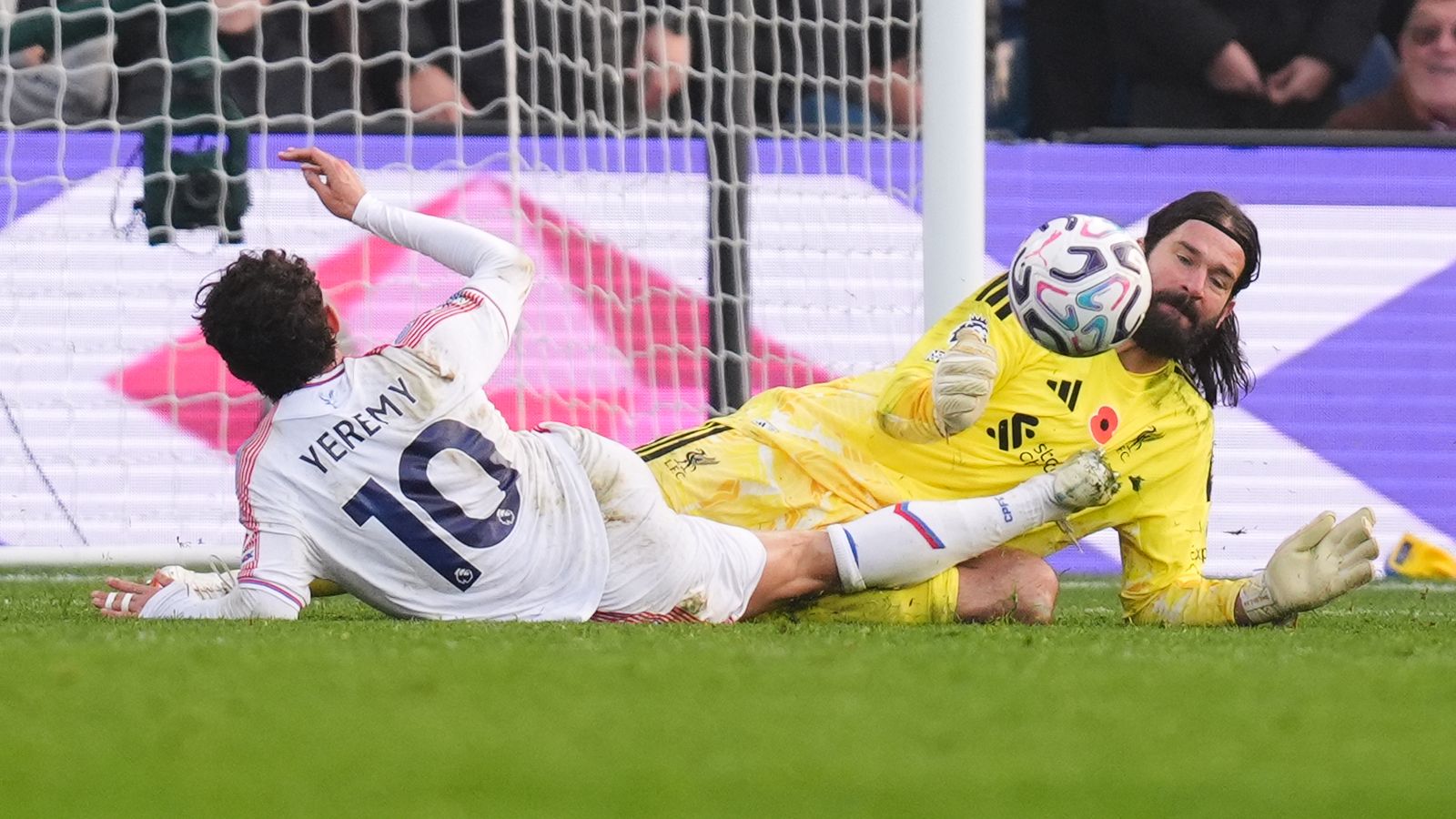
Liverpool did not look pretty against Palace, but they did not need to. They weathered aerial bombs, swatted away physical bullying, and ground out a brutal 1-0 win on sheer defensive willpower.
Virgil van Dijk and Ibrahima Konate spent the afternoon doing the dirty work that never makes the highlight reels. They headed away clearances, blocked shots with their ribs, and suffocated Palace in the final third.
When you watch a defensive pairing operate with that level of telepathic authority, the idea of panicking in the transfer market sounds absurd. Arne Slot’s system does not demand superhero recovery sprints every five minutes because his structure prevents the fire from starting in the first place.
Dropping superstar money on a marquee defender makes sense if your house is burning down. Liverpool’s defense, however, is currently the stingiest unit in the Premier League. The Selhurst Park grinder proved that Liverpool’s back four does not need a savior; it just needs everyone to stay in one piece.

The Hospital Ward Gamble and the Catalan Price Tag
Let’s address the Ronald Araujo myth before the video game enthusiasts start shouting about his sprint speed. At his absolute physical peak, the man is an athletic marvel. He possesses track-star acceleration, abnormal upper-body power, and the kind of aggressive tackling style that makes opposing wingers contemplate retirement.
The problem is that you only get to watch that peak for about twenty games a season.
Araujo's medical chart reads like a textbook from an orthopedic surgery conference. Hamstring strains, knee issues, torn thigh muscles, and extended rehabilitation stints have defined his last two years in Spain.
Barcelona reportedly slapped a valuation of €80 million on a player who missed more than 25 matches across all competitions due to recurring muscle damage. That is not just risky; it borders on financial negligence.
Liverpool already know what it feels like to nurse an elite thoroughbred through an English winter. Ibrahima Konate is world-class when healthy, but his calves and hamstrings require constant rotation and careful minutes management. Pairing Konate with Araujo would not build a fortress; it would build the world’s most expensive sports science experiment.
When you pay elite money in the Premier League, you are paying for availability as much as ability. Paying top-tier wages to a defender who might spend December in a compression sleeve makes zero sense for a club that prides itself on analytical precision.
The Red Mist Problem Under European Lights
Physical durability is only half the argument against this move. The other half is temperament, and that is where the Araujo tape gets genuinely alarming.
Watch his performance in Barcelona’s infamous Champions League collapse against Paris Saint-Germain last spring. Barcelona had the tie under complete control, sitting on a two-goal aggregate lead on their home pitch.
Araujo then panicked, hacked down Bradley Barcola outside the penalty area inside thirty minutes, and caught a straight red card. That single moment of unprovoked recklessness burned Barcelona’s European campaign to the ground.
Top-level European defending is no longer about heroic last-ditch slide tackles and violent aerial battles. It is about patience, angles, and emotional discipline.
Arne Slot is an obsessive tactician who preaches control above all else. His Liverpool team suffocates opponents by denying them transition moments and refusing to bite on reckless challenges.
Van Dijk is the undisputed master of this philosophy. He shepherds attackers into blind alleys without even making physical contact.
Araujo plays like a wrecking ball with a caffeine addiction. In La Liga, where defenders can occasionally bully smaller forwards, that aggression looks heroic. In the Premier League, against street-smart referees and ruthless counter-attacking wingers, that brand of chaotic desperation turns into penalty kicks and early baths.
Paying the King Instead of Buying Catalan Hype
The most compelling reason to kill this transfer rumor is staring everyone in the face: Virgil van Dijk’s contractual status.
Entering the final stretch of your captain’s deal while flirting with an 80-million-euro replacement from abroad is dreadful squad politics. Van Dijk is not merely an employee; he is the spiritual anchor of Liverpool’s entire locker room.
Even now, playing with slightly less straight-line pace than he had five years ago, Van Dijk reads the game faster than anyone else in Europe. He commands the defensive line, directs the midfield press, and organizes set-piece defending with a single shout.
If Liverpool have a mountain of cash sitting in Richard Hughes’ transfer vault, every single penny of it belongs in Van Dijk’s extension package. Siphoning those resources away to accommodate Barcelona’s desperate hunt for liquidity would have poisoned the dressing room culture.
Barcelona need money because their financial mismanagement has been a running joke across European football for half a decade. They wanted Liverpool to bail them out, take on their medical risks, and pay them a king's ransom for the privilege.
Michael Edwards and Richard Hughes made their reputations by exploiting desperate sellers, not volunteering as their marks. Walking away from Araujo shows that the ruthless, data-driven Liverpool transfer machine is back to doing what it does best: saying no to hype.
Modern football discourse is obsessed with shiny new toys. Fans spend every international break scrolling through transfer threads, convincing themselves that an imported name will magically fix non-existent problems.
The performance at Selhurst Park was a wake-up call for anyone seduced by Spanish tabloid gossip. Winning football matches in the Premier League is an ugly, grueling business.
It is won on cold Saturday lunchtimes when your existing defenders clear forty crosses and scrap for second balls. Liverpool do not need Ronald Araujo, and they never did.
They need Van Dijk signed to a fresh contract, Konate wrapped in bubble wrap during cup weeks, and Jarell Quansah continuing to develop into a reliable Premier League deputy.
Leaving Araujo in Catalonia to sort out his own fitness issues is not a missed opportunity. It is a masterclass in knowing who you are and refusing to buy someone else's headache.
Read Next
- Barcelona chasing Levi Colwill for £75m makes zero sense for anyone involved
- Liverpool selling Rio Ngumoha to Bayern Munich would be pure madness
- Carrick's chaotic Man United cannot survive Anfield
- Boubacar Kamara is back fit and Europe's biggest clubs are already circling
- 🇺🇾 Uruguay World Cup 2026 — La Celeste Hub