
Jermain Defoe's exit proves Woking was never going to work

The mismatch at the Kingfield Stadium
Jermain Defoe stepping down as Woking manager after a mere 116 days is not a surprise to anyone who tracks the intersection of marquee names and lower-league operational realities. The club described the tenure as an impossible situation, a phrase that carries the weight of a quiet, fractured transition behind the scenes. When a former England striker takes a role in the National League, the gap between expectations and the actual mechanisms of the squad is often wider than the pedigree suggests.
The move, documented thoroughly by Sky Sports, highlights the perils of chasing headlines over system continuity. Woking directors are now left to navigate the wreckage of a project that barely cleared the opening stretch of the season. It is rare to see a public admission of failure so early, but the arithmetic of Defoe's stay leaves little room for alternative interpretations.
Tactical drift without a blueprint
Management in the fifth tier requires a granular understanding of squad limitations that top-flight playing experience rarely provides. You cannot replicate the tactical discipline of a Premier League academy when the training ground resources or player scouting networks are constrained by finite budgets. Without a clear tactical identity, a team often drifts, resulting in the erratic form that surely accelerated Defoe's departure.
The club's hierarchy likely banked on the attraction of a high-profile name to generate commercial interest. Instead, they inherited a volatile tenure marked by short-term decision-making. 116 days is barely enough time to implement a set-piece routine, let alone overhaul a club's footballing culture. When the results failed to materialize on the pitch, the professional detachment between the board and the manager became inevitable.
The danger of celebrity management
Football history is littered with star players who struggled once they swapped the boots for the clipboard. The specific pressures on a local club differ from those at the elite level where staff layers protect the head coach. At Woking, the buck stops with the manager in front of a fanbase that demands immediate, tangible progress.
The failure here points toward a disconnect in communication. If a manager finds a role impossible to sustain in under four months, the vetting process during the hiring phase was fundamentally flawed. It is a harsh lesson for a team like Woking, which now faces the task of rebuilding while the memory of this unsuccessful experiment lingers in the dressing room.
Whether this was a miscalculation by the board or a lack of administrative alignment is secondary to the outcome. When professional reputations and club standing collide at the non-league level, the casualty is invariably the club's stability. Woking now sits at a crossroads, needing a pragmatic approach to replace the high-concept failure of the last three months. They need a coach who understands the mud-and-grit reality of this division, rather than a name who views the position as a stepping stone or a curiosity.
Inverting The Pyramid: The History of Soccer Tactics
A deep dive into the evolution of football tactics and formations.
Frequently Asked Questions
How long was Jermain Defoe the manager of Woking?
Why did Jermain Defoe leave his managerial role at Woking?
What issues led to Woking's failure under Jermain Defoe?
Where does Woking play their home matches?
What kind of manager does Woking need after Defoe's departure?
More Coverage

Jermain Defoe's Woking exit takes a bitter legal turn
2 months, 3 weeks ago
Jermain Defoe ghosting Woking is the most non-league thing ever
2 months, 3 weeks ago
Jermain Defoe's abrupt Woking exit is a managerial train wreck
2 months, 3 weeks ago
Jermain Defoe’s Woking disaster was a train wreck waiting to happen
2 months, 3 weeks ago
Jermain Defoe's exit from Woking proves the non-league transition was flawed
2 months, 3 weeks ago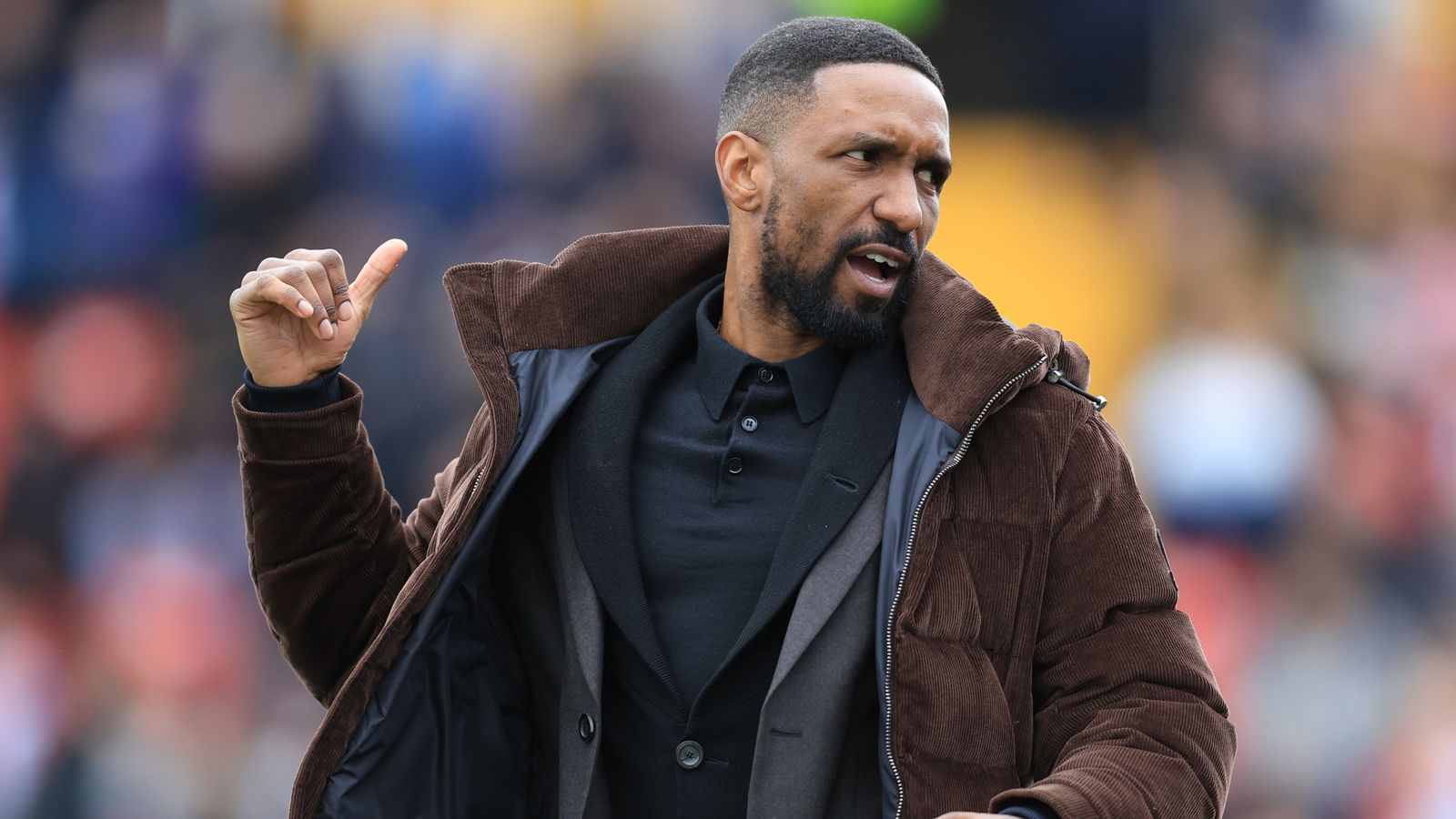
Jermain Defoe ghosting Woking is non-league circus at its finest
2 months, 3 weeks agoMore Analysis
Jermain Defoe's Woking exit takes a bitter legal turn
2 months, 3 weeks ago
Jermain Defoe ghosting Woking is the most non-league thing ever
2 months, 3 weeks ago
Jermain Defoe's abrupt Woking exit is a managerial train wreck
2 months, 3 weeks ago
Jermain Defoe’s Woking disaster was a train wreck waiting to happen
2 months, 3 weeks ago
Jermain Defoe's exit from Woking proves the non-league transition was flawed
2 months, 3 weeks ago