Press Conferences Cut Short and Volatile Stakes in Backa Topola
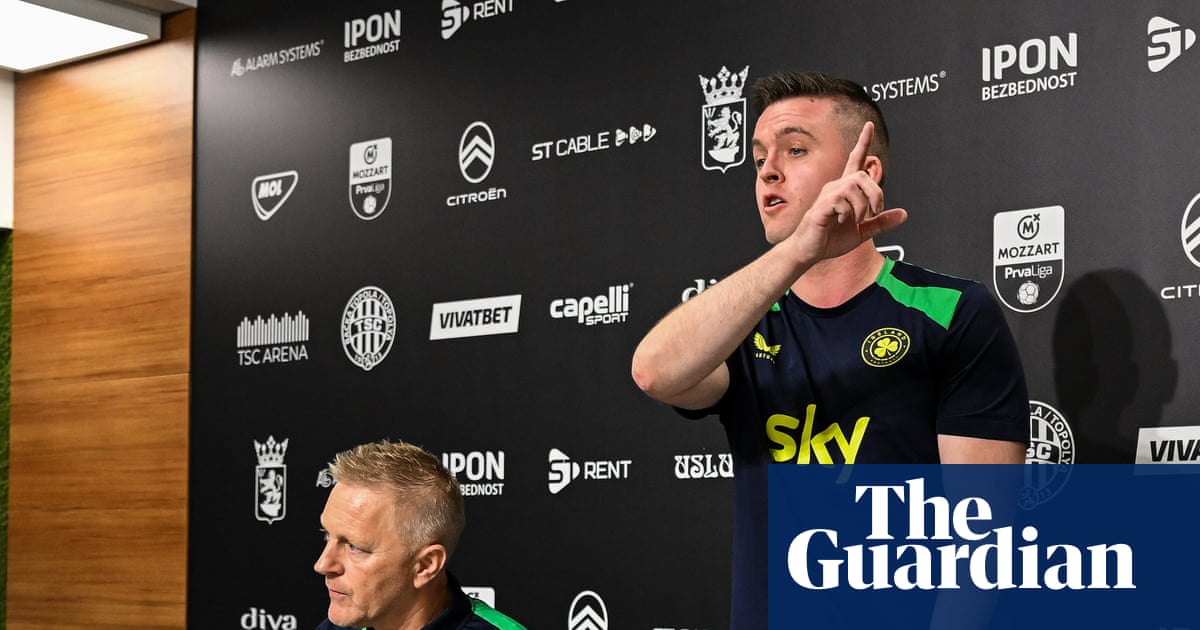
Press conferences rarely set tactical boundaries, but Saturday in Serbia was different. When Heimir Hallgrimsson sat down in Backa Topola on the eve of Ireland's Nations League return leg, football quickly left the room.
As The Guardian reported, the FAI cut short the press briefing after hostile exchanges between Irish officials and Israeli journalists. Questions quickly veered from mid-block defensive triggers to geopolitical accusations.
Reporters pressed Hallgrimsson on recent international events and raised an alleged incident on a Flydubai flight. An Irish press officer intervened immediately, stating the team would only address football matters.
Tension peaked when an Israeli reporter alleged that Irish players used racial slurs during Tuesday's match. The FAI official repeatedly declared "that is completely untrue" before grabbing the microphone, prompting the journalist to shout, "Don't touch me!"
This volatile exchange followed comments from Israeli foreign minister Gideon Saar, who accused Dublin of being on "the wrong side of history." The political backdrop has completely enveloped what should be a straightforward sporting contest.
The Football Association of Ireland previously refused to host this return fixture on home soil due to security concerns. Moving the match to neutral Serbia was intended to lower the temperature, yet Saturday showed that friction remains unavoidable.
For Hallgrimsson, the objective has shifted from tactical perfection to pure group survival. Football matches are won on spatial control, but Sunday will test emotional restraint above all else.
From Budapest to Serbia: How Ireland Controlled the First Leg
Lost amid the political noise is the reality of Tuesday's 3-0 victory in Hungary. On the pitch, Ireland delivered their most disciplined tactical performance in recent memory following their 3-0 first-leg win.
Before kick-off in Budapest, the Irish squad made their stance clear. Players wore armbands and lowered their heads during the Israeli national anthem, foregoing traditional captain handshakes.
Once the whistle blew, Hallgrimsson's tactical blueprint executed cleanly. Ireland settled into a compact 4-4-2 shape, surrendering lower-value possession while locking off central passing lanes.
Israel dominated early possession stats, controlling 61% of the ball in the opening half-hour. Yet that possession proved entirely hollow as Ireland restricted them to speculative efforts from distance.
Ireland's opening goal stemmed from a textbook pressing trigger. When Israel's left-back received a bouncing pass with his back to goal, Ireland's right winger jumped early to cut off the lateral exit.
The resulting turnover allowed Ireland to break with four players attacking three defenders. Two swift forward passes dissected the backline, establishing an early momentum that Israel never managed to disrupt.
By halftime, Ireland had hit the net twice despite completing 80 fewer passes than their opponent. Efficiency in transition defined the match, masking structural flaws that could resurface on Sunday.
Brother Coventry and the Midfield Mechanics of Composure
Hallgrimsson recognised that emotional instability destroys tactical discipline. To combat the mounting pressure surrounding the squad, the manager instituted a new pre-match routine.
Before stepping onto the pitch, players and backroom staff gather in a tight huddle for a moment of quiet focus. Midfielder Conor Coventry leads the ritual, earning a unique nickname from his manager.
blockquote>“Conor Coventry has taken that part, so he is now called Brother Coventry in the squad. But it’s really good when you go into a high-intensity and big-pressure game like we’ve been doing, to start the game with cool heads.”Coventry's role extends far beyond pre-match prayers. On the pitch, the midfielder serves as Ireland's primary defensive regulator, sliding laterally to protect the central channels.
When opponents overload the half-spaces, Coventry's positioning dictates whether Ireland step up or drop deep. His ability to foul smartly without taking yellow cards keeps Ireland's mid-block intact.
However, Ireland's mid-block is not without glaring vulnerabilities. During the final 20 minutes in Hungary, the midfield line dropped far too deep, leaving massive gaps between the double pivot and forward line.
Against a more incisive opponent, surrendering 25 yards of central turf would invite continuous danger. Israel carved out two clear-cut chances late in Tuesday's match specifically through those unmonitored central pockets.
If Brother Coventry and his midfield partners lose their positional discipline in Serbia, a three-goal cushion can evaporate rapidly under sustained pressure.
Tactical Blueprint: Exploiting Israel's Aggressive High Line
Israel enter Sunday's return leg facing a severe mathematical deficit. Trailing by three goals, their tactical approach in Backa Topola must lean heavily toward high-risk aggression.
Expect Israel to push both full-backs high into the attacking third from the opening minute. This lateral width is designed to pin Ireland's wingers and stretch their compact central block.
Yet this aggressive shape leaves Israel exposed to direct vertical counter-attacks. In Hungary, Israel's center-backs consistently failed to adjust their body angles when turning toward their own net.
Ireland must target the space behind Israel's right-back. When that defender pushes into the attacking line, Ireland's left winger should immediately occupy the vacant zone.
Direct diagonal balls from deep will bypass Israel's counter-press entirely. If Ireland complete two accurate long switches early, Israel will be forced to pull their full-backs deeper.
Pressing triggers will also decide central control. Ireland should avoid pressing Israel's central defenders when they hold static possession in their own half.
Instead, the trigger must be the pass into the central defensive midfielder. The moment that pivot player turns into pressure, Ireland's forward duo must collapse inward to force a turnover.
Executing this trap requires total synchronization across all three lines. A single step late by a wide midfielder allows Israel to break into dangerous attacking space.
Management Failure and the PR Circus around Ireland
While Hallgrimsson insists his squad can isolate football from politics, the association's media handling on Saturday raised valid questions. Abruptly ending a press conference rarely de-escalates tension.
By cutting off microphones and engaging in physical standoffs over recording equipment, the FAI amplified the spectacle after Saturday's press conference was abruptly ended. A sharper communications strategy would have addressed questions calmly before steering back to sports.
Instead, the drama in Backa Topola guarantees that every foul and tackle on Sunday will be micro-analyzed through a non-sporting lens. Players are human; external noise inevitably seeps into decision-making.
When referee decisions go against Ireland in Serbia, maintaining emotional balance will prove far harder than it was in Budapest. Hot tempers lead to rash tackles, yellow cards, and tactical disorganization.
Hallgrimsson's goal is straightforward yet daunting. As he noted during the pre-match discussions:
blockquote>“Surviving this, coming out of it together as one would be a massive win for me. That is coming from my heart. All the challenges that this team has gone through, all the criticism. Just surviving as a group after this game, that would be a big win for me.”Survival, however, cannot mean passive defending for 90 minutes. Sitting back in an empty neutral stadium invites unnecessary risk against a desperate opponent with nothing left to lose.
Match Prediction: A Tense Battle in Neutral Serbia
Sunday's fixture in Backa Topola will not be pretty. Neutral venues with empty stands create an uncomfortable, eerie dynamic where tactical communication echoes off empty seats.
Israel will throw bodies forward early, creating an uncomfortable opening 20 minutes for Ireland's back four. Expect early crosses and aggressive set-piece delivery as Israel try to spark panic.
Ireland's defensive structure will bend under this initial surge, likely conceding a goal mid-way through the first half when failing to clear a secondary ball from a corner.
However, as Israel commit more players forward in search of a second goal, space will open up dramatically on the transition. Ireland's wingers will exploit the high defensive line on the break.
A second-half equalizer off a rapid counter-attack will kill Israel's momentum and secure Ireland's aggregate advantage. The emotional intensity will spill over late, resulting in multiple bookings.
My call: Israel win 2-1 on the night, but Ireland advance on aggregate. Hallgrimsson gets his survival, even if the path to victory remains messy and fraught with tension.
Read Next
- Ireland cut short press conference in Serbia as tensions with Israel boil over
- Ireland's wild international week is spinning completely out of control
- Northern Ireland bullied Hungary in Belfast, but missed chances cost them
- Thirty years after Euro 96, Czech football faces a grim reality check
- 🇸🇷 Serbia World Cup 2026 — Eagles Hub