A Collapse in Backa Topola
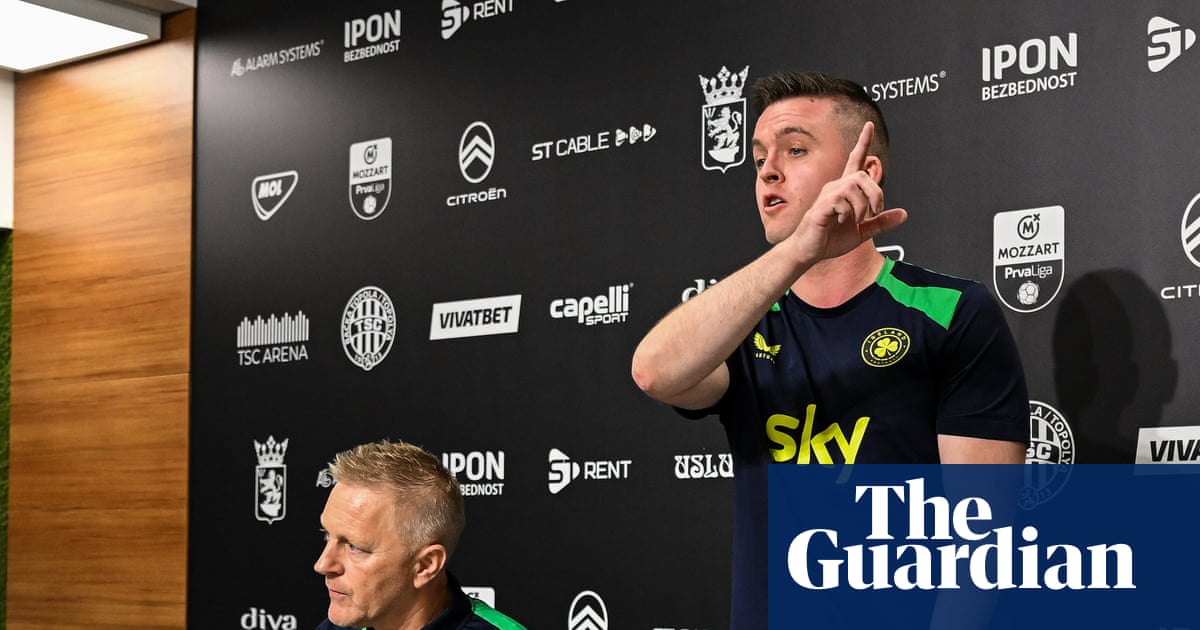
Saturday afternoon in Serbia was supposed to be about tactical adjustments and fixture logistics ahead of a European international match. Instead, Heimir Hallgrimsson sat inside a media room in Backa Topola and watched his pre-match duties dissolve into pure fury. Within minutes, Football Association of Ireland officials moved in, grabbed microphones, and shut down the session entirely.
The Republic of Ireland face Israel on Sunday night in Backa Topola for their second Nations League encounter in five days. As reported by The Guardian, the match is being played on neutral territory in Serbia because the FAI refused to host the return leg in Dublin due to security reasons. Moving the game to Eastern Europe did not insulate the squad from the geopolitical conflict surrounding it.
Tuesday's opening match in Hungary provided a stark preview of this international window. Ireland secured a 3-0 victory on the scoreboard, but the match itself was defined by silent protests and tension. The Irish squad had previously held a team vote to determine whether they would even take the pitch, deciding to fulfill the fixture despite deep internal unease over the war in Gaza.
Before kick-off on Tuesday, Irish players stood with heads lowered while the Israeli national anthem played through the stadium speakers. They wore armbands throughout the 90 minutes. When the match officials gathered the teams at center circle, the traditional pre-game handshakes between team captains did not happen.
If FAI leadership believed moving Sunday's return fixture to Serbia would quiet the room, Saturday's media appearance shattered that illusion. The press conference did not fail because of footballing disagreements. It collapsed because the real world broke through the artificial barrier sports administrators try to maintain.
Accusations, Microphones, and Shouted Denials
The atmosphere in the room shifted instantly when Israeli journalists took the floor. Questions about midfield shape and team selection were discarded. Instead, reporters pressed Hallgrimsson on recent events in the Middle East and accused the Irish squad of supporting violence.
One journalist directly confronted the Irish head coach regarding an incident on a Flydubai flight traveling from the UAE to Israel earlier in the week. The reporter demanded to know what Hallgrimsson had to say about people whose ideology was based on murder, citing an attempt that put 170 Israeli passengers at risk, including 27 innocent children.
An Irish press officer interjected before Hallgrimsson could process the question. The official stated clearly that political queries would not be addressed and insisted the room focus exclusively on football questions. That intervention did nothing to calm the reporters gathered inside the facility.
A second Israeli journalist immediately fired back with a severe charge against the Irish players. The reporter alleged that members of the Irish squad had hurled racial slurs at Israeli players during Tuesday's match in Hungary, specifically accusing them of calling opponents monkeys on the field.
The room erupted before the question was finished. An FAI official repeatedly interjected, shouting that the accusation was completely untrue. The official stepped forward and forcibly removed the microphone from the reporter's hands while the press conference descended into chaos.
"Don't touch me, don't touch me," the journalist shouted as the microphone was taken away. Seeing the situation spiral beyond control, the Irish delegation ended the press conference abruptly and escorted Hallgrimsson out of the room. The entire exchange lasted only a few frantic minutes.
The fallout was immediate and harsh. Israeli Foreign Minister Gideon Saar condemned the Irish squad's conduct and posture, publicly declaring that Dublin was on the wrong side of history. Political pressure on both federations has intensified with every passing hour.
The incident highlighted the absurdity of the FAI's media strategy. Trying to enforce a football-only rule when a nation's foreign minister is issuing diplomatic rebukes is wishful thinking. You cannot host a high-stakes international match under these conditions and expect a standard pre-match conversation.
Inside Ireland's Squad and the "Brother Coventry" Ritual
Lost in the diplomatic crossfire is the human reality facing the Irish players. Hallgrimsson was open about the emotional weight carrying over to his dressing room. He made no attempt to pretend his squad is operating in a bubble.
"Surviving this, coming out of it together as one would be a massive win for me. That is coming from my heart. All the challenges that this team has gone through, all the criticism. Just surviving as a group after this game, that would be a big win for me and for this group, for the association."
The manager recognized that public sentiment in Ireland directly influences his players. Passionate debates at home create an intense environment for young athletes trying to perform on an international stage. When external noise reaches this volume, tactical instruction often takes a backseat to psychological management.
To combat the growing anxiety, Hallgrimsson and his staff introduced a new pre-match routine ahead of recent fixtures. Before stepping onto the turf, the entire squad, coaching staff, and support team gather in a tight huddle to perform a quiet prayer designed to settle their nerves.
Midfielder Conor Coventry has taken ownership of this pre-kickoff ritual. Hallgrimsson revealed that Coventry's spiritual leadership has earned him a new nickname among his teammates, who now call him "Brother Coventry" in the locker room.
"One change that we’ve done in the last games is before we go on to the pitch, we do a little prayer and a huddle with the players and all the staff, just to cool our heads before we go on to the pitch. Conor Coventry has taken that part, so he is now called Brother Coventry in the squad. But it's really good when you go into a high-intensity and big-pressure game like we've been doing, to start the game with cool heads."
Relying on a midfielder to anchor team sanity is a unique coping mechanism. Yet it reveals how desperate the coaching staff is to establish emotional stability before whistle blow. When 90 minutes of football are preceded by international protests and security concerns, a moment of collective silence might be the only grounding tool available.
Tactical Reality and the Impossible Mask of Sport
When the referee blows the whistle on Sunday night in Serbia, footballing logistics must finally take over. Ireland hold a comfortable advantage following Tuesday's three-goal victory in Hungary. Yet managing a two-game window under severe psychological strain presents unique tactical hazards.
Hallgrimsson's setup relies heavily on structure, discipline, and emotional control. On Tuesday, Ireland maintained a compact defensive posture, absorbing periods of opposition possession before attacking quickly into space. That game plan breaks down the moment players lose focus or allow emotion to dictate their challenges.
The physical nature of the first leg showed how quickly tempers can flare. With Israel eager to avenge their previous defeat, Sunday's rematch in Backa Topola will test Ireland's discipline from the opening minute. Early fouls or verbal exchanges could rapidly escalate under the watchful eye of European match officials.
From a football perspective, Ireland's biggest vulnerability remains their tendency to drop deep when under sustained pressure. Sinking into their own penalty box against an opponent with nothing to lose is a dangerous strategy. Hallgrimsson needs his midfield unit, led by Coventry, to push the line higher and contest second balls in the central third.
The decision by the FAI to refuse hosting this match in Dublin remains a major point of discussion. While security concerns were cited as the primary reason, avoiding the fixture at home deprived Irish supporters of a home match while doing nothing to eliminate the controversy. As The Guardian's report on the press conference meltdown demonstrated, moving a match to Serbia simply creates a different venue for the same conflict.
Hallgrimsson is right about one thing: simply getting through this international window with his squad intact will feel like a victory. But football governing bodies cannot continue to pretend that sports exist in an isolated vacuum. When pre-match media events collapse into screaming matches and mic-snatching, the illusion of separation is completely gone.
On Sunday night in Backa Topola, twenty-two players will step onto the pitch to play 90 minutes of Nations League football. Brother Coventry will lead his pre-match huddle, the captains will likely skip the pre-game handshake once more, and the whistle will blow. But no matter the final score on the board, this week in Hungary and Serbia has proven that some matches cannot be contained by the touchlines.
Read Next
- Ireland's wild international week is spinning completely out of control
- Zidane's France debut exposed structural issues talent cannot fix
- Jurgen Klopp called out AfD idiocy, but Germany's pitch problems are real
- Scotland's attacking promise died in the 11th minute against Switzerland
- 🇸🇷 Serbia World Cup 2026 — Eagles Hub
- 🏆 UEFA Nations League Final Four 2026 Hub — June 4-8, Lisbon