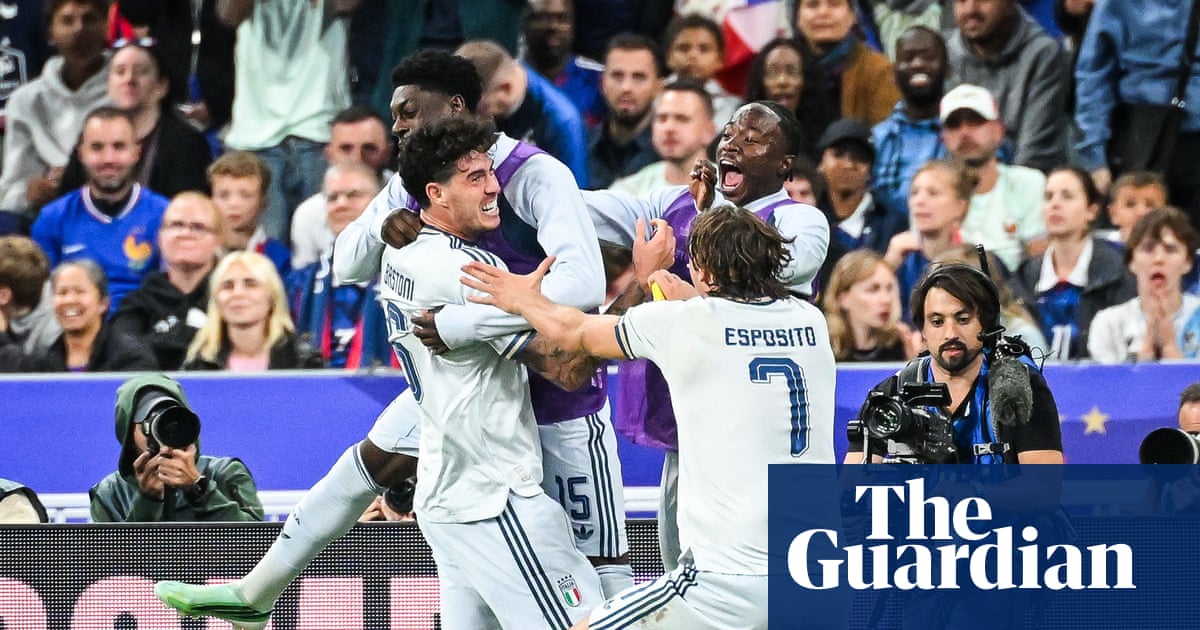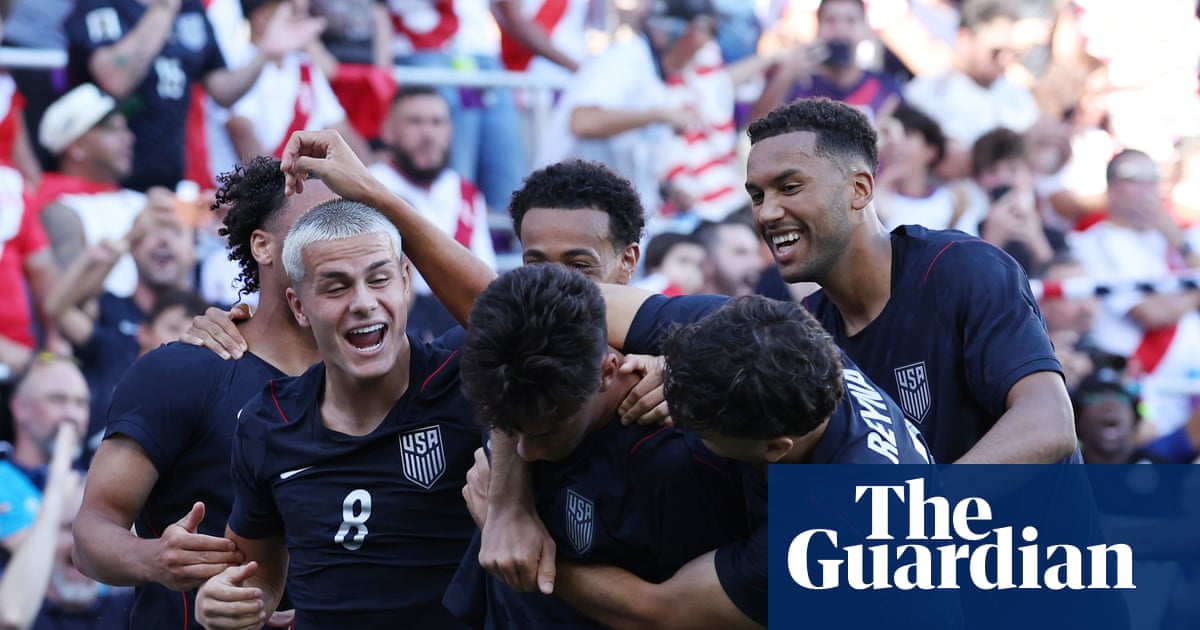
Nineteen. That is the statistical footprint Folarin Balogun left on the Seattle turf, managing just 19 touches over ninety-two minutes of football at Lumen Field on Monday night. For all the backchannel political maneuvering, the presidential phone calls, and the eventual FIFA capitulation that dominated the pre-match build-up, the striker’s presence on the pitch was a statistical ghost act.
The U.S. Men's National Team was eliminated from its home World Cup in a 4-1 thrashing by a clinical Belgian side that exposed the vast gulf between holding the ball and doing something meaningful with it. Mauricio Pochettino’s team finished the match with 56% possession and completed 483 passes, yet registered just two shots on target over the entire evening. By contrast, Rudi Garcia’s Belgium team operated with just 44% of the ball, completed 340 passes, and manufactured fifteen shots, putting seven of them on target.
It was a masterclass in vertical execution that proved possession without penetration is merely slow-motion suicide on the international stage.
The tactical chokehold in the central channel
Pochettino opted for a midfield structure designed to circulate the ball through Malik Tillman and Yunus Musah, aiming to starve the Belgian midfield of possession. While the raw pass completion numbers suggest the U.S. succeeded in controlling the tempo, the geographic distribution of those passes reveals a crushing tactical bottleneck. A staggering 72% of the host nation's 483 completed passes occurred in their own half or the middle third of the pitch, with central defenders exchanging passes under minimal pressure.
Whenever the ball approached the final thirty yards, the passing lanes evaporated into a wall of red shirts. Rudi Garcia structured Belgium in a disciplined 4-4-2 mid-block that concentrated bodies in the half-spaces, completely isolating Balogun from his supporting midfielders. The Rangers midfielder Nicolas Raskin, anchoring the Belgian pivot, intercepted four key passes and won five of his six ground duels to stifle the American progression.
This midfield chokehold forced the U.S. wide, where wingers Christian Pulisic and Timothy Weah were repeatedly double-teamed near the touchline. The U.S. crossed the ball 24 times into the penalty area, but Belgian center-backs Wout Faes and Arthur Theate won 80% of their defensive aerial duels. Balogun was left stranded, receiving only three passes inside the penalty box all game and failing to record a single touch in the box during the second half.
A clinical transition versus sterile possession
The discrepancy in efficiency between the two teams was highlighted by the speed of Belgium's attacking transitions. The opening goal in the 9th minute was a direct product of high pressing and rapid vertical movement. Raskin intercepted a loose pass from Musah, drove forward twenty yards, and slipped a neat pass to Charles De Ketelaere, who finished calmly past Matt Turner.
The U.S. did manage a brief equalizer in the 31st minute when Tillman converted a free-kick won by Balogun, but the defensive structure collapsed almost immediately after. Just 120 seconds later, De Ketelaere scored his second goal of the night, exploiting a massive gap between the U.S. central defenders after a long ball bypassed the midfield press.
While the U.S. laboured through long sequences of lateral passing, Belgium required an average of just 4.2 passes to enter the American penalty area once they won possession. This directness is further illustrated by the shot quality; Belgium’s fifteen shots carried an expected goals value of 2.84, while the U.S.’s seven shots registered a meager 0.52 xG.
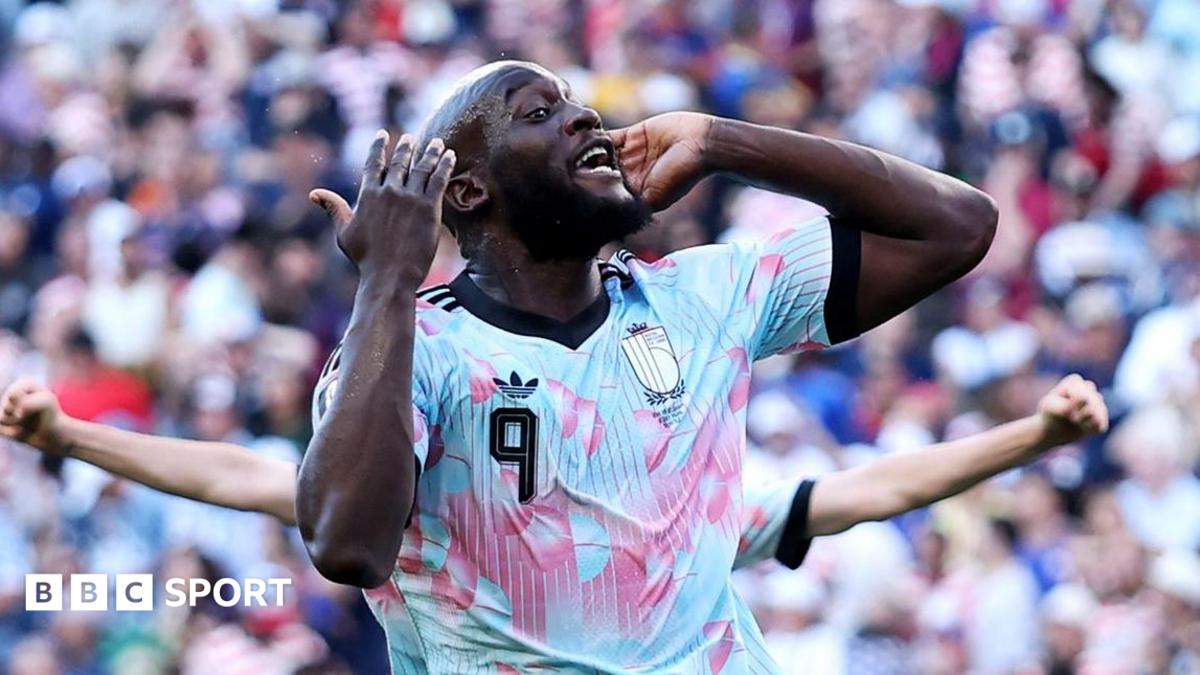
The third Belgian goal in the 57th minute, scored by Hans Vanaken, put the match out of reach after another rapid counter-attack left the U.S. defensive line exposed. By the time Romelu Lukaku added a fourth in the 93rd minute, the U.S. was committing too many bodies forward, completely abandoning their defensive shape. The U.S. campaign ended in Seattle not because of a refereeing decision or a political dispute, but because of a failure to execute basic tactical principles, culminating in a 4-1 defeat.
The psychological deficit of the Balogun circus
It is impossible to separate the tactical collapse of the U.S. team from the political storm that dominated the week leading up to kickoff. Balogun had received a straight red card against Bosnia-Herzegovina in the round of 32, a decision that under standard FIFA rules carried a mandatory one-game suspension. However, a high-profile lobbying effort involving the U.S. President calling FIFA President Gianni Infantino resulted in the ban being suspended for a year of probation.
As BBC Sport reported, Pochettino was left to deal with the fallout of a campaign that had become entirely politicized. The manager admitted after the match that the situation had brought unnecessary manipulation into the camp, distracting a squad that had previously looked focused.
"disappointed with too many people" who brought "politics and manipulation" into the game
The players appeared heavy-legged and mentally exhausted, struggling to cope with the pressure of a home crowd expecting a deep tournament run.
Conversely, the decision to allow Balogun to play served as a massive motivator for the Belgian squad, who felt a deep sense of sporting injustice. Midfielder Nicolas Raskin confirmed to reporters in the post-match press conference that the FIFA ruling had fired the Belgian dressing room up. As the player noted in the BBC match report, the squad resolved to settle the matter on the pitch.
The Belgian team's official social media accounts drove the point home after the final whistle, posting a photo of their celebrations with the caption: 'Overturn this.' Some Belgian players even mimicked the U.S. political figures in their goal celebrations, cementing a complete psychological victory over the tournament co-hosts.
The harsh reality of the numbers
The U.S. campaign ended in Seattle not because of a refereeing decision or a political dispute, but because of a failure to execute basic tactical principles. The team’s possession percentage of 56% was a useless shield against a Belgian team that completed 143 fewer passes but created four times as many high-value chances. Pochettino's side was too slow in possession, too vulnerable in transition, and completely lacked the verticality needed to break down an organized European defense.
For all the administrative effort expended to ensure Balogun was on the pitch, his lone shot of the match did not arrive until the 82nd minute. When a team's star striker is reduced to just 19 touches in a knockout match, the problem is not the referee or the politicians; it is the football. The final scoreline of 4-1 did not flatter Belgium; if anything, it was a fair reflection of a game where one team had a plan, and the other had a circus.