
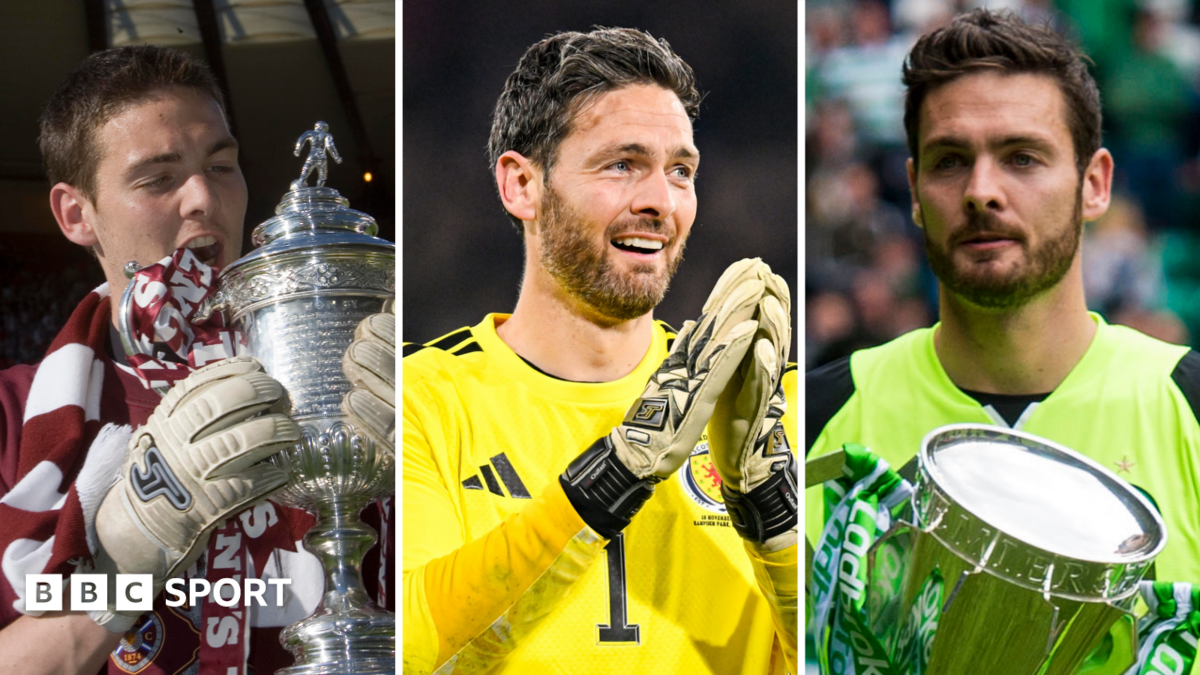
The quiet exit of a generational shot-stopper
Craig Gordon has finally hung up his gloves, ending a professional career that spanned two and a half decades. The news represents more than just a personnel change for the national team and his club; it forces a realization that a specific kind of reliability is leaving the game.
When looking back at his tape, the standout feature was never raw athleticism. It was his elite spatial awareness. Gordon operated with an internal compass that allowed him to organize his back four with minimal shouting, prioritizing positioning over the reflexive save-making often favored by younger keepers.
The evolution of his tactical profile
Gordon spent years refining his distribution, a necessity for any modern goalkeeper operating at the top tier. His transition from a traditional shot-stopper in the mid-2000s to a player comfortable playing out from the back reflects his intellectual approach to the position. Analysts have tracked his passing completion rate closely, noting that by the 2024 season, he was frequently hitting 85% on passes under 20 yards.
However, the skepticism surrounding his later years was grounded in reality. His recovery pace diminished. If a striker beat the press and forced a one-on-one, the gap between his decision-making and his physical execution widened. As the BBC reported, the culmination of a 25-year career is a notable achievement, yet it leaves a significant tactical dilemma for his successors who lack his command of the penalty area.
What happens next in the box
The immediate concern is who steps into the vacancy. Replacing a player who understands the geometry of the goal as Gordon did is a manager's nightmare. We aren't just discussing a replacement shot-stopper; we are talking about losing a defensive playmaker.
Without him, coaching staffs must adjust their defensive lines upwards or downwards to compensate for a keeper who cannot sweep as effectively as he once did. We are looking at a potential drop in xG against per match, simply because the organizing voice is absent. Watching the next set of fixtures in the Scottish leagues will be an exercise in spotting the defensive hesitation that inevitably follows the departure of a long-term captain of the defense.
A final assessment of his impact
Gordon’s career serves as a masterclass in longevity despite recurring physical setbacks. He returned from multiple knee issues that would have forced players with less tactical discipline into early retirement. That drive alone changed the way his teams played; he was a constant presence even when his frame was visibly failing.
My prediction is that the transition will be rocky. Expect to see at least three direct goals conceded in the next ten matches due to communication errors that Gordon would have intercepted with a simple shout. His absence will be felt most acutely in the 90th minute of tight matches when composure is the difference between a point and a loss. The game has lost one of its most cerebral figures, and the tactical standard for goalkeepers in Scotland has just taken a sharp, unavoidable dip.
Read Next
- England’s semi-final exit reveals a tactical identity crisis
- Thomas Tuchel's tactical rigidity cost England their biggest chance
- Rodri is holding the world in the palm of his hand
- Bellingham and the fracture in England's tactical identity
- 🏴 Scotland World Cup 2026 — Tartan Army Hub
- 🇧🇷 WC 2026 Group C — Brazil, Morocco, Scotland, Haiti
- ⚽ Scottish Premiership 2025-26 — Celtic vs Rangers Hub






