
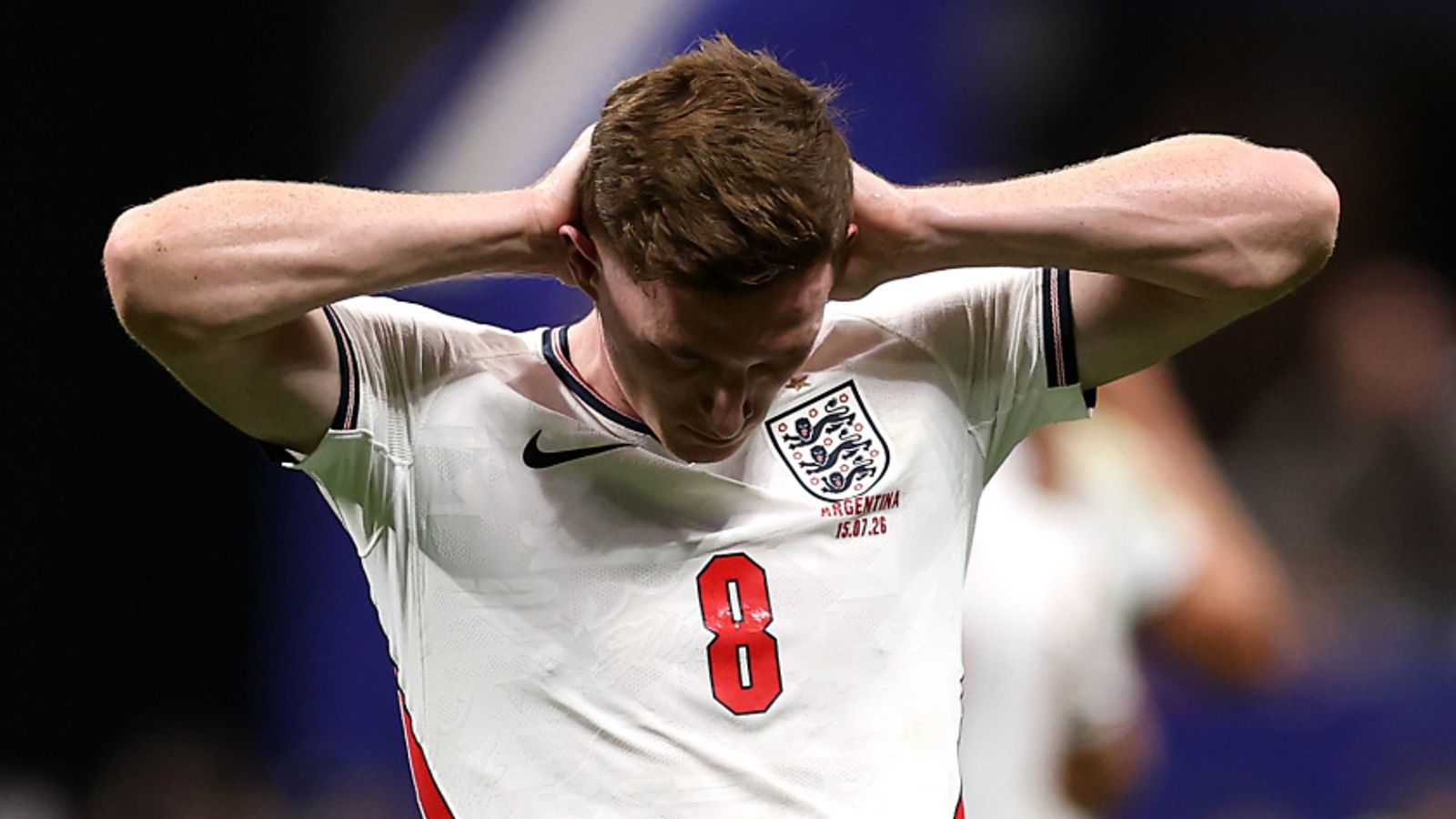
Measuring the gap between ball security and threat
England controlled 62% of the possession in their 2026 World Cup semi-final against Argentina, yet produced just 0.42 expected goals (xG) during that dominant opening period. Possession without penetration is a recurring theme that transformed from a tactical choice into a strategic liability. By the 18th minute, Argentina had already solved the high press, forcing England into lateral circulation that yielded minimal disruption to their defensive structure.
While figures from BBC Sport coverage indicate high pass completion within the defensive third, the advanced metrics tell a different story. The progression into the final third stagnated, with key playmakers failing to find space between the lines. Jude Bellingham and Declan Rice, usually the engines of ball progression, saw their touches limited to areas deep inside their own half, far from the critical zones where they influence game state.
The collapse of defensive organization
The transition from an aggressive press to a mid-block proved fatal after the opening goal. Thomas Tuchel’s side retreated, but the gaps in midfield widened as Argentina identified the space behind the full-backs. The shift in defensive density from a compact 4-2-3-1 to a stretched 4-4-2 allowed the Argentine pivot to dictate tempo without pressure.
As noted by Sky Sports analysis, while Djed Spence provided dynamism on the right flank, his individual efforts were isolated by a lack of coordinated movement from the central attacking trio. Harry Kane found himself dropping into midfield to collect, an action that dragged defenders out but left zero targets for crosses or cutbacks. The resulting isolation of the final line created a vacuum that allowed the opposition to build attacks with increasing confidence.
Stagnation in the final third
The statistical profile of the match highlights a team hesitant to take risks on the turn. England averaged 6.2 passes for every shot attempted, a figure remarkably higher than the 4.1 average maintained during the group stages. This increased volume of safe internal passing mirrors the team's loss of vertical intent.
- Possession: 62% for England, 38% for Argentina.
- Expected Goals: England recorded 0.42 xG before the equalizer.
- Final third entries: Decreased by 21% after the 30th minute.
- Midfield turnover rate: Argentina forced 14 errors in the central channel.
Total commitment to a possession-based approach requires tactical fluidity, yet England remained static when the defensive phase shifted. The lack of movement from the wide players meant the ball carrier often faced a closed door, forcing a retreat back to the backline. When a team opts for sustained possession, the movement must be off-the-ball to break defensive parity. England lacked this, instead opting for predictable patterns that were easy to track for the Argentine marker system.
Reframing the tournament trajectory
The 1-0 scoreline at the interval felt generous to a side that struggled to create high-quality chances. A lack of clinical edge from the front three made these underlying numbers even harder to suppress. Managing a lead requires a shift in intensity that England historically struggles to sustain under pressure, resulting in the 74th minute collapse that decided the match.
Confidence in the final decision-making process plummeted as the game wore on. Dan Burn noted the persistent impact of these high-stakes losses, indicating that the mental hurdle is perhaps as significant as the physical gaps exposed in the midfield. Looking at the data, the team's inability to switch gears remains the primary flaw. Until the side can reconcile their possession stats with legitimate high-danger zone shot conversion, repeat exits in major semifinals remain a statistical probability rather than a surprise.
Read Next
- England's fitness crisis hits hard before Argentina showdown
- England injury concerns mount ahead of Argentina World Cup semi-final
- A classy move in a game governed by greed
- Ezri Konsa injury scare looms over England semifinal
- 🏴 England World Cup 2026 — Three Lions Hub
- ⚡ UCL Semi-Finals 2026 — Full Coverage Hub





