On July 4, 2026, Kansas City Stadium hosts a Round of 32 clash that will reward the winner with a trip to Vancouver to face Switzerland. But anyone looking for an open, fluid exhibition of attacking soccer should look elsewhere. Colombia and Ghana are about to engage in a physical, defensive grind. Fans hoping for a goalfest are set to be left disappointed, as both sides have built their tournament runs on defensive caution.
Colombia enters this knockout match as Group K winners with seven points. Under Néstor Lorenzo, Los Cafeteros have combined positional discipline with brief, explosive sequences of vertical transition. They defeated Uzbekistan 3-1 on June 17, edged DR Congo 1-0 on June 23, and played out a sterile 0-0 draw against Portugal on June 27. Lorenzo's side has registered an average expected goals against of just 0.42 per 90 minutes.
Ghana, meanwhile, crept into the knockouts as one of the best third-placed teams in Group L. Their manager, Carlos Queiroz, has quickly installed his signature defensive organization since taking over in April 2026. The Black Stars qualified with four points, scoring twice and conceding twice. They secured a 1-0 win against Panama, drew 0-0 against England in Boston, and lost 2-1 to Croatia. Under Queiroz, Ghana’s defensive shape is incredibly rigid, making them one of the hardest teams to break down in the tournament.
Lorenzo's Fluid Mechanics and Transition Risks
Lorenzo's Colombia operates in a nominal 4-3-3 that morphs into a 3-2-5 in possession. Central to this shape is the movement of right-back Daniel Muñoz. The Crystal Palace defender has been their most potent offensive weapon. Muñoz scored in the 40th minute against Uzbekistan and again in the 76th minute against DR Congo, highlighting his capability as a late-arriving threat in the box. His high positioning allows Colombia to sustain pressure in the final third, registering a 62% field tilt during the group stage.
Muñoz’s deep vertical runs are balanced by the defensive caution of left-back Johan Mojica, who tucks inside to form a back three alongside Davinson Sánchez and Jhon Lucumí. This asymmetric structure allows James Rodríguez to drift into the right half-space, searching for pockets between the lines. From there, James directs play, boasting an impressive 88% pass completion rate in the opposition half. He seeks to release Luis Díaz on the opposite flank, who maintains width and isolates defenders.
Díaz remains Colombia’s primary outlet for direct, dribble-heavy attacks. His job is to pin the opposition right-back deep, creating space for underlapping runs. If Ghana allows James time to turn and pick passes, Colombia will dominate the tempo. During the group stage, Díaz completed 4.2 take-ons per 90 minutes, drawing defenders toward him.
Yet, Colombia’s system has a glaring flaw. The aggressive positioning of Muñoz leaves vast channels open behind him. Against Uzbekistan on June 17, this gap was ruthlessly exposed. In the 60th minute, Abbosbek Fayzullaev exploited a lack of communication between Lucumí and Jefferson Lerma. Fayzullaev sliced open the center-backs on a quick counter-attack to score. If Ghana can bypass the Colombian counter-press, they will find joy in these wide areas.
The Queiroz Block and Ghana's Attacking Limits
Ghana's strategy under Queiroz is simple: deny space, slow the game down, and survive. In Group L, they managed only two goals while conceding two. Their defensive highlight was a gritty, goalless draw against England in Boston, where they held a compact 5-4-1 low block and limited the English to speculative shots from distance. England recorded an expected goals rate of only 0.54, their lowest in a group match since 2014.
The Black Stars defend with a low line of engagement, rarely pressing high. They prefer to clog the central zone and force the opposition wide. In their final group match against Croatia, they equalized through Derrick Luckassen but eventually buckled under pressure, conceding an 84th-minute winner to Nikola Vlašić. Queiroz’s defensive structure demands intense concentration, and any lapse is fatal.
Ghana’s primary problem is a total lack of offensive cohesion. The team has been severely weakened by the absence of Mohammed Kudus, who was ruled out of the tournament with a quadriceps injury and a subsequent hamstring relapse. Without Kudus's ball-carrying ability, Ghana's transition play is slow and predictable. They averaged just 2.1 shots on target per match in the group stage.
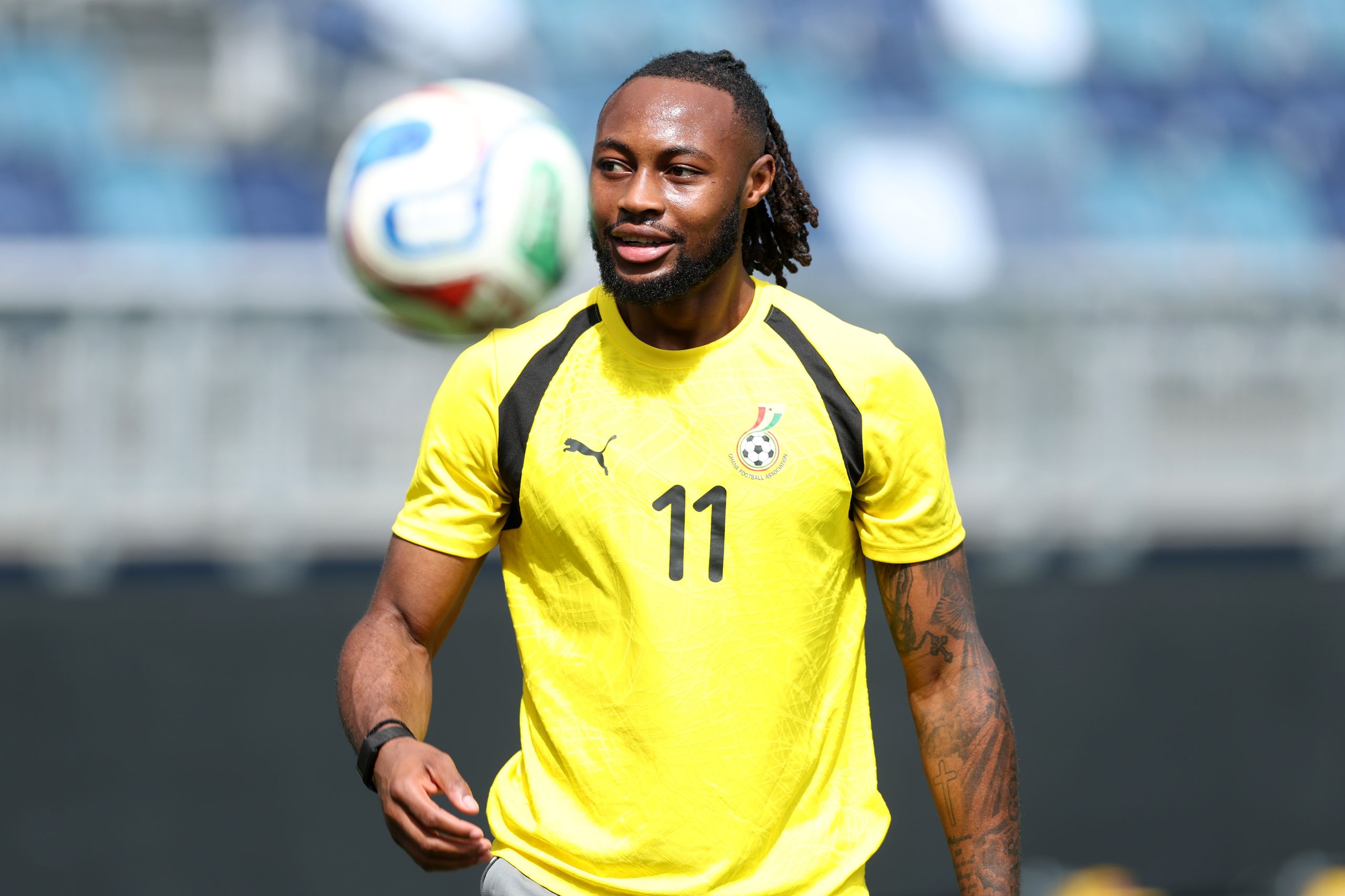
This leaves the team heavily dependent on set-pieces and isolated moments of individual brilliance. Their only victory in the group stage, a 1-0 win over Panama, came in the 95th minute when Caleb Yirenkyi headed home a Brandon Thomas-Asante cross. If they cannot sustain possession, they will spend 90 minutes defending their own penalty box. They must find a way to support Antoine Semenyo up front, who has been left isolated.
Thomas Partey’s return provides some stability in the midfield. Having missed the opener against Panama due to visa issues in Canada, he is fully available for this match in Missouri. However, Partey’s physical decline was apparent in the Croatia defeat, where he struggled to track runners in transition. His pass completion rate fell to 71% under pressure, a worrying sign against Colombia’s aggressive press.
The Midfield Chessboard
The key matchup will unfold in the central channel. Jefferson Lerma and Richard Ríos will anchor Colombia’s midfield, tasked with stopping Ghana's direct counter-attacks. They will face a Ghanaian midfield double pivot likely composed of Partey and Salis Abdul Samed.
Colombia will look to create overloads on the right wing. James Rodríguez, Muñoz, and Ríos will rotate positions to pull Ghana’s left-back, Gideon Mensah, out of position. If Gideon Mensah steps out to challenge James, it will open the channel for Muñoz to run into.
Ghana must remain disciplined and resist the temptation to press James too high. Queiroz will instruct his midfielders to stay compact, force James to pass backward, and wait for a turnover. When they win the ball, they will look to feed Antoine Semenyo quickly, hoping he can run at Davinson Sánchez.
Broadcast Details and Final Verdict
The match will be broadcast live by ITV, featuring their top-tier commentary and punditry team. Fans who tune in expecting an open, high-scoring contest will likely be disappointed. You can check out the broadcast details and presenters for the match to plan your viewing.
Both teams are built to minimize risk in knockout situations. As the pre-match analysts at FourFourTwo predicted, this game has all the hallmarks of a defensive battle. You can follow the action in real-time on the Sky Sports live center.
Colombia is the superior team, but they will have to work hard for every yard of grass. Queiroz’s Ghana will make this match as ugly and disrupted as possible. Expect frequent fouls, slow restarts, and a deep defensive block.
Colombia’s patience will be tested. James Rodríguez will need to be at his creative best to find angles through the Ghanaian wall. A single moment of quality should decide it.
My call is a narrow victory for Néstor Lorenzo's men. They will secure a 1-0 win, with the decisive moment likely arriving in the second half. A late goal from a set-piece or a Muñoz run will send Colombia through to face the Swiss.
Read Next
- Why Mexico's altitude and sudden kickoff change is Tuchel's nightmare
- Why the Azteca altitude will expose England's spacing crisis
- Jurgen Klopp is ready for Germany but it will not fix their tactical crisis
- Why England's 1am kick-off against Mexico is a tactical nightmare for Tuchel
- 🇨🇴 Colombia World Cup 2026 — Los Cafeteros Hub
- 🇬🇭 Ghana World Cup 2026 — Black Stars Hub
- 🏴 WC 2026 Group L — England, Croatia, Ghana, Panama