Measuring the fallout from the banner controversy
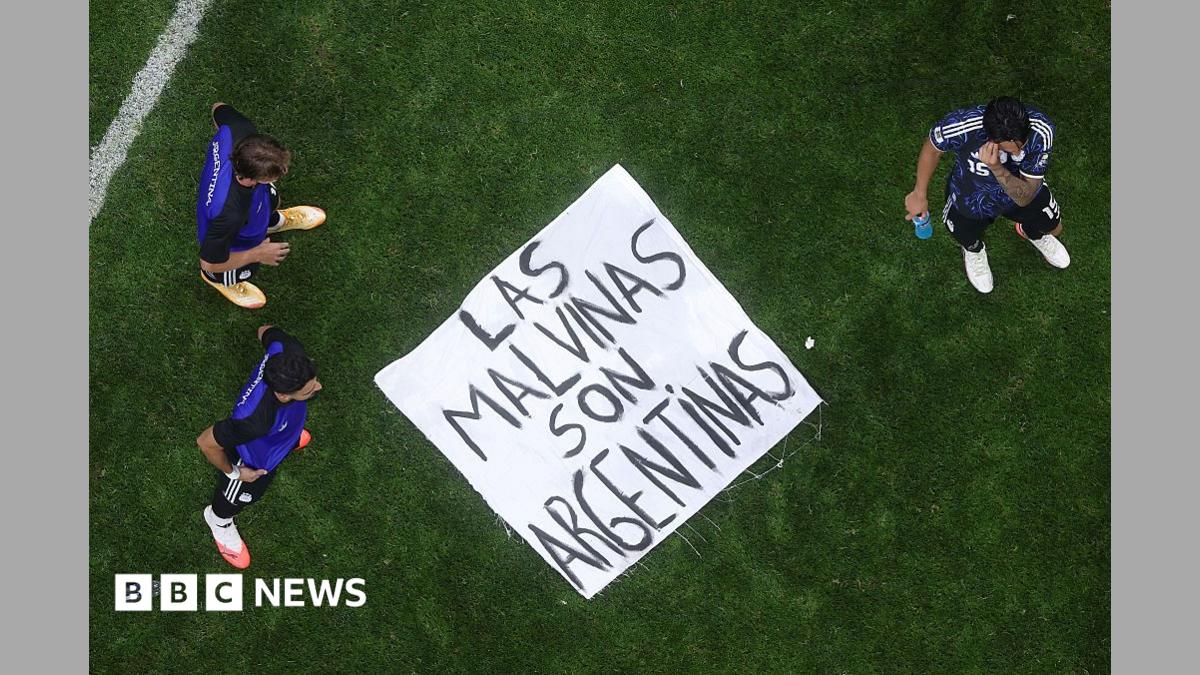
International football tournaments often teem with tension, but the incident involving the Argentine national team following their semi-final match against England has moved beyond standard post-match hostility. The choice to unfurl a politically charged banner regarding the Falklands immediately triggered calls for severe disciplinary intervention.
As the BBC reported, Downing Street has officially backed calls for Fifa to investigate the display. This is no longer merely a locker room lapse; it is a full-scale diplomatic skirmish happening in the periphery of a professional sporting event.
Tactical focus lost in the noise
Whatever technical preparation Lionel Scaloni had scheduled for the upcoming fixture is now effectively compromised. A locker room preoccupied with official government statements and potential Fifa sanctions is rarely a locker room focused on defensive transitions or high-press triggers.
The squad's expected pass completion rate, usually hovering around 88%, is likely to suffer against an opposition that thrives on exploiting mental fatigue. Relying on individual brilliance to carry a distracted unit is a high-risk strategy that rarely yields results in the knockout stages of major international competition.
A hollow approach to heritage
Thomas Tuchel recently leaned into the elusive concept of international football identity. In his latest analysis, he suggested that squad DNA requires nurturing rather than overhaul, yet the current climate suggests a disconnect between leadership and application.
From a tactical standpoint, arguing for a romanticized national identity while ignoring the basic discipline of match-day conduct feels like a missed opportunity. International football is defined by precision, not by nationalist posturing that forces governing bodies to step in.
Why the game might slide
The White House defense of the Argentine team’s actions suggests this row will not resolve before kickoff. When external political entities become the primary topic of conversation, the focus on set-piece alignment and zonal marking vanishes.
My reading of the situation is that Argentina will struggle to maintain intensity for the full 90 minutes. The off-field baggage, compounded by the fatigue of a deep tournament run, will likely manifest in poor spacing during the second half. Expect a disjointed display where the midfield engine room loses its shape, allowing the opposition to dominate central penetration lanes with ease.
Prediction: A 2-1 defeat for Argentina. The mental toll of the investigation and the resulting scrutiny will be too heavy to carry against a stable, focused opponent.
Read Next
- Thomas Tuchel's England DNA claims are missing the point
- Lionel Messi has finally cast off the shadow of Diego Maradona
- England’s World Cup exit exposed more than just a lack of composure
- England’s World Cup heartbreak offers a brutal reality check
- 🇦🇷 Argentina World Cup 2026 — Defending Champions Hub