Financial Fair Play Collides With Foreign Policy
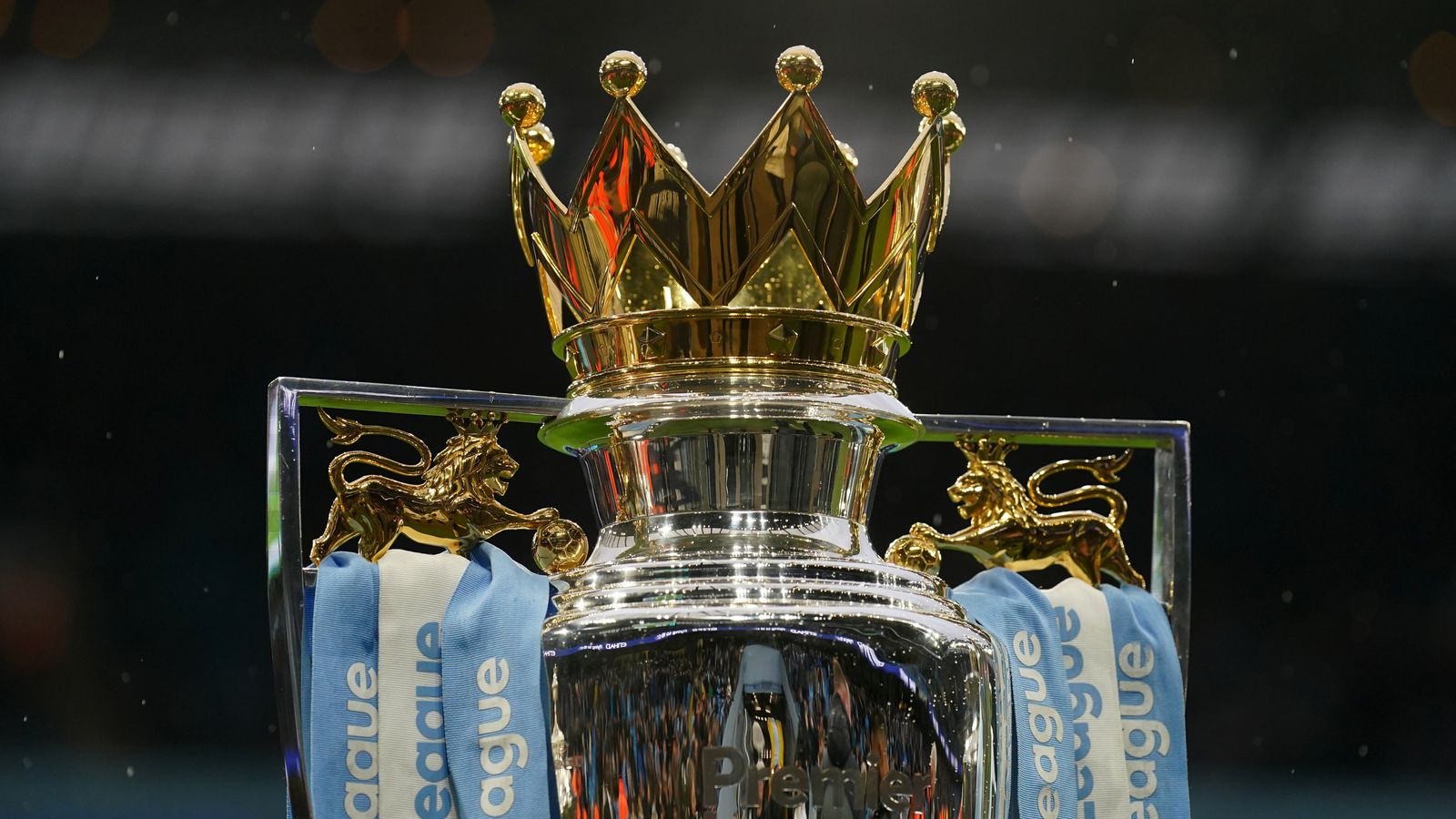
The verdict arrived, and nine seasons of financial engineering came crashing down. Independent commissioners found Manchester City guilty of serious breaches of Premier League financial rules. City's official response was immediate: an appeal claiming the decision contains clear material errors of law, principle, and fact.
The nine-season period under scrutiny represents the foundation of City's modern era. Commissioners examined hidden contract arrangements and inflated sponsorship deals from Abu Dhabi companies. City built their dominant squad while allegedly operating under two sets of financial books.
What happens off the pitch right now matters far more than any courtroom argument. Abu Dhabi is not relying solely on top-tier barristers to fight this judgment. They are deploying sovereign wealth as a political hammer.
Reports indicate the UAE is threatening to pull billions of pounds out of UK investment commitments. Funding for the Oxford-Cambridge technology scheme is directly on the line. State ownership in English football was bound to trigger this exact crisis.
When a domestic league sanctions a state-owned club, sporting regulation collides with international diplomacy. Sheikh Mansour is not just City's owner; he is the UAE's deputy prime minister and vice president. Khaldoon Al Mubarak is not just club chairman; he runs Mubadala, Abu Dhabi's massive sovereign wealth fund.
The boundary between football management and foreign policy vanished years ago. Now, Premier League governance is being tested against raw economic pressure.
Al Mubarak's Downing Street Visit
Examine the timeline of recent political encounters. Last month, Khaldoon Al Mubarak walked into Downing Street to meet Business Secretary Jonathan Reynolds. Official representatives from the Department for Business and Trade insisted the Man City hearing was never on the agenda.
That assertion stretches credibility to its absolute limit. Al Mubarak reportedly knew the guilty verdict was coming when he requested that meeting. You do not send the head of Mubadala to Whitehall for polite chatter while your football club faces historic sanctions.
The groundwork for these economic ties was laid earlier this year. Former Investment Minister Lord Stockwood sent a letter to Al Mubarak in February, inviting Abu Dhabi officials to inspect the Oxford-Cambridge project. Stockwood and science minister Lord Vallance wanted Middle Eastern capital backing UK technology hubs.
Lord Stockwood's invitation was not a routine memo. It represented high-level UK strategy aimed at securing sovereign wealth for life sciences and technology projects. When Al Mubarak met Reynolds, that investment pipeline became an unspoken bargaining chip.
Those ministers have since been replaced by Chris McDonald. But the structural trap remains active. British politicians rolled out the red carpet for sovereign money, and now that capital is being wielded to influence football governance.
Greater Manchester Mayor Andy Burnham has been pulled directly into the fallout. Burnham previously attended City matches and spoke publicly regarding the guilty verdict. UAE officials are warning Prime Minister Keir Starmer's government that future UK commitments are severely undermined.
This is political retaliation disguised as investment strategy. If a sovereign state can threaten regional funding to protect a football club, league rules become meaningless.
Downing Street has notably declined to dispute reports that UAE investment interest has chilled. Civil servants maintain that the independent commission operates separately from state business. That separation is a convenient fiction that Abu Dhabi refuses to honor.
Tactical Superiority Built On Accounting Errors
To understand the severity of this crisis, analyze what took place on the pitch during those nine seasons. Financial controls exist to prevent clubs from spending unearned capital to purchase competitive advantage. Bypassing those limits alters the sporting reality for every team in the division.
Tactically, Manchester City constructed an extraordinary machine. They assembled unprecedented squad depth across every position, creating a system that no self-funded club could rival. Pep Guardiola's high-intensity pressing rests entirely on that physical rotation.
Examine City's tactical setup during their title runs. Guardiola's team dominated through suffocating counter-pressing and complete territorial control. They could afford to keep world-class talent like Bernardo Silva or Julian Alvarez on the bench every Saturday.
No conventional club could maintain a payroll of that scale without violating domestic limits. Rivals like Arsenal and Liverpool had to sell before they could buy, balancing their ledgers carefully. City bypassed those constraints entirely, converting illicit financial backing into points on the board.
Opponents felt that structural advantage every week. You could match City's pressing triggers and mid-block shape for 60 minutes. Then their bench introduced world-class game-changers against tired defensive lines.
That tactical dominance was bought with resources the commission deemed improperly declared. These breaches were not harmless accounting mistakes. They dictated title races, European qualification spots, and relegation battles for nearly a decade.
Rivals lost out on tens of millions in prize money while competing against artificial wage structures. City's legal team insists the ruling is unsafe. Yet threatening to starve British technology hubs of investment only heightens the impression of wrongdoing.
The Premier League's Ultimate Governance Test
The Premier League faces a moment of reckoning. If league executives retreat under diplomatic pressure, financial regulation is finished. Every state-backed club will understand that rules apply only until political capital is invoked.
Downing Street is attempting to maintain a strict public boundary. A No 10 spokesman issued a formal response following the verdict.
"As the Prime Minister made clear, the initial judgment is serious and there can't be any suggestion that anyone is above the rules. He also stressed that it is an ongoing independent process. It is essential that it is allowed to run its course and the outcome respected. Wherever wrongdoing is established, those responsible should face the appropriate consequences."
Enforcing that standard will require real political courage. British ministers are desperate for foreign investment to fuel economic growth. Abu Dhabi recognizes that vulnerability and is applying relentless pressure.
The Premier League's reputation hinges on this outcome. If the chief executive and board back down because No 10 fears losing foreign investment, the league becomes a playground for sovereign states. Financial rules were created to ensure fair competition, not to yield to economic threats.
The contrast in disciplinary enforcement is stark. When smaller clubs violated profit and sustainability rules, point deductions were applied swiftly within the same season. City spent years delaying proceedings through legal challenges before turning to diplomatic pressure.
Supporters deserve a league governed by sportsmanship, not foreign policy negotiations. If City's appeal fails, the penalty must reflect nine years of continuous violations.
The Verdict Must Stand
The appeal process will drag on, leaving English football under a cloud of uncertainty. City will exhaust every procedural maneuver to overturn the commission's finding. Meanwhile, UAE officials will continue signaling that capital project funding hangs in the balance.
This standoff reveals the core flaw in state club ownership. When a sports team serves as an instrument of state influence, football is taken hostage by international diplomacy. Matches are no longer decided solely on grass; they are negotiated in Whitehall corridors.
The Premier League cannot yield. Allowing foreign states to dictate domestic sports regulation through financial threats destroys the competition's credibility permanently.
My prediction is clear and unyielding. The independent appeal panel will uphold the core guilty verdict against Manchester City. The Premier League will impose a monumental penalty of at least 30 points, sending an undeniable signal that state capital cannot purchase immunity from football law.
Read Next