The Ibrox Disaster: How Sunday's Hibs Match Turned Catastrophic
Football has a cruel habit of ruining plans inside forty-five minutes. Rangers entered Sunday's match against Hibernian looking to ignite their domestic campaign under new manager Derek McInnes. Instead, a disastrous first-half incident reshaped the club's entire season.
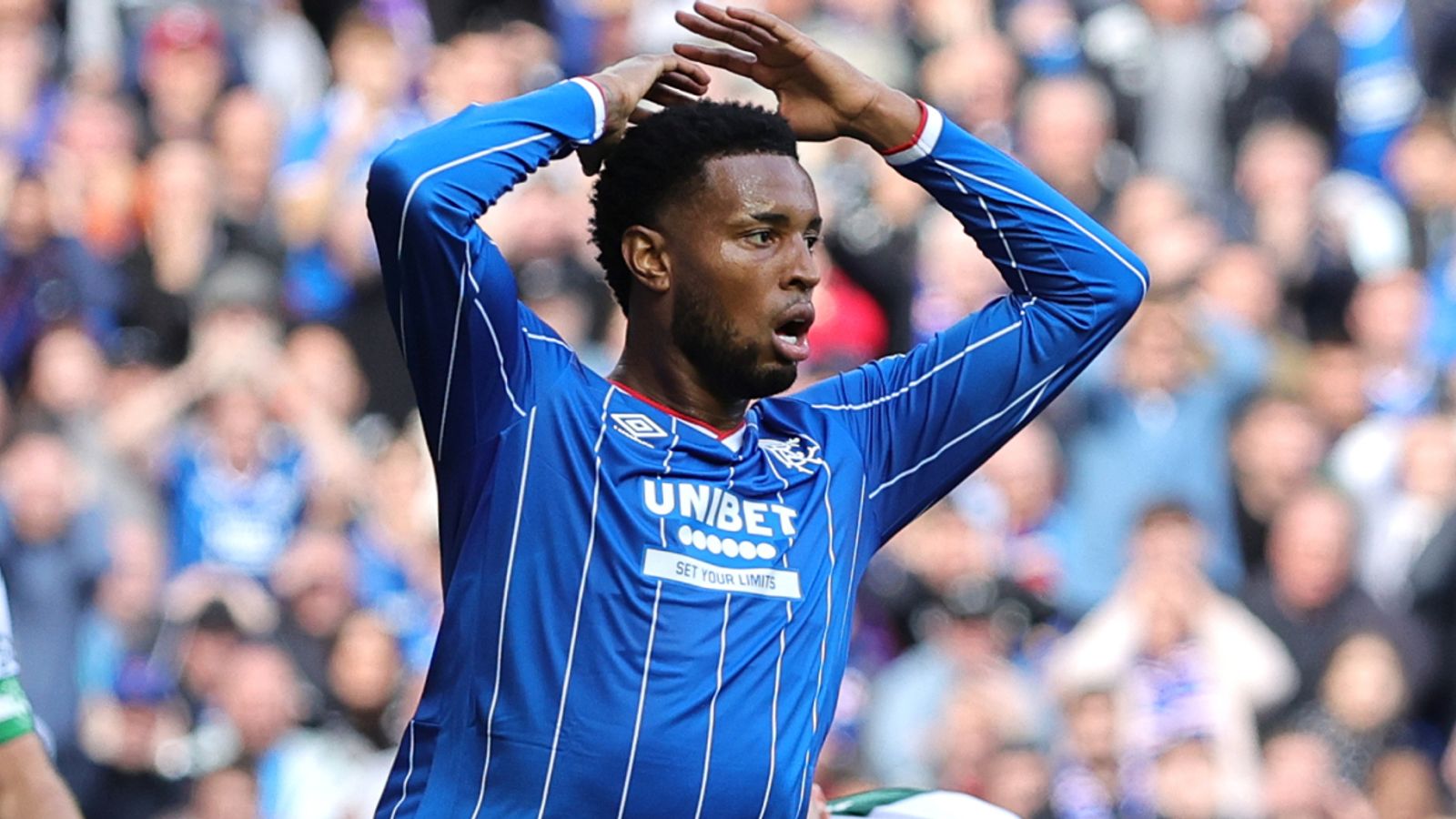
Youssef Chermiti sprinted toward the touchline chasing a long ball before colliding heavily with the rigid pitchside boards at Ibrox. As Sky Sports reported, the 22-year-old forward collapsed in agony and was stretchered off before leaving the stadium wearing a protective boot and knee brace.
Subsequent scans revealed the absolute nightmare scenario for any athlete. The Portuguese U21 international suffered a major anterior cruciate ligament injury that will keep him sidelined for a significant period. Medical staff face a long reconstruction process, leaving Ibrox without their starting forward for most of the campaign.
The emotional blow to the squad was immediate. Without Chermiti providing a focal point up front, Rangers lost their shape and succumbed to a home defeat against Hibs. The result leaves McInnes winless through his first three competitive fixtures in Glasgow.
Rejecting Galatasaray: Ambition vs Risk at Boardroom Level
What makes Chermiti's injury doubly painful for the Ibrox board is the sequence of events leading up to kickoff on Sunday. Just hours before the match, Rangers formally rejected a substantial transfer bid from Turkish powerhouse Galatasaray. Chairman Andrew Cavenagh and his executive team believed they were holding an asset whose value was set to soar even higher.
Chermiti arrived from Everton last summer in a deal worth up to £10m. He repaid that investment during a stellar debut campaign, racking up 15 goals and five assists in all competitions. His combination of physical size, acceleration, and finishing made him the focal point of the Rangers attack.
Galatasaray's interest was not random. European clubs have consistently monitored Ibrox for talent that can step straight into continental competition. Losing that sale is a painful blow to squad reinvestment plans.
That impressive productivity led Ibrox decision-makers to set Chermiti's price tag above the club-record £19.6 million fee Ajax paid for Calvin Bassey back in 2023. Turning down Galatasaray was meant to be a declaration of sporting intent. Rangers wanted to retain their primary goal threat rather than cash in early.
Instead, that calculation crumbled before halftime. A multi-million pound liquid asset turned into an inactive long-term recovery case in a single moment. Now Rangers must absorb his salary during a multi-month rehabilitation while simultaneously hunting for a high-cost replacement in an inflated August market.
Pitchside Safety and the Biomechanical Toll of an ACL Rupture
Rupturing an ACL remains one of the most punishing structural injuries in professional sport. The knee joint relies on the anterior cruciate ligament to control rotation and prevent the tibia from sliding out in front of the femur. When a player collides at speed with pitchside advertising hoardings, sudden impact forces the joint into unnatural torsion under heavy load.
For a young forward whose game relies on sudden stops and dynamic shifts of direction, recovery requires immense patience. Simply repairing the tissue is only half the battle. Rebuilding hamstring strength, joint stability, and full confidence takes months of monotonous gym work.
This incident also reopens a serious debate about perimeter safety standards at Ibrox and across Scottish football. Rigid advertising boards positioned just meters from touchlines represent a constant hazard for sprinting players. When physical perimeter structures cause catastrophic joint damage, venue managers must reconsider minimum clearance distances around the playing surface.
Player welfare cannot take a backseat to sponsor placement. Seeing a young talent stretchered off because he ran out of grass is a terrible look for the league. Scottish football governing bodies ought to inspect pitchside buffer zones before another player suffers a similar fate.
Derek McInnes' Winless Start and the Tactical Hole Upfront
Losing Chermiti plunges Derek McInnes into a full-blown early crisis. Three games into his tenure, the manager has yet to record a victory, and his team looks defensively vulnerable and offensively disjointed. Losing the central pillar of his forward line turns an awkward adjustment period into an urgent firefighting mission.
Speaking after the defeat to Hibernian, McInnes made no effort to hide his disappointment regarding the forward's injury.
"Disappointed for the big fella that he has to come off on a stretcher. I thought he was looking bright and running gaps. He played with a bit of purpose and there's no doubt we missed that, but he's left in a boot and his knee in a brace."
McInnes also addressed the pre-match transfer interest from Turkey, insisting that Chermiti remains vital to the club's future structure despite the medical setback.
"It's no surprise that he's a player who's got a big tag on him and he's got high potential, but thankfully he's our player and that will continue to be the case."
Those supportive words cannot mask the tactical reality on the pitch. Without Chermiti occupying center-backs and stretching defenses, Rangers looked static against Hibs. The squad lacks another striker capable of holding up the ball and connecting play in the final third.
The August Transfer Scramble: Driouech, Meghoma, and Emergency Targets
With the Scottish transfer window shutting on September 3, recruitment directors are scrambling to fix a broken frontline. Chairman Andrew Cavenagh confirmed the club will bring in three to five more recruits before the deadline. That push will bring summer arrivals into double digits following an already chaotic transfer window.
The next arrival is PSV Eindhoven winger Couhaib Driouech. Rangers secured a £6.5m deal for the 24-year-old winger after winning a contested race against Burnley and Celta Vigo. Driouech scored 12 goals and provided 10 assists across 61 games in Holland, including three goals in the Champions League last season.
While Driouech brings much-needed skill to the flank, he is not a central striker. Reports linking Rangers to Sheffield United forward Ryan One proved wide of the mark, with Sky Sports confirming that no negotiations are taking place for the 18-year-old. Finding a genuine replacement for Chermiti remains an unsolved problem.
Meanwhile, defensive reinforcements are moving closer. Negotiations continue with Brentford over bringing 20-year-old defender Jayden Meghoma back on loan after he logged 44 appearances at Ibrox last term. Meghoma could be registered in time for Sunday's League Cup clash against St Mirren if paperwork clears promptly.
Rangers are also holding talks for Aston Villa right-back Kosta Nedeljkovic and Club Brugge defender Hugo Siquet. The 24-year-old Siquet is reportedly eager for a move to Glasgow. To help fund these late moves, Rangers are finalizing the departure of midfielder Mohamed Diomande to Turkish club Corum FK for £4.5m.
Selling Diomande to Corum FK frees up roster space and generates funds, but late-window hunting for central forwards is notoriously expensive. Sellers know Rangers are desperate, which instantly drives up asking prices across Europe.
Europa League Stakes and an Unforgiving Early Season Schedule
The timing of this squad breakdown could hardly be worse. Rangers must prepare for the second leg of their Europa League third-round qualifier against Polish side Jagiellonia Białystok. Passing that European hurdle is essential for both club finances and team morale.
Squad depth is already stretched thin across multiple positions. Medical staff are racing to evaluate defender Tuur Rommens' fitness before the return leg against Jagiellonia Białystok. Losing another starter would severely limit McInnes' ability to rotate during a grueling August fixture list.
Fans at Ibrox are already showing signs of impatience. Watching another season begin with defensive errors, tactical uncertainty, and key injuries feels like an exhausting repeat of recent years. McInnes was brought in to establish stability, yet he finds himself managing a squad under construction during active competition.
The next three weeks will dictate whether Rangers can save their summer or watch their season slip away early. Replacing 15 goals on short notice is a monumental challenge in late August. If the board fails to deliver a quality striker before September 3, the frustration around Ibrox will grow much louder.