The 0.77 Goal Ratio: Deconstructing Peter Baines' Wartime Dominance
Numbers from wartime English football are often dismissed as products of tactical chaos. Rosters mutated weekly, travel restrictions disrupted training, and guest players moved fluidly between clubs. Yet when a player records 27 goals in 35 games during a single campaign, the statistical signal pierces through the noise.
That return represents a rate of 0.77 goals per game for Wrexham during the 1940s. To put that figure in perspective, modern elite forwards rarely maintain a non-penalty goal average above 0.70 across a full season. For an inside-right playing in the pre-substitution era, such output was remarkable.
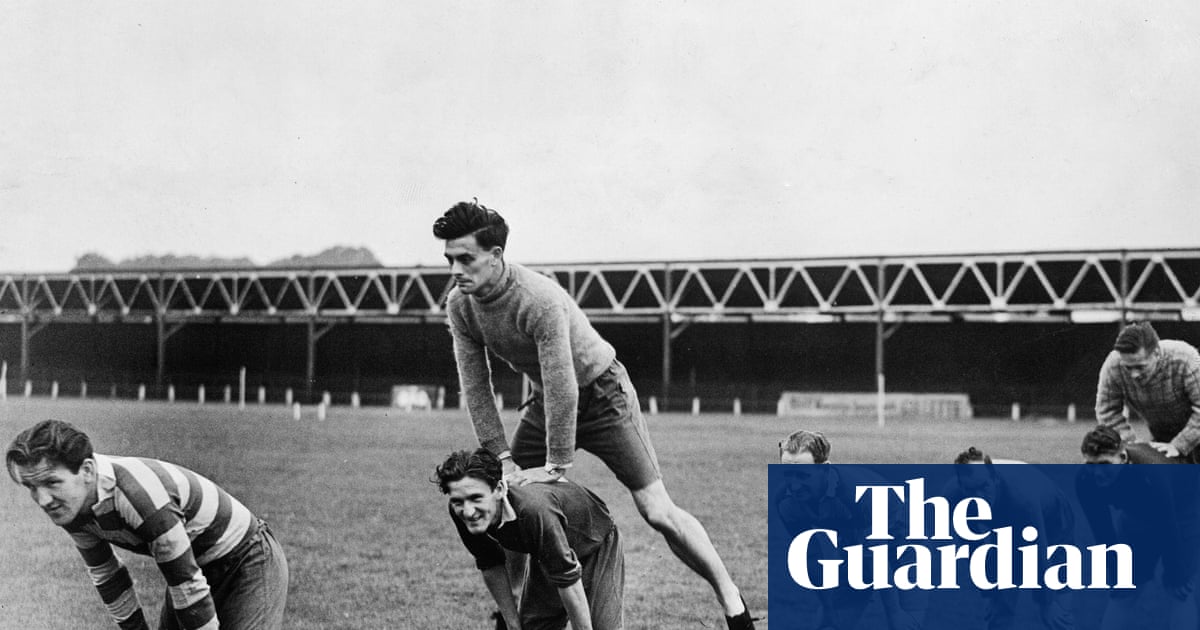
Baines did not operate as a static center-forward pinned between opposing center-halves. Historical match accounts clearly profile him as an inside-right—the number eight in the classic W-M system (3-2-2-3). In that era, the inside-right was tasked with orchestrating build-up play while simultaneously making late vertical runs into the penalty box.
A return of 27 goals in 35 appearances indicates exceptional spatial awareness and finishing efficiency in the half-space. Baines excelled at identifying structural gaps between the opposition's left wing-half and left-back. When Wrexham worked the ball out wide, Baines attacked the central channels before secondary defenders could reset their line.
Tactical Blueprint: High-Share Scorer Across Four Clubs
Baines was no localized anomaly. His career spanned appearances for Wrexham, Oldham Athletic, Crewe Alexandra, and Hartlepools United, alongside an exhibition outing as a guest player for Liverpool. Contemporary press reports reflected his tactical impact, describing him as "a real go-ahead player" and "one of the best number eights in postwar combination football."
His match performance for Hartlepools United against Gateshead in 1944 provides a clear case study in goal share concentration. As recorded in the Northern Daily Mail, Baines scored three of Saturday's six goals in a 6-3 victory. Delivering 50% of a team's total goal tally from an interior midfield position demonstrated his dominance in chaotic match environments.
Wartime combinations frequently lacked defensive cohesion, creating wide corridors between half-backs and full-backs. Without structured pressing triggers, defensive lines retreated deep toward their own penalty box under direct pressure. Baines exploited those defensive habits by unleashing powerful long-range efforts and gambling on loose secondary balls.
The Geometry of the 1940s Inside-Right
In Herbert Chapman's W-M formation, the number eight served as the primary engine room link. The role demanded immense physical stamina to cover the length of the pitch without modern sports science or tactical substitutions. Inside-rights were required to defend when possession flipped and sprint forward to overload the opposition box.
Baines possessed the acceleration to outpace heavy pitch conditions and static defenders. While traditional center-forwards absorbed bruising physical contact from stoppers, Baines operated in the pockets of space behind them. That positional freedom allowed him to maintain high conversion rates across multiple club setups.
His versatility made him an invaluable guest asset for clubs facing sudden roster shortages. Whether lining up for Crewe or appearing at Anfield for Liverpool, Baines delivered immediate attacking output without requiring lengthy tactical integration.
The Archival Anomaly: Statistical Probabilities versus Media Myth
While Baines' on-pitch metrics are firmly documented, his biographical background presents a fascinating analytical contradiction. For decades, sports historians celebrated Baines as the first Indigenous Australian to play professional football overseas. As reported by The Guardian, that origin story faces rigorous archival scrutiny.
Journalist Nick Harris featured Baines in his 2003 book England, Their England, naming him "the first Australian of Aboriginal descent in the League." Harris postulated that Baines was born in Australia and transported to a Manchester orphanage under forced assimilation policies. Australian database OzFootball and Ancestry records similarly listed Australia as his birthplace.
However, archival researcher Bill Hern uncovered a primary document that alters the mathematical probability. Hern located a Manchester birth record for a Cecil Peter Baines whose birth and death dates align perfectly with the footballer. Hern stated he was 99% certain that Baines never set foot in Australia.
"I have to say that I am 99% certain that Baines never set foot in Australia but I'll leave you to make your own judgement."
Hern also examined military logs, prison registries, and family birth certificates. His research revealed that Peter Baines senior was described in the Habitual Criminals' Register merely as "swarthy" rather than dark-skinned. Furthermore, no historical records substantiate the theory that Baines was removed from an Indigenous mother under Stolen Generations policies.
Why the Australian Narrative Persisted for 80 Years
If the Manchester birth record is authentic, why did the Australian narrative take root so firmly? The primary source of the claim stems from a 1944 article in Hartlepool's Northern Daily Mail.
The newspaper explicitly wrote: "Peter is an Australian. As a boy he came with his parents to Liverpool..." That single passage launched an 80-year historical debate.
Journalist Trevor Thompson notes how compelling that contemporary press line remains. In wartime Britain, sports journalists frequently relied on verbal accounts, locker-room hearsay, or inaccurate player notes. Once published in print, that brief paragraph transformed into accepted historical consensus for over eight decades.
The 30-Year Void: Assessing Baines' True Historical Place
Stripping away unverified claims does not diminish Baines' genuine significance as a pioneer. He stands as Crewe Alexandra's first black player and a central figure in Wrexham's pre-modern history. Decades before Ryan Reynolds and Rob McElhenney acquired Wrexham in 2021, Baines was creating headlines at the Racecourse Ground.
His guest appearance and goal for Liverpool at Anfield carries immense historical weight. After Baines scored in that wartime fixture, more than three decades elapsed before Howard Gayle made his official Liverpool debut in 1980. That 30-year gap highlights the sparse representation of black players in postwar British football.
Professor John Maynard of the University of Newcastle emphasizes the broader challenge of sports history. As documented in historical research, systemic barriers frequently erased minority participation from official records. Maynard observed that Aboriginal history resembles a giant jigsaw puzzle with critical pieces missing from the table.
A Flawed Pioneer: The Reality Behind the Ledger
A rigorous statistical evaluation must also account for off-pitch complexities. Newspaper archives reveal that Baines' life off the field was turbulent. Court clippings document repeated legal issues, alongside severe gambling habits and alcohol dependency.
Wartime football offered little structural support or financial security for players after the whistle blew. Baines was not a polished ambassador; he was a gritty, complex working-class footballer who lived on the margins of society. His erratic personal life likely prevented him from securing permanent long-term contracts at top-flight clubs.
When Baines died in Manchester in 1997 at age 77, local tributes reflected deep community affection despite his struggles. Remembrances celebrated his "smiling face" and recalled him as a "smashing story-teller" who could laugh at himself. On the pitch, his 0.77 goal ratio for Wrexham remains a remarkable achievement in British football history.
Read Next
- JJ Gabriel is flying to Barcelona while Shea Lacey earns his stripes
- Aston Villa's £43m chase for Alejandro Garnacho is getting serious
- Ruben Amorim is already facing an early reality check at AC Milan
- Shaun Wright-Phillips on Strictly is a reminder of football's lost wingers
- 🎮 EFL League One 2025-26 — Wrexham, Birmingham & Promotion Race Hub