
Why FIFA's refusal to shift the Azteca kick-off ruins Tuchel's plan
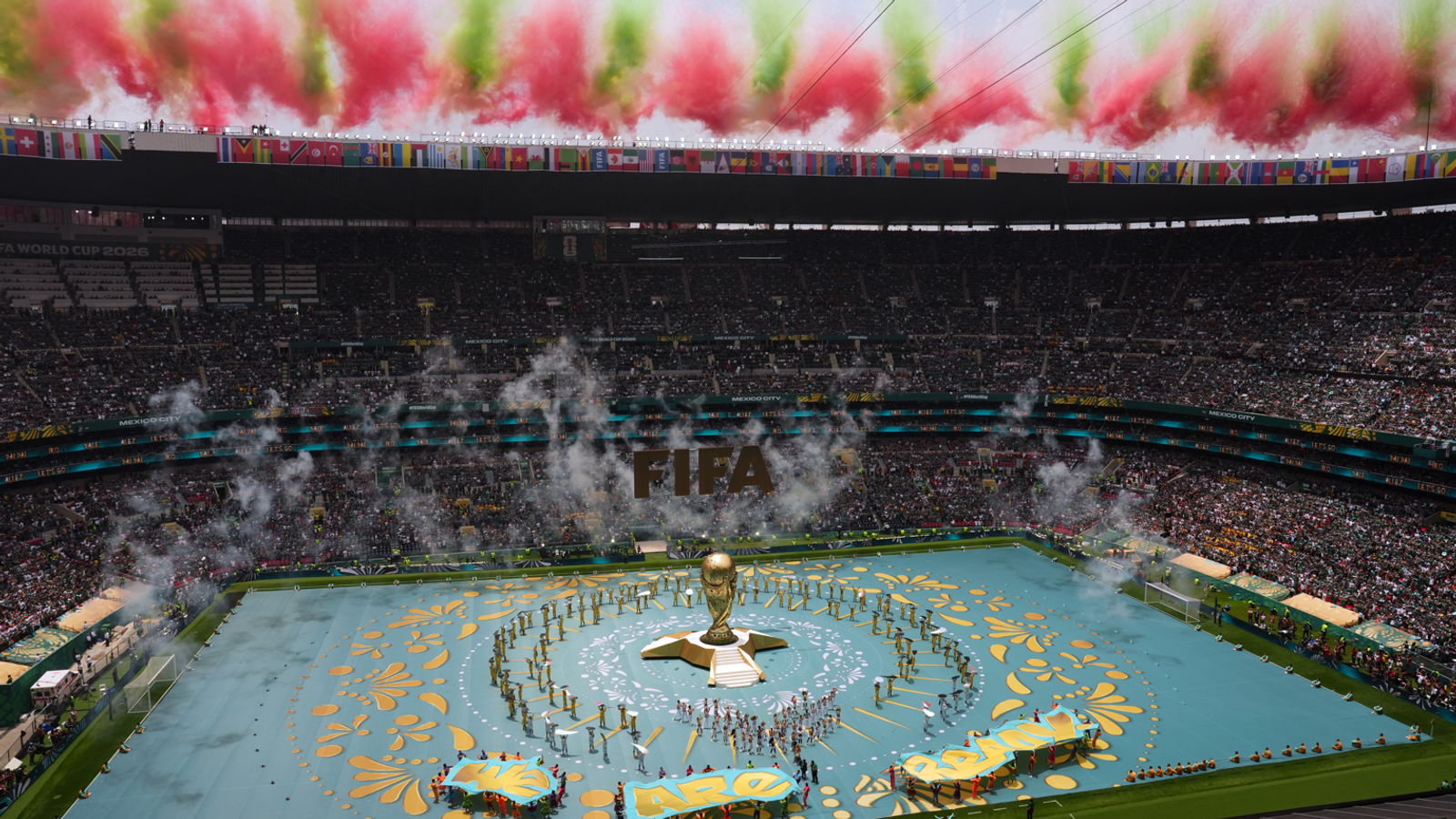
The Altitude Compromise
England’s World Cup preparations have been thrown into a tailspin by FIFA’s scheduling decisions. The Three Lions face Mexico in the Round of 16 at the Estadio Azteca. Despite heavy rain and thunderstorm forecasts in Mexico City, the kick-off remains fixed for 1:00 AM Monday BST.
According to the latest updates on the Sky Sports live blog, FIFA rejected calls to move the match forward. A shift to 1:00 PM local time would have avoided the evening storms. Instead, England must play in the nocturnal dampness of the capital, under the constant threat of lightning-induced delays.
Thomas Tuchel was candid about the physical barrier, noting that short-term adaptation is a medical impossibility. The squad has had only three days to prepare since their last match. Acclimatization requires at least ten days to trigger red blood cell production.
"My understanding is that we cannot adapt to the altitude. That is just a huge advantage that Mexico will have. It just takes too much time."
The physiological tax of 2,240 meters
The real opponent on Sunday is not the Mexican XI, but the air. The Estadio Azteca sits at 2,240 meters above sea level. At this height, the partial pressure of oxygen drops significantly, impairing aerobic capacity and spiking recovery times after intense sprints.
Without that window, England's players will face rapid lactic acid accumulation. Sprints will feel twice as long. Recovery will take twice as much time.
The physical toll manifests in the muscles. Under hypoxic conditions, the body relies on anaerobic glycolysis. This pathway produces energy quickly but accumulates waste products rapidly, causing heavy legs and shortness of breath early in the match.
This physical strain limits the team's ability to maintain high-intensity efforts. Tuchel's usual pressing triggers will be useless. If a winger presses the fullback, the central midfielders cannot cover the space behind them in time.
The logistics battle and FIFA regulations
Tuchel’s medical staff had designed a sports science plan to combat the height. They wanted to use a fly-in, fly-out model. This strategy, developed with the British Olympic Association, involves arriving just hours before kick-off to bypass the worst symptoms of altitude sickness.
However, FIFA regulations blocked this approach. A mandatory rule forces teams to train at venue-specific sites the day before the match. England had to fly from their base in Kansas City on Friday afternoon and are now stuck in Mexico City.
This regulation has forced Tuchel to scrap his preferred preparation. The German manager described the situation as a massive advantage for the hosts. Mexico’s players have played their tournament games at altitude and are fully adjusted.
The weather delay threat
To make matters worse, the evening kick-off brings a high probability of severe weather. Thunderstorms are forecast for Sunday night. Under FIFA safety protocols, any lightning strike within eight miles of the stadium triggers an immediate 30-minute suspension.
We saw this disruption during France’s group match against Iraq, which was paused for over two hours. Such breaks destroy physical momentum and make warming up again a logistical nightmare. For a team already struggling for oxygen, a disjointed, stop-start match is the worst-case scenario.
Furthermore, wet pitch conditions will accelerate physical fatigue. Players must expend more energy to maintain their footing on a slippery surface. The combined effect of thin air and heavy turf will test England's physical limits.
The Tactical Retrenchment
These physical limitations demand a total overhaul of England’s tactical approach. Tuchel's signature style relies on high-tempo counter-pressing and intense verticality. If England attempts to press high at the Azteca, they will run out of gas before halftime.
The solution is a deep, compact defensive shape. A low block will allow England to protect their penalty box while minimizing long-distance recovery runs. By dropping the defensive line, the players can defend in small spaces and keep their heart rates down.
This approach shifts the physical burden. Instead of chasing the ball, England must focus on spatial discipline. The midfielders must sit tight, screen the passing lanes, and force Mexico to play around the block rather than through it.
Abandoning the high press
Sitting deep is a defensive necessity. Mexico’s attackers thrive on transition play. If England leaves space behind their backline, the hosts will exploit it with direct passing.
This defensive retreat requires a mental shift from the players. The attackers must accept long periods without the ball. They must focus on their defensive responsibilities, closing down the passing lanes to the Mexican midfield.
The tactical keys for England’s defensive structure are clear:
- Maintain a maximum distance of 25 yards between the defensive line and the forwards.
- Force Mexico's possession wide into cross-heavy areas.
- Use Kane as a target man to hold up the ball and relieve pressure.
- Minimize individual vertical presses from the central midfielders.
Pickford, the thin air, and ball flight
The altitude also alters the physics of the match. In the thin air, the ball travels faster and farther, with Tuchel estimating that passes could fly an extra five yards. This change will test Jordan Pickford's positioning and decision-making.
Pickford is prone to erratic sweeps. In this environment, long balls over the top will bounce unpredictably. The Everton goalkeeper must remain glued to his line, avoiding the temptation to rush out and claim overhit passes.
This physical change also affects long-range shooting. Shots from distance will hold their line longer. England's defenders must close down shooters quickly to prevent clean looks from 25 yards out.
Furthermore, set-pieces will become highly volatile. Anthony Barry’s defensive routines must account for the faster ball flight. Pickford will need clear communication with his center-backs to avoid misunderstandings on high crosses.
The Warnings of Wednesday Night
The need for tactical discipline is highlighted by England's performance on Wednesday. The 2-1 victory over DR Congo in the Round of 32 was far from convincing. It exposed deep structural issues that Mexico will surely exploit if they are not corrected.
England fell behind in the seventh minute when Brian Cipenga scored after a rapid transition. The goal exposed Djed Spence’s defensive weaknesses. The right-back was caught high up the pitch, leaving a massive gap behind him that DR Congo exploited with ease.
Spence’s positioning was a recurring issue. He repeatedly failed to track back, forcing Ezri Konsa to cover the wide areas. This movement dragged the center-backs out of position and created gaps in the penalty box.
The structural cracks against DR Congo
The midfield pivot of Elliot Anderson and Declan Rice lacked positional balance. Anderson repeatedly drifted forward, leaving Rice isolated in defensive transitions. When DR Congo broke, they found a clear path through the center of the pitch.
This lack of control forced England to play a chaotic, physical game. They struggled to sustain possession and create clean chances. The team looked disjointed and physically spent long before the final whistle.
It took individual brilliance to rescue the result. In the 75th minute, Harry Kane equalized with a header from an Anthony Gordon cross. Kane then secured the win in the 86th minute with a strike from distance.
The Palmer and Foden shaped void
The lack of midfield control has brought Tuchel's squad selection back into the spotlight. The decision to leave Cole Palmer and Phil Foden out of the 26-man squad was controversial. Tuchel defended the decision by citing his preference for tactical discipline over individual reputation.
However, without Palmer’s ability to retain possession or Foden's creative spark between the lines, England looked unimaginative. Jude Bellingham was forced to drop deep to collect the ball, leaving Kane isolated up front. The attacking play was slow and predictable, relying too much on crosses from wide areas.
Against Mexico, this lack of creativity will be magnified. If England sits in a low block, they must be clinical on the counterattack. Without players who can thread passes through tight spaces, the transitions will break down quickly.
The absence of Trent Alexander-Arnold also limits England’s passing range. From a deep block, Alexander-Arnold’s long-range passing would be a powerful weapon. Without him, the responsibility for launching counterattacks falls on Rice and the central defenders.
The Outlines of a Plan
To survive the Azteca, Tuchel must make hard choices. The manager cannot afford to carry passengers. Players who fail to track back or maintain their defensive positions will cost the team their place in the tournament.
According to reports on Sky Sports, Tuchel is considering tactical changes to bolster the midfield. Bringing in a third central midfielder could provide the defensive stability England needs. This change would protect the back four and allow Rice to play a more disciplined role.
It is a test of Tuchel’s coaching philosophy. He was hired to bring tactical sophistication and tournament savvy to the national team. On Sunday, he must prove that his structural ideas can overcome both a hostile crowd and a hostile climate.
If England attempts to play a high-pressing game, they will face a physical breakdown. A disciplined, defensive performance is the only path to the quarterfinals. The manager must convince his players to accept the physical tax and play a pragmatic game.
Ultimately, the match will be decided by physical management. The team that manages their energy levels most effectively will progress. Tuchel must show that he can adapt his tactics to the environment, even when it means abandoning his preferred style.
Read Next
- England face altitude and heat crisis as FIFA weighs Mexico kick-off change
- England’s trip to the Azteca isn’t the tactical death sentence it looks like
- Why the Azteca kick-off shift is a tactical nightmare for England
- Why England face a tactical nightmare at the Azteca
- 🏆 World Cup 2026 — Full Coverage Hub
- 🇲🇽 Mexico World Cup 2026 — El Tri Hub
Frequently Asked Questions
What time is the England vs Mexico match at Estadio Azteca?
Why is altitude acclimatization impossible for England before the match?
How does the Azteca altitude physically affect the players?
What is the fly-in fly-out model England planned to use?
Why did FIFA regulations block England's fly-in fly-out model?
More Coverage

Man City's £900m scandal casts a long shadow over the A-League launch
2 days, 5 hours ago
England win in Prague but Thomas Tuchel still has tactical puzzles to solve
2 days, 11 hours ago
Tuchel got his win in Prague, but Trent and VAR are still causing arguments
2 days, 11 hours ago
Thomas Tuchel is still overthinking Trent Alexander-Arnold
2 days, 11 hours ago
Thomas Tuchel is playing with fire after England's Wembley disaster
2 days, 21 hours ago
Why Ruben Amorim is misusing Goncalo Ramos at AC Milan
3 days agoMore Analysis
Man City's £900m scandal casts a long shadow over the A-League launch
2 days, 5 hours ago
England win in Prague but Thomas Tuchel still has tactical puzzles to solve
2 days, 11 hours ago
Tuchel got his win in Prague, but Trent and VAR are still causing arguments
2 days, 11 hours ago
Thomas Tuchel is still overthinking Trent Alexander-Arnold
2 days, 11 hours ago
Thomas Tuchel is playing with fire after England's Wembley disaster
2 days, 21 hours ago