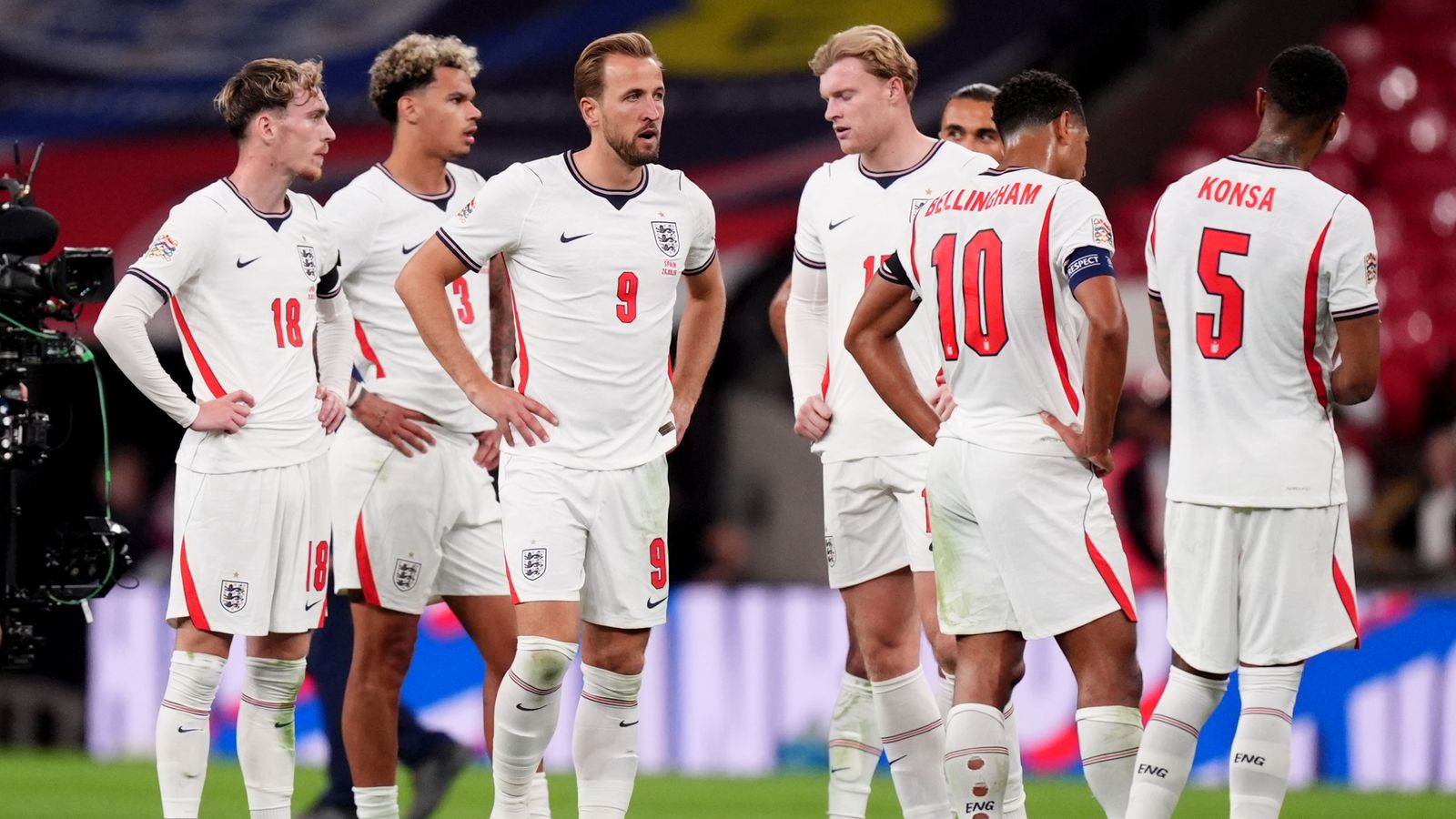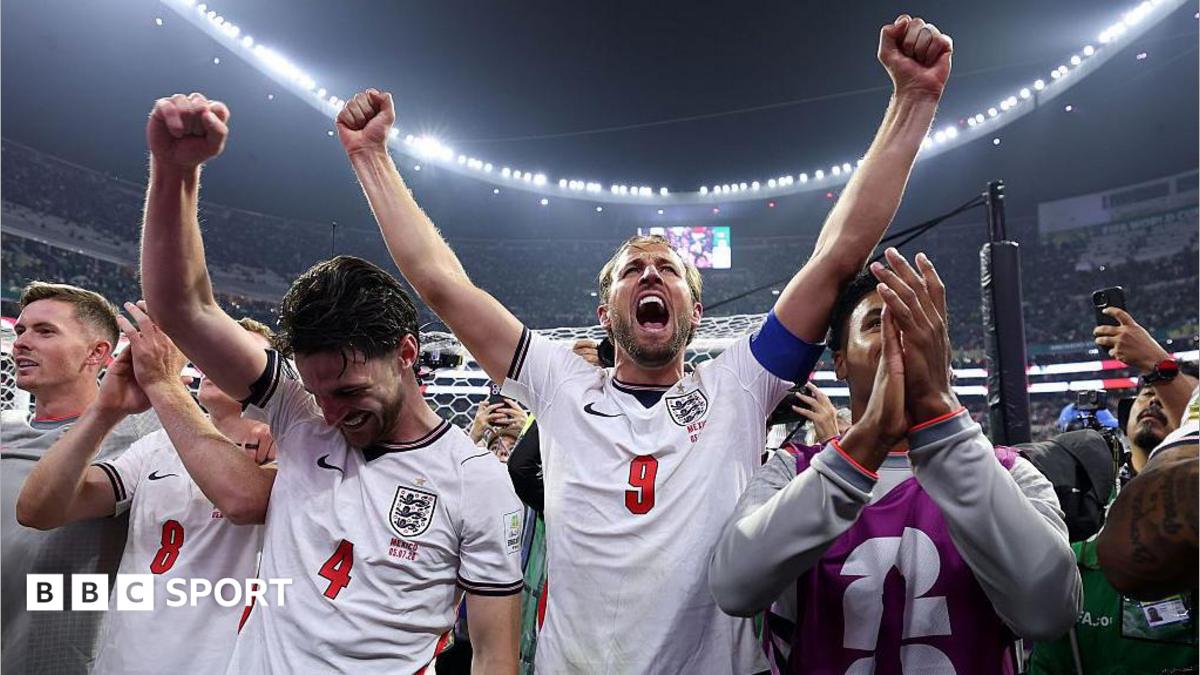
Yesterday's match in Mexico City was billed as a battle of attrition. It lived up to the billing in the most chaotic way possible. England dragged themselves to the World Cup quarter-finals, but the tactical price they paid was immense.
The headlines will focus on the dramatic scoreline, but the real story lies in the data sheets. England completed only 71.4% of their passes in the second half. This was their lowest completion rate since Thomas Tuchel took charge.
Usually, Tuchel's sides control matches through possession. Here, they choked. The thin air of the Azteca Stadium combined with a relentless Mexican press forced England into a direct game they did not want to play.
Yet, despite the loss of control, they emerged with a 3-2 victory. Their post-shot xG of 2.84 was their highest on foreign soil in tournament history. It was a match of extreme statistical variance.
The Azteca Altitude and the Passing Collapse
How Mexico Choked the English Midfield
Mexico set up in an aggressive 4-3-3 shape that shifted into a 4-1-4-1 out of possession. Their primary objective was to prevent Declan Rice from turning. In that task, they succeeded.
Rice finished the first half with just 22 completed passes, compared to his group stage average of 54 per half. The Mexican midfield trio of Edson Álvarez, Luis Chávez, and Érick Sánchez swarmed the central zone, forcing him backwards or wide. This localized pressure disrupted England's build-up play completely.
England's normal passing network features short, horizontal connections that disappeared against Mexico. The average distance of England's passes increased from 16.4 meters in the group stage to 21.8 meters in this match. This shift indicated panic rather than intent.
The Second-Half Physical Drop-Off
The altitude of 2,240 meters above sea level was always going to be a factor. The data shows exactly when the physical toll hit England. Between the 60th and 80th minutes, England's high-intensity runs dropped by 18% compared to their tournament average.
This physical decline had immediate tactical consequences, expanding the space between England's defensive line and midfield by 12 meters. Mexico exploited this gap repeatedly. As BBC Sport reported, the players relied on pure will to survive the closing stages, but that is a terrible long-term strategy.
Without the energy to press, England dropped into a low block that was far from secure. Mexico generated 1.95 xG, with 1.42 of that coming in the second half alone. England were bent double, barely managing to hold the line.
The Bellingham Sledgehammer and the Space He Exploits
The Tactical Anatomy of the Winner
Jude Bellingham has developed a habit of saving England when their structure fails. This match was no exception. His match-winning goal in the 78th minute was a masterclass in exploiting defensive hesitation.
The move began with a rare transition opportunity where Bukayo Saka received the ball wide on the right, drawing the Mexican left-back out of position. Harry Kane made a decoy run toward the near post, pulling the left-sided center-back with him. This movement created a gap in the half-space.
Bellingham recognized the opening instantly and made a late, driving run from deep to receive a progressive pass from Rice. The Mexican media later described the strike as an iron sledgehammer, according to Mexican media reports that reflected the suddenness of the blow. The shot carried an xG value of just 0.08, highlighting how individual brilliance bailed out a broken system.
Bellingham's Progressive Impact
Bellingham's raw output remains England's most potent offensive weapon. He received 12 progressive passes over the course of the match, more than any other player on the pitch. His ability to hold off defenders in tight spaces was essential.
He won 9 of his 14 ground duels, providing a physical outlet when England could not pass through the lines. However, his high positioning left Rice isolated to defend transitions alone. This tactical imbalance is something Tuchel must address before the next round.
When England lost the ball, the distance Bellingham had to recover was too great. This left a massive vacuum in the center of the pitch. A more disciplined opponent would have punished England severely for this gap.
The Rest Defense Failure and Tuchel's Ref Anger
The Statistics of the Transition Collapse
England's rest defense was non-existent for large stretches of the match. They allowed Mexico to launch 6 counter-attacks of 3 or more passes starting in England's defensive third. This is a staggering number for a Tuchel-coached team.
Usually, Tuchel demands a compact structure where at least five players remain behind the ball. Against Mexico, England often had only three players back. The full-backs were caught high up the pitch, leaving the center-backs exposed to direct runs.
This exposure led to a high number of fouls as England players tried to stop transitions early. England committed 19 fouls during the match, while Mexico committed 22. The stop-start nature of the game prevented either side from establishing any rhythm.
Tuchel's Tactical Frustration
The refereeing decisions certainly added to the tension. As Sky Sports reported, Tuchel was furious on the touchline, later calling the officiating not good enough. His anger, however, felt like a shield to cover up his own team's structural failures.
The referee allowed a physical game, which suited Mexico's aggressive pressing strategy. England's players complained about late challenges, but they also failed to adapt to the official's threshold. They kept trying to play short passes under pressure, turning the ball over in dangerous areas.
If Tuchel wants to blame the officials, he should also look at his own midfield setup. Inserting Conor Gallagher early in the second half did little to stop the bleeding, as he completed just 5 of his 9 passes and was dribbled past three times. It was a 30-minute cameo that offered running but zero control.
The Physical Cost Ahead of the Norway Clash
Miami and the Threat of the Norwegian Press
England now face Norway in Miami for a place in the semi-finals. If England repeat this performance, they will go home. Norway possess the physical profile and the tactical discipline to exploit England's transition vulnerabilities.
Unlike Mexico, who relied on emotion and the Azteca crowd, Norway play with mechanical efficiency. Their mid-block is compact, and they transition with speed. England's physical metrics must recover before they step onto the pitch in Florida.
The effort in Mexico City was described as historic. As The Mirror reported, it was labeled England's greatest victory on foreign soil. The numbers, however, show a team that survived on individual talent and a bit of luck rather than tactical superiority.
The Real Meaning of the Numbers
Winning when playing poorly is the hallmark of tournament contenders. But relying on your playmaker to hit low-probability shots from the edge of the box is unsustainable. The 2.84 xG England generated was bloated by high-quality chances created in transition, not sustained possession.
Against a defensive block as organized as Norway's, those transition opportunities will be scarce. Tuchel has a few days to fix his rest defense and restore passing rhythm. If he fails, the Azteca miracle will simply be the prelude to a Miami disaster.
Read Next
- Thomas Tuchel must resist the temptation to beat Mexico at their own game
- Why England's tactical gamble at the Azteca could end in disaster
- England's bizarre right-back experiment will play right into Mexico's hands
- Why Thomas Tuchel is about to run straight into Javier Aguirre's trap
- 🏆 World Cup 2026 — Full Coverage Hub
- 🏴 England World Cup 2026 — Three Lions Hub