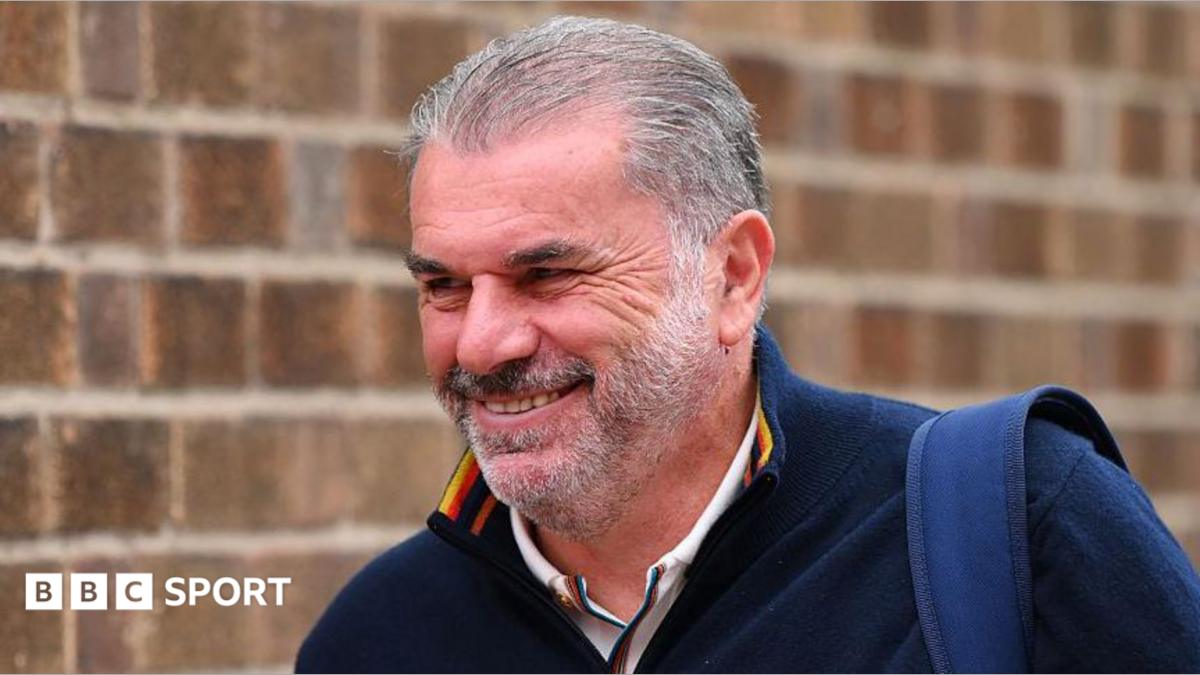
The announcement that Ange Postecoglou is taking over at Al-Nassr has sent shockwaves through the Saudi Pro League. As the BBC confirmed, the former Tottenham head coach is now tasked with managing Cristiano Ronaldo. On paper, it is a marriage of convenience between a coach looking for a new project and a club desperate for silverware.
In practice, it is a tactical contradiction that threatens to tear the team apart from day one. Postecoglou does not compromise on his footballing identity. His teams play with a suicidal defensive line, relentless counter-pressing, and extreme physical demands.
Ronaldo, now 41, exists in a completely different tactical dimension. The Portuguese forward is a pure penalty box predator who saves his energy for the final third. These two distinct approaches cannot coexist without one of them completely abandoning their core principles.
The upcoming season will expose these cracks immediately. When the campaign begins, the Riyadh Derby against Al-Hilal will serve as the ultimate diagnostic test. If Postecoglou deploys his signature high-pressing scheme, Al-Hilal will slice through them like a warm knife through butter.
The Mechanics of Postecoglou's Tactical Blueprint
To understand the problem, we must break down Postecoglou’s build-up and pressing structures. In his 4-3-3 system, the full-backs do not overlap; they tuck inside to form a temporary midfield double pivot. This creates a 2-3-5 attacking structure designed to suffocate opponents in their own half.
The wingers hug the touchlines, stretching the opposition block to create vertical passing lanes for the advanced midfielders. This system relies entirely on immediate, aggressive counter-pressing when possession is lost. The closest players must swarm the ball within three seconds to prevent the opponent from launching a counter-attack.
In his final season in North London, Postecoglou’s side recorded a PPDA (Passes Per Defensive Action) of 8.4, one of the most aggressive pressing figures in Europe. That level of physical exertion requires ten outfield players working in absolute harmony. If even one player fails to press, the entire system collapses.
A passive forward allows the opposition center-backs time to look up and pick a long pass. Against a high defensive line, a quarterback-style long ball is lethal. This is the exact vulnerability that opponents will target from the very first whistle of the season.
Postecoglou's journey from Glasgow to Riyadh, by way of North London, has been defined by one constant rule: his teams do not compromise on style, a trait noted during his Celtic tenure. He expects his players to run until they drop. The question is whether he can convince the most prolific goalscorer in football history to join the chase.
The Defensive Vulnerability of the Front Line
Cristiano Ronaldo is no longer capable of leading a modern press. During his time in the Saudi Pro League, his defensive actions have plummeted to career-low levels. He averages fewer than 3.5 pressures per ninety minutes, putting him in the bottom percentile of forwards worldwide.
His heat map shows a player who rarely ventures outside the width of the penalty box when his team is out of possession. Postecoglou cannot simply instruct Ronaldo to run. At this stage of his career, Ronaldo’s physical profile is geared towards explosive bursts inside the box, not sustained running in defensive phases.
If he is forced to chase center-backs for ninety minutes, his goalscoring efficiency will drop. Yet, if he is excused from defending, Al-Nassr will be playing with ten men whenever they lose the ball. This is not a minor detail; it is a structural flaw.
When Tottenham struggled under Postecoglou, it was often because their front three failed to lock down the opposition's first pass. With Ronaldo leading the line, Al-Nassr's midfield will be forced to cover double the ground. Players like Otavio and Marcelo Brozovic will find themselves exposed to constant transitions, left to defend vast expanses of open space.
In Ronaldo's last season, he converted a staggering 28% of his big chances, showing that his finishing remains elite. However, his team conceded 1.4 goals per game when he started, compared to just 0.8 when he was rested. This statistical trade-off shows that scoring goals often comes at the cost of team control.
This structural imbalance will put immense pressure on Al-Nassr's backline. Aymeric Laporte is a superb ball-playing defender, but he lacks the recovery pace required to play in a system that leaves 50 yards of space behind him. Pairing a slow backline with a non-pressing forward is a recipe for defensive catastrophe.
The tactical burden will fall squarely on Al-Nassr's midfield trio. Postecoglou typically demands that his number eights make runs into the box, effectively joining the attack. This leaves the single pivot, likely Brozovic, with the impossible task of policing the entire midfield line.
Brozovic is an exceptional reader of the game, but he is not a physical destroyer who can clean up every mess. When the press fails, Brozovic will be forced to choose between dropping deep to help the center-backs or stepping up to confront the ball-carrier. Either decision leaves a massive pocket of space for the opponent's attacking midfielders to exploit.
In the fast-paced transitions of modern football, these split-second decisions determine the outcome of matches. Al-Nassr's midfielders will find themselves overrun, outmaneuvered, and exhausted before the hour mark. By the 70th minute, the fatigue from constant recovery runs will set in.
Postecoglou's teams are notorious for conceding late goals when their physical levels drop. Without the squad depth to rotate high-energy midfielders, Al-Nassr will surrender leads in the final third of matches. This is where the tactical disconnect becomes a physical crisis.
The Prediction: A Riyadh Derby Reality Check
Al-Hilal are the worst possible opponent for an uncoordinated press. Under Jorge Jesus, they build up in a fluid 3-2-4-1 shape that excels at drawing opponents forward before playing through them. Ruben Neves drops between the center-backs to act as the primary playmaker, dictating the tempo with ease.
If Ronaldo allows Neves time on the ball, Al-Nassr's high line will be repeatedly exposed. Al-Hilal's wingers will exploit the space vacated by Al-Nassr's inverted full-backs. When the full-backs tuck into midfield, the flanks are protected only by the speed of the center-backs.
If the transition is quick enough, Al-Hilal will create two-on-one situations against Al-Nassr’s isolated defenders. We saw this vulnerability exposed repeatedly during Postecoglou's tenure in North London, where teams like Chelsea and Newcastle scored four or more goals by exploiting the wide areas. Al-Hilal’s rapid attackers will find joy in behind the high defensive line from the opening kickoff.
Let's also look at the set-piece situation. Al-Nassr conceded 14 goals from set-pieces last term, a weakness that Postecoglou historically struggles to fix. His refusal to employ a dedicated set-piece coach at his previous clubs is a well-known blind spot. Against a physical side like Al-Hilal, this stubbornness will prove costly.
Many pundits expect Postecoglou to adapt his style to suit Ronaldo's strengths, pointing to his tactical tweaks at Celtic as evidence of flexibility. But those tweaks were minor adjustments, not a fundamental rewrite of his footballing philosophy. Postecoglou has spent his entire career insisting that his way is the only way, and he is unlikely to change for a 41-year-old superstar.
The most likely outcome is a public power struggle that mirrors Ronaldo's final months at Manchester United, as Postecoglou demands high pressing and Ronaldo refuses to deliver it. The results will suffer, the dressing room will fracture, and the board will be forced to choose between them. This is not a project built for long-term success; it is a ticking time bomb.
For the opening match of the season, Al-Hilal will expose every single flaw in this new system. They will dominate possession, bypass the disjointed Al-Nassr press, and exploit the spaces behind Laporte. Expect a high-scoring affair where Ronaldo gets his customary goal, but Al-Nassr's defense is ripped to shreds.
Al-Hilal will win a chaotic encounter 4-2, leaving Postecoglou facing immediate questions about his tactical rigidity. The honeymoon period will last exactly ninety minutes before the reality of managing Ronaldo in a high-pressing system sets in. The Saudi Pro League is about to witness a fascinating tactical experiment, but it will end in tears for Al-Nassr fans.
Read Next
- Ange Postecoglou managing Cristiano Ronaldo is a recipe for beautiful disaster
- Spain will punish Portugal if Roberto Martinez doesn't drop Cristiano Ronaldo
- Portugal must drop Cristiano Ronaldo if they want to beat Spain
- Top 10: world
- 🇵🇹 Portugal World Cup 2026 — A Seleção Hub
- ⭐ Saudi Pro League 2025-26 — Ronaldo, Al Nassr & the Title Race