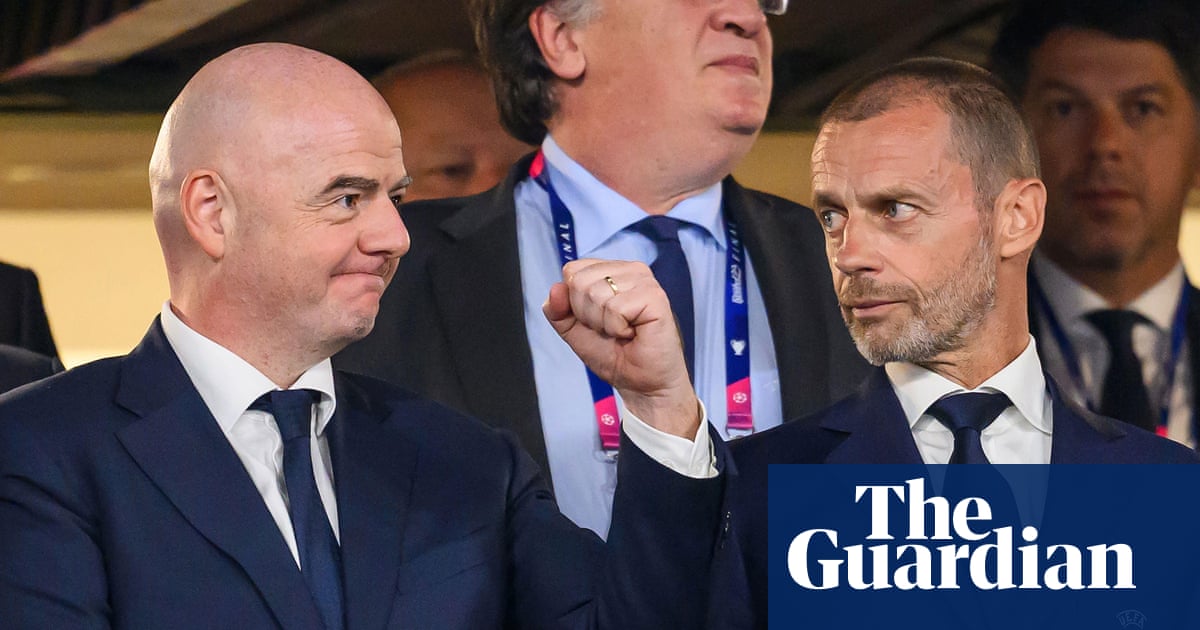
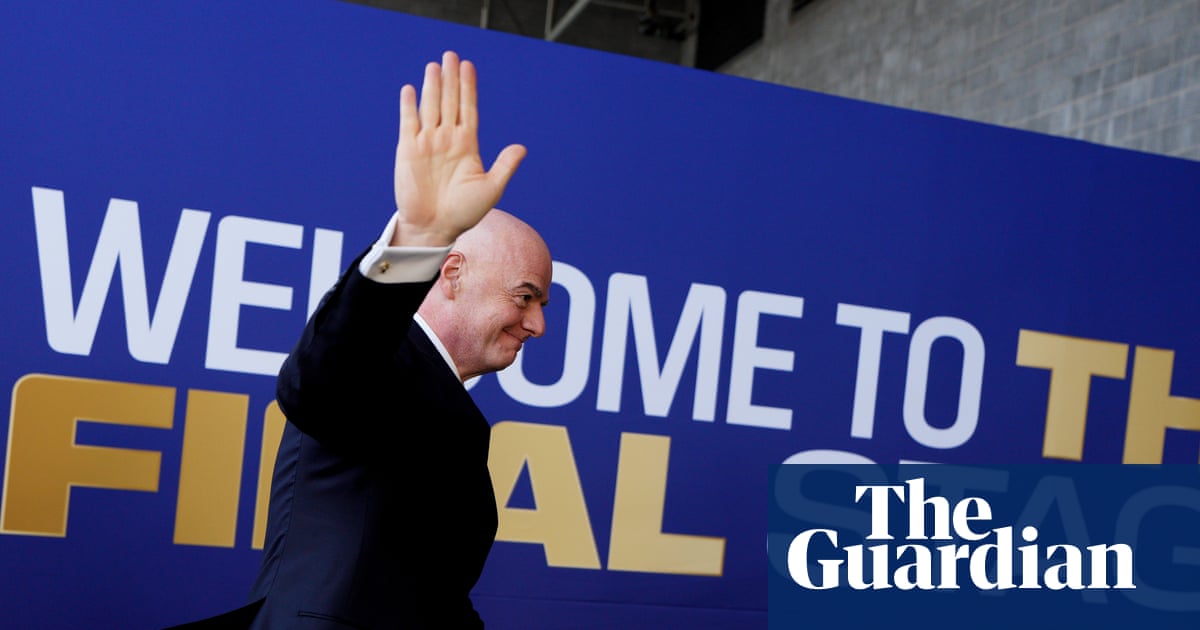
You have to appreciate the absolute poetry of Swiss politics. Switzerland is a nation so aggressively neutral that they watched two World Wars unfold from behind their chocolate shops and simply said, "Not our business." They store gold for international oligarchs without blinking an eye. But when it comes to Gianni Infantino, the Swiss Football Association took one look at his presidential track record and decided neutrality was off the table.
On September 30, 2026, the SFV executive committee dropped a hammer that echoed from Zurich all the way to Rabat. They officially withdrew their support for Infantino’s re-election bid as FIFA president. In a public statement, they admitted they could no longer justify standing behind the man running global football.
Let that sink in for a second. Gianni Infantino was born in Brig, Switzerland. FIFA's headquarters sits right in Zurich. This is not some disgruntled South American federation complaining about VAR decisions. This is his own home country looking him in the eye and handing him a pink slip. It is the football equivalent of a pro wrestler getting deafening boos in his hometown arena while the commentators scramble to explain why the crowd hates him.
Back in June 2026, the Swiss FA rubber-stamped their endorsement for Infantino’s next term like everyone expected. Fast forward just three months, and that backing completely evaporated. What causes a 90-day total collapse in faith? It turns out even the most patient Swiss bureaucrat breaks down when a leader starts treating world football like an aggressive private equity liquidation event.
The "Today I Feel" Era Catches Up
To understand how we arrived at this executive meltdown, you have to rewind to 2016. Infantino initially floated into the FIFA presidency as the harmless, bald guy who pulled plastic balls out of glass bowls during Champions League draws. He was supposed to be the clean-up guy after Sepp Blatter and Michel Platini got torpedoed by federal indictments and ethics bans. He was the safe, uninspiring substitute brought on in the 88th minute to hold the ball in the corner.
Instead of keeping a low profile, Infantino put on the captain's armband and immediately turned into a cartoon villain. Remember his press conference before the 2022 World Cup in Qatar? That was the infamous "Today I feel Qatari, today I feel Arab, today I feel disabled" monologue. It left a room full of international journalists wondering if they were watching a sports presser or a bizarre piece of performance art. That speech gave us a front-row seat to his leadership style.
Since that moment, his tenure has been an endless marathon of empire-building and tournament inflation. He forced a 48-team World Cup onto the schedule for 2026, destroying the tight group stage tension that made the tournament special. Then he invented the bloated 32-team Club World Cup, slapping another summer of fixture congestion onto players who were already dragging their hamstrings across the pitch.
Every decision felt calculated to extract maximum money from broadcast networks and state funds. If you handed Infantino a traditional chess board, he would add sixteen extra pieces, double the square count, and try to sell corporate naming rights to the rooks.

Private Equity and the Balogun Circus
The turning point for the Swiss FA was not just general exhaustion with Infantino's antics. It was two specific, jaw-dropping blunders that proved governance in Zurich had gone off the rails.
First came the disastrous proposal in July 2026 known as "FIFA Forward Enterprise." Infantino floated a scheme to launch a commercial subsidiary, opening the door for private equity firms to buy ownership stakes in FIFA's biggest tournaments. Think about the sheer greed behind that idea. The World Cup is a global treasure passed down through generations of supporters. Infantino wanted to pitch shares of it to hedge funds like a struggling social media app.
Public outcry forced FIFA to shelf the plan, as AP News reported during the initial backlash. But the damage was done. The Swiss FA recognized it as an existential threat to how sport governance should operate. You cannot preach about protecting the integrity of the game while trying to sell pieces of its premier event behind closed doors.
Then came the bizarre handling of the Folarin Balogun case during the 2026 World Cup tournament. FIFA's disciplinary committee altered a player suspension rule right in the middle of competition. That decision transformed routine sporting discipline into a murky political favor. When a governing body alters its own rulebook during a live tournament, you are no longer running an elite sports organization. You are running a Sunday pub league where the owner of the ball changes the offside rule when his team is losing.
Those two missteps exposed a pattern of arbitrary control. The Swiss FA realized they could not defend those moves without burning their own credibility on the international stage.
The Mutiny Spreads, But Europe's Hypocrisy Remains
Switzerland is not acting as a lonely rogue actor here. Their rebellion matches a sweeping wave of opposition across European football. National associations from England, Wales, France, Serbia, and Finland have all withdrawn their backing or voiced explicit opposition to Infantino's re-election.
UEFA executives are currently meeting behind closed doors to field a challenger candidate before the deadline for the 77th FIFA Congress in Rabat, Morocco. The March 2027 presidential election was supposed to be a victory lap for Infantino. Now it promises to be an absolute dogfight.
However, let us inject some cold reality into this discussion. European football leadership is hardly a heroic force for good here. The sudden outrage from UEFA members reeks of shameless hypocrisy. For nearly a decade, European associations stood by quietly while Infantino built his political fortress across Africa, Asia, and Oceania.
Infantino’s real power base was never built in London, Paris, or Zurich. It was constructed by pumping millions of dollars in FIFA development funding straight into smaller member nations. Under FIFA's "one nation, one vote" system, a vote from Montserrat carries the exact same weight as a vote from Germany or Brazil. European administrators ignored that simple math because their own domestic leagues were generating billions in television revenue.
Now that Infantino has turned his expansion tactics onto international calendars and tried to monetize global tournaments, European FAs are suddenly shocked to find a emperor in their boardroom. They helped build this voting system through years of passive compliance. Now they are discovering that withdrawing support in Zurich does not automatically guarantee votes in Rabat. Infantino still holds massive clout across non-European confederations, and defeating him will take more than stern press statements from Western Europe.
The Tab Is Finally Due in Zurich
Even if Infantino maneuvers through the Rabat congress and secures another term, his aura of invincibility has dissolved. When your native country publicly declares that your leadership is indefensible, your political armor is gone.
Football supporters have endured ten straight years of bloated formats, absurd press conferences, and aggressive commercial expansion disguised as global progress. We watched the sport get sliced up, stretched thin, and oversaturated until fans started tuning out.
The Swiss FA finally took a stand that ordinary supporters have wanted to see for a decade. They drew a firm line and refused to validate the ongoing circus. It is a massive symbolic blow, and in international sports politics, symbols carry real weight.
If Gianni Infantino wants to hold onto his throne through 2027, he will have to do it without the backing of his home nation and the city where FIFA sits. The tab has arrived at the table, and for the first time in his tenure, the boss has run out of cheap tricks.