The breakdown in governance
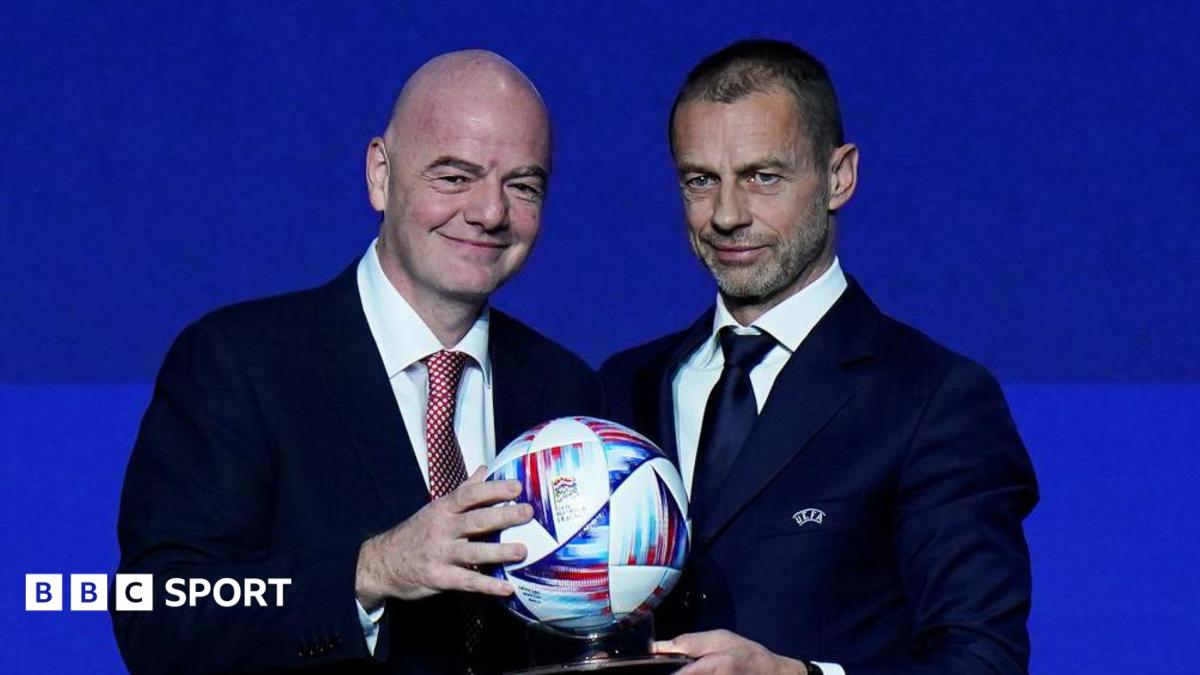
Uefa officials have formally lost confidence in Gianni Infantino’s leadership of Fifa. The trigger for this rift is the abandonment of a controversial, multi-billion dollar investment project that was intended to reshape the commercial future of international football tournaments.
Internal discussions suggest that European football’s governing body views the current Fifa administrative direction as chaotic. The collapse of this specific financial roadmap has left major broadcast and sponsorship deals in limbo, creating an administrative vacuum at the highest levels of the sport.
The administrative fallout
This is not the first time Uefa and Fifa have clashed over financial policy. Previous tensions during the 2022 World Cup planning phase highlighted structural disagreements regarding prize money distribution and calendar congestion.
According to recent reports from the BBC, the friction is now centered on a lack of transparency regarding the abandoned investment plan. Member federations within Europe feel the decision-making process lacked the necessary oversight, leading to a breakdown in cooperation that will likely stall progress on future global event planning.
The cost of the stalemate
The immediate impact is a freeze on long-term strategy. Without a unified front, Fifa’s ability to secure stability for upcoming tournament cycles is compromised, as Uefa's loss of confidence signals to other confederations that the status quo is unsustainable.
The lack of a coherent commercial strategy leaves national associations without clear budgeting forecasts. While the players remain on the pitch, the backend operations of international football are currently operating in a reactive state, failing to address the fundamental fiscal pressures of the modern game.
A pattern of institutional failure
Critics point to this as another example of how centralized authority in global football often prioritizes politics over practical execution. The failure to launch the investment vehicle reflects poorly on the oversight committees responsible for risk management, revealing a fundamental disconnect between executive ambition and market reality.
History shows that these high-level disputes rarely resolve quickly. When similar rifts emerged during the early 2010s, it took years of litigation and leadership turnover to normalize relations between Zurich and Nyon. Observers note that the current situation is arguably more precarious because it involves primary revenue-generating initiatives rather than simple administrative policy.
Strategic consequences
Competitors of traditional international tournaments, such as private club-led initiatives, are likely to observe this discord with interest. If the established governing bodies cannot provide a predictable commercial environment, stakeholders may begin to seek alternative avenues for their capital.
The current internal paralysis is a clear failure of consensus-building. By failing to secure buy-in from the most powerful confederation, the leadership has effectively neutralized its own influence, leading to a deadlock that serves no one in the sport.
Looking ahead
Expect significant public posturing at the upcoming autumn summit. Whether this translates into a leadership challenge remains to be seen, but the tone of the communication between the two bodies has shifted from professional negotiation to public distancing.
The reality is that football operates on a four-year cycle, and this friction is already eating into the planning window for the next major tournament selection process. Every month spent arguing in the boardroom is a month where the actual development of the sport is neglected.
This disconnect between governance and the grassroots game is becoming the defining feature of the Infantino era. Unless a compromise is reached before the next general assembly, the fragmentation of international football governance will likely become permanent.