The Right-Back Crisis of England's Own Making
Thomas Tuchel has spent his career building complex, rigid tactical systems. They are designed to control variables. Yet, as England prepares for tonight's World Cup Round of 32 clash against the Democratic Republic of Congo, the German manager is staring at a vacancy he cannot hide.
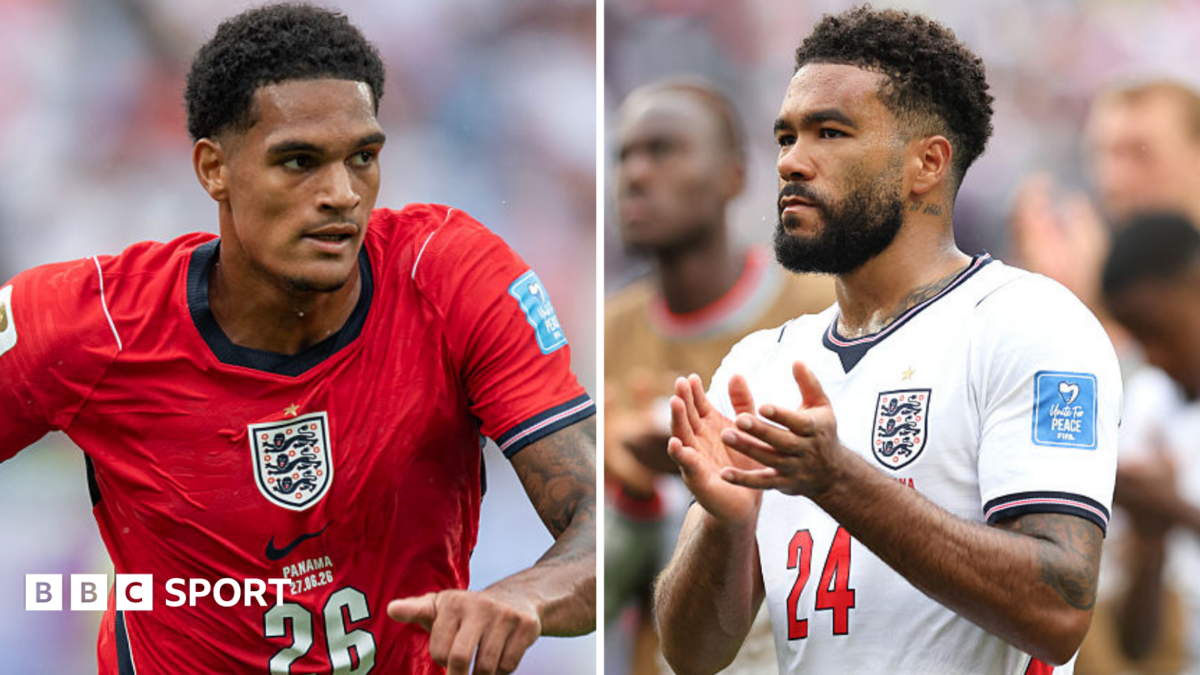
Reece James is sidelined by a hamstring pull from the Ghana match. Jarell Quansah is also ruled out after twisting his ankle against Panama. As reported by BBC Sport, both players will miss the match because of injury. This leaves the squad completely off-balance on the right side.
Add in Tino Livramento’s pre-tournament calf injury. The cabinet is entirely bare. This is not just bad luck. It is the logical consequence of a stubborn squad selection.
Tuchel chose to leave Trent Alexander-Arnold out of the final 26-man roster. He even left him off the preliminary 55-man list, which, as The Guardian discussed, sparked a national debate. He cited concerns over defensive work rate and positioning.
Tuchel's previous success at Chelsea was built on defensive stability in transition. In his preferred system, the wing-backs were protected by a solid back three and a double pivot. With England, he has tried to replicate this by playing Reece James as a right-sided defender who can shift out wide. But with James out, the structural integrity of his defense is compromised.
By prioritizing a defensive system that required defensive full-backs, Tuchel left himself with no backup options. Now, England must rely on Djed Spence, who spent the season on loan and is known for defensive lapses. Alternatively, he can ask central defender Ezri Konsa to play out of position on the right flank.
If Konsa starts, the tactical cost is obvious. He has personal ties to tonight's opponents, as his father is Congolese. But Konsa is a central defender. Shifting him to the right against a dynamic winger will limit England's ability to progress the ball. It will force Bukayo Saka to isolate himself against a low block, with no overlapping support.
Djed Spence and the Left-Flank Risk
If Djed Spence starts, England's entire tactical structure changes. Tuchel’s system relies on an asymmetric build-up. In the group stage, when England built play, they shifted into a 3-2-4-1 shape in possession.
Reece James would tuck inside to form a double pivot alongside Declan Rice, while Levi Colwill pushed forward on the left. This allowed England to keep a stable defensive cover during their 4-2 win against Croatia, a 0-0 draw with Ghana, and a 2-0 victory against Panama. But Djed Spence is not Reece James.
Spence's natural instinct is to run forward. He constantly hugs the touchline and overlaps the winger. If Spence plays like an orthodox wing-back, the right side of England's defensive cover will be exposed.
During his season on loan, Spence registered a pass completion rate of only 78%. He frequently lost possession in the middle third. Against a fast-breaking team like DR Congo, those turnovers will be lethal.
Spence's loan spell at Genoa showed that he still struggles with tracking back when possession is lost. He frequently gets caught ball-watching, allowing opponents to make blind-side runs behind him. If Desabre's side exploits this, England will find themselves in constant defensive recovery mode.
If Spence pushes high, John Stones will be forced to drift wide to cover the right channel. This will pull England's defensive line out of shape. It will create spaces in the center for the Congolese forwards.
Tuchel's preference for structural control is well documented. But control requires players who can execute specific roles. Spence's defensive positioning is a major weakness, and in transition, he often fails to recover his position quickly enough, leaving the right center-back isolated.
Desabre's Congo: The Ultimate Transition Machine
Under Sébastien Desabre, the Democratic Republic of Congo has become a stubborn, disciplined unit. They did not reach the Round of 32 by accident. They finished third in Group K, earning a historic 1-1 draw against Portugal and a vital 3-1 victory over Uzbekistan.
This was their first-ever men's World Cup victory. It was built on a very specific tactical blueprint. Desabre sets his team up in a compact 4-4-2 or a mid-block 4-2-3-1.
The defensive line is anchored by Marseille's Chancel Mbemba and former Manchester United defender Axel Tuanzebe. They do not press high. Instead, they wait for the opponent to enter the middle third before triggering their press.
Their pressing trigger is usually a pass into the half-space. Midfielders like Noah Sadiki and Gaël Kakuta look to swarm the ball. Once they regain possession, they transition rapidly.
In the center of the pitch, Samuel Moutoussamy and Charles Pickel provide a physical screen for the back four. They focus on disrupting the passing lanes to Bellingham and Foden, forcing England to play wide. This forces England to rely on crosses from deep, which Mbemba and Tuanzebe can easily clear.
The main outlet is Arthur Masuaku on the left, who immediately looks for Yoane Wissa. Wissa, who scored twice in the 3-1 win over Uzbekistan, is a master of the diagonal run. He starts wide on the left and cuts inside behind the opposition right-back.
With Djed Spence likely starting at right-back for England, Wissa will target this exact space. In the group stage, Wissa registered an impressive shot conversion rate. This makes him the most dangerous player on the pitch.
Wissa's movement is particularly dangerous because he does not stay in one zone. He will drift into the space between the center-back and fullback, waiting for midfielders to play diagonal balls over the top. This direct threat contrasts sharply with Harry Kane's tendency to drop deep, which often leaves England without a runner in behind.
On the other side of the pitch, DR Congo has their own defensive weapon. Former Manchester United right-back Aaron Wan-Bissaka has declared for the Leopards and will start at right-back. This creates a fascinating duel: Bukayo Saka vs. Aaron Wan-Bissaka.
Saka is England's main creative hub. But Wan-Bissaka is perhaps the best 1-on-1 defender in the world. In the Premier League, Wan-Bissaka won over 70% of his defensive duels. If Wan-Bissaka nullifies Saka, England's attack will become predictable and slow.
The Prediction: Why a Shock is on the Cards
Tuchel's England wants to play slow, possession-oriented football. They averaged 63% possession during the group stage. However, their attacking threat was highly inconsistent.
Stripping away the chaotic opening game against Croatia, they generated a mere 0.95 non-penalty xG against Ghana and Panama combined. They struggle to break down low blocks. Now, they face a team that has already frustrated Portugal and has the speed to exploit their right-back void.
If Spence starts, his positioning will drag John Stones out of the defensive line to cover the right channel. This will open up space for Wissa and Cédric Bakambu to run at Levi Colwill. If Konsa starts, the right flank will be dead offensively, allowing DR Congo to shift their entire defensive block toward Saka and Bellingham.
England's selection crisis has stripped them of tactical flexibility. This will be a grueling, frustrating evening for England fans. Expect DR Congo to sit deep, absorb England's sideways passes, and strike on the counter-attack.
I predict a historic upset in San Francisco tonight. DR Congo will score early on the break through Wissa, hold off England's desperate late pressure, and secure a famous 2-1 victory in extra time.
Read Next
- Why England should dread DR Congo's low block in the last-32
- Thomas Tuchel's selection crisis makes England vulnerable to DR Congo
- Top 10: Jarell Quansah's Defining Career Milestones
- England's right-flank breakdown is setting up a World Cup disaster against DR Congo
- 🏆 World Cup 2026 — Full Coverage Hub
- 🏴 England World Cup 2026 — Three Lions Hub