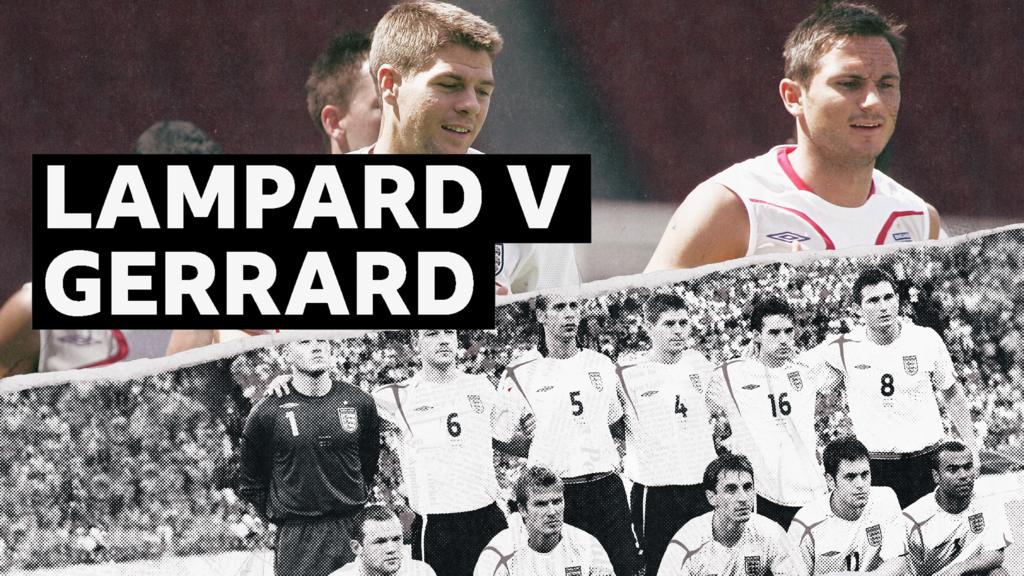
The 2006 England Midfield Paradox
England arrived at the 2006 World Cup with a squad boasting an embarrassment of riches. Sven-Goran Eriksson possessed arguably the most talented midfield in the nation's history, but failed to synthesize it. This list ranks the moments of tactical rigidity and personnel failures that defined the era of the 'Golden Generation'.
10. The 4-4-2 Obsession
Eriksson refused to deviate from the flat 4-4-2 formation despite the clear tactical void it created. By pairing Steven Gerrard and Frank Lampard in the center, England surrendered all defensive cover. Other nations were playing hybrid systems by 2006, yet England remained stuck in the past. It was a structural failure that essentially nullified the attacking output of both stars.
9. The Scholes Retirement Aftermath
Paul Scholes retiring from international football in 2004 left a gaping hole that nobody filled. His vision allowed the team to breathe during the turn of the millennium. Instead of finding a pivot, Eriksson crammed attackers into a crowded central zone. This departure signaled the beginning of the end for fluent English possession play.
8. The Lampard-Gerrard Overlap
The two legends consistently occupied the same pockets of space on the pitch. They were both elite box-to-box operators who required license to roam forward. By forcing them to play alongside each other, England essentially cut its attacking options in half. Neither could fully express their game without compromising the other.
7. Owen Hargreaves' Isolated Brilliance
Hargreaves was the only midfielder capable of holding the defensive line with discipline. He was frequently overlooked or played out of position to accommodate the more famous names. In the 2006 quarter-final against Portugal, he was arguably England's best player. His excellence only served to highlight how misguided the team selection had been all tournament long.
6. The Lack of a Tactical Plan B
When the starting XI faltered, Eriksson showed nothing in his repertoire to force a change. Substitutions were consistently late and reactive rather than proactive. He often looked to the dressing room for an answer that he should have provided on the training ground. Watching England scramble for late goals against inferior opposition became a standard summer experience.
5. The Rooney Red Card
Wayne Rooney getting sent off against Portugal defined the 2006 campaign as a disaster. While the incident remains iconic, it masked the fact that England were struggling to create chances with 11 men. The team relied too heavily on individual brilliance rather than collective patterns. It was a chaotic conclusion to a tournament defined by confusion.
4. The Defeat to Portugal on Penalties
England exiting via a shootout was the predictable final chapter for this group. Watching the squad struggle to control the game for 120 minutes made the loss feel earned. The tactical inability of the midfield to dictate tempo against Deco and Maniche was glaring. This match remains a point of deep frustration for those who expected a deeper run.
3. The Quarter-Final Midfield Vacuum
In that same quarter-final, England looked frantic whenever they touched the ball. There was no composure or rhythm at the base of the formation. As recent retrospectives from staff highlight, the coaching team simply could not get them to function as a unit. They lacked the tactical humility to adapt for the benefit of the side.
2. The Failure to Integrate Carrick
Michael Carrick arrived in the squad as the natural replacement for a deep-lying playmaker role. Eriksson rarely trusted him, preferring to shoehorn attacking midfielders into defensive slots. It remains a staggering decision to leave a player of his passing range on the bench in high-stakes matches. This neglect ensured England never held possession efficiently enough to win major honors.
1. The Inability to Adapt for the Starters
The number one moment is the collective failure to build a system around Gerrard and Lampard that actually functioned. It forced two of the world's best players into a position where they were constantly checking their shoulders. They were essentially sabotaged by a management team desperate to keep everyone happy. It was a lost decade of talent that remains the low point of modern English international football.
The Big Picture
Reflecting on 2006 serves as a stark reminder that talent without a cohesive structural philosophy is ultimately just noise. While players like those mentioned in the BBC analysis were world-class, the lack of managerial adaptation cost them a legacy. England's inability to reconcile individual ego with team utility remains a cautionary tale.
Honorable Mentions
The decision to play Ledley King in midfield, the constant injury concerns surrounding Rooney, and the lack of a defined captain's role during squad rotations.