Tuchel's Right-Back Blindspot Threatens England's Atlanta Campaign
Exactly zero. That is the number of fit, natural right-backs available to Thomas Tuchel as England prepares for its round-of-32 clash against the Democratic Republic of Congo in Atlanta. While England finished top of Group L with seven points, this numerical vacancy looms over their entire World Cup campaign.
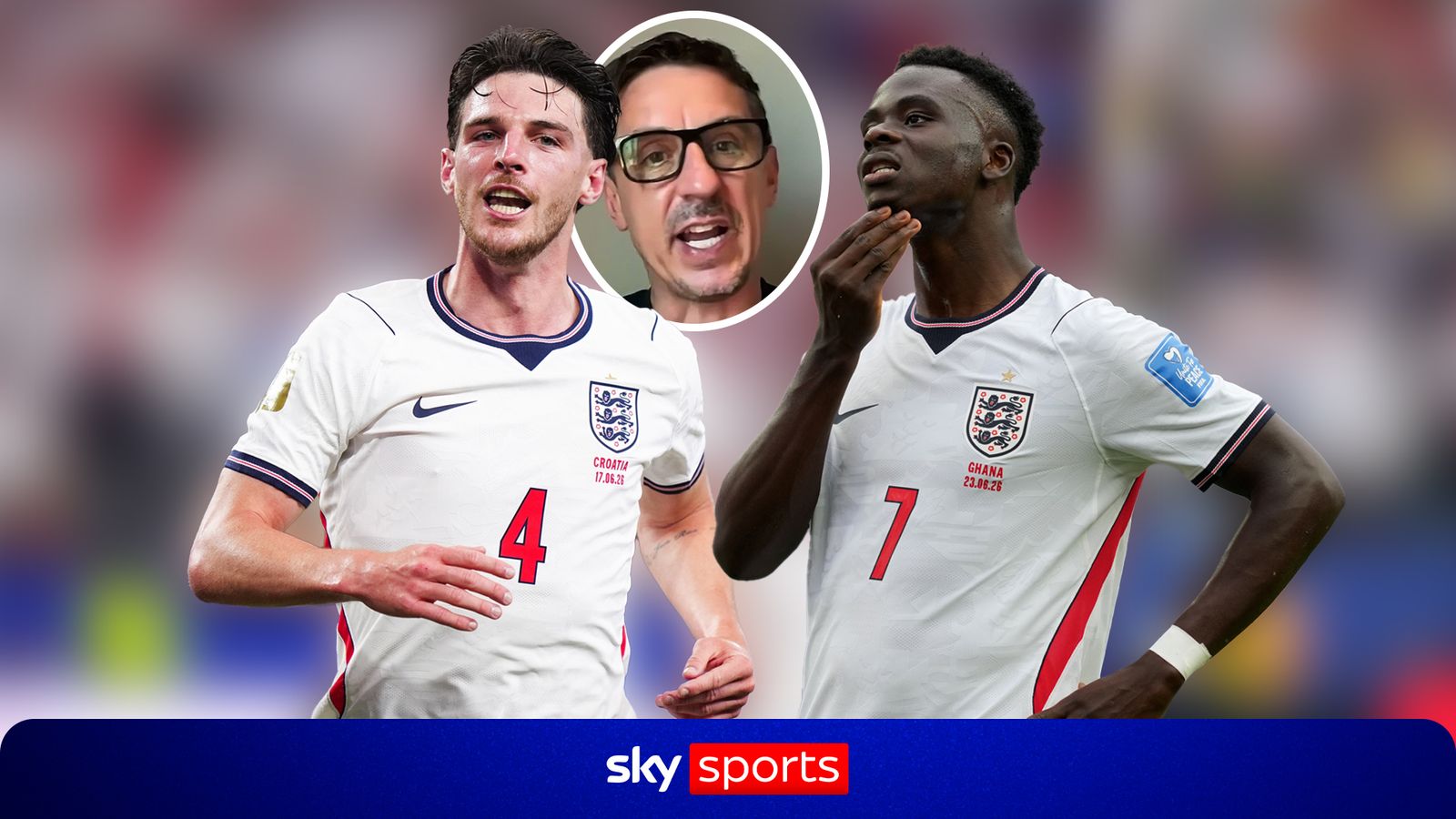
This crisis is born of selection arrogance. It has left a squad that once boasted defensive depth completely exposed. Gary Neville, who accumulated 85 caps as a specialist right-back for England, did not mince words on Sky Sports. He accused the national setup of repeatedly disrespecting the full-back role.
Tuchel believed he could navigate a tournament with fragile defensive assets. That gamble has backfired before the knockouts have even begun in earnest. Expecting midfielders or central defenders to simply plug these wide gaps is a recipe for failure against elite wingers.
The Anatomy of a Self-Inflicted Crisis
The warning signs were flashing red before the tournament. First-choice right-back Reece James arrived with a well-documented history of muscular issues. Yet, he was selected alongside Tino Livramento, another player whose recent seasons have been interrupted by long-term injuries.
Predictably, Livramento withdrew before the opening match against Croatia due to a calf problem. He was replaced in the squad by Trevoh Chalobah. Then, during the grueling 0-0 draw against Ghana in Foxborough, the inevitable occurred.
James suffered a severe hamstring injury. He is now unavailable until the latter stages of the tournament, as Sky Sports reported. When Jarell Quansah was drafted in to play out of position, he promptly twisted his ankle during the final group game.
This leaves Tottenham’s Djed Spence as the last option. Spence was selected primarily as left-back cover. Now, he must cross flanks to patch up a broken defensive line.
Compare this to previous tournaments under Gareth Southgate. England famously traveled with four right-backs to ensure tactical flexibility and structural redundancy. Tuchel has gone to the opposite extreme.
He selected a top-heavy squad that prioritizes central defensive blocks and attacking stardust. He did this at the expense of basic positional security. Now, against a physical DR Congo side in Atlanta, England must deploy a makeshift backline.
The Tactical Domino Effect on Saka and Rice
The conventional view is that a right-back crisis merely hurts the defensive solidity of the right flank. The reality is far more damaging to England's attacking structure. A detailed look at the group stage pass maps reveals a counterintuitive truth.
The lack of a natural right-back has completely broken Bukayo Saka’s game. Without an overlapping runner to occupy the opposition left-back, Saka is being doubled up on in every possession phase. Against Panama, Saka was forced to receive the ball much deeper in his own half.
Saka's Structural Isolation
This structural isolation forces Saka to run through brick walls just to progress the ball. He has played high-intensity football for Arsenal and England for three consecutive years. Neville observed that Saka looks like a player who has run himself into the ground, lacking his usual explosive sharpness.
The Lateral Physical Strain on Rice
The dysfunction extends directly into the engine room. Declan Rice, who has carried a similar physical load for club and country, is showing signs of breakdown. During the opening match against Croatia, Rice was substituted when the score was 3-2.
While some assumed Tuchel was managing his minutes, the midfielder was carrying a calf strain. That injury subsequently forced him out of the Panama match. The tactical link between the right-back injury and Rice's calf strain is direct.
Without a natural right-back to defend the wide channel, the right-sided midfielder must cover double the lateral defensive distance. When Ezri Konsa or Quansah plays at right-back, they lack the recovery speed to cover the space behind them. This forces Rice to sprint outward to protect the half-spaces.
It is a demanding physical task that has broken England's defensive shield. Against Ghana, this structural gap was exposed repeatedly. It required a desperate Konsa tackle that should have resulted in a penalty.
Evaluating the Alternatives for Atlanta
Tuchel faces a stark tactical choice for Wednesday’s clash. He can start Spence at right-back, a player who has spent his recent club career playing left-back. Alternatively, he can deploy Konsa or Quansah out of position, prioritizing defensive height over lateral mobility.
Neither option is appealing against a DR Congo side that qualified as one of the eight best third-placed teams. DR Congo finished behind Colombia and Portugal in a highly competitive Group K. They are a team designed to exploit defensive transition phases.
The Spence Flank-Swap
If he selects Spence, England gains width but loses defensive aerial presence. Spence's naturally left-footed preference when playing under pressure could also slow down England's ball progression on the right wing. This structural vulnerability will be a primary target for Congo's transitional runners.
The Centre-Back Block
If Tuchel selects a central defender like Konsa at right-back, England will struggle to progress the ball cleanly. Konsa does not possess the passing range or vertical positioning to transition the ball quickly. This forces the central midfielders to drop deeper to collect possession, flattening the shape.
This is where Tuchel's tactical decisions will be tested. He has promised that England will grow as the tournament progresses, telling reporters after the 2-0 win over Panama that "the bigger the game, the bigger England will be." You can read more about his post-match comments on Sky Sports News.
Yet, no amount of motivational rhetoric can fix a team that cannot defend its own flanks. If Congo exploits these wide channels early, Tuchel's tactical plan will disintegrate rapidly. The lack of cover has created a single point of failure.
The Kane and Bellingham Oasis
Fortunately for England, their individual quality in central areas remains world-class. Jude Bellingham has emerged as the tournament's outstanding midfielder, performing at an elite level. Against Panama, Bellingham was England's best player in a difficult first half, carrying the progressive burden when the structure around him faltered.
His physical robustness stands in sharp contrast to the fatigue showing elsewhere in the squad. Then there is Harry Kane, who continues to defy age and physical fatigue. By scoring against Panama, Kane reached 11 career World Cup goals, officially surpassing Gary Lineker's long-standing English record of 10.
Kane's relentless efficiency explains why elite clubs like Barcelona remain heavily interested in signing the Bayern Munich forward, as reported on Sky Sports. His ability to drop deep and link play is vital if England's wide areas remain stagnant.
Yet, Kane and Bellingham cannot carry this team alone. The other eight outfield players are dogged by physical issues or structural mismatching. To win a World Cup, a manager must construct a functional collective where every piece supports the core stars.
By neglecting the right-back position, Tuchel has built an engine with a missing cylinder. Whether DR Congo has the tactical intelligence to exploit it remains the defining question of England's summer.
Read Next
- Why England's right-back crisis gives DR Congo a path to an upset
- How Virgil van Dijk is holding Koeman's fragile Dutch defense together
- England won but the internet is absolutely roasting Thomas Tuchel
- Why Canada's aggressive press might crash against South Africa
- 🏴 England World Cup 2026 — Three Lions Hub