
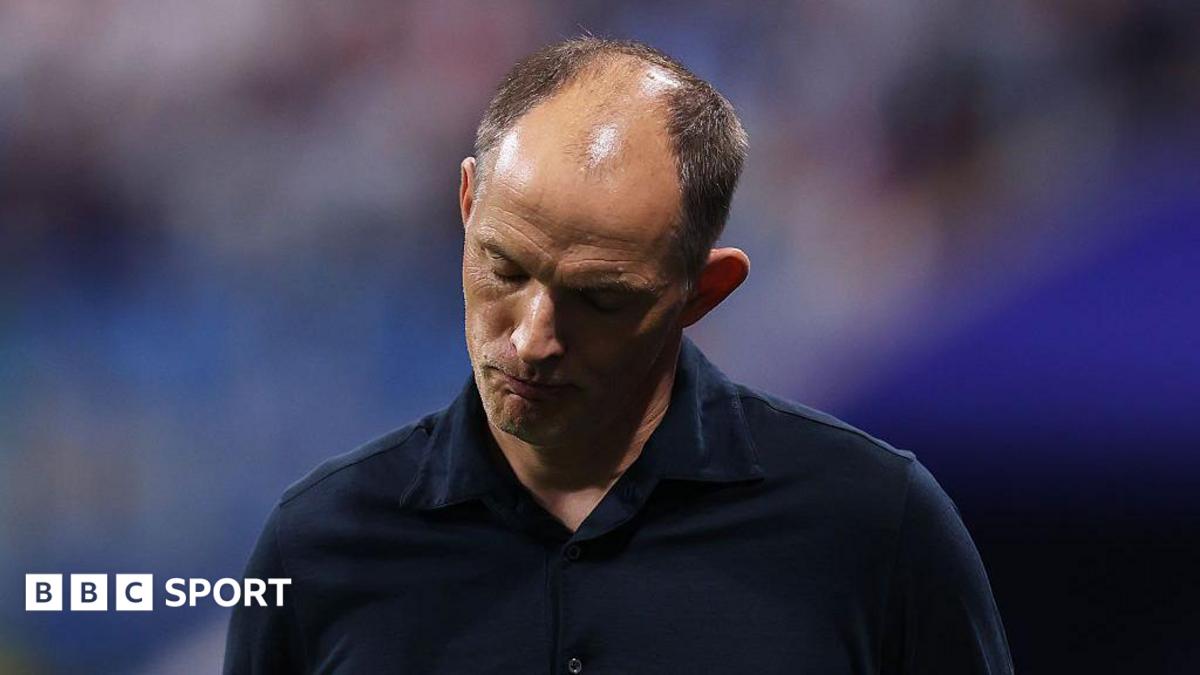
The Tuchel era stumbles in high-profile test
England’s defeat to Argentina has prompted immediate internal debate regarding the efficacy of Thomas Tuchel’s tactical shift. While the change from Gareth Southgate’s disciplined, possession-heavy style was billed as a transformation, the result mirrored the stagnation that plagued the previous regime during tournament exits.
Technical staff expected Tuchel to introduce a higher press and faster vertical transitions. Instead, the team mirrored the conservative tendencies seen under Southgate, specifically against elite opposition. The transition from one manager to another was sold to the public as a bold pivot, yet the output remained stubbornly familiar.
Defining the tactical gap
Tuchel’s reputation for tactical flexibility in club football—most notably his 2021 Champions League run—is now under the microscope. Critics pointing toward the midfield disconnect are finding evidence in the data. Against Argentina, England’s ball progression failed to circumvent the high-pressure traps set by the opposition.
If the plan was to move away from the cautious nature of the previous administration, this performance functioned as a sobering reset. It raises questions about whether the squad is being asked to play for a manager who values risk, or if players are reverting to the safety of Southgate-era patterns when matches reach a boiling point.
The weight of expectation
The transition from Southgate to Tuchel was intended to bring a winning edge to a team that reached multiple finals only to fall at the final hurdle. Losing to Argentina—a side that capitalizes on precisely the type of midfield turnover that haunted England—is a poor look for a new manager establishing his identity.
Tuchel currently sits in the middle of a delicate window. The FA invested in his appointment specifically to capture the trophies that narrowly slipped away in recent years. If this loss is not an anomaly, the board’s decision to move on from a stable culture for a high-risk personality will face intense scrutiny.
Identifying the flaws
The defensive shape showed cracks that have been present since the late stages of the previous cycle. Specifically, the lack of a dominant holding midfielder to dictate the pace against pressing sides left the backline over-exposed. This failure to adjust during the second half suggests the coaching staff may be struggling with squad depth issues.
Beyond the tactical frustrations, the lack of on-pitch leadership when the momentum shifted is alarming. A manager of Tuchel’s pedigree is brought in to fix that exact psychological block. Failure to rectify this within the next two months will lead to a media frenzy regarding the validity of the FA’s current path.
A look at the numbers
The side struggled to maintain possession in the final third, recording a low conversion rate that mirrored poor performances from 2024. Despite the intent to overhaul the attack, the final ball remained erratic. Tuchel’s immediate task is to identify why a team with such raw creative talent is struggling to execute basic patterns in high-stakes fixtures.
Ultimately, the England setup remains caught between two identities. They are no longer the defensive-minded unit of the past, but they are clearly not yet the dominant attacking force promised by the hiring of a serial winner. The next set of qualifiers will serve as a definitive litmus test for whether this experiment can succeed.
Unless the midfield chemistry improves, the team will continue to struggle against top-tier opponents. Managing a national team requires different pacing than the daily grind of club management, a lesson Tuchel may be learning the hard way. The honeymoon period is officially over, and the pressure is already rising.
Read Next
- Thomas Tuchel keeps the keys to the kingdom despite 2026 World Cup failure
- Thomas Tuchel gets the keys to the England car and it has no wheels
- Thomas Tuchel is clinging to his England job after the Argentina collapse
- Gary Neville is beefing with defenders again because of course he is
- 🇦🇷 Argentina World Cup 2026 — Defending Champions Hub
- 🏴 England World Cup 2026 — Three Lions Hub





