
Thomas Tuchel's England are playing with fire at the World Cup
The Spark That Lit the Technical Area
Thomas Tuchel did not hide his rage. The German coach spent three minutes gesturing wildly at the fourth official, his hands tracing the trajectory of a sliding goalkeeper in the humid air. The flashpoint in the last-32 stage of the World Cup was not just a refereeing disagreement. It was a moment that crystallized the tension running through England's tactical setup under their new manager.
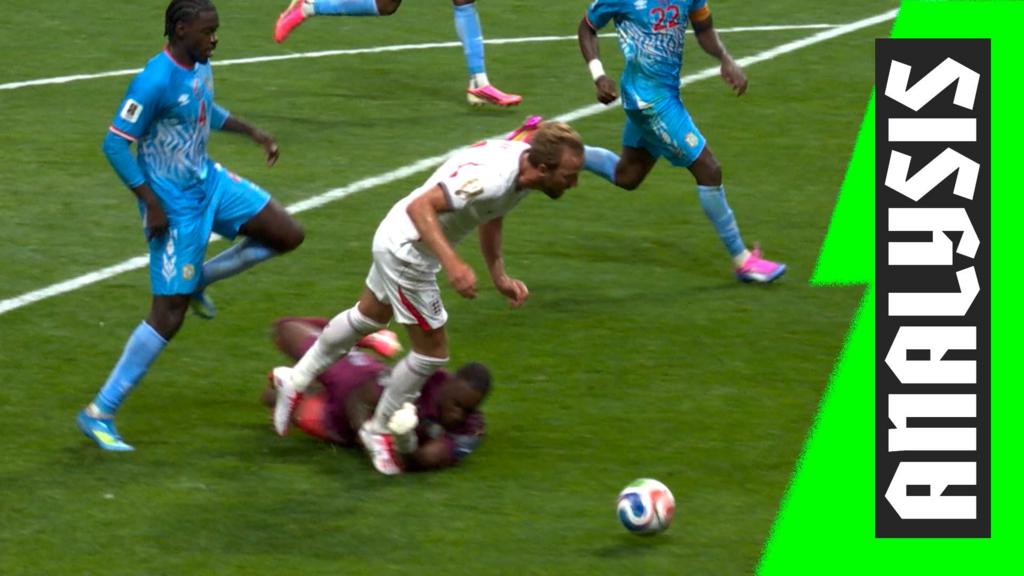
The incident occurred late in the first half of a tense knockout match. Harry Kane, dropping off the frontline to spark a flat English attack, sprinted onto a lofted pass over the top. DR Congo goalkeeper Lionel Mpasi-Nzau rushed off his line with aggressive intent. Kane reached the ball first, toeing it aside before crashing to the turf under heavy contact from the keeper.
The referee waved play on immediately, a decision that left the English bench and players stunned. As reports from the ground confirmed, the anger from the English camp was instant and sustained. Yet the debate that followed in the TV studios was far from simple, revealing deep divisions about how such incidents are refereed in the modern game.
Tuchel's fury was not just about the missed call. It was the realization that his carefully constructed, risk-averse system had failed to create any other clear-cut chances. In a high-stakes knockout match, relying on a single refereeing decision is a dangerous strategy. The manager knew that this moment could define England's entire tournament campaign.
The atmosphere in the stadium turned hostile as the English supporters made their feelings known. Every touch by a DR Congo player was met with loud boos, and the tension on the pitch was mirrored in the stands. The match had lost its rhythm, degenerating into a series of physical battles and constant stoppages.
Anatomy of a Penalty Shout
To understand why the penalty was denied, we must break down the mechanics of the collision. Kane's movement was typical of his late-career profile. He did not run in a straight line toward the goal but curved his run to shield the ball with his body. This lateral movement forced Mpasi-Nzau to commit to a sliding challenge that was always going to risk making contact with the player rather than the ball.
Mpasi-Nzau's approach was a high-risk defensive action. The goalkeeper chose to slide feet-first, which limited his control over his momentum. When Kane touched the ball to his right, Mpasi-Nzau's trailing leg caught Kane's ankle, bringing the England captain down in the penalty area. By any traditional reading of the laws of the game, this was a clear foul.
The officiating team, however, seemed to view the contact differently. They appeared to judge that Kane had initiated the contact by trailing his leg, or that the ball was already moving out of play. This interpretation ignores the velocity of the goalkeeper's challenge. Mpasi-Nzau was committed to a slide that could not be aborted, creating an unavoidable collision path.
The lack of a VAR intervention was the most puzzling aspect of the decision. In a tournament where micro-contacts are routinely penalized, the decision to let play continue seemed anachronistic. Tuchel's frustration was justified by the sheer physical impact of the challenge. The goalkeeper was late, high, and completely missed the ball.
The angle of the referee's vision may have played a significant role. Positioned behind the play, the referee could not see the gap between the goalkeeper's leg and the ball. He relied on his assistant, who also had an obstructed view. This failure of positioning highlights the limitations of human officiating in fast-paced situations.
Furthermore, the speed of the transition caught the officials off guard. England had spent the previous ten minutes passing slowly in their own half, lulling everyone into a false sense of security. When the sudden vertical pass was played, the referee was still running to catch up, leaving him too far from the action to make an accurate call.
The Studio Split
The post-match analysis highlighted how polarized the football world is on goalkeeper challenges. As the BBC punditry panel showed, former players and officials look at these incidents through entirely different lenses. The debate featured Micah Richards, Joe Hart, Wayne Rooney, and Darren Cann, each offering a distinct perspective based on their playing careers.
Wayne Rooney was unequivocal in his support of the England captain. Having played as an elite striker, Rooney argued that Kane did what any smart forward must do. He anticipated the goalkeeper's rush, protected the ball, and accepted the contact that was bound to happen. From a striker's perspective, the defender's failure to touch the ball makes it a penalty every time.
Joe Hart offered the goalkeeper's union view, focusing on the lack of options for Mpasi-Nzau. Hart argued that once a keeper commits to the slide, they cannot vanish. He suggested Kane went down easily, looking for the contact rather than trying to stay on his feet. This clash of viewpoints shows the fundamental disagreement between attackers and keepers on the pitch.
Darren Cann brought the technical refereeing perspective to the discussion. The former assistant referee pointed to the instructions given to officials regarding players initiating contact. He noted that if a striker alters their running line specifically to collide with a defender, refs are encouraged to play on. This rule, designed to stop forwards hunting for penalties, may have cost England dearly here.
Micah Richards focused on the physical force of the challenge. Richards argued that regardless of intent or running lines, the sheer speed of Mpasi-Nzau's slide made it a dangerous play. When a goalkeeper flies out with that intensity and misses the ball, the referee must penalize the lack of control. The discussion demonstrated that even with multiple slow-motion replays, consensus remains impossible.
This division among experts shows how complex officiating has become. When a former elite striker, an international goalkeeper, and a top official cannot agree, the fans have little hope. The lack of clarity in the rulebook is the real villain here. It leaves everyone confused and angry, from the players to the manager.
The debate also highlighted the inconsistencies in VAR application. Throughout the tournament, similar challenges had resulted in penalties after lengthy video reviews. The refusal to even review this incident on the pitchside monitor felt like a step backward for the technology, undermining player confidence in the system.
England's Positional Stagnation under Tuchel
While the penalty decision dominated the headlines, the real story was England's tactical struggles. Tuchel opted for a possession-heavy system designed to control the tempo. England recorded a massive 74% share of the ball in the first half. Yet this possession was almost entirely lateral, failing to disrupt DR Congo's defensive block.
The English buildup shape was a rigid 3-2-2-3. The back three circulated the ball slowly, waiting for the double pivot to open up passing lanes. DR Congo's mid-block remained narrow, closing down the central spaces effectively. England's midfielders were forced to play backward passes, preventing any progression into the final third.
This possession resulted in an incredibly low xG of just 0.28 in the opening period. The lack of verticality was glaring. The wingers stayed pinned to the touchlines, isolated from the central midfielders. Kane was forced to drop so deep to get touches that the box was left completely empty during crossing situations.
The spacing between England's lines was poor throughout the match. The distance between the backline and the midfield pivot was too large, which made them vulnerable to the counter-press. When DR Congo did win the ball back, they found wide open spaces to exploit on the flanks. This tactical disconnect is a major concern for Tuchel's team going forward.
The decision to play two defensive midfielders seemed redundant. Both players wanted to occupy the same spaces, resulting in a crowded midfield and a lack of creative options. Tuchel's refusal to adapt his system mid-game was a major factor in England's struggles. The team looked formulaic and lacked the spark needed to break down a resilient opponent.
England managed only 4 penalty area entries in the entire first half, a statistic that highlights their attacking impotence. For a team with so much offensive talent, this is a damning indictment of their tactical approach. The players looked restricted by the system, afraid to take the risks necessary to break open a disciplined defense.
The pass maps from the match tell a depressing story for English fans. The most common passing combinations were between the center-backs and the defensive midfielders. The attacking midfielders were starved of service, receiving the ball only when forced wide or with their backs to goal. This isolation made it impossible to build any sustained attacking momentum.
DR Congo's Disciplined Low Block
DR Congo deserves immense credit for their defensive performance. Under Sébastien Desabre, they set up in a compact 4-4-2 structure that refused to bow to England's star power. The two banks of four kept their distances tight, leaving no room for England's creative midfielders to operate between the lines.
The defensive plan was clear: force England wide and defend the crosses. With Kane dropping deep, England lacked a physical presence in the box to challenge the Congolese center-backs. DR Congo won the vast majority of aerial duels, clearing the ball comfortably and launching quick transitions through their wide players.
The pressing triggers were executed with high discipline. DR Congo did not press England's center-backs, allowing them to pass the ball laterally. They waited until the ball was played into the fullback areas or to a midfielder facing his own goal. Once the trigger was pulled, two or three players closed in to force a turnover.
This defensive discipline neutralized England's attacking threat. It also highlighted the lack of variation in England's attacking play. Without runners from midfield to run behind the defensive line, DR Congo could shift horizontally without fear of being caught out of position. The defensive block remained unbroken, frustrating England's star-studded lineup.
The physical dominance of the Congolese defenders was a key factor. They won the majority of the second balls, preventing England from building any sustained pressure. This defensive resilience was not just down to hard work; it was a tactical masterclass in space restriction. Desabre's team executed their game plan to perfection.
Their counter-attacking threats kept England's fullbacks from committing too far forward. Every time England lost possession, DR Congo looked to exploit the space behind the wingbacks with direct passes. This threat kept England defensive-minded, even when they dominated possession, further slowing down their attacking transition.
The Tactical Cost of Caution
Thomas Tuchel's appointment was supposed to bring tactical sophistication and tournament pragmatism. Instead, this match showcased the negative side of his coaching philosophy. By prioritizing control over risk, England looked sterile and predictable. The decision to play two defensive midfielders against a low block was overly cautious.
The substitution strategy also raised serious questions. Tuchel waited until the final ten minutes to introduce direct, pacey wingers who could take on their defenders. By then, the game had descended into a scrappy battle, and the substitutes had little time to impact the tactical flow. This slow reaction from the bench is a worrying trend for England.
England's reliance on individual brilliance rather than structural excellence was obvious. When the system failed to create openings, the players looked to Kane or their wingers to produce a moment of magic. This approach is rarely successful in the later stages of a World Cup, where organized defenses are the norm.
The penalty incident should not blind us to these deeper issues. Even if England had been awarded the spot-kick and scored, the performance was worrying. A team with England's attacking talent should not be relying on a refereeing decision to break down a well-organized opponent. Tuchel must find a way to inject more pace and variety into his side's play.
The lack of tactical flexibility is Tuchel's biggest weakness. He seems wedded to a specific system, regardless of the opponent or the game state. This rigidity makes England easy to prepare for and play against. If England are to win the World Cup, Tuchel must show he can adapt and take risks when the situation demands it.
England ultimately scraped through, but the 0-0 scoreline after normal time was a harsh reflection of their performance. The match exposed the limitations of Tuchel's conservative approach, showing that control does not always equal success. The manager's tactical decisions will be under intense scrutiny as the team prepares for the next round.
Looking Ahead to the Quarter-Finals
If England are to progress further in this tournament, tactical adjustments are mandatory. The current slow buildup play is too easy for organized teams to defend against. Tuchel must encourage his midfielders to take more risks with forward passes and introduce more vertical movement from the wide positions.
Playing a single pivot with two advanced midfielders could be the solution to unlock deep defenses. This change would provide more passing options in the half-spaces and force the opposition defense to make difficult decisions. It would also allow Kane to stay higher up the pitch, where his finishing ability is most effective.
The tournament is entering its most demanding phase. England have the talent to go all the way, but only if they can find the right tactical balance. The draw against DR Congo was a warning shot that cannot be ignored. Tuchel must learn from this match and adapt his system, or England's World Cup dream will end in disappointment.
The fans' patience is wearing thin. They want to see a team that plays with freedom and attacking intent, not one that is constrained by a conservative system. Tuchel's reputation is on the line. The next match will show whether he has the tactical flexibility to lead England to glory, or if he is too rigid to change.
The path to the final is full of tactical challenges. England have shown they can defend and control possession, but they must now prove they can score. The tactical adjustments made in the next few days will determine England's fate at this World Cup. The time for caution is over; it is time for Tuchel to release the handbrake.
Read Next
- Thomas Tuchel has a right-back crisis he cannot easily solve
- Harry Kane got robbed in Atlanta and I am ready to riot
- Harry Kane got robbed in Atlanta and I am ready to riot
- Tuchel's England faces the ultimate trap game against DR Congo
- 🏆 World Cup 2026 — Full Coverage Hub
- 🏴 England World Cup 2026 — Three Lions Hub
The Mixer: The Story of Premier League Tactics, from Cantona to Guardiola by Michael Cox
The ultimate tactical breakdown of how the Premier League changed forever.
Frequently Asked Questions
Who did England play in the World Cup last-32 stage?
Why was Harry Kane denied a penalty against DR Congo?
Who was the DR Congo goalkeeper involved in the Kane collision?
How did Thomas Tuchel react to the referee's decision?
What tactical issues did England face against DR Congo?
More Coverage

Man City's £900m scandal casts a long shadow over the A-League launch
4 hours ago
England win in Prague but Thomas Tuchel still has tactical puzzles to solve
9 hours ago
Tuchel got his win in Prague, but Trent and VAR are still causing arguments
10 hours ago
Thomas Tuchel is still overthinking Trent Alexander-Arnold
10 hours ago
Thomas Tuchel is playing with fire after England's Wembley disaster
19 hours ago
Why Ruben Amorim is misusing Goncalo Ramos at AC Milan
23 hours agoMore Analysis
Man City's £900m scandal casts a long shadow over the A-League launch
4 hours ago
England win in Prague but Thomas Tuchel still has tactical puzzles to solve
9 hours ago
Tuchel got his win in Prague, but Trent and VAR are still causing arguments
10 hours ago
Thomas Tuchel is still overthinking Trent Alexander-Arnold
10 hours ago
Thomas Tuchel is playing with fire after England's Wembley disaster
19 hours ago