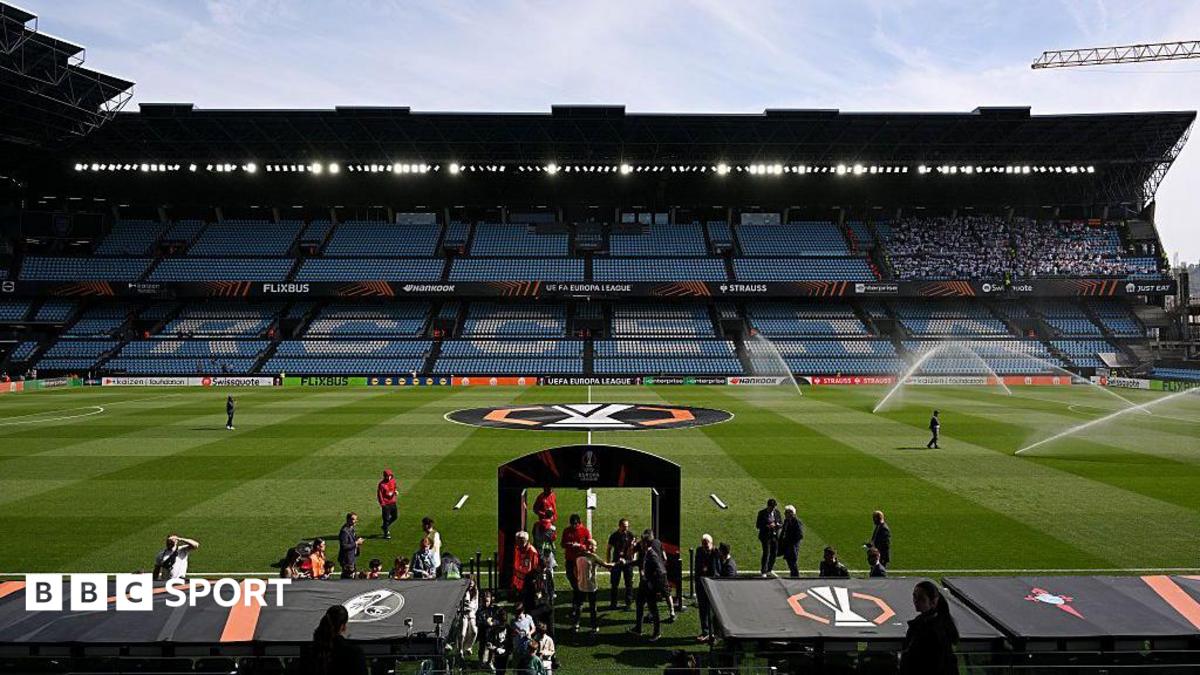
Jesus de Miguel's death has to change how goalkeepers attack the air

The lethal mechanics of goalkeeper protection
Monday evening in the Spanish Segunda División looked like any other grind. UD Tenerife were chasing an equalizer against Andorra FC, tossing numbers into the box. Strikers like Jesús de Miguel make a living in those congested corridors.
Then came the hanging cross. Andorra goalkeeper Jesús Owono sprinted off his line, locked his eyes onto the ball, and launched himself airborne into the pack. De Miguel never saw him coming.
The collision was devastating. Owono’s raised lead knee struck De Miguel flush in the chest, stopping the forward in mid-air. Paramedics rushed onto the turf as the striker went into cardiac arrest on the pitch.
The aftermath was heartbreaking. On Tuesday morning, the 30-year-old forward died at Nuestra Señora de Candelaria University Hospital from severe chest trauma. His partner María and their daughter Carla, just over a year old, watched the entire scene unfold from the stands.
Football treated the tragedy as a freak occurrence. Spanish media framed it as an unavoidable disaster, a cruel twist of fate on a football pitch. That framing is cowardly.
Look at how goalkeepers are taught to attack aerial crosses. Academy coaches across Europe teach the same mechanic: drive the lead knee up toward the chin when contesting high balls in traffic.
Coaches sell it as self-preservation. The raised knee forms a rigid frame that shields the goalkeeper’s ribs from incoming forwards. It protects the keeper completely.
The problem is what happens to the attacker. When a fully grown athlete launches his knee at pace into an opponent's ribcage, it acts as a battering ram. The forward has zero protection.
Outfielders face instant red cards for high boots near an opponent's shoulder. Arrive late in a ground tackle and the referee reaches straight for his pocket.
Goalkeepers operate under total immunity. They can barrel through six-yard boxes, driving their knees straight into opponents' chests without facing a whistle. Football has normalized violence under the guise of commanding the box.
De Miguel did what every number nine is coached to do. He held his ground, tracked the flight of the delivery, and jumped to contest the header. He was completely defenseless.
His eyes were fixed upward and his chest was wide open. The force of an oncoming goalkeeper traveling at pace into that exposed sternum proved fatal. Paramedics fought frantically on the turf, but the damage was irreversible.
The human wreckage left in Navahermosa
The shock waves tore straight through Navahermosa, a small village of 3,500 people outside Toledo where De Miguel's parents and grandparents live. As The Daily Mail reported, the town council declared three days of mourning with flags at half-mast.
De Miguel grew up in Madrid but never abandoned Navahermosa. Known affectionately to locals as "Demi," he spent his childhood summers there and regularly trained on the local municipal pitch ahead of pre-season. His roots ran deep.
The cruelty was staggering. His father was watching the match live in a village bar when the collision occurred. He broke down in tears on the spot, rushing to Tenerife with his wife after learning their son was in intensive care.
On Thursday, the funeral brought the village to a halt. Shops and restaurants shuttered as hundreds walked behind a black Mercedes hearse carrying De Miguel's coffin. A small banner tied among the flowers read: "our family won’t forget you."
The crowd overwhelmed the parish church of San Miguel Arcángel. Over 200 mourners stood outside on the pavement, listening in silence as the service unfolded. The 75-minute ceremony ended with tearful family speeches met with passionate applause.
Manuel Hernandez addressed the gathering on behalf of the family:
"Jesus leaves a void that is impossible to fill, but also an immense memory in all of us who have been lucky enough to share our lives with him."
Those words captured a brutal reality. De Miguel's friend Fernando Roman revealed that María had been left alone in the hospital during those agonizing early hours before family arrived. The two families had recently talked about taking their young daughters to Disney.
Roman shared his heartbreak in an open letter honoring the striker:
"Many people didn’t truly know you, but having known you, I can say you were one of the best people I’ve ever had in my life: humble, hardworking, never one to look for trouble."
The agony touches both sides. Owono has endured what his family described as the hardest days of his life, supported by his mother as the reality sank in. He never intended to hurt anyone.
Owono executed a movement pattern drilled into him across hundreds of practice sessions. That is what makes this an institutional failure. Football taught him that technique, praised him for using it, and ignored the risks.
A refereeing culture that protects the wrong player
Modern Segunda División football is intensely physical. Margins are tiny and set-pieces often decide survival. Coaches pack the six-yard box with bodies, daring goalkeepers to challenge through heavy traffic.
Refereeing bodies have built an absurd fortress around goalkeepers. If an attacking player brushes a keeper’s arm on a corner, the whistle blows instantly. Officials award cheap fouls for routine physical contact.
Yet the standard flips entirely when the goalkeeper initiates contact. When a keeper wipes out a forward with a knee to the upper torso, officials treat it as routine area command. The victim is either ignored or whistled for obstruction.
This double standard creates terrible incentives. Goalkeepers know they are untouchable. They attack crowded aerial space with abandon, confident that officials will protect them from any sanction.
The sport's own rulebook contradicts this behavior. Law 12 clearly penalizes playing in a dangerous manner, defined as any action that endangers an opponent while trying to play the ball. That rule is supposed to govern every player on the pitch.
Why does Law 12 vanish when a keeper leaves his feet? If an outfield defender jumped into an aerial duel with his knee bent into a striker’s ribs, he would be sent off immediately. Goalkeepers must meet that same duty of care.
The tactical adjustments football refuses to make
UD Tenerife will host a memorial service on Saturday evening at the Heliodoro Rodríguez López Stadium. Flowers and scarves have piled up outside the gates all week, with Tenerife manager Álvaro Cervera and Spain boss Luis de la Fuente paying their respects. But mourning is not enough.
Tributes and moments of silence cannot replace concrete regulatory action. As reporters in Navahermosa noted, the entire Spanish game was shaken by the incident. If authorities treat De Miguel's death as an unavoidable fluke, they guarantee it will happen again.
The raised-knee takeoff is an outdated relic. It was popularized decades ago when goalkeepers had almost no protection from aggressive forwards charging the goal-line. Today, goalkeepers enjoy sweeping structural advantages and complete referee backing.
They do not need to lead with a knee to win aerial balls. Goalkeepers can generate tremendous vertical leap off two feet or by trailing their lower body, exactly like basketball players. Jumping cleanly is an athletic skill.
The International Football Association Board must outlaw the lead-knee jumping mechanic in congested boxes. The instruction to referees must be simple and non-negotiable. If a goalkeeper leads into an opponent's torso with a raised knee, whistle for dangerous play and award a penalty.
Coaches will complain, but player behavior shifts fast when points are on the line. When football banned the backpass to the goalkeeper in 1992, critics predicted chaos. Goalkeepers adapted within months, and the game improved.
When slide tackles from behind were outlawed, defenders adjusted their body shape and timing. The same tactical evolution must happen in the penalty area. Protecting human lives matters more than defending a dangerous habit.
Jesús de Miguel went to work on Monday night chasing a ball in the penalty area. His daughter Carla will now grow up knowing her father through scrapbooks and the memories of teammates. Football owes his family real change, not just hollow condolences.
Read Next
- Jesus de Miguel dies at 30 following tragic on-field collision in Tenerife
- Jesus de Miguel's tragic death puts Spanish football to the test
- Bournemouth's Bench Just Bailed Out Marco Rose's Broken Prague Rotation
- Why Man City are about to get ambushed at the City Ground
- 🏆 Europa League Final 2026 — Full Coverage Hub
Adidas Unisex-Adult Tiro 23 League Training Jersey
Look sharp, stay cool, and own the pitch just like your favorite Premier League
Frequently Asked Questions
Who was Jesús de Miguel?
How did Jesús de Miguel die?
Who was involved in the fatal collision with Jesús de Miguel?
Why do goalkeepers raise their lead knee when contesting crosses?
What actions did Navahermosa take following Jesús de Miguel's death?
More Coverage
Bournemouth's Bench Just Bailed Out Marco Rose's Broken Prague Rotation
14 hours ago
Why Man City are about to get ambushed at the City Ground
15 hours ago
Man City are about to get ambushed by Nottingham Forest
16 hours ago
Why Thomas Tuchel is right to keep Cole Palmer on the outside
1 day, 3 hours ago
Arsenal are about to face their toughest test of the season
1 day, 7 hours ago
Why RB Leipzig cannot afford to play Martin Demichelis's high line tonight
1 day, 21 hours agoMore Analysis
Jesus de Miguel's tragic death puts Spanish football to the test
2 days, 22 hours ago
Jesus de Miguel dies at 30 following tragic on-field collision in Tenerife
3 days, 1 hour ago
Mallorca keeper Ivan Cuellar in hospital after freak training ground collapse
1 month, 1 week ago
Lionel Messi is buying CD Eldense while fighting Father Time in Miami
1 month, 4 weeks ago
Ander Herrera is playing for free, but Real Zaragoza need more than romance
2 months, 1 week ago