Political Noise Meets Tactical Reality
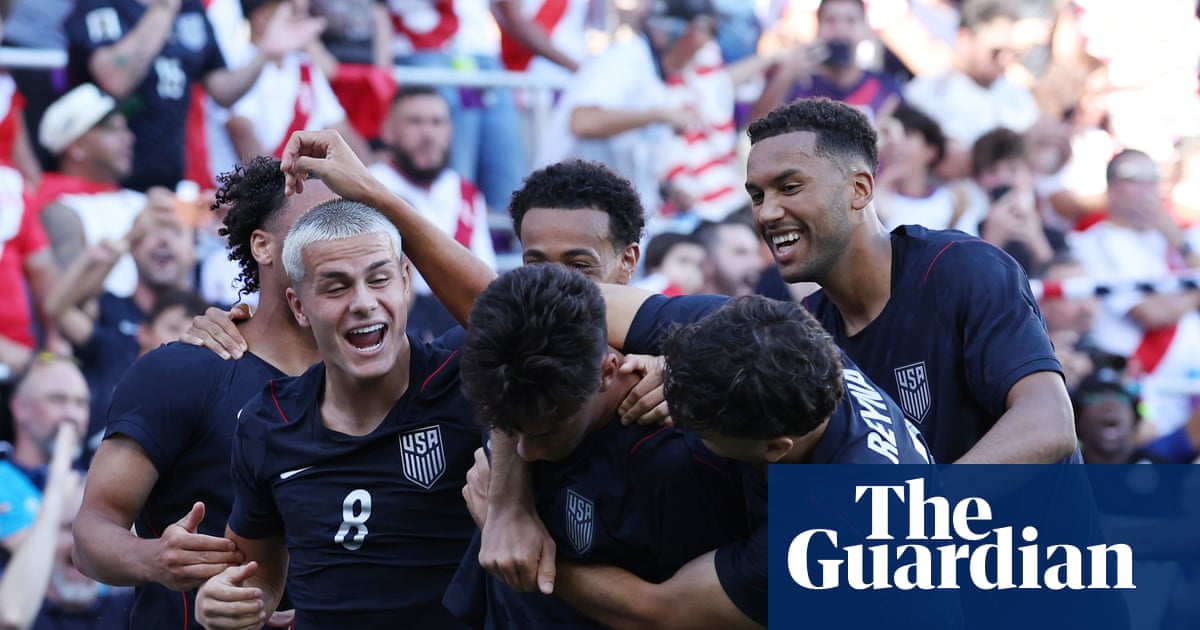
The build-up to a World Cup knockout match is usually defined by training ground updates and injury reports. Instead, the United States Men's National Team has spent the last forty-eight hours dealing with a bizarre political storm. As Mirror Football reported, striker Folarin Balogun was thrust into the headlines after Donald Trump dropped him into a public controversy.
Balogun has since spoken out to clear the air, but this distraction could not have come at a worse time. The USMNT faces a seasoned Belgium side that knows exactly how to exploit mental lapses. On the pitch, Balogun remains the focal point of an attack that has struggled for consistency.
If the Americans cannot isolate the external drama, their World Cup run will end here. Tactical focus must return to the pitch. Domenico Tedesco has drilled Belgium into a compact mid-block that limits space between the lines.
Analyzing the USA Attack and the Balogun Dilemma
Spacing and Movement Pitfalls
For Balogun, this match represents a chance to prove his worth on the biggest stage. His role in this tournament has been heavily debated. During the group stage, his positioning often isolated him from the midfield, leading to just 18.4 touches per ninety minutes.
When he does receive the ball, it is often with his back to goal, thirty yards out. At his best, Balogun is a vertical threat who runs the channels. He needs midfielders who can slide passes behind the opposition defense before the line drops.
In the group stage finale, the central pairing failed to make a single progressive pass into the penalty box. Balogun's expected goals (xG) during the group stage sat at a modest 0.85 across three matches. He took only four shots in total, with just two finding the target.
The coaching staff must find a way to get him facing forward in the final third. One solution is to alter his starting position. Instead of occupying the central defenders, Balogun should drift onto the shoulder of Wout Faes to use his acceleration.
Critical Flaws in the American Build-up
This lateral movement would also open up space for late-running midfielders like Weston McKennie. Belgium under Tedesco does not look to dominate possession. Instead, they defend in a compact 4-4-2 shape that morphs into a 4-5-1 under pressure.
They allow opponents to pass sideways along the backline, waiting for a trigger to press. That trigger is usually a square pass to a fullback. In their last match, Belgium forced twelve turnovers in the middle third using this exact trap.
The American fullbacks must be quick to play forward rather than taking extra touches. If the Americans play slowly, they will walk straight into these pressing traps. Christian Pulisic must drop deeper to draw a Belgian defender out of position.
If Pulisic remains high and wide, the US possession will become stagnant and predictable. Belgium's defense is vulnerable to quick transitions. When Wout Faes steps out to challenge, he leaves massive space behind him.
Deconstructing Belgium and the Tactical Plan
The Belgian Mid-Block
If Balogun can time his runs to coincide with these moments, the US can expose that gap. The game will be decided in the zones just outside the penalty area. Amadou Onana and Youri Tielemans are excellent at screening their defense.
They rarely commit forward, preferring to sit deep and protect the central corridor. To bypass this screen, Antonee Robinson must push high up the left flank to pin the Belgian right-back. This forces Belgium's winger back, turning their midfield line into a defensive block.
By widening the pitch, the US can create gaps between Onana and Tielemans. However, this strategy carries immense risk. If Robinson is caught high, Jeremy Doku will have acres of space to exploit.
He completed 4.2 successful dribbles per game in the group stage, making Robinson's vacated flank a counter-attacking highway. Tyler Adams must cover immense ground. He must slide across to support the left-back whenever possession is lost.
The Battle in the Half-Spaces
If Adams is late, Doku will isolate the left center-back in a dangerous one-on-one scenario. Despite recent progress, the USMNT has clear deficiencies in possession. Their build-up play from the back is often static, with center-backs taking too many touches before releasing the ball.
This gives Belgium ample time to adjust their defensive shape and prepare their press. Against a disciplined block, slow circulation is a recipe for disaster. The American midfielders also tend to occupy the same vertical lines.
We often see McKennie and Adams standing too close, making it easy for a single opponent to mark both. Berhalter's coaching staff has also struggled to adjust mid-game. During the second half of their last match, they failed to register a shot after the opponent shifted to a back three.
This lack of tactical flexibility is a major worry ahead of a knockout game. They cannot afford to be reactive. If Tedesco sees the US struggling to progress through the middle, he will squeeze the pitch even further.
The Mental Test and Prediction
Can Balogun Rise Above the Distraction?
The US must have a secondary plan ready to deploy. The mental side of this match cannot be ignored. Adding a public political spat to a knockout match makes preparation incredibly difficult.
Before the USA's clash, the camp had to digest the noise, with Folarin Balogun speaking out about the situation. Balogun is young and relatively new to this level of national scrutiny. How he handles the first fifteen minutes will be telling.
If his first few touches are heavy, the Belgian defenders will look to physicalize the matchup immediately. Balogun must show physical resilience and hold his ground. His teammates must support him.
Christian Pulisic needs to keep the group focused on the match plan. While the media circus continues outside the stadium, only the tactical details matter inside. A strong start would settle everyone's nerves.
A couple of early runs behind the defense would force Belgium to drop deeper. The longer the game remains scoreless, the more the pressure will build on the American side. Do not expect an open, flowing game.
A Tactically Tight Affair and Prediction
Tedesco will not risk his defense by committing too many bodies forward. Berhalter will be wary of Belgium's speed on the counter-attack. We are likely to see a tactical game of chess.
The first half will feature low-risk passing and conservative positioning from both sides. The real changes will happen in the second half. Set pieces could prove decisive in a match this tight.
The US must be disciplined when defending corners against the height of Faes and Onana. They conceded two goals from set pieces during the group stage, a weakness Belgium will surely target. On the other hand, the US has speed on the break.
If they win the ball in their own half, they must transition forward instantly to utilize Balogun's running power. A quick transition after a Belgian set piece might be their best route. This match will test the maturity of this American team.
They have the athletic capability to match Belgium, but tactical discipline will decide the outcome. The Balogun situation is a test of their collective resolve. Belgium's experience in these situations gives them a slight edge.
They have players who have competed in Champions League finals and deep tournament runs. They will not panic if the US dominates possession early on, waiting instead for their moment. I expect the US to struggle to break down the Belgian block.
Balogun will work hard but will find himself isolated once again. Belgium will win a tight, frustrating encounter 1-0 to advance. The tournament journey ends here for the Americans.
Read Next
- Pochettino is about to run the USMNT straight into Belgium's tactical trap
- Belgium's tactical gamble is about to meet Spain's defensive wall
- USMNT got exactly what they deserved in the Seattle soccer circus
- Top 10: Top Moments of the USMNT 2026 World Cup Run
- 🇧🇪 Belgium World Cup 2026 — Red Devils Hub