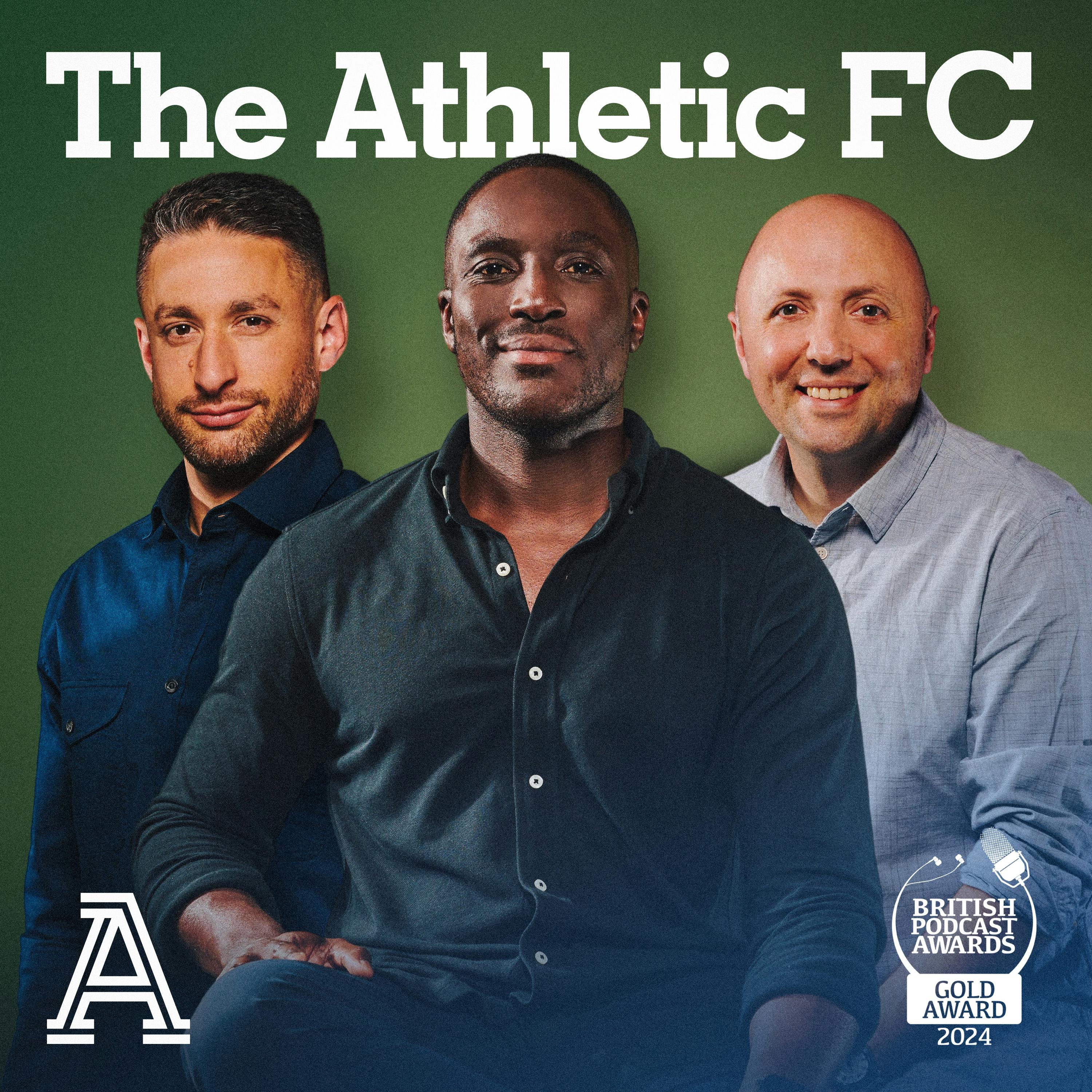
🎙️ The Athletic FC Podcast March 9, 2026 ⏱️ 29 min

Can Arsenal or Man City win the quadruple?

🎧 Listen to Original Episode →

1. Executive Overview: Core Theses & Key Revelations

In the modern landscape of elite European football, entering the month of March alive in four distinct competitions is a rarity of historic proportions. Never before in the history of English football have two separate clubs—in this instance, Mikel Arteta’s Arsenal and Pep Guardiola’s Manchester City—navigated the relentless winter schedule to stand on the precipice of a prospective quadruple simultaneously. This milestone served as the foundation for an extraordinary analytical session on The Athletic FC Podcast, featuring host Ayo Akimolero alongside seasoned analysts Oli K, Duncan Alexander, and Manchester City correspondent Sam Lee.

The core thesis emerging from this high-level panel is both provocative and sobering: while financial hyper-concentration and sophisticated roster building have narrowed the elite tier of world football to a select few hyper-wealthy behemoths, the physical realities of elite sport render winning all four trophies a near-statistical impossibility. The discussion shattered several persistent myths surrounding modern squad rotation, fixture scheduling, and domestic competition structures. Rather than viewing multi-trophy ambitions purely through the lens of tactical quality or financial muscle, the panel framed the quadruple as a complex problem of bio-energetics, fixture governance, and extreme statistical variance.

Among the key revelations and analytical consensus points established during the debate were:

  • The Physiological Ceiling: Sam Lee advanced the stark prognosis that no English club will complete a quadruple within the next 150 years—or if accomplished, it will occur as an unrepeatable single-instance anomaly. Accumulated minute loads, high-intensity transition demands, and neuromuscular exhaustion have pushed elite squads to a literal physical breaking point.
  • The Domestic Asymmetry: Unlike continental counterparts in La Liga, Ligue 1, and Liga Portugal—where governing bodies routinely manipulate league schedules to afford Champions League representatives extended rest and tactical preparation—the Premier League and English Football League maintain an uncompromising calendar rigidity that actively penalizes domestic contenders.
  • The Inefficiency of Perfection: Even hyper-engineered squads like Arsenal, equipped with dual-depth across all positions, and Manchester City, leveraging opportunistic market tactics to acquire proven Premier League talent (such as Marc Guéhi and Antoine Semenyo), cannot insulate themselves against the compound attrition of knockout competitions.
  • The Psychological Inflection Point: The upcoming Carabao Cup final at Wembley between Arsenal and Manchester City represents far more than an isolated piece of silverware; it functions as a decisive psychological catalyst capable of dictating momentum or triggering emotional degradation across the remaining three fronts.
  • European Vacuum vs. Bracket Variance: Despite current English dominance, the panel noted a qualitative vacuum at the top of European football compared to the decade-defining Real Madrid, Barcelona, and Bayern Munich teams of the 2010s. This vacuum, combined with favorable Champions League bracket draws, offers Arsenal an exceptional pathway, yet historical precedents demonstrate how thin the margin remains between legend and disappointment.

2. Context & Background: The Landscape Leading to This Conversation

To fully grasp the magnitude of the debate unfolding in March 2026, one must examine the historical evolution of multi-trophy pursuits in English football. For over a century, winning "the Double"—the Premier League (or First Division) alongside the FA Cup—was mythologized as the pinnacle of domestic achievement. Accomplished only twice in the 19th century by Preston North End (1889) and Aston Villa (1897), it remained an elusive feat throughout the 20th century, claimed by Tottenham Hotspur in 1961, Arsenal in 1971, and Liverpool in 1986, before becoming more frequent during the Premier League era under Sir Alex Ferguson and Arsène Wenger.

The paradigm shifted permanently in 1999 when Manchester United completed the Treble—League, FA Cup, and UEFA Champions League—establishing a benchmark of competitive dominance. Yet, even as United dominated the domestic landscape, Ferguson remained resolutely skeptical regarding the feasibility of winning four major trophies in a single campaign. Ferguson understood that navigating four competitions required an alignment of random variables: absolute health in April and May, favorable refereeing calls, and minimal travel disruption. His pragmatic philosophy was vividly displayed during the 2009 FA Cup semi-final against Everton, where, despite being perfectly positioned in the league and Europe, Ferguson fielded a heavily depleted reserve side, sacrificing the domestic cup to preserve squad integrity for higher-value objectives.

The modern benchmark for a quadruple attempt was set by Jürgen Klopp’s Liverpool in the 2021-22 season. Liverpool pushed every single competition to its maximum limit, playing all 63 possible matches in a grueling campaign. They lifted both the Carabao Cup and FA Cup via penalty shootouts, only to miss the Premier League title by a single point on the final day following Manchester City’s dramatic late comeback against Aston Villa, before losing the Champions League final 1-0 to Real Madrid in Paris despite taking 24 shots. Liverpool’s agonizing climax demonstrated that a team can play at an elite operational level for ten months and still end up with the two secondary domestic honors rather than the historic grand slam.

The current landscape of 2026 presents a fascinating evolution. The expansion of European competition formats, coupled with increased physical intensity metrics tracked by modern sports science, has intensified the strain on elite athletes. Concurrently, financial polarization has concentrated elite playing talent into an extraordinarily small group of super-clubs. Consequently, while the financial gap between top-tier clubs and the rest of the football pyramid makes competing on multiple fronts a regular expectation, the physical burden on players has never been higher. The convergence of Arsenal and Manchester City entering March alive in all four competitions represents the ultimate collision between financial roster construction and physical human limitations.

3. Deep-Dive Thematic Breakdown

3.1 The Quadruple Paradox: Financial Concentration vs. Human Physiology

At the heart of the panel's discussion lies a fundamental paradox in modern sports economics. Financial concentration in global football has enabled top-tier clubs to hoard elite talent, constructing rosters that feature multi-million-euro international players on their second-string benches. In theory, this allows managers to field two distinct starting lineups without experiencing a catastrophic drop in tactical execution. However, human biology does not scale linearly with payroll size. The human body possesses non-negotiable physiological limits that sports science, cryotherapy, and hyper-baric recovery protocols can only margin-optimize, not eliminate.

Sam Lee articulated this reality by pointing out that players across elite clubs have been subjected to continuous, uninterrupted match calendars for several consecutive years. Between expanded international tournaments, summer continental championships, long-distance pre-season tours, and condensed domestic schedules, top performers operate in a perpetual state of chronic fatigue. High-intensity sprint counts, decelerations, and neuromuscular load metrics accumulate over multi-year cycles. When a team reaches April, the risk of soft-tissue injuries, micro-tears, and cognitive fatigue spikes exponentially. A single hamstring tear to a key central defender or deep-lying playmaker can destabilize an entire tactical system, rendering squad depth secondary to positional indispensability.

Furthermore, the physical demands of modern high-pressing tactics exacerbate this physiological exhaustion. Both Arteta’s Arsenal and Guardiola’s City rely on aggressive counter-pressing, rapid defensive transitions, and intense spatial coverage to maintain control. Executing these tactical schemes requires maximum physical output. As player energy levels decline late in the season, pressing structures develop microscopic gaps, reaction times slow down by milliseconds, and technical errors increase. Consequently, even if a club possesses the financial resources to employ 22 world-class athletes, the inability to rest key central pillars without breaking structural cohesion creates an insurmountable barrier to quadruples.

3.2 Squad Construction & Tactical Asymmetry: Arsenal’s Structural Depth vs. City’s Cannibalizing Efficiency

The comparative analysis of Arsenal and Manchester City’s squad architectures revealed two distinct approaches to multi-competition survival. Arsenal’s recent transformation under Mikel Arteta is built upon systematic, heavy investment aimed at building dual-positional security. Following extensive recruitment campaigns over recent transfer windows, Arsenal have assembled a squad featuring top-tier options in almost every position. This structural depth provides Arteta with unmatched flexibility, allowing Arsenal to adjust tactical shapes depending on the opponent's defensive posture.

Importantly, Arsenal have mastered set-piece efficiency, transforming corners and wide free-kicks into high-probability scoring mechanisms. This capability acts as an invaluable buffer during periods of physical fatigue. When open-play creativity stalls due to sluggish movement or opponent low blocks, set-piece routines allow Arsenal to secure victories while conserving energy. In European competition, where opponents rarely deploy the ultra-deep defensive blocks common in the Premier League, Arsenal’s athletic profile and transitional speed thrive in open space, as demonstrated by their dominant performance against Bayern Munich in the Champions League league stage.

  • Recruitment Strategy
  • Long-term dual-depth building; profile-matching for high physical output
  • Targeted opportunistic additions; acquiring proven rival stars (e.g. Guéhi, Semenyo)
  • Tactical Primary Weapon
  • Set-piece mechanics, structural press, dual-wing isolation
  • Positional control, elite box presence, game-state manipulation
  • Physical Resilience
  • High athletic baseline; heavy rotational dependency
  • Calculated pacing; elite game management under low intensity
  • Domestic vs. European Adaptability
  • Thrives in open European transitions; encounters domestic low blocks
  • Unrivaled experience in high-pressure run-ins; vulnerable to counter-attacks
  • Dimension Arsenal FC (2025-26 Profile) Manchester City (2025-26 Profile)

    Conversely, Manchester City’s squad evolution under Pep Guardiola reflects a strategy of targeted, high-impact roster engineering. Rather than simply stacking squad depth, City executed calculated transfer moves by acquiring top talent directly from domestic competitors—a roster building tactic reminiscent of Manchester United’s dominant recruitment model in the 1990s. The mid-season additions of Marc Guéhi and Antoine Semenyo, alongside earlier marquee signings such as Gianluigi Donnarumma and Rayan Aït-Nouri, provided City with immediate tactical adaptability and elite Premier League experience.

    Guardiola’s tactical framework prioritizes ball control as a method of defensive rest. By maintaining extended phases of possession, Manchester City reduce the necessity for high-intensity defensive sprinting, effectively protecting their core players from physical burnout. However, as Sam Lee highlighted, while this City squad remains immensely capable, it does not match the absolute peak performance levels of Guardiola’s 2017-18 or 2022-23 iterations. City's reliance on specific match-winners means that while they possess the game management savvy to win individual knockout ties, managing energy across four parallel competitions tests their operational ceiling.

    3.3 The English Calendar Anomaly: Structural Disadvantages & Domestic Asymmetry

    A central theme emphasized during the podcast was the structural penalty imposed on English clubs by domestic fixture scheduling. The panel highlighted a stark operational asymmetry between the Premier League and major continental leagues across Europe. In leagues such as La Liga (Spain), Ligue 1 (France), and Liga Portugal, national governing bodies actively alter league schedules, move fixture dates, or grant outright postponements to assist their representative clubs ahead of major UEFA Champions League knockout ties.

    In contrast, English football operates under a rigid broadcast schedule and calendar structure governed by competing administrative entities—the Premier League, the Football Association (FA), and the Football League (EFL). English clubs receive no schedule accommodations prior to European fixtures. A Premier League side playing a grueling Champions League away fixture on a Wednesday night is frequently scheduled for an early Saturday morning kickoff in domestic play, leaving minimal windows for physiological recovery and tactical preparation.

    Furthermore, England remains the only top-five European nation to maintain two separate domestic cup competitions: the FA Cup and the Carabao Cup (League Cup). While France abolished the Coupe de la Ligue in 2020 to alleviate fixture congestion, English football continues to run a dual-cup system. This structural design adds a significant number of high-stakes matches to the mid-winter calendar. When combined with the superior physical intensity of Premier League matches—where lower-table sides possess the athletic capability and financial resources to contest every duel—the cumulative physical toll on English clubs competing for a quadruple is uniquely severe compared to their continental peers.

    3.4 The Wembley Inflection Point: Carabao Cup as a Psychological Microcosm

    The impending Carabao Cup final between Arsenal and Manchester City at Wembley Stadium emerged in the podcast as a critical turning point for both clubs' season trajectories. While the League Cup is frequently categorized as the least prestigious of the four major honors, the panel stressed that its placement in late February or early March gives it disproportionate psychological weight in a multi-trophy campaign.

    For Arsenal, the stakes surrounding the Wembley showpiece are particularly high. Despite their impressive tactical growth under Mikel Arteta, Arsenal have not won a major trophy since the 2020 FA Cup and have not lifted the League Cup since 1993. Securing early silverware would provide powerful psychological validation, instilling a deep belief within the squad similar to the effect Jose Mourinho’s first League Cup victory had on Chelsea in 2005. Winning the first available trophy transforms abstract quadruple ambitions into tangible reality and establishes a winning momentum that carries into spring.

    "If City beat Arsenal at Wembley, you can imagine the mental fallout for Arsenal going into the remaining competitions. But if Arsenal break that drought, it validates everything Arteta has built and provides the psychological impetus required for an extraordinary run-in." — Oli K, The Athletic FC Podcast

    Conversely, a defeat in the Carabao Cup final carries severe psychological risks. For a team attempting to manage the physical strain of four competitions, losing a final can induce emotional deflation, leading to systemic fatigue in subsequent league and European fixtures. For Manchester City, a club accustomed to lifting silverware, the final represents an opportunity to strike a psychological blow against their primary title rivals. The Wembley outcome will establish the psychological foundation for both clubs as they navigate the vital closing months of the season.

    3.5 European Pathways & Bracket Mathematics: Statistical Variance in the Knockout Era

    The final thematic pillar analyzed by the panel focused on the role of statistical variance and bracket mechanics in the UEFA Champions League. Duncan Alexander highlighted ongoing data research by Conor O'Neill for The Athletic, which examines historical draw difficulty and tournament pathways. Knockout cup football is inherently volatile; single-elimination formats mean that superior tactical quality can easily be invalidated by red cards, refereeing errors, unexpected injuries, or exceptional individual performances from opposing goalkeepers.

    In the 2025-26 Champions League knockout draw, Arsenal secured a highly favorable tournament pathway, landing in a quadrant that avoids the heavily stacked opposite side of the bracket containing heavyweights such as Real Madrid, Bayern Munich, Manchester City, Chelsea, Paris Saint-Germain, and Liverpool. This bracket distribution significantly increases Arsenal’s mathematical odds of reaching the final. The Champions League, often viewed as the most demanding leg of a quadruple attempt, effectively becomes a favorable opportunity for Arsenal due to bracket placement.

    However, history offers sobering lessons regarding favorable European pathways. The panel recalled Arsenal’s famous 2003-04 "Invincibles" campaign. That season, following the elimination of several traditional European giants, Arsenal were widely considered the best team on the continent. Yet, an unexpected quarter-final defeat to domestic rivals Chelsea shattered their European ambitions within a single week, illustrating how fragile multi-trophy pursuits remain. No matter how favorable a tournament pathway appears, the inherent variance of knockout football means relying on a quadruple outcome remains an extreme statistical gamble.

    4. Speaker Perspectives & Analytical Contrast

    A key strength of The Athletic FC Podcast discussion was the distinct analytical lenses brought by each contributor. Rather than defaulting to generic media tropes, the panelists engaged in a sophisticated debate, highlighting key areas of agreement while exposing subtle analytical friction regarding squad ceilings and historical context.

  • Sam Lee
    (City Correspondent)
  • Pragmatic Realism & Physical Skepticism
  • Impossible (0% chance; 150-year window)
  • Player exhaustion, fixture calendar rigidity, squad regression relative to historical peaks
  • Oli K
    (Senior Football Writer)
  • Historical Precedent & European Context
  • Near-impossible long shot; "No, they won't do it"
  • European quality vacuum, Ferguson squad rotation management, Wembley psychological impact
  • Duncan Alexander
    (Data & Analytics Specialist)
  • Statistical Modeling & Search Trends
  • Extremely low probability; high variance
  • Premier League point-margins, Champions League draw difficulty, Google Trends narrative tracking
  • Ayo Akimolero
    (Host & Editorial Lead)
  • Tactical Adaptability & Roster Dynamics
  • Balanced Skepticism
  • Arsenal low-block solutions, squad depth profiles, tactical variance in European space
  • Panelist Core Analytical Lens Quadruple Feasibility Assessment Primary Strategic Focus

    The primary area of debate centered on comparing current teams to historical predecessors. Sam Lee maintained a firm position that neither current Arsenal nor current Manchester City reach the operational standards of past elite sides—such as Guardiola’s 2017-18 "Centurions," his 2022-23 Treble winners, or Klopp’s 2021-22 Liverpool. Lee argued that because those superior teams failed to achieve the quadruple due to physical and calendar constraints, expecting less dominant iterations to accomplish the feat is unrealistic.

    Oli K offered a nuanced counter-perspective. While acknowledging that Arsenal and City might not match the statistical peaks of previous domestic giants, he argued that the current European landscape features a noticeable quality vacuum. With traditional continental heavyweights Real Madrid, Barcelona, and Bayern Munich undergoing structural transitions and exhibiting performance inconsistency, the barrier to European success is lower than it was a decade ago. Consequently, Oli K posited that Arsenal’s status as the top-performing side in Europe this season gives them a legitimate opportunity to advance deep in Europe, even if winning all four trophies remains unlikely.

    Duncan Alexander framed the discussion through data and historical search trends. He noted that public interest in the term "quadruple"—measured via Google Trends—reaches historic peaks only when a club maintains viable chances into the spring, as seen during Liverpool’s 2022 run and Arsenal’s early February surge following their Carabao Cup semi-final victory. Alexander's analysis grounded the emotional narrative of the title race in cold mathematical reality: if Manchester City win their game in hand and defeat Arsenal at the Etihad Stadium, the Premier League title race shrinks to a single point, dramatically increasing the pressure on both squads.

    5. Strategic & Industry Implications

    The insights generated by the podcast panel extend far beyond the immediate title race between Arsenal and Manchester City, reflecting broader economic, structural, and regulatory shifts across global football. As elite competitions expand, the operational friction between commercial revenue generation and athlete welfare is reaching an unsustainable tipping point.

    The expansion of global football tournaments—highlighted by the expanded 36-team UEFA Champions League Swiss model and the expanded 32-team FIFA Club World Cup—has created a hyper-congested calendar. Governing bodies continue to generate new inventory to maximize broadcasting rights and sponsorship revenues. However, as the podcast analysis demonstrated, this economic growth directly clashes with the physical limitations of the athletic talent powering the industry. Player unions, led by FIFPRO, are raising legal and operational challenges regarding workload safety, citing rising injury rates and reduced recovery windows.

    From an industry standpoint, the persistence of the dual-cup format in England is coming under increased scrutiny. While the Carabao Cup provides vital financial distribution for lower-league EFL clubs, its presence severely penalizes English representatives in European competition. If English clubs consistently suffer European elimination due to domestic fatigue, pressure will grow on football authorities to reform the domestic cup calendar, reconsider fixture replays, or implement winter break structures similar to continental Europe.

    Furthermore, the podcast highlighted how modern media consumption is increasingly driven by historical multi-trophy narratives. As analytics and sports betting become deeply integrated into fan engagement, public interest surges around historic milestones like the quadruple. However, as demonstrated by Duncan Alexander’s anecdote regarding Wycombe Wanderers’ late collapse against Bolton Wanderers—where three goals were conceded in seven minutes past the 88th minute—football retains an unpredictable, volatile nature that defies statistical modeling and squad valuation. This tension between analytical roster construction and unpredictable match volatility remains football's defining dynamic.

    6. Looking Ahead: Unresolved Questions & Next Milestones

    As Arsenal and Manchester City navigate the high-stakes spring calendar, their prospective quadruple bids will be determined by specific operational metrics and critical fixtures. Translating analytical commentary into actionable performance monitoring requires tracking key performance indicators across both squads over the coming weeks.

    Key metrics and operational indicators to monitor include:

    • High-Intensity Sprint Drop-offs: Tracking distance covered at high speeds (>25 km/h) in the final 20 minutes of matches to identify early signs of neuromuscular fatigue.
    • Soft-Tissue Injury Frequency: Monitoring squad availability, specifically hamstring, groin, and calf strains among core central defenders and central midfielders.
    • Rotational Minute Ratios: Evaluating whether Arteta and Guardiola can successfully rotate 3 to 4 starting positions in domestic league fixtures without suffering performance drops or dropping points.
    • Set-Piece Conversion Delta: Measuring Arsenal's efficiency in set-piece goal scoring during matches where open-play expected goals (xG) drop below seasonal baselines.

    The journey toward potential history will be defined by several immediate milestones. The Carabao Cup final at Wembley stands as the first decisive threshold, where one team's quadruple ambition will end while the other's receives a massive psychological boost. Following Wembley, attention shifts to the direct Premier League showdown at the Etihad Stadium, a fixture that could alter the points margin and dictate tactical priorities for the remainder of the domestic season. Concurrently, navigating the two-legged UEFA Champions League quarter-finals will test whether either squad possesses the depth to sustain performance across multiple fronts.

    Ultimately, while modern roster engineering and financial power have brought Arsenal and Manchester City to the threshold of March alive in four competitions, historical precedent and physical realities suggest that the quadruple remains football's ultimate unscaled peak. Whether either club can defy statistical odds and physical limits will stand as one of the most compelling analytical storylines in modern sports history.

    💬 Key Quotes & Speaker Breakdown

    Quadruple feasibility

    "I don't think it'll be done in the next 150 years or if it is it'll be done once. It's just too physically demanding; all the players have played so much football over the last few years, they're basically at a breaking point."

    Sam Lee

    "The chances of winning the lot remain very slim. It requires everything to fall into place and a clean bill of health in the final weeks of the season."

    Oli K

    Fixture congestion

    "If you look at the Spanish League, the French League, the Portuguese League, they're rearranging fixtures or postponing fixtures to make it easier for their teams. You don't get that in England. The deck is kind of stacked against the English clubs."

    Sam Lee

    Premier League title race

    "I think the league's going to be the hardest bit of that for Arsenal, even with their advantage. If City win the game in hand and beat Arsenal at the Etihad, it's a one-point league table."

    Duncan Alexander

    Arsenal form

    "I think Arsenal have been the best team in Europe this season. So they have got as good a chance as anybody, but it's so difficult. And no, they won't do it."

    Oli K

    "I think Arsenal's best display of the season, and maybe the best team performance I've seen this season, was Arsenal beating Bayern in the league stage of the Champions League."

    Duncan Alexander

    Historical squad management

    "I remember in 2009, Manchester United had won the League Cup and were well placed to win the league, but Ferguson in the FA Cup semi-final against all expectations basically fielded a reserve team because he felt so many players were on the edge."

    Oli K

    Champions League draw

    "Arsenal could easily be on the Bayern half with along with City and Chelsea and PSG and Liverpool. So it does feel in that sense that the cards are sort of falling for them this season."

    Duncan Alexander

    Carabao Cup final

    "I think City are not the favourites to win the Premier League or the Champions League, but it's pretty much a coin toss for the Carabao Cup final."

    Oli K

    League Cup history

    "Mourinho kind of reinvigorated top clubs' interest in the League Cup because it's easy to forget that from the mid-90s to the mid-2000s, Alex Ferguson just used the League Cup as a training exercise for their up-and-coming players."

    Duncan Alexander
    📜 View Full Episode Verbatim Transcript 30,425 characters
    Welcome to the Athletic FC podcast with me, Ayo Akimolero. Our song and Manchester City are still in all four competitions after reaching the last eight of the FA Cup. So could we see one of these two sides complete the quadruple? Alright, in with us today we have Oli K. We've also got Duncan Alexander as well. Oli, look, it's the first time in English football history we've got in to March and there are two sides still in all competitions with the possibility of completing the quadruple. Just how big a task is it ahead for both Arsenal and Manchester City? It's clearly very difficult. I mean, you could say that Arsenal, for example, might be favourites for all four of those competitions, but then you look at the probability of winning all four, it's still very difficult. I'm sure the bookies odds will reflect that clearly at the start of every season that there are odds offered on teams winning the lot and they're normally very long odds. Now I would imagine in Arsenal's case they've come down and down and down, but it's still a long shot. I remember when reporting on Manchester City in the 2000s and early 2010s, every year we would ask Alex Foes now, could you win the lot this season? Is that a realistic target or sometimes could Arsenal win the lot, could Chelsea win the lot? And his answer was always no. He always felt, you know, Manchester City had won the treble in 1999, but he always felt it required everything to fall into place and it basically a clean bill of health in the final weeks of the season, so that you've got that squad strength and able to rotate games from perhaps as it used to be an FA Cup final on a Saturday to a Champions League final on the Wednesday. He felt that everything was in place for 1999 and never really after that. So his view was that it wasn't possible, it's probably never been more possible than in the 25th century where it's generally only a small cluster of teams winning everything, but I think in order, you know, the chances of winning the lot remain very slim. Yeah, don't come all devin to that a little later on, but let's just focus on these two teams because also Arsenal and Manchester City are the only Premier League sides currently to score over 100 goals in all competitions this season. When you look at both these squads, which do you think is more equipped to go the furthest? It's an interesting question that because I think if you go back a few months, you'd have probably definitely said Arsenal after their recruitment last summer, where, you know, the support in a lot of players and basically have two world class players or very good players reach position. But I think in the last sort of month or so, Sissi have really come back into it. And if you look at players like Kusunov, who they signed last January, Trance or Window, they obviously strengthened again in the summer, players like Donna rumours, obviously made a really big impact, but someone like Ryan Aignori, who has had a slow start, but he's starting to come into his own a little bit as well. And then, obviously, they went again and filled some gaps this January with Mark Gay. And to answer some menu, I think probably, you know, it's quite a 1990s sort of move that a very Manchester United in the 90s is sort of going to a Premier League rival and sort of picking off two of the best players to help your squad. And I think it's working. I think City are kind of, you know, they're not the favourites to win the Premier League or the Champions League, but it's pretty much a coin toss for the caribou cut final. And I do actually think that game will have quite a big say in how these teams get off the rest of season, because I think if City beat Arsenal, then you'd imagine there could be some mental issues for Arsenal going into the other competitions, whereas I think if Arsenal win it is really sort of, you know, they haven't won the League Cup since 1993, which is sort of ridiculous in itself. But if they can get this first trophy over the line, we saw with Chelsea and the Marine in his first season that it really kind of helped. And I think we could see the same again. OK, well, before we go any further, let's hear from our Manchester City writer Sam Lee. He's what he makes of either City or Arsenal's chances and whether a quadruple is even possible. Personally, I just don't see, well, I don't think either of these teams win in it because there have been better teams in the past, very recent past, the haven't been able to do it. A lot of the City teams, but all of the City teams that have won trophies in the last few years are better than this City team. They're better than Arsenal at the moment. I live up all as well, you know, in 2022, they came relatively close to doing it, but they couldn't, they're better than these two teams at the moment as well. But also, if you look at the Spanish League, the French League, the Portuguese League, they're rearranging fixtures or postponing fixtures to make it easier for their teams. You don't get that in England. So the deck is kind of stacked against the English clubs in that respect as well. Also, the English League has always been more physical than other leagues, but it's even more so now. If there's a reason it's never been done before winning the quadruple, four different trophies and managing those, it's never been done. I don't think it'll be done in the next 150 years or if it is it'll be done once. But basically, two physically demanding, all the players have played so much football over the last few years, they're basically a breaking point anyway. Other leagues, they try and offset that physical disparity by giving their players a bit of rest before Champions League games, and just the fact that City and Arsenal will be going up against each other, makes it more likely that one team might win this and the other team wins that. And then there's just the fact that these two teams, they're not as good as previous teams that have come close. Yeah, super interesting there from Sam Oli. He mentions intensity, also mentions the amount of games that teams have to play. Look, Pep Guardiola won two troubles in his time at Manchester City in 2019 and 2023. Surely the quadruple is the last thing left for him to take off. Yeah, and particularly as we're talking about the possibility of him moving on at the end of the season, that's gone very quiet on that front, but I think there's still that possibility. He will want to absolutely hit, I mean, he's made history so many times with Barcelona and with City in particular, but it is so much easier said than done. And I think in the case of Arsenal, I think you're almost talking about, can they win the quadruple? I mean, we're talking about a team that a club that hasn't won a trophy since 2020. And I'm not saying that to knock them down by any means. It's just just to win that first loop, that link up in that final against Manchester City in a couple of weeks time. That is huge for them to win the Premier League again after what will be 22 years is huge for them. I don't think either of these teams is going to be judged on whether or not they do the quadruple. Obviously, if they achieve it, they certainly will. But it's not any kind of failure of you if you win two of those trophies, for example. And I think just go back to Liverpool in 2022. So Liverpool were still in with a shout of the quadruple going into May. They'd won the league cup. They were through to the Champions League final. They then played the FA Cup final. So I think, yeah, even going into the final week of the season, they'll come with a shout. The final 10 minutes of the league game was in Villa Cane. Yeah. And then Manchester City came from 2-0 down to beat Asad Villa 3-2 in that strangely sort of overlooked, strangely forgotten last day drama. And then Liverpool played really well in the Champions League final, but were beaten by Tuba, Courtois and Real Madrid. So it's just, it's so difficult. But what's this disagree slightly with Sam Papson? I think you can look at Europe at the moment and say that Sam was saying that, you know, this isn't a great Manchester City team. This isn't a great, you know, he felt that this Arsenal team isn't up there with the Liverpool of Manchester City teams in the recent past, and I would probably agree with that. But I also feel there's a bit of a gap at the top of European football at the moment. So even if, you know, I don't think Real Madrid and Barcelona and Bayern are at the level that they were, sort of, a decade ago or more recently than that. So I do feel that even if you were saying Arsenal aren't as good as those teams in the past, I think they are. I think they've been the best team in Europe this season. So they have got as good a chance as anybody, but it's so difficult. And no, they won't do it. Now I'm with you, I mean, but Duncan, I mean, Oli makes a really good point, actually, because I was, you know, we talk about the quadruple here. I mean, Arsenal haven't won a trophy in absolutely ages. And even the Premier League alone or even a league cup alone will be a notch, you know, higher than they've achieved over the last how many years, right? But also, I do look at this squad that Arsenal do have at their disposal. And it's a squad technically built to play with different game states, different types of styles, different types of teams. We probably haven't seen that from this squad. I would say this season, but they do have that depth inevitably. So if they are going to go ahead and do this, they kind of do have a squad that can achieve it. Oh, yeah, absolutely. I think Arsenal's best display of the season, and I think maybe the best team performance I've seen this season was Arsenal beating Bayern in the league stage of the Champions League earlier in the autumn. And they completely, other than maybe, you know, five minutes here and there, they completely dominated Bayern. Bayern hadn't even dropped a point in either competition at that point. So I think this Arsenal team, particularly as we'll come on to talk about with the draw they've got in the Champions League. So I think that's a pretty, it's going to, it's surely one of their best opportunities to win a Champions League ever in their history. I mean, to all its point about Liverpool in 2021-22, you know, not all parts of a quadruple are made equal, are they? I mean, you know, that, I think that season for Liverpool fans is probably looked on as a bit of a wasted opportunity now, you know, yes, they won the league up on the FA Cup, which for fans of many teams up and down the country would be an incredible, greatest season ever, but I think to come that close to winning the league. I think even they're probably Liverpool fans, they're probably swap, you know, both of those cups for just the league or just the Champions League. So yeah, I think for Arsenal it is important, as you say, to get that first trophy for a long time under the belt, but yeah, I think the league's going to be the hardest bit of that for Arsenal, even with their advantage. We've had a few seasons that we recently were the sort of, the running has been a little bit over by this point or, you know, at last season, we're kind of new Liverpool, we're going to win the league. So I'm really sort of relishing the drama that we've got up coming in the next couple of months. So you don't think it's a one-horse race for Arsenal? No, I think if City win the game in hand and be Arsenal at the hotel, it's a one-point league table. So I think it's still alive there. I mean, obviously, per various Supercomputers, Arsenal have strong favourites, but yeah, that's a long way to go. This is the Athletic FC podcast with I.O. Akimolera. Ahead of the weekend, on the Athletic Dan Scheldon wrote a piece looking back at the historic attempts to complete a quadruple in English football. Olli, we've already referenced Liverpool in 2022. Is that an achievement remembered as well as it could have been? Given they missed out on the two biggest trophies? Yeah, I was at Anfield for that final game against Wolves in 2022, and obviously they'd won the FA Cup a week earlier, and they were on Manchester City's co-tails going into the final league game. They needed things to go their way, and honestly, the atmosphere, as it sort of spread around Anfield, that Man City had gone 1-0 down and then 2-0 down. That felt like that was going to be one of the most dramatic. Final days, and there was this incredible opportunity there for Liverpool, who at that time were being held by Wolves, and the sort of eruption in the ground when Mo Salah, I think, put Liverpool ahead in that game, was enormous, but then people realised that Man City had actually turned it around at the Etihad, which as I said before, is strangely overlooked in the sort of pantheon of great Premier League drama. It just doesn't seem to be talked about that. Incredible come back on the last day. As Duncan said, that was a season of near misses in the end for Liverpool, that it's probably remembered more for falling just narrowly short in the league, and defeating the Champions League than for the two that they won. But one thing which I think is a real illustration of how hard it is, is when you see when the fixtures come, and for example, when the FA Cup semi-finals are normally scheduled in April, that is normally when you've got Champions League semi-finals around the same time. So I remember in 2009, I just united with one of the league cup. They were well equipped, well, very well placed to win the league. They were through to the FA Cup semi-finals against Devitt, and clear favourites for that. But they were still battling through Champions League water finals at that stage, and that the FA Cup semi-final against Everton felt straight after the Champions League quarterfinals, and this big intense run of games, and Ferguson in the FA Cup semi-final against all expectations basically fielded a reserve team almost, because he felt so many players were kind of completely on the edge, and they still took Everton to penalties, but Everton won on penalties. So as desperate as he was to win the quadruple and win the lot that season, he felt that something had to give, and I think maybe you could look at this Arsenal squad now, or even the matches to City Squad now, and say that they've got, they're even deeper than those squads of the late 2000s, but there aren't too many sort of no disrespect, you know, Federico Mercaded, Gary Gibson types coming in and team, it's a higher level of squad, but it's still so difficult when those fixtures fall, so I've just looked at the FA Cup semi-finals, asked scheduled just before the Champions League semi-final first leg. So if Arsenal could have Barcelona in the Champions League semi-final, Manchester City could have Liverpool, or PSG or Chelsea in the semi-final, I think if they've got an FA Cup semi-final a few days later, they'll be resting a lot of the big guns, so that's another thing to take into account. Luck of the draw naturally will come into that later on at Duncan, but I also think about whether you do need a team that goes toe-to-toe with you know, we've spoken about Pepp's team Liverpool, obviously on their coattails, obviously this time around Arsenal, Manchester City on their coattails as well, just to drive you for that level of perfection, really, as you're aiming to achieve the unachievable. Yeah, I think that's a really good point. I think we saw the Liverpool last season that they kind of just peed it out towards the end because there was not much to play for, and this kind of relentlessness I think really drives teams on at the stage of the season. So I mean just on the point of Ferguson and League Cups as well, I think we can credit Joseph Merino, who obviously came sort of close, did a Liverpool 21-22 in 0607 with Chelsea won both domestic cups, second in the in the Premier League and lost in the semi's to Liverpool and Champions League. But Merino kind of reinvigorated top clubs interest in the League Cup because it's easy to forget that sort from the mid to late 93 to the mid 2000s, Vanguil Ferguson just used the League Cup as a sort of training exercise for their up and coming players, and that really kind of removed any chance of quadruple, really. So Merino kind of brought that back, and it was interesting, obviously, as we just talked about, that United did land the League Cup in that season, but yeah, decided to rotate for the FA Cup. So yeah, I think obviously we are in a pretty unique situation here where City and Arsenal both are still in that position. We were recording this before the draw for the FA Cup quarterfinals, but there's some big teams in there. There could be a very tricky tie for these teams. There's also some, shall we say, favorable routes to the semis or the final at least. So yeah, it's interesting to see what comes out the heart later. I think the name Portvels probably what you're thinking there, Duncan. No problem. I see what you're saying. It's good, so they're on the way back. John Brady's doing a good job. But yeah, I don't. Could I just ask though, you know, we talk about Joe Sembrino and his winning ways and sort of bringing more sort of emphasis back onto the League Cup because the trophy is still a trophy, but I'm just looking at this current Arsenal side, and you know, some of the complaints some people have of them being anti-footballing in their respects, Duncan, winning by any means necessary, not necessarily through style and pizzazz. Do you see any similarities here? I think you can see a determination in mechalatetta and a manager who plots each game on its own merits. You know, they had a specific plan for Mansfield at the weekend, and why wouldn't you? Because, you know, even League One teams are incredibly well prepared in this day and age. I think the kind of set piece stuff is slightly overblown. I mean, some of Arsenal's performances in the Champions League, the season where teams don't set up, like Premier League teams do against them. They've looked a really, really good football team. I think, I think almost, as mad as it sounds, the Champions League is almost like the kind of the fun, free hit bit of Arsenal season because everyone in England is so determined to sit deep and, you know, play the lowest of blocks against them, whereas in Europe that doesn't happen. So, you know, they have got a favorable pathway, and I think they'll probably enjoy that. I've asked an alert to play a bit differently if they are going to achieve the quadruple, Olli, having to maybe play differently amidst this low blocks and but also able to express themselves in the competition like the Champions League. Yeah, and I think they will find themselves up against low blocks in the Champions League. I suspect any team who's watched the way they play will be probably better prepared to face them than some of the teams were, that face from the league phase. I think teams in the Champions League have looked nothing like as well prepared against set pieces. You look even, you know, Liverpool was scoring loads from set pieces in the Champions League earlier in the competition while not able to get, you know, basically not able to get a cornerpast the first man in the Premier League. That's changed a bit more recently, but it's, yeah, I feel Arsenal have got a real variety and a real variety of options they've got. Sometimes you don't see much variety in their performance within a game or in their style within a game, but they do have different ways that they can set up and different ways they can set up to win a game. So, yeah, I think they do have the depth to certainly win more than one trophy this season. I wouldn't say quadruple is a realistic goal at all, but it's, you know, they do have a real resilience and winning mentality, which I think they are not given credit for, be the various weapons that they are certainly sort of recognised in terms of the set pieces of zone and just the different ways of playing and being good at it in the squad that they have significant things in their favour. You're listening to the Athletic FC podcast with IOWAC in Malaria. One of the things we've spoken about is obviously Liverpool coming closest to a quadruple in recent years, but is it a one-off? I think Sam at the top said it's almost impossible to win the quadruple Oli, but I'm just thinking about the resources available to Premier League clubs right now, even from the days of Manchester United when Alex Ferguson was going for it, you know, the depth in squads, but not just the depth and talking recruitment, not just on the pitch, but in terms of staff as well, you know, data and all those kind of things, is it inevitably just one of the hardest things to achieve based on that alone? I'm old enough to have grown up and I guess I don't get the same in an era where the double, the double, just running the league in FA Cup was just mythologised as an achievement and I think it, you know, it happened twice in the late 19th century then spurs that it in 1961, Arsenal 71, Liverpool 86, many United, then three times in the 90s and then it's just there's been a succession of doubles since since the 1990s, many United Arsenal, Chelsea, Man City, so much so that people have almost lost track of what the double is because it's sort of seen as something that just happened. Then it turns to can anyone do the treble, then it's can anyone do the quadruple? In fact, we're talking about it as a realistic possibility for two teams. It just shows how, and the fact that we're talking about it season after season really, it shows that how concentrated the financial resources, the playing resources, talent, etc. are now within a really small group of teams. So it is the same teams generally in competition for the prizes season after season that's that is a 21st century phenomenon. It seems far more achievable now than it ever did in the 80s, 90s for example, but it's still a really tall order and particularly I think in the Premier League where just winning that is just take such a monumental effort for anybody. Yeah, I mean we should point out that even doing a quadruple is pretty much limited to England alone because we're still foolish enough to have two domestic cup competitions. France had the Cup de la Ligue, but they got rid of that. But yeah, I mean still, if you look at trebles, if we take the treble of domestic league, domestic cup and European cup, slash champions league, it's only ever been done 11 times, which to all his point about doubles, that's still a very, very hard thing to do. Obviously, only City and United have done it here, Barcelona have done it a couple of times, but it's a very, very hard thing to do. So yeah, the fact we're even talking about a quadruple is slightly ridiculous and yes, it does come down to squad strength and team strength and league strength and financial strength, etc. But it's also as someone to Ollie's point, who my first, everyone remembers the first cup fun I saw, the first one I remember was 1986 and I remember all the, all the, this is the double and my young brain, all this sounds fun. And then you know, you learnt those dates in your 71, 61 and then the the Villa and the Preston one should point out Preston rotated their goalkeepers in 1888 in modern. But I mean, I think football fans are kind of like hardwired to find these sort of little things interesting and that's why it is fun to have this conjecture about whether City or Arsenal can do it this season because these are the kind of achievements that are still legendary, even if maybe the style of football to do it, you know, that'll get forgotten in years to come. The trophies won't. Yeah, I mean, I want to touch on just before we wrap this up about the quadruple, you know, something you've spoken about already, Duncan is the the lock of the draw, you know, he's spoken about a favourable FA Cup draw. If Arsenal ended up winning the carobo cup, beat Manchester City, perhaps that could kickstart something for them in terms of how they see themselves as quadruple contenders, you know, the Champions League draw could also have a massive, massive impact on that as well. Arsenal some might say look to be on the more favourable side of the draw in many respects. So why don't let them dream? Yeah, I mean, we've got a piece coming on the athletic on Tuesday by Conor O'Neill, which is like kind of a big day to dive on on, you know, strength of draws and pathways in Champions League. And historically, if we take the Champions League, it's also three or four, which is when it moves into its post-second group stage format that no one lamented. Arsenal had the second toughest last 16 draws historically in that period. So they kind of earned a good side of the draw, but the fact is that it still came down to luck this time because Basie Bayern and Arsenal got drawn to see which half of the draw they're winning. Arsenal could easily be on the Bayern half with along with City and Chelsea and PSG and Liverpool. So it does feel in that sense that the card is sort of falling for them this season. And a bit like in O304 where they lost to Chelsea in the quarterfinals of the Champions League and really probably should have won the Champions League that season. They were the best team in Europe by some distance. You just wonder whether if they don't get across the line in one or several competitions this year, whether they will see this as another really big mist chance. Just before we started, I just looked because I was fascinated by the idea that this is being talked about. And I just looked on where you can look on Google Trends and see what when certain words have been searched. And in the UK, the word quadruple is currently at its second, the second most it's ever been searched for. And the high by far was in May 2022, which is that Liverpool period we're talking about. Now I'm not saying that nobody was talking about it back in the late 2000s when I just started going for it, but maybe they were using that. They're probably an ass jives. Exactly. You've stolen. There's all search engines on that. After the Easter. Yeah, so it's something that has barely been a worthwhile piece of narrative or also for many of the recent years. But yeah, that spike in 2022 says that either a lot of fans were interested in it or a lot of people like me were writing about the possibility and googling it a lot. But yeah, the high point in terms of searches over the past three months for the word quadruple came fourth of February, which I think was after Arsenal beat Chelsea in the caribou semi-final second leg. So yeah, that tells you that people are suddenly talking about this and suddenly thinking about it. And I'm sure if they get past leather cues, which I expect them to and then particularly if they beat Manchester City in the caribou cup final, then it is going to be something that people talk about more and more. Before we finish Duncan, we've got to talk about sides trying to achieve the impossible. And you know, I'm going to be talking about right now, if you witness something incredible at the weekend following your side of Wickham Wanderers, tell us more. Yes, I was at the tough sheet community stadium to see Wickham who climbed into the into the top six in midweek, take on third place Bolton. So you know, big game two teams in form, Wickham proceeded to dominate the first 70 minutes, played really well, tune it up and then got to the 88th minute, tune it up. So, you know, pretty, pretty safely to thought and then three Bolton substitutes scored in the space of seven or eight minutes. And yeah, I've never seen that happen before. So as someone who enjoys, as we've just talked about unique events in football, then I guess I should be happy, but I probably wasn't that happy at five o'clock, put it that way. Yeah, Ollie, I mean, tune it up. It does prove that it can be indeed be quite a dangerous score line. Yeah, but it shouldn't be dangerous for a couple of minutes left, should it, Duncan, it's a bit careless. You know, I mean, with your stats data head on, what's the latest, anyone's, for example, in the Premier League, what's the latest, anyone's squandered a tune in a league? I remember, Manchester City, tune it up at home to Liverpool, those at that game, reporting on that game, late 2000s. Yeah, there was a one quite recently, ever to tune up at home to Bournemouth, and into the 87th minute, so the Bolton Wicken game lasted one minute longer. But yeah, in options records, it is the latest in the EFL that they've got, for sure. I mean, a few people kind of message me on social media at the weekend and sort of point you out, there's what Tram Air Blue won, even worse in the National League a few years ago. So it does happen, but it's quite an existential moment where you're a big ground, a big club, there's a lot of fans that over 20,000 fans there, grumbling, very disappointed at their team about to lose 2L, and then seeing that sort of hope rise, and then the noise, the explosion of noise at 3.2 was, it is quite an experience when you see that. It's just not very pleasant when it's your team for any way. But it is what it is. Let's leave it there, Jens. Always, I appreciate your time, Duncan, Oli. Thanks for joining us too, and also thank you guys for joining us as well. We'll catch you soon. You've been listening to the Athletic FC podcast. The producers with Guy Clarke, Mike Stavroup, and Jay Beale, with editing by Paul Eiliff and Nick Thompson. The executive producer is 80 more ahead. To listen to other great athletic podcasts for free, including our dedicated club shows, search for the Athletic, wherever you get your podcasts. You'll also find us on YouTube at the Athletic FC podcast, so make sure you subscribe. The Athletic FC podcast is an Athletic Media Company