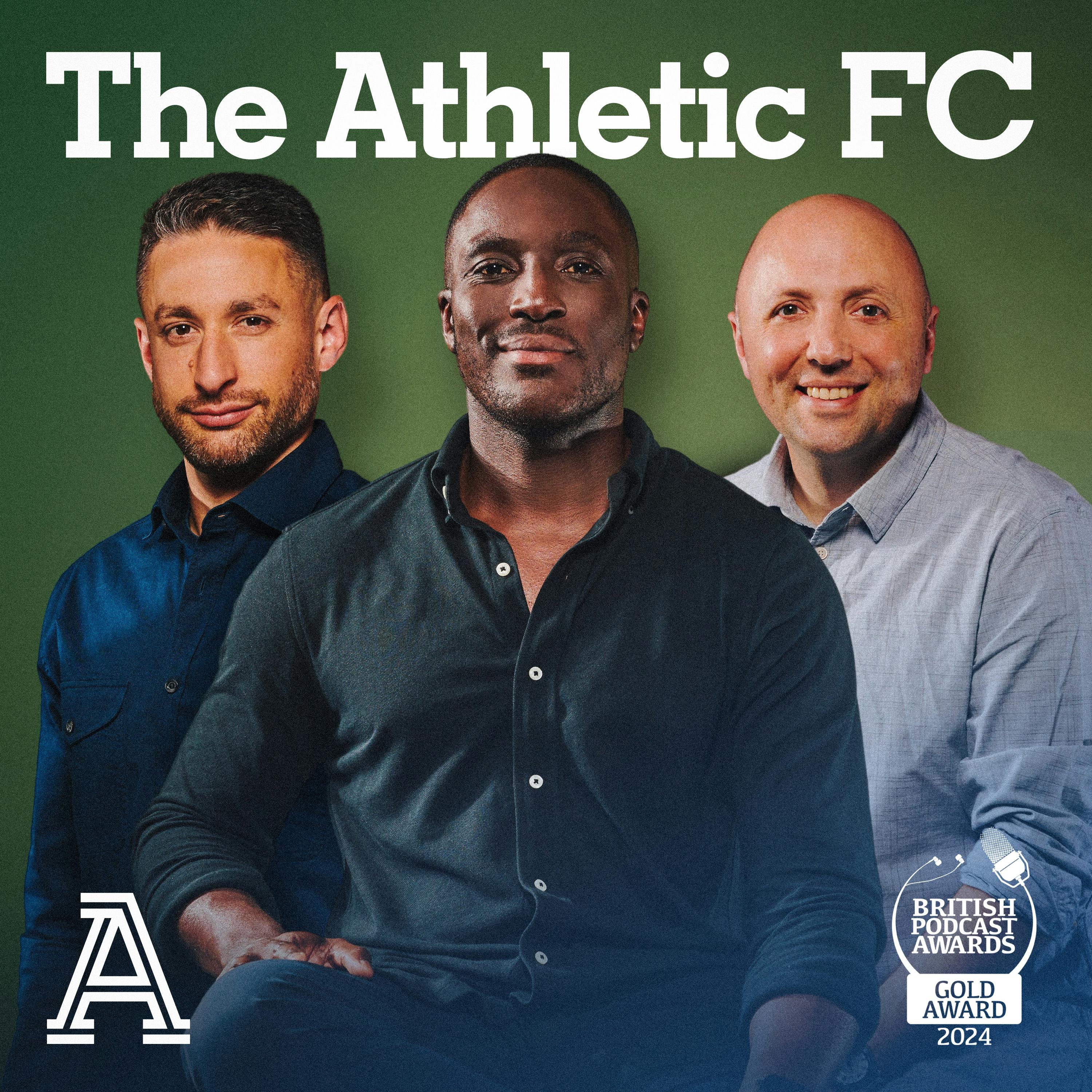
🎙️ The Athletic FC Podcast •September 26, 2026 •⏱️ 26 min

Gary Neville on the future of punditry & becoming Prime Minister | Truth or Padel Full Interview

🎧 Listen to Original Episode →

1. Executive Overview: Core Theses & Key Revelations

When Gary Neville sat down with David Ornstein and Emma Payton for The Athletic FC Podcast's Truth or Padel Extra, the expectation was a casual post-match debrief following an informal game of padel. What emerged instead was a seminal longform discourse on the state of elite football, modern media architecture, and systemic leadership governance. Neville, whose career trajectory has bridged the hyper-competitive changing rooms of Sir Alex Ferguson’s Manchester United and the peak of modern sports broadcasting, delivered an unvarnished diagnostic assessment of where the global game—and the culture surrounding it—stands today.

Across the wide-ranging conversation, several foundational theses emerged that challenge conventional wisdom across tactical theory, media economics, and public life. First, Neville delivered a candid admission of tactical alienation, acknowledging that the role of the modern fullback—exemplified by Manchester City’s Rico Lewis and Liverpool’s Trent Alexander-Arnold—has evolved into a technical domain that he, as a traditional wide defender, scarcely recognizes. Second, Neville performed a financial and historical re-evaluation of Manchester United's iconic mid-1990s midfield, asserting that the quartet of Roy Keane, Paul Scholes, Ryan Giggs, and David Beckham remains the premier engine room in English football history, capable of commanding aggregate transfer valuations exceeding £600 million in today's inflated market.

Third, Neville outlined a definitive shift in sports broadcasting, predicting that the next generation of premier athletes—including Declan Rice, James Maddison, Virgil van Dijk, and Jack Grealish—will bypass traditional television desks to curate self-owned media ecosystems. Fourth, Neville permanently closed the door on a potential political career, framing his decision through a scathing corporate critique of the UK's parliamentary system, which he condemned for chronic short-termism and rotational leadership failure. Finally, Neville offered rare introspective reflections on the emotional toll of club devotion, the grief of losing his father, and the hard-won leadership wisdom derived from his high-profile coaching failure at Valencia.

Core Dimension Traditional Baseline (1990s–2000s) Modern Paradigm (2020s & Beyond) Neville's Strategic Assessment
Fullback Functionality Touchline width, overlap crossing, 1v1 defensive isolation Inverted central playmaker, spatial half-space orchestrator Acknowledge cognitive & technical leap; total tactical shift
Midfield Valuation £15M–£20M record British transfers £100M–£150M+ standard elite benchmark Scholes/Beckham/Giggs valued at £150M–£200M+ each today
Post-Career Punditry Linear studio panels (Sky, BBC, ITV) Player-curated digital channels & direct content engines Transition from reactive commentary to lifestyle content curation
Institutional Governance Long-term managerial tenure (Ferguson era) Rapid ministerial/executive turnover Cabinet reshuffles labeled "irresponsible leadership"

2. Context & Background: The Landscape Leading to This Conversation

To fully grasp the resonance of Neville's assertions, one must place them within the shifting landscape of contemporary football and sports media. Neville occupies a singular position in global sport. As a decorated defender who amassed eight Premier League titles, two UEFA Champions League trophies, and 85 England caps, his footballing credentials are beyond dispute. Yet his post-playing career has proven even more influential. As the lead analyst for Sky Sports, founder of The Overlap digital channel, co-owner of Salford City, and investor behind major urban development projects in Manchester, Neville has established himself as a prominent media executive and entrepreneurial voice in British public life.

This interview unfolded against a backdrop of profound structural transformation across multiple domains. Tactically, European elite football has undergone a radical paradigm shift driven by coaches like Pep Guardiola and Jürgen Klopp. The traditional position-based setups of the late 20th century have given way to fluid, space-oriented systems where positional designations are fluid. Fullbacks are no longer restricted to touchline defensive duties; they operate as inverted midfielders, central orchestrators, and primary line-breakers.

Simultaneously, the sports media ecosystem is undergoing its most severe disruption since the advent of satellite television. Traditional linear broadcasting networks face declining linear audiences and shifting demographic preferences. The rise of athlete-owned media companies, podcasts, and direct-to-consumer platforms has empowered players to bypass traditional media gatekeepers. In this context, The Athletic FC Podcast's Truth or Padel Extra format—hosted by premier football journalist David Ornstein and presenter Emma Payton—reflects a broader industry trend toward informal, personality-driven, yet intellectually rigorous interviewing formats that extract authentic insight from elite figures.

Finally, the political and macroeconomic climate in the United Kingdom over the past decade has created an environment of widespread institutional skepticism. Following years of political instability, frequent leadership transitions, and economic turbulence, public debate around governance, leadership competence, and systemic accountability has reached a crescendo. Neville’s frequent public commentary during this era led to widespread speculation regarding a potential move into elective politics—speculation that this interview definitively put to rest.

3. Deep-Dive Thematic Breakdown

The conversation between Neville, Ornstein, and Payton moved far beyond standard sporting anecdotes, providing a rigorous examination of tactical evolution, market dynamics, broadcasting trends, political governance, and leadership psychology. Below is an exhaustive breakdown of the five primary thematic pillars explored during the discussion.

3.1 Tactical Alienation: The Metamorphosis of the Modern Fullback

One of the most striking admissions from Neville was his unvarnished confession of tactical alienation when observing contemporary fullbacks. Having occupied the right-back slot for Manchester United and England across two decades, Neville was defined by positional discipline, defensive solidity, overlapping runs, and precise delivery into the penalty area. However, when examining young elite players such as Manchester City's Rico Lewis or Liverpool's Trent Alexander-Arnold, Neville acknowledged a profound generational gap in technical profile and spatial awareness.

"When I watch Rico Lewis play football now... I honestly don't recognize the way in which they play," Neville admitted. "It's exceptional, the technical ability that they have to be able to handle the ball, the speed of them. I only retired 15 years ago, by the way. I'm not talking about the 70s and 80s here. I honestly don't recognize the way in which they play." He noted a similar sensation when speaking directly to Alexander-Arnold: "I don't recognize what you do going forward."

This admission underscores a fundamental transformation in football's tactical geometry. In the era of Ferguson and Arsène Wenger, fullbacks operated along linear tracks. Defensive primary duties required winning 1v1 duels against wingers, maintaining backline compact distance, and providing width on the overlap when mid-block defenses dropped deep. In contrast, Pep Guardiola’s tactical innovations have turned the fullback into a central conductor. Players like Rico Lewis step inside from out wide to form a temporary double-pivot in central midfield, absorbing pressure in congested central zones, operating under 360-degree pressure, and making vertical line-breaking passes.

This shift demands a completely different cognitive and physical profile. The modern inverted fullback must possess the vision of a central playmaker, the press-resistance of an elite number six, and the agility to sprint back into defensive coverage during rapid transitions. Neville’s admission that he does not recognize this style of play is not a self-effacing concession of inadequacy, but an authoritative recognition of how rapidly elite football has re-engineered positional demands. The traditional fullback who provided width and defensive cover has been superseded by a multi-dimensional spatial operator.

3.2 Hyper-Inflation and Nostalgia: Quantifying the Class of '92 in Today's Market

The discussion turned to historical player valuations when Ornstein pressed Neville on how Manchester United's celebrated midfield of the late 1990s and early 2000s—Roy Keane, Paul Scholes, Ryan Giggs, and David Beckham—would be valued in the contemporary transfer market. Neville was unequivocal in his historical placement, asserting that the unit stands as the finest midfield in the history of English football.

"Without a shadow of a doubt, the greatest midfield that's ever been produced in this country is that four that played for United. They had everything," Neville declared. "You're talking a hundred million pound player each. Skoles, Bex, and Giggs right now... three of them could be like 150, 200 million each."

When asked to value his own career in modern terms, Neville placed his baseline worth at £40 million to £50 million. This valuation exercise provides a fascinating case study in modern transfer market economics. During Neville’s playing career, a world-record transfer for a fullback hovered around £15 million to £20 million. In the contemporary market, elite fullbacks regularly command fees between £45 million and £60 million (such as Marc Cucurella, Achraf Hakimi, or Kyle Walker), while generational midfield playmakers command transfer sums exceeding £100 million (exemplified by Declan Rice, Jude Bellingham, Moises Caicedo, and Enzo Fernández).

Neville's ranking of his Class of '92 peers was equally revealing. Self-deprecatingly placing himself and his brother Phil at the bottom of the hierarchy, Neville positioned Nicky Butt in the middle tier, with Scholes, Giggs, and Beckham sharing the summit. This ranking reflects more than brotherhood modesty; it illustrates the market premium placed on elite game-changers over functional system operators. While Neville’s remarkable consistency, tactical discipline, and leadership provided eight years of unbroken service without Manchester United needing to sign a rival right-back, he recognized that the ultra-high valuation tier is reserved for players who possess transformational technical brilliance and global commercial reach.

3.3 The Media Metamorphosis: From Traditional Punditry to Player-Owned Media Empires

As co-creator of The Overlap and a key figure in modern sports broadcasting, Neville offered an authoritative blueprint for the future of football media. When asked by Ornstein which current active players possess the credentials to become the next generation of top pundits, Neville identified Declan Rice, James Maddison, Trent Alexander-Arnold, Virgil van Dijk, Jack Grealish, Andy Robertson, and Vincent Kompany. Crucially, however, Neville argued that the very nature of punditry is undergoing a structural transformation.

"These lads are not just going to sit on television and speak about a football match," Neville observed regarding figures like James Maddison. "They're also going to give you content during the week of their own. Maddison, Rice... he should think about curating a career in content."

Neville categorized future media figures into two distinct operational profiles:

  • The Deep Tactical Analyst: Exemplified by figures like Jamie Carragher or Vincent Kompany, who analyze spatial mechanics, tactical systems, and granular pitch data with obsessive analytical rigor.
  • The Charismatic Personality Operator: Exemplified by figures like Jack Grealish or Paul Merson, who bring warmth, light-hearted authenticity, and high emotional connection to broadcasting without bogging down in complex tactical jargon.

This distinction highlights a broader disruption within the media landscape. The era when ex-players relied exclusively on traditional television networks (Sky, BBC, ITV) for post-career media work is ending. Modern athletes command massive personal follower bases across social channels and video platforms. By launching self-owned podcasts, production houses, and digital channels, players can monetise their personal brands directly, retain complete editorial control, and publish mid-week behind-the-scenes content that dwarfs standard television ratings. The traditional television studio is becoming just one node in a broader, player-controlled media ecosystem.

3.4 Political Institutional Failure: Corporate Governance vs. Parliamentary Volatility

For years, Neville’s vocal public commentary on social inequality, regional investment, and UK government policy fueled widespread speculation that he would eventually transition into politics, potentially running for Parliament or local office. In this interview, Neville emphatically closed that door, revealing a philosophical critique of the UK political system built on his experience as a corporate executive.

"I absolutely will not go into politics. I love football too much. I love my life too much. I love my family too much," Neville declared. "There's no way I'll go into it because it would mean I'd have to give up the thing that's kept me going all my life."

Beyond personal lifestyle considerations, Neville offered a sharp structural critique of parliamentary democracy, comparing state departmental leadership to corporate business units. He expressed outrage at the practice of rapid cabinet reshuffles, where ministers rotate through critical departments—such as transport, health, education, housing, and the economy—after just 12 to 24 months in post.

"We have these politicians who go and take control of these departments, have a year or two in the post, and then get a cabinet reshuffle. That is not responsible leadership," Neville argued. "If you change your department leadership every 10 minutes, you're never going to get consistency, you're never going to get structural stability. It would never work in any business. Why would running the country that way work?"

Neville advocated for a technocratic model of state governance, suggesting that major state departments should be led by highly compensated, experienced chief executive officers who bring long-term domain expertise and operational stability rather than political careerism. Reflecting on global political polarization and the erosion of objective truth, Neville cited a recent Bruce Springsteen concert in Washington D.C. as a source of emotional inspiration, emphasizing the urgent need for clear moral leadership, authentic values, and fundamental integrity in public life.

3.5 Monastic Obsession, Trauma, and the Maturity of Modern Leadership

The final thematic thread of the conversation focused on personal psychology, leadership evolution, and the emotional burden of lifelong athletic obsession. Neville spoke candidly about the monastic culture that defined Manchester United during his playing career under Sir Alex Ferguson, describing an atmosphere of intense pressure and total commitment.

"We were absolute animals for our football club. We were at it to a level of complete and utter heightened fever," Neville recalled. "I can't describe it."

This intense commitment, however, presented severe challenges when transitioning into post-playing executive roles and managerial positions. Neville reflected openly on his coaching stint at Valencia CF in 2015–2016, describing it as the defining failure of his professional life—yet one that catalyzed essential personal growth.

"Valencia was tough for two or three months. That's the only time in my life where I felt out of my depth, where I felt like I didn't belong," Neville admitted. "Up against the likes of Simeone, Valverde, and Rafa Benítez... it informs who I am today because of what happened."

Following Valencia and the death of his father, Neville transformed his management philosophy. In his early executive career, Neville admitted to operating with aggressive micro-management, sending dozens of emails at 4:00 AM and expecting immediate compliance. Over time, he learned to adopt a balanced leadership framework built on a principle he encountered in higher education: stretching teams without stressing them.

"We want to stretch our people, but we don't want to stress them," Neville explained. "Pushing them to drag that little bit more out of them to get them to their absolute maximum, but not jumping too big into an arena where they can't survive." This philosophical shift represents the evolution of Neville's character: transitioning from an obsessive athletic operator into a reflective executive who understands human sustainability.

4. Speaker Perspectives & Analytical Contrast

The dynamic between David Ornstein, Emma Payton, and Gary Neville provided a compelling study in editorial technique and conversational pacing. Rather than a formal, scripted Q&A, the Truth or Padel Extra format leveraged the physical engagement of sport—playing padel—to lower conversational barriers before transitioning into deep-form discussion. This structure generated a striking balance between spontaneous disclosure and strategic signaling.

David Ornstein, widely recognized as one of sports journalism's premier news-breakers, operated with calculated editorial precision. His line of questioning avoided superficial media clichés, instead guiding Neville toward areas of genuine industry substance: transfer valuation inflation, structural changes in sports punditry, executive governance, and political ambitions. Ornstein’s ability to press Neville on his political aspirations twice—first on the padel court and subsequently in the studio—forced Neville to move beyond soundbites and articulate his overarching critique of parliamentary governance.

Emma Payton provided vital structural pacing, anchoring the transition from the high-energy, quickfire paddle segment into the reflective studio interview. Her presence ensured that the conversation maintained an approachable narrative arc while allowing Neville room to expand on deeply personal topics, such as family grief and the emotional intensity of his attachment to Manchester United.

Neville himself presented a fascinating duality: the pragmatic, data-fluent corporate executive alongside the passionate, romantic football supporter. While he analyzed transfer markets and media business models with objective clarity, his language turned intensely poetic when discussing Manchester United. "There is nothing in my life that can ever make me feel like United have," Neville confessed. "It makes you scream. It makes you dejected. It ruins your week. But the best times of my life have been watching that club." This tension between analytical pragmatism and raw emotional devotion is precisely what makes Neville such a compelling media voice.

5. Strategic & Industry Implications

The insights articulated by Neville carry broad implications for sports executives, media companies, political strategists, and athletic academies. Understanding these trends is essential for navigating the next decade of elite sports and media operations.

1. Broadcasting and Rights Distribution Shifts: Traditional television networks must urgently re-evaluate their talent acquisition and digital integration strategies. As active players build independent media channels, networks can no longer view ex-players merely as studio analysts. Broadcasters must partner with player-owned media brands, offer flexible multi-platform distribution rights, and co-create digital content series to retain younger audiences who prioritize authenticity over legacy studio setups.

2. Academy Tactical Curricula Modernization: Neville's observations regarding Rico Lewis and Trent Alexander-Arnold highlight a fundamental imperative for youth football academies. Coaching frameworks must dismantle rigid positional silos. Defensive players must receive advanced central midfield technical training from early developmental stages, focusing on 360-degree orientation, press-resistance, and spatial awareness. Academies that continue producing single-axis touchline fullbacks will find their graduates obsolete at the elite level.

3. Corporate Governance Models in Public Administration: Neville’s critique of UK political leadership resonates across public policy circles. The ongoing instability caused by short-term political appointments suggests a growing demand for structural reform in public administration. Adopting corporate-style executive tenure—where state department heads are appointed based on operational domain expertise rather than political patronage—could offer a blueprint for stabilizing long-term infrastructure, healthcare, and economic planning.

4. Athlete Brand Architecture & Post-Career Transition: Neville's journey offers a clear template for modern athletes. Rather than treating post-playing life as an afterthought, current players should proactively curate personal content channels, invest in sports technology and real estate, and build multi-dimensional business portfolios while still active. The modern footballer is no longer just an athletic employee; they are a media platform and corporate entity in their own right.

6. Looking Ahead: Unresolved Questions & Next Milestones

As Gary Neville continues to expand his media footprint, real estate developments, and stewardship of Salford City, his insights leave several critical questions open for the sports industry to monitor over the coming seasons.

  • The Direct-to-Consumer Athlete Media Shift: Will active players like Declan Rice, James Maddison, or Trent Alexander-Arnold launch fully independent digital media networks during their playing careers, fundamentally disrupting the access traditional press departments control?
  • The Future of Fullback Evolution: Will the tactical pendulum eventually swing back toward traditional defensive physical specialists, or will the inverted playmaker become an absolute mandatory baseline across all tiers of professional football?
  • Manchester United's Institutional Rebuild: Can Manchester United restore the elite culture and operational excellence that Neville described from the Ferguson era under its current executive structure, or will the emotional volatility surrounding Old Trafford continue to impact performance on the pitch?
  • Technocratic Governance Integration: Will public administration in major Western democracies adopt long-term corporate executive structures for state departments, or will electoral systems remain trapped in rapid cabinet turnover and short-term political cycles?

Ultimately, Gary Neville's appearance on Truth or Padel Extra served as far more than an entertaining podcast interview. It delivered an authoritative baseline for understanding how football, media, and leadership are intersecting in the modern era. As tactical paradigms evolve, media platforms decentralize, and governance structures face mounting scrutiny, Neville's reflections provide a clear lens through which the future of global sport and public life will be judged.

💬 Key Quotes & Speaker Breakdown

Politics

"I absolutely will not go into politics. I love football too much. I love my life too much. I love my family too much. There's no way I'll go into it."

— Gary Neville

"We have these politicians who go and take control of these departments, have a year or two in the post, then get a cabinet reshuffle. That is not responsible leadership. It would never work in any business."

— Gary Neville

Tactical evolution

"When I watch Rico Lewis play football now... I honestly don't recognize the way in which they play. It's exceptional, the technical ability that they have to be able to handle the ball."

— Gary Neville

"I said the same to Trent Alexander-Arnold. I don't recognize what you do going forward."

— Gary Neville

Manchester United history

"That midfield four with Roy, Giggs, Scholes, and Bex... that is the greatest midfield that English football has ever produced. Without a shadow of a doubt."

— Gary Neville

Future of punditry

"Declan Rice, if he wants to [be a pundit]. James Maddison, he should think about curating a career in content. Trent Alexander-Arnold could. Virgil van Dijk would be a great pundit."

— Gary Neville

"I'm not going to rule out Vincent Kompany [as a future pundit]. He would be an incredible pundit. An analyst in the game."

— Gary Neville

Manchester United

"There is nothing in my life that can ever make me feel like United have. It makes you scream. It makes you dejected. It ruins your week. But the best times of my life have been watching that club."

— Gary Neville

Manchester United culture

"We were absolute animals for our football club. We were at it to a level of complete and utter heightened fever. I can't describe it."

— Gary Neville

Managerial career

"Valencia was the only time in my life where I felt out of my depth, where I felt like I didn't belong."
— Gary Neville
📜 View Full Episode Verbatim Transcript 27,609 characters
Ranked the class of 92, from the worst to the best. Oh no. Welcome to Truth or Paddle Extra on the Athletic FC podcast. I'm Emma Payton and I'm joined by Truth or Paddle host David Ornstein. Hello, how you doing? I'm good. That is something I've never been called before. No. Welcome to a new era. It is your new role, your new title, so... The paddle corresponded. The paddle corresponded. That works actually. Um, to start with then, what is Truth or Paddle? Well, Truth or Paddle is a brand new limited series that we've been working on here at the Athletic where I get the chance to ask our famous football guests questions that you might not normally get the chance to put to them in a traditional interview and it's all done over a game of paddle. So how does it work? If I win a point, they have to answer the question. If they win the point, they get to avoid answering the question. And our first guest was former Manchester United and England, footballer, legend, media mogul now, Gary Neville. I feel like if they want a point, they should have got to ask you a question. That's the next year. Yeah, the next year. Okay, let's show you a clip from that episode now. This is where we find out how honest you really are. Which of the Spice Girls would you have married? I can't answer that. You absolutely can't. Which of the Spice Girls would I have married? Which of the Spice Girls would you have married? You've got the opportunity to win the point and avoid answering it. Come in. Oh ****, that's not bad. How have you got that back? That was very basic play. Sorry Emma, I'm about to tell the world which Spice Girls would have married. Which of the Spice Girls would you have married? It's good to be by a process of elimination this. Well Victoria obviously not because... Off limits. She's with David. Sporting not because she sports them a pool. Oh yeah, that's true. Yes, we can. That would have been a challenging sort of moment. I think back in the day, I think I said, to say that Melby, Jerry or Emma, baby Spice. I think back in the day, I think I said that sort of baby Spice was my favourite. I mean, David, this is not right. There's something just very uncomfortable. So much churning about this. You can't sport scary Spice because it's your lead's fan. Yeah, scary Spice from leads. I think Jerry would fright me today just generally. Would take baby Spice. Yeah, baby Spice will go off. The full video of the paddle game interview is available on the Athletic FC YouTube channel. The link is in the show notes. But what are we going to hear on this episode of Truth or Paddle Extra? Well, after the game, we sit down and have a proper chat. And that's what you're going to hear today. With Gary, I asked him if he ever wants to go into politics. Which current footballers he thinks will make the next great pundits. He also spoke really poignantly about his father's death, which is something I hadn't heard him talk on before. Then if you could give your 18-year-old self some advice, what would it be? Okay, let's get into it then. Where did you start? I started by asking Gary a few quickfire questions to get warmed up. Let's go. Who's the best young English player right now? Nico Riley. Who was the best manager ever? Alex Ferguson. Who was the best team mate you played with? Oh, such a difficult one. I've always said best team mate, Roy Keane. Who's the nicest person in football? Just something. It sounds crazy. I would say my brother, Michael Carricore, are going to soul-sharing our dressing room. One. I'm going to go on my brother. The biggest ego in football? Cristiano. But in a good way. Ronaldo or Messi? Ronaldo. Holland or Mbappe? Holland. Guardiola or Maurinho? Guardiola. Lampard Gerard or Skoles? Skoles. Rooney or Keane? Rooney. Ranked the class of 92 from the worst to the best. Oh, no. I'm going to put me in my brother, joint bottom. Err... F***. Oh, my God, that is so difficult. And we put me in my brother at the bottom. And then we put Skoles, you bet, and gigs, you get the top joint. Butty in the middle, because he was better than me and Phil. But he'd accept that he wasn't at the level of those three. There's just something that sounds crazy. That midfield finited with Roy, with gigs, gigs of Skoles, you and Bex. That is the greatest midfield that British football, English football, has ever produced. Yeah. Ever. From the best in the world. Yeah, in the world. I mean, look, in midfield, you could go Busskets, Javi and Yester. No, one of the best. And you start to put that together, and then you start into a debate of, you know, I don't want to do that, but I'm going to say, without a shadow of a doubt, the greatest midfield that's ever been produced in this country is that four that played for United. They had everything. Yeah. People say, why did you win things? That midfield, those four, three of them come from, obviously, our youth team. Amazing. You're talking a hundred million pound player each. I'm Skoles, you're Bex and Giggs, you're right now. I'm rocking 150. Amazing. You know, three of them could be like 6, 5, 6, 700 million. What would you be worth? 10 million. I'd be worth 40 or 50 million now. I would. Probably. Stupidly, naively, how I don't know. But, you know, back in the day, you know, back in the day, it was 15, 20 million for a full back. Now, it's 40 for 50 million. Yeah. If for me, if I was to be 24 years of age and give seven or eight, nine years of service to a football club, I'd probably worth 40, 50 million in terms of what they're paying. But when I watch Nico Riley, I've mentioned him before, when I watch him play football now, and I said this to you actually, Mausley was scared last week when I saw him briefly for an interview that I did be righty for the overlap. I don't recognize the football that these lads are playing. It's exceptional, the technical ability that they have to be able to handle the ball, the speed of them. I only tired 15 years ago, by the way. I'm not talking about the 70s and the 80s here. I'm talking about these lads, a next generation to me, really. I honestly don't recognize the way in which they play. I said the same to Trent Alexander Arnold. I don't recognize what you do going forward. Did anybody try to sign you? No. Manchin and I didn't sign a write back. The whole time I was at the club. That's when a youth player was back up. Wes, sometimes back up, my brother, was sometimes playing, Shady, sometimes played, or at the end, Raphael. They didn't sign one write back the whole time I was there. It's weird, and other players, other positions got challenged. Yeah, yeah, yeah. You know, challenged by an external player coming in, but I genuinely, I felt challenged all the time because I just, you put pressure on yourself, but no one ever came in for me, no one ever spoke to me about it. Michael was with nail to the mask. There was no way I was ever leaving that. That club was literally, and is, I'm so happy that I've only got Manchin and I did against my name. I am so happy with that. It just represents what I am, and what I feel my family is. But when I look at David's career, and I speak to David now, and I think how much richer he is for his experiences, having Milan, Paris, LA, Madrid, on his CV. I just think, wow, and I see sometimes these lads who played for these countries in this beat three or four languages, and I think, wow, it's not me. Let's bring it more to your modern career and thoughts on the football world. Of the players still playing, who do you think will make the next great pundit? The people who've got the ability to make the next great pundit, if they want to, by the way, in some of these lads don't want to. Declam Rice, if he wants to. James Madison, and he should, think about curating a career in. I'm not going to say punditry, I'm going to say content. These lads are not just going to sit on television and speak about a football match. They're also going to give you content during the week of their own. So for me, Madison, Rice, Henderson I think can be a solid pundit. Any will, he'll have to develop his character, his personality. I'm trying to think of all the lads that are coming towards the end now. I think Trent Alexander-Arnold could. I mean, spoke to him. Very knowledgeable. Watches the game, loves the game. Whether he wants to or not is another matter. I don't think Harry will want to. Don't think it'll be his game, that. I think he might do a bit here and there, but I don't think he would want to. Jack, if he wanted to. And I'm thinking Jack... That's content. No, I'm thinking Jack has been someone who is more... So I think Paul Morrison's amazing on television. And I think he brings a contrast to say, sometimes, and he does know the game, and he does no analytics. But he's not like Kara, who's deep into the idea of every little inch on the pitch. But he's very much a personality. He's got a great character, he's got a warmth to him. I think Jack can be that type of pundit if he wants to be. Someone who's seen the game at the highest level. But takes the game less seriously, but in a good way, they take the game very seriously and merst does. But in a way, which there's more of a smile on the face when they're doing punditry, you know what I mean? It's more of a light touch, you know, light and shade as you'd like to call it. So I think Jack could do something if he wanted to in a different space than the, you're telling us about the right back inverting and the left back in there. I don't know where Jack was really talking to me about that. I want to hear from people who are intelligent and well-traveled like a Le Carcou that have experienced tons, massive transfers, controversy. Well, Van Dyke would be good pundit. Van Dyke would be a great pundit. Willing to speak their mind as well. Yeah, I'm trying to think that players who, to be fair, I mean, Rodri, players who've got all sort of what to be, that's a joke. Vincent Kumpley would be an amen. So Vincent Kumpley would be an incredible pundit. I don't rule it out because at some point in their life, you know, we've seen Andrews in Josie, we've seen Jürgen Klott, they've all gone into television and done stuff. Vincent Kumpley would be an exceptional pundit. Yeah, totally agree. An analyst in the game. Can't get a word in Edgeways with Vinnie though. He's, that's good. That's what Tom and Andy Robertsons of this world. Andy Robertson would be very good. I think that'd be excellent. What's the biggest mistake you've made in your career, apart from opening a cocktail bar on Dean's game? Valencia, mistake. I mean, it informs who I am today because of what happened. There's no doubt about that, every failure does. I mean, mistake on the pitch was the Sean Golter one in the Derby, and the two in the World Club Championship against Vastigordi Gama. They're the two biggest mistakes I made on a football pitch that caused me a lot of suffering at the time. You know, suffering internally, you know me, not suffering anyway, you know, illness or anything, but it was hard to get over those mistakes, what you do, but it was hard to get over them. Valencia was tough for two or three months. It was really tough that. That's the only time in my life where I fell out of my depth, where I felt like I didn't belong. Up against the likes of Simioni, and Valverde, and Raffa Benitez, another great experience managers. That was tough, that was tough. If you were to give your 18-year-old self some advice, what would it be? Learn how to say no more quickly. Really? I do say no, but I'm quite collaborative in a sort of leadership way, and I've got a lot better at it in the last six, seven, eight years. No doubt about that, but definitely learning to say no. What was the last story or event or thing that stopped you in your tracks and made you start to think differently about things in life than you did before? Things that stopped me in my tracks. You know, I've been to the old-gold jottal last year. Yeah, massively. That shakes me to my bone, that. Honestly, when you talk about cry before, I don't think I've ever cried before, but honestly, things like that really shocked me. I mean, the thing in my life that, to be fair, that's happened that is my dad dying over in Australia watching my sister play. That's the one thing that, if you spot in my life, she would say that I've changed since then, that I'm different, that, you know, because my dad has spots every single day, you know, he was a massive influence, obviously, on my life. That's the one thing that, I think, that's the most I've ever cried in my life and screamed. That's the most I've ever cried in my life and screamed. For four, five, six days, I don't think I stopped. I always remember my sister, only in the middle of the night, two, three o'clock in the morning. My wife saw the phone flashing, answered it, and my dad was being rushed into hospital, and I said, face timing now. And she, a face time when he was there, being taken into intensive care, and I'll never ever forget that moment. That's like, and look at everybody, at some point, I had to go through something like this, so it's not a case of that. But when it's your parents, when it's your mum, when it's your dad, it's something that, yeah, it's, and he was massive, he watched every single football match that I played in with my mum. He was over watching my sister, Colch England, so that's the one thing that I think has stopped me in my tracks momentarily, because the reality of it is, the strength I get is from my mum, because my mum just gets on with it. My mum, that I find that from people who are sort of in their 60s and 70s, the sort of generation they were born in, just post-war. My mum was born sort of early 1950s, when dad was born late 1940s, yeah, 1950 actually. The incredibly resilient, tough, hardened, don't tell people, the idea of telling people when you're struggling, they didn't, they don't, you know what I mean? We talk now more openly, don't we, about mental health, and making sure that we actually sort of support each other. We want people to not sort of go quiet and not, you know, be introverted around it. And that's absolutely the right thing. But you're 60, 78-year-old parents and grandparents. They didn't do that. No, they just, they, they, they're tough as hell, it's unbelievable, really. Your first answer was about Jotter, oh, and then your father, what has it made you think and do differently, how have you changed? I think, I believe it, not I am more relaxed than I was. I mean, I, I have, I have relaxed more as I've got older. I'll debate that with you, but yeah, I see. People, people think I haven't at times, maybe people who sort of have known me in the last three or four years, but you wouldn't, when I was at United, I would have to call it obsessive, almost maniac type behavior. I feel like we're a bunch of maniacs. You, you know, it sounds, sounds the wrong expression. But when I look back, we were absolute animals for our football club. We literally, and I'm not a bit of bullying it up here. We were just every single day. We were at it to a level of complete and utter heightened, like fever, you know what I mean? I can't describe it. And then the first five years coming out in I did, I'm getting up at like four or five in the morning, firing 10, 15, 20 emails off. Bang, bang, bang, bang. Why is everyone else not up? Where, where, you're that type of mentality. And then you go to Valencia, you come out of Valencia, you get a clip round the air, you start to fail a couple of times in business, you start to think to yourself, I'm going to second, you start to realize the pressure that you're putting on people that you're working with and are you getting out, the best out of people that you're working with and how to lead people in a way which demands from them. But almost in some way, commitment and desire in your team comes from a loyalty, but it doesn't come from pressurising them to a point whereby, and the best expression I ever heard was somebody at our university who said, we want to stretch our students, but we don't want to stress them. Stretch them, stretch them, push them. So that means dragging that little bit more out of them all the time to get them to their absolute maximum. But if you jump too big, you've stressed them because you put them into an arena where they can't survive. It's a bit like me putting them in with someone who plays Paddle really well this morning. Do you know what I mean? If I'd played against someone on my own level, Matt on a few more points, I'd be answering less questions. You know, it's like that, that idea of sort of letting people just develop slowly. And I think that's something that I've changed and I'd understand a lot more now. But post-Jotter and your father, you learn to appreciate life a bit more? I look into appreciate life, to relax more, to enjoy myself more, to switch off more at times, understanding that it can just be gone in a flash. Moments like that do shock you, they do a shiver, send a shiver down your spine, and I've got no connection, obviously, to Diogo Jotter, obviously, after my father, but you just think that these moments do hit your heart, I think, in terms of just sort of what it makes you realize about life and how lucky we are and privilege we are to be here. There was one question that I really wanted to ask you on court that you won the point on, so I didn't have to answer it, and I want to ask you it now. But is that not breaking the rules of your life? Because you're a real podcast. It's the whole point of the follow-up section. We can ask what we want. It's my get out of jail free card. So I asked you, would you like to be prime minister, leader of the UK? I'm going to ask you it again now. No, I absolutely will not go into politics. I felt really passionate about it a few years ago, and still do, but I felt passionate about it a few years ago when Johnson and Truss Sunak were in power. I felt that was just wrong, and we need you to change. But not for the reason that I wanted to go into it personally. I feel passionate about it. I can't believe the position that we're in globally around politics and leadership right now. I think it's a shocker. But yeah, it's not for me. Do you know why, David? It's self-selfish or not. Or not even would I even get a point if I went and stood for it any position politically? I can't not go much sulphur on the Saturday afternoon. I'll go much united on the Saturday afternoon. I'll go and do a game on the Sunday. Or not going basically sort of sit with Roy Keen, Ian Jill Carrot on the overlap. Giving up that thing that I love that I've literally done since the age of five. And I had to care if you remember, got hammered for going to watch Arsenal, didn't they, in the boxes, in the season, yeah. And I think to myself, you know, get hammered to go and watch a football match. I love football too much. I love my life too much. I love my family too much. I love doing what I'm doing, particularly here in Manchester. So there's no way I'll go into it because it would mean I'd have to base, they give up the thing that's kept me going all my life, which is football and the place where I live. That just doesn't work for me. Could your political frustrations and anger and beliefs ever get you to the point much later in life where it overrides all of that? You can never say never, Kanye, but look, I've committed to things in the next five to six, seven years, which means I can't go into politics. You know, the day that I've just done on the overlap, the buildings that I'm doing in Manchester, the commitments that I have with Sky, the commitments that I have with ITV doing, the World Cup and the Euros, they're things that matter, I commit to people and I follow through with them. So there's things that make me, I can't even do it, even if I wanted to, because I've, you know, I stick to what I'm going to do. One of the things in life that's really important is that what you say you're going to do you do, and I think that's that reliability that's important and consistency. And the idea of sort of me just jumping in. And also, I jumped into a position in management, if you remember, by saying yes to something years ago. I've never actually operated in politics before. I wouldn't have a clue how to go about it. I would have a clue what to do with the six to seven major things in this country. You think of transport, health, education, housing, the economy, security and police and sort of major stuff. All these things, I look at them as six individual departments of a business and I think of just, why don't we just put a CEO in place, like amazing CEO, highly paid, intelligent, competent person, insight into what we have is, we have these sort of politicians who go and basically take control of these departments. They have a year or two in the post and then they get a cabinet reshuffle and they're out of it. That is not right. That is a responsible leadership. If you change your department leadership every 10 minutes, you're going to end up with a situation whereby you're never going to get consistency, you're never going to get structural stability. So it's wholly flawed the political system. People aren't competent enough to manage billions of pounds of budgets in each department and then the cabinet reshuffles and changes in leadership that have occurred, particularly in the last five, six, seven years. It's just, it's wholly flawed. It would never work in any business. So why would running the country that way, I'll never know. So I think of change all the time. I think of things that I would love to do but just something I'm not naive enough to think that I would be able to do it because I get stuck in the mud and the treacle like everybody else. That's fair enough. Is your view of world politics similarly dim? Yeah. Yeah, it is. I think we're in a real shocker of a position where the truth deceives as it acts like. Simple premise of when sort of I was younger and my dad used to say that he knew the difference between right and wrong. You've now got people in positions of power who will explain that something that you know is wrong is right and a lot of people believe them. And you then start to question and doubt yourself. We're in that world of sort of second guessing what the truth is and what I think just said that. Is that OK to say that? No, it's not. But we've actually now, we're in a very blurred period, I think, in a dangerous period. Now it's what Bruce Springsteen last week who was extremely political. But I enjoyed it. I got quite emotional at times here in him speak. And so are the crowd. Because I think we know the difference between right and wrong. And we know what a good leadership looks like. Yeah, I just think we've got to a point now of extremes and I don't like it. We always try and ask a desert island question. So who would you like to be trapped on a desert island with if you had to be? One person in the world. Bruce Springsteen. The boss. I went to Washington last week for one day to watch him. Dedication. Just something, 75 years of age, three hours. It was raining for 25, 30 minutes of the concert on to him. He's wet through in a waste jacket, shirt and tie. He's shirts ringing wet. And you imagine if you're 75-year-old, honestly, it's bewildering. Doesn't need to be there either. What that man's, it doesn't need to be there. Honestly, amazing. What's the truth or paddle question that you would love to ask another player? Who's the player? Give me a player. Who have you got coming up? I'll be giving away secrets for it. I'm not going to go on it. I'm only going to interview them. If there was a player you were on court with, and you needed to ask a general question of a football player that would be embarrassing, revealing, carriages, the obvious one. What makes you happy? Just something. It's incredible. It's a bit tiresome fury when I was interviewing him. And I said, what is it you want in life? He said, I just want to be happy. I thought, what a simple answer. Very few people, you know, of that type say that simple thing. But it's what your parents used to say to you. Your grandparents just want them to be happy. It's a very simple thing. But if you're happy, then you've got everything. Health, happiness. So yeah, I would say what makes you happy? What makes you happy? Apart from Bruce Springsteen. I was going to say concerts make me happy. Being at home with my daughters and wife made me really happy. Going for something to eat with the family makes me really happy because I just completely, not to switch off. Going to a beautiful place. Going for a walk. I was going to say watching United, but that hasn't made you happy in recent years. No, just something. That's a different type of happy. When I go on what's sulphur'd and I go on what's United, it takes my body and my mind into a place that nothing else can in my life. That's why I love football. There is nothing can make me feel like United have made me felt nothing. That's be clear. There is nothing in my life that can ever make me feel like United have. And I apologise every time I say that to my wife, to my parents, to my brothers, to my sisters, to my family, to my friends. But United makes me scream. It makes you dejected. It ruins your week. It makes you weak. The best times of my life have been watching that club or playing for that club. As a kid, it made me dream. And it's magic. Manch United is magic. And then I get a similar feeling when I go on what's sulphur'd now and they lose or they win. So football is incredible, really. Would you want to own or run Man United one day, given your two passions, sort of sport, Man United football and business? I think I'm good where I'm at right now, David. Look, I'm 51 years of age. It is my passion. United is the one thing in my life outside of my family. That would say is that the biggest influence on my life. Because it's just something. It's an oasis line, which to be fair. But my favourite line in a song is, while we're living, the dreams we have as children fade away, which is out of an oasis song. And United keeps me young. It keeps me dreaming. It keeps me sort of, you know, football keeps you young. It keeps you dreaming. It keeps you happy. It keeps you... That kidding you should never leave. You know what I mean? I think United does that for me. Thank you. Well done. It's a pleasure. That's it, David. I love you. I love you. I love you. I love you. I love you. I love you. I love you. I love you. I love you. I love you. I love you. I love you. I love you. I love you. I love you. I love you. I love you. I love you. I love you. I love you. I love you. I love you. I love you. I love you. I love you.