The death of the tactical blog boy era
We spent the entire winter listening to tactical purists tell us that the traditional forward was dead. They drew pretty little diagrams on social media to show why the modern game belongs to false-nine space-interpreters who press like rabid terriers.
We were flooded with endless lists of under-the-radar strikers to watch who allegedly had the perfect expected-assists-per-ninety to unlock deep blocks. Then the actual tournament started in the heat of North America, and all that theory went straight into the dumpster.
It turns out that when the world is watching, you do not win matches with heat maps. You win them with absolute freaks of nature who eat defenders for breakfast.
Kylian Mbappe and Lionel Messi did not care about the tactical revolutions. They just went out and demolished everyone in their path.
The entire striker watchlist narrative was a massive scam. It was built on the idea that football had become too complex for simple goalscorers.
The tournament that wrapped up on July 19, 2026, proved that the old-school law of gravity still applies. If you have a guy who can run thirty-six kilometers per hour and blast the ball through a goalkeeper's chest, you do not need a philosophy.
You just need to get him the ball and get out of his way.
Mbappe is playing FIFA on beginner mode
Kylian Mbappe walked out of the tournament with the Golden Boot after scoring 10 goals, including a ruthless double in the third-place play-off against England. Let that number sink in.
Ten goals in a single World Cup is the kind of stuff we assumed was left behind in the nineteen-seventies. It is the footballing equivalent of Wilt Chamberlain averaging fifty points a game.
Mbappe does not press. He does not track back to help his fullback, and he spent large portions of the group stage looking like a man waiting for a bus.
But the second a defender loses concentration for half a beat, he is gone. He is a cheat code, a sports car in a tournament full of sensible hybrid sedans.
France did not even make the final, yet Mbappe still dominated the scoring charts because he is a pure finisher who does not rely on a complex system to function. While England were trying to figure out how to get their tactical spacing right, Mbappe was just running past people and firing rockets into the top corner.
His performance in the third-place game was a masterclass in direct, arrogant finishing that made the English defense look like they were wearing concrete boots. It was almost cruel.
Haaland does not need your pity or your midfield
For years, the loudest guys in the pub argued that Erling Haaland was a system player who would struggle without Pep Guardiola's army of creative geniuses. They told us Norway qualifying for a forty-eight-team World Cup was a fluke and that Haaland would be isolated against elite international defenses. He responded by scoring 7 goals in the tournament.
Haaland did not need Kevin De Bruyne to slide perfect through-balls into his path. He basically treated opposing center-backs like cardboard cutouts, using his massive frame to bully teams that tried to play a high line.
Watching him run against the likes of Uruguay and South Korea was like watching a varsity senior crash a middle school recess game. He is a walking bulldozer with a ponytail.
Norway did not have the depth to go all the way, but Haaland proved that a world-class striker can carry a country on his back through sheer physical will. He did not care about neat combination play.
He just wanted the ball in the box, and when he got it, defenders ended up on the floor. The idea that he needs a perfect environment to score goals is officially dead.
The Messi mirage and England's heavy legs
Then we have Lionel Messi, who managed to score 8 goals at the age of thirty-nine. It is honestly getting ridiculous at this point.
The man was walking around the pitch for eighty minutes a game, looking like he was trying to remember where he parked his car, only to pop up and score a brace. It is like watching a veteran wrestler who cannot run anymore but still puts on the match of the night by doing the basics perfectly.
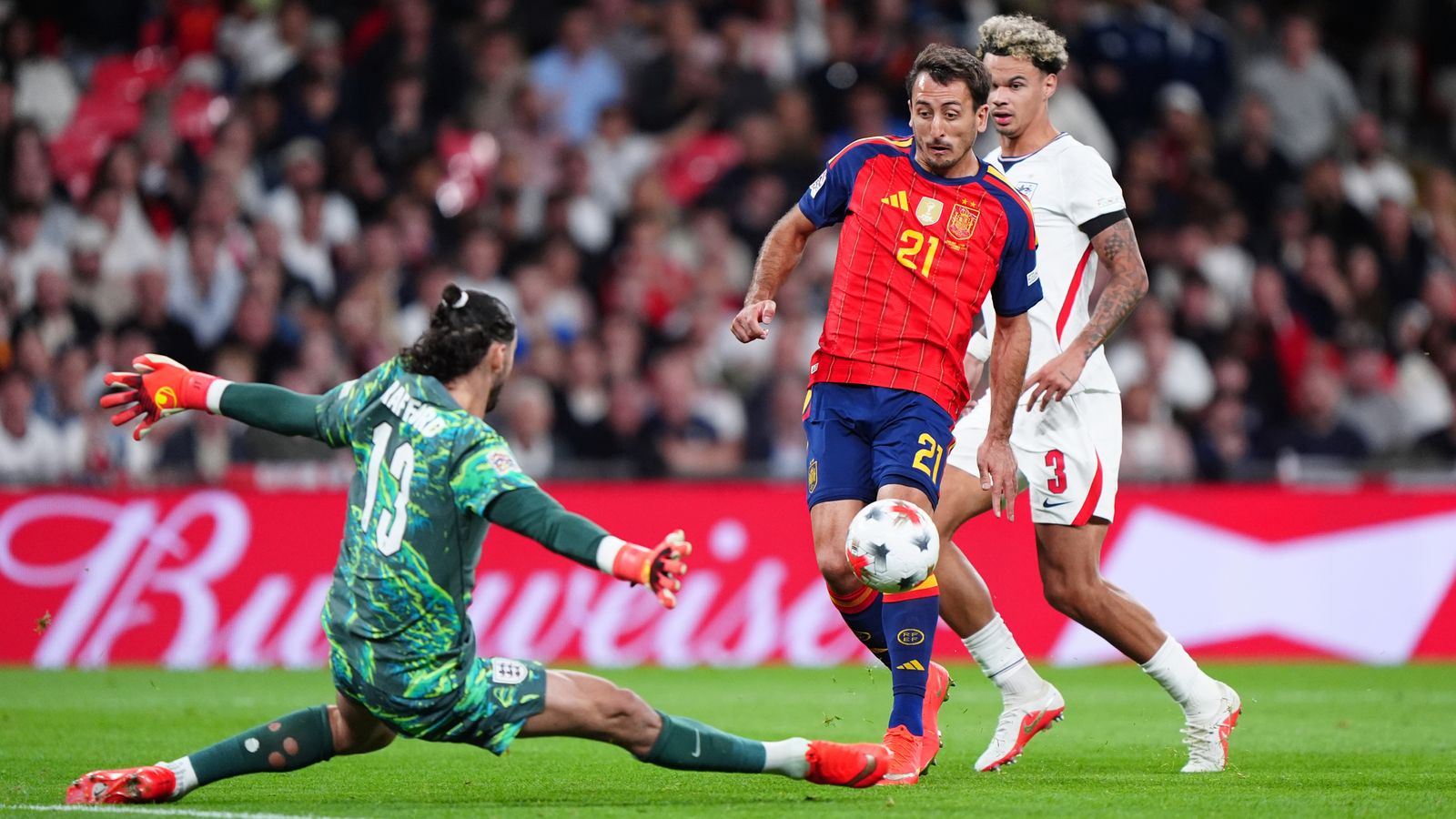
Messi dragged Argentina all the way to the final at MetLife Stadium, only to lose 1-0 in the 106th minute of extra time. The decisive blow came from Ferran Torres, a guy who actually knows how to run for two hours without stopping.
Spain won the tournament not because they had a dominant striker, but because they had an actual team that worked, unlike Argentina's strategy of hoping Messi could perform another miracle. Spain's technical midfield carved teams open, and when they needed the winner in the 106th minute of the final, they had the legs to finish it.
Meanwhile, England's campaign was the usual tragicomedy. Harry Kane put up decent numbers, but he looked completely exhausted by the time they reached the knockout stages.
Kane looked like he was trying to push a stalled Volvo up a steep hill in the midday sun. The heavy minutes from the European club season clearly took their toll, and England's tactical setup was so rigid it felt like watching a corporate team-building exercise.
They passed the ball sideways until the fans wanted to tear their hair out, and when they finally got to the third-place game, Mbappe simply blew them away. Jude Bellingham managed to score six times by playing as a charging midfielder, but England had no real focal point when Kane's legs gave out.
It is the same old story for England: great on paper, but slow, predictable, and ultimately second-best when the real athletes show up.
The overhyped starlets who disappeared
Let's talk about the strikers who were actually on those pre-tournament players to watch lists. The internet spent weeks hyping up young forwards who were supposed to be the breakout stars of the tournament.
Instead, we got a collection of players who looked terrified of the big stage, unable to handle the physical pressure of a summer tournament in North America. They were swallowed up by the occasion and the heat.
They told us we needed to watch the clever movement of the new generation. But clever movement does not help you when a central defender from Spain or Argentina is trying to put you through the advertising boards.
The young starlets who were supposed to dominate ended up as tactical footnotes, replaced by midfielders who actually knew how to arrive in the box.
Spain did not even play with a traditional dominant striker for most of the tournament. They relied on Lamine Yamal and their technical midfield to carve teams open, and when they needed the winner, it was Ferran Torres who delivered.
That is the ultimate irony: the team that actually won the tournament did it by ignoring the striker hype entirely, while teams with hyped young forwards were sent home early.
The simple truth of goalscoring
Football is a game that gets overanalyzed by guys who have never played a minute of competitive sport in their lives. They want to turn a simple game of scoring goals into a chess match played with computers.
The Golden Boot standings from this World Cup are a giant middle finger to those people. The top of the charts did not feature any clever tactical experiments.
It featured Mbappe, Messi, Haaland, and Bellingham. It featured players who have the raw athletic ability and the technical quality to decide a game in a single moment.
They are the guys who make you jump off your couch and spill your beer.
So, the next time someone tries to sell you on a twenty-one-year-old striker who is great at defensive actions in the final third, tell them to shut up. Show them the tape of Mbappe scoring ten goals or Haaland running through three defenders to score a winner.
Football is still about the guys who can put the ball in the back of the net, and it always will be.