Pour one out for the 32-team purity test
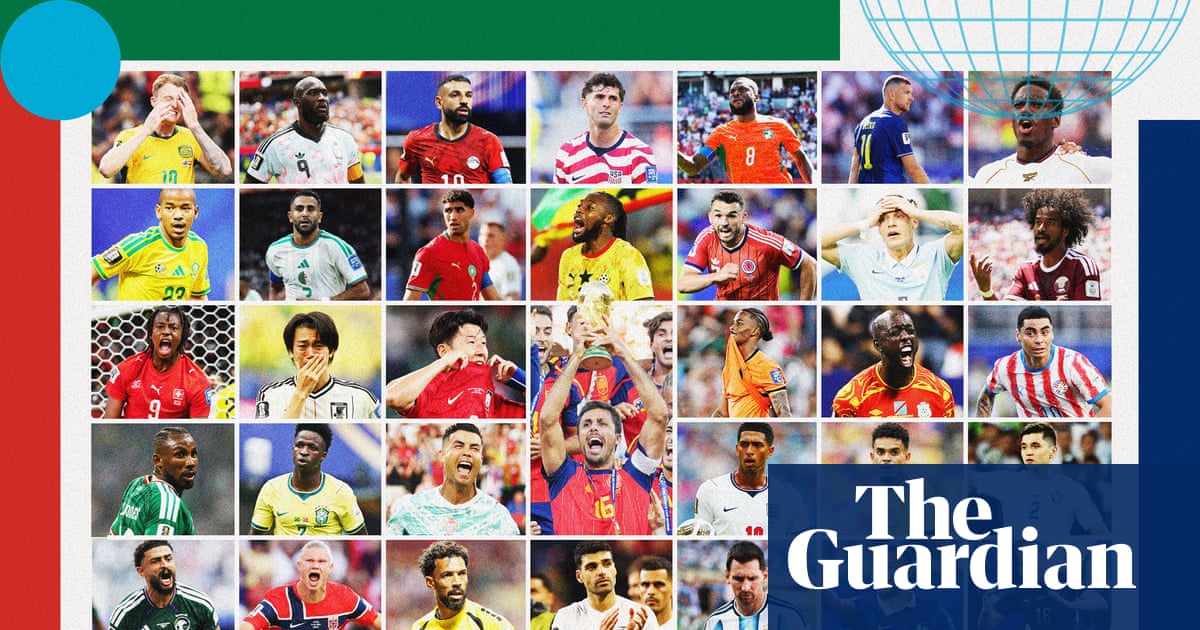
Grab a cold one, pull up a stool, and let’s sit back to analyze the absolute circus we just witnessed. When Gianni Infantino decided less than a year into his FIFA presidency to blow up the sacred 32-team format and invite half the planet to the party, half of us buried our heads in our hands while the other half started calculating air miles. Now that the dust has settled on the first 48-team World Cup, we are left staring at a sprawling, chaotic tournament that gave us everything from unforgettable underdog moments to absolute tactical snoozefests.
Remember when people swore that expanding the tournament would completely dilute the product? Well, they weren't entirely wrong, but they weren't entirely right either. We watched massive gulfs in class where elite squads basically had light cardio sessions against teams that looked happy just to have their jerseys swapped at full-time. But at the exact same time, the sheer weight of games meant the drama arrived in weird, unpredictable bursts.
As Billy Munday observed in The Guardian, this expanded edition had its share of flaws alongside the high-stakes theater. It felt like watching an oversized summer festival where your favorite headliner is scheduled on stage three while a garage band is struggling with soundchecks on stage one. But that’s the reality of modern football when corporate ambition meets global growth.
The group stage marathon and the bloat problem
Let's be dead honest about the group stages. Expanding to 48 teams meant we were treated to a marathon schedule that tested even the most dedicated couch potatoes among us. You needed three TV screens, two delivery apps open, and a spreadsheet just to figure out who was advancing as a third-place qualifier. It was chaotic engineering at its finest, turning what used to be a tight three-week group phase into a endless slog of group fixtures.
The issue wasn't just the sheer volume of games; it was the quality control in the early rounds. For every thrilling nail-biter between mid-tier nations fighting for their lives, we had two matches that felt like pre-season friendlies played in massive NFL venues. Teams with defensive game plans came into group stages simply aiming to draw their way into the Round of 32, creating matches where nobody took a risk for 90 minutes. That isn't high-stakes international football; that's tactical hostage-taking.
Yet, when the format hit its stride, the emotional highs were genuinely wild. Smaller nations who would have been watching from home under the old system gave their fanbases core memories that will last decades. You could see what it meant to the players when they scored a single goal in the tournament, celebrating like they’d just lifted the trophy itself. That emotional spectrum is the double-edged sword of FIFA's expansion vision.
Is a 64-team World Cup actually on the horizon?
Here is where things get spooky. Now that Infantino and company proved they could pull off 48 teams without the entire logistical machine collapsing, you know what’s coming next. The whispers are already starting around Zurich about whether 64 teams is the ultimate destination. If you think 48 was a stretch for broadcast schedules and player stamina, 64 would turn the World Cup into a full-blown two-month trade convention.
The physical toll on elite players is already absurd. Top European superstars entered this tournament after grinding through 60-game club seasons, and by the knockout rounds, some of them looked like they were running through wet cement. Adding another round of games or padding out the field even further risks turning the final stages of the World Cup into a battle of attrition rather than a display of world-class skill.
We have to ask ourselves what we actually want out of international football. Do we want a streamlined, ruthless tournament where only the absolute elite battle for supremacy, or do we want a global festival where literally every nation gets a participation ribbon? FIFA has clearly voted for the latter, because more teams mean more broadcasting rights, more sponsorship activations, and more political currency inside FIFA congress meetings.
The final verdict on the grand experiment
Look, I roast FIFA as much as the next guy at the bar, but pretend for a second that you didn't watch every single match you could get your eyes on. The tournament was bloated, flawed, and blatantly cash-motivated, but it was still the World Cup. It brought us bizarre matchups we never thought we'd see on the global stage and gave footballing outposts their five minutes in the spotlight.
The problem is that the cat is out of the bag now. There is zero chance FIFA ever scales back to 32 teams. The revenues are too big, the member associations are too pleased with their guaranteed tournament spots, and the commercial train has already left the station. We are stuck with the mega-tournament era whether we like it or not.
So bottom line? Sip your beer, embrace the weird third-place qualification math, and get ready. Because if Infantino gets his way, by the time the next decade rolls around, your local pub team might just draw Brazil in Group Z.
Read Next
- FIFA's new three-week international window will break autumn tactical momentum
- The 48-team World Cup is a bloated mess we somehow can't look away from
- Tottenham are making a massive gamble on their forward line this summer
- Southampton face a hollow future after the Tonda Eckert disaster
- 🏆 World Cup 2026 — Full Coverage Hub