Steve Clarke's rigidity has left Scotland praying for a 0.07% miracle
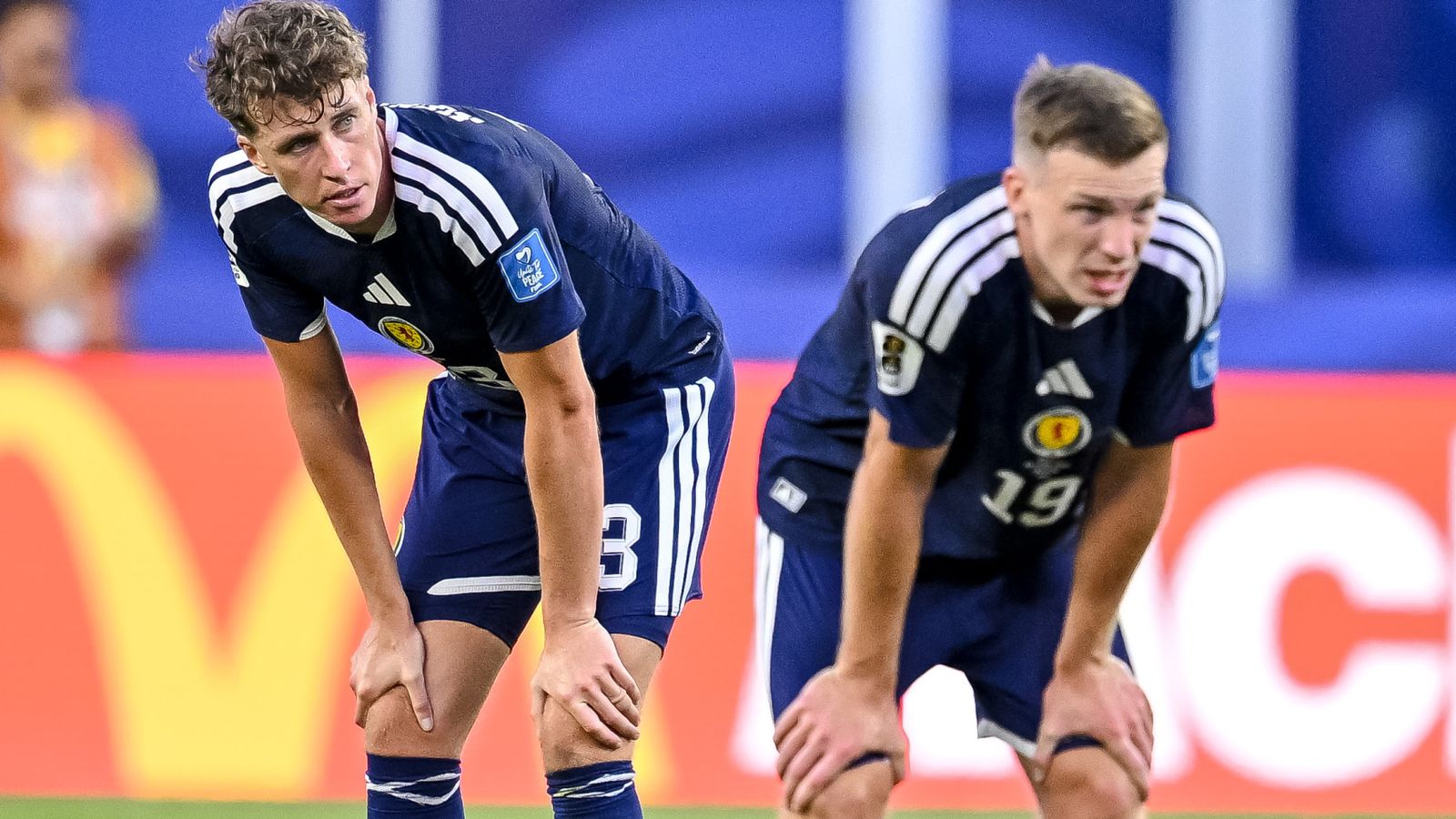
A Decimal Point and a Flight Home
The numbers do not lie, even if they offer a microscopic sliver of false hope. Following a disastrous run of Group C results, statistical models have left Steve Clarke’s Scotland clinging to a 0.07 per cent chance of reaching the round of 32. It is a mathematical death sentence wrapped in a hypothetical math problem.
For the Tartan Army, the optimism of Boston has evaporated into the realities of modern international football. The verdict from pundits has been swift and unforgiving. Speaking on ITV, former midfielder Roy Keane summed up the mood:
If you're a Scotland fan, you're probably heading to the airport.
To qualify as one of the best third-placed teams, Scotland must sit in the top eight of a complex twelve-team table. Currently languishing in tenth place, their fate is entirely out of their hands. They require a sequence of events so precise that it borders on the fictional.
You can track the arithmetic on the live World Cup third-place table, but the real post-mortem must focus on the pitch. This tournament exit is not the result of bad luck, but of tactical stagnation.
The Miami Meltdown: Brazil Explores the Flanks
The definitive blow fell on June 24 at Hard Rock Stadium in Miami Gardens. Faced with a Brazil side boasting elite technical profiles, Clarke opted for his signature low block. The resulting 3-0 defeat was a masterclass in how to systematically dismantle a reactive defensive system.
From the first whistle, Brazil identified Nathan Patterson as the pressing trigger. The young Everton fullback was repeatedly isolated against Vinícius Júnior. The opening goal arrived in the seventh minute after a diagonal switch from Bruno Guimarães found the Real Madrid winger.
The tactical issue was not just Patterson's positioning, but the lack of cover from the midfield. Billy Gilmour failed to drop into the half-space to double-team Vinícius, leaving Patterson entirely exposed. This lack of defensive coordination allowed the Real Madrid winger to dictate the tempo of the entire right flank.
Vinícius bypassed Patterson with a simple drop of the shoulder and curled his finish past Angus Gunn. The ease of the dribble set the tone for the rest of the match.
Scotland’s three center-backs—Jack Hendry, Grant Hanley, and Kieran Tierney—struggled with their spacing throughout the evening. They dropped too deep, creating a massive void in front of the penalty area. Vinícius took advantage again in the third minute of first-half stoppage time, ghosting between Hendry and Hanley to make it two.
Clarke's defensive line was further compromised by the lack of pressure on the ball. Brazil's midfielders had time and space to look up and pick passes behind the Scottish backline. Without a midfield press to disrupt the service, the three center-backs were forced into a constant state of retreat.
Matheus Cunha added the third in the 60th minute, exposing a tired and disorganized defensive line. The goal came after a simple cutback that bypassed Scotland's entire midfield track-back.
While the post-match statistics showed Scotland with 46% possession and 14 shots, these numbers are deceptive. Once Brazil went three goals up, they dropped into a passive defensive shape. Scotland played 417 lateral passes in non-threatening areas, failing to register a single high-value opportunity.
In possession, Scotland’s shape resembled a rigid setup that struggled to transition. The gap between Gilmour and the attacking midfield duo was too wide, forcing Robertson to attempt low-percentage long balls. These vertical passes were easily intercepted by the Brazilian defenders, starting rapid counters.
Brazil finished with 21 shots, nine of which hit the target, illustrating the complete control they maintained over the match. It was a sterile, comfortable win for the favorites.
The Boston Tragedy: Six Shots, Zero Ambition
If the Brazil match was a mismatch in talent, the June 19 fixture against Morocco at Gillette Stadium was a failure of coaching. Conceding a goal in the second minute to Ismael Saibari should have forced a tactical shift. Instead, Clarke refused to alter his shape, allowing Morocco to dictate the entire afternoon.
Morocco's midfield set up a compact block that took away Gilmour's passing lanes. Opposing players pressed Gilmour whenever he received the ball from the center-backs, forcing him to play backward. This horizontal circulation meant Scotland spent the first half passing within their own defensive third.
Morocco finished with 54% possession and completed 612 passes, while Scotland managed just 39% of the ball. The central midfield trio of Billy Gilmour, Scott McTominay, and Callum McGregor became a defensive screen rather than a bridge to the attack. When they won possession, there was no progressive outlet.
Striker Che Adams was left to run channels alone, isolated by 30 meters from his nearest teammate. This isolation made it impossible for Scotland to build any sustained attacking pressure.
The statistical indictment of this approach was stark. Scotland managed six total attempts but registered 0 on target over ninety minutes. They could not progress the ball through Morocco’s mid-block because Clarke’s system lacked lateral rotation.
The lack of attacking variety was compounded by the underutilization of Lewis Ferguson. The midfielder was instructed to play as a defensive screen. This role stripped him of his best attribute—late runs into the opponent's penalty area—and left Che Adams completely isolated.
By keeping Andrew Robertson and Patterson pinned to their defensive lines, Scotland played into Morocco's hands. The North Africans simply compressed the center of the pitch and waited for Scotland to turn the ball over.
The False Dawn and the Math of Survival
The Haitian Warning Signs
This entire campaign was built on the shaky foundations of the June 13 opener. A 1-0 victory over Haiti in Boston gave the impression of a team on the rise. John McGinn’s deflected strike in the 29th minute, set up by a cross from Ben Doak, secured the three points.
Scott McTominay had also hit the post in the 17th minute, suggesting Scotland had control. But that dominance was fleeting.
Yet a closer look at the footage reveals that Haiti exposed the same transition vulnerabilities that Brazil later exploited. The Haitian forwards—Frantzdy Pierrot and Wilson Isidor—repeatedly found space behind Scotland’s wing-backs. Ruben Providence missed a clear chance in the second half that should have leveled the match.
Haiti's forwards identified that Scotland's wing-backs struggled with recovering their positions. Whenever Robertson pushed forward, Haiti launched quick transitions into the space he vacated. This forced Hanley to slide wide, leaving massive gaps in the center of the penalty area.
Only Haiti’s poor execution in the final third saved Scotland from an opening-day disaster. It was a warning sign that went unheeded.
Instead of addressing these gaps, Clarke doubled down on his passive defensive scheme. Against Morocco and Brazil, that lack of structural flexibility proved fatal. A national team boasting Premier League and Serie A talent should not be reduced to chasing shadows.
Players like Lewis Ferguson, who has excelled in Italy, were wasted in a system that views possession as a risk rather than an opportunity. They were passengers in a defensive car crash.
The Scenarios Required
Now, the Scottish FA is left looking at the tournament brackets and hoping for a set of results that defy probability. To stay alive, three specific matches on Saturday and Sunday must go exactly as required. If any of these results deviate, the campaign is officially over.
- Croatia vs Ghana: Ghana must defeat Croatia by at least three goals on Saturday night. This would pull Croatia down to Scotland's points total and worsen their goal difference.
- DR Congo vs Uzbekistan: Uzbekistan must win or draw on Sunday morning. If Uzbekistan win, they cannot do so by four or more goals, which would push them ahead of Scotland.
- Algeria vs Austria: Austria must win by two or more goals on Sunday morning. This is required to drop Algeria below Scotland in the overall standings.
You can check the full schedule of these remaining fixtures on the World Cup schedule guide, but planning for the future must begin immediately. Steve Clarke has built a disciplined group, but his tactical cycle has reached its natural limit. If Scotland want to do more than make up the numbers at major tournaments, they must learn to play with the ball.
adidas Tiro 23 League Training Pants
The iconic, streamlined soccer pants upgraded for modern comfort.
Frequently Asked Questions
What are Scotland's chances of reaching the World Cup round of 32?
Why did Scotland lose 3-0 to Brazil in Miami?
Who scored for Brazil against Scotland at the Hard Rock Stadium?
How must Scotland qualify as one of the best third-placed teams?
What tactical errors did Scotland's center-backs make against Brazil?
More Coverage
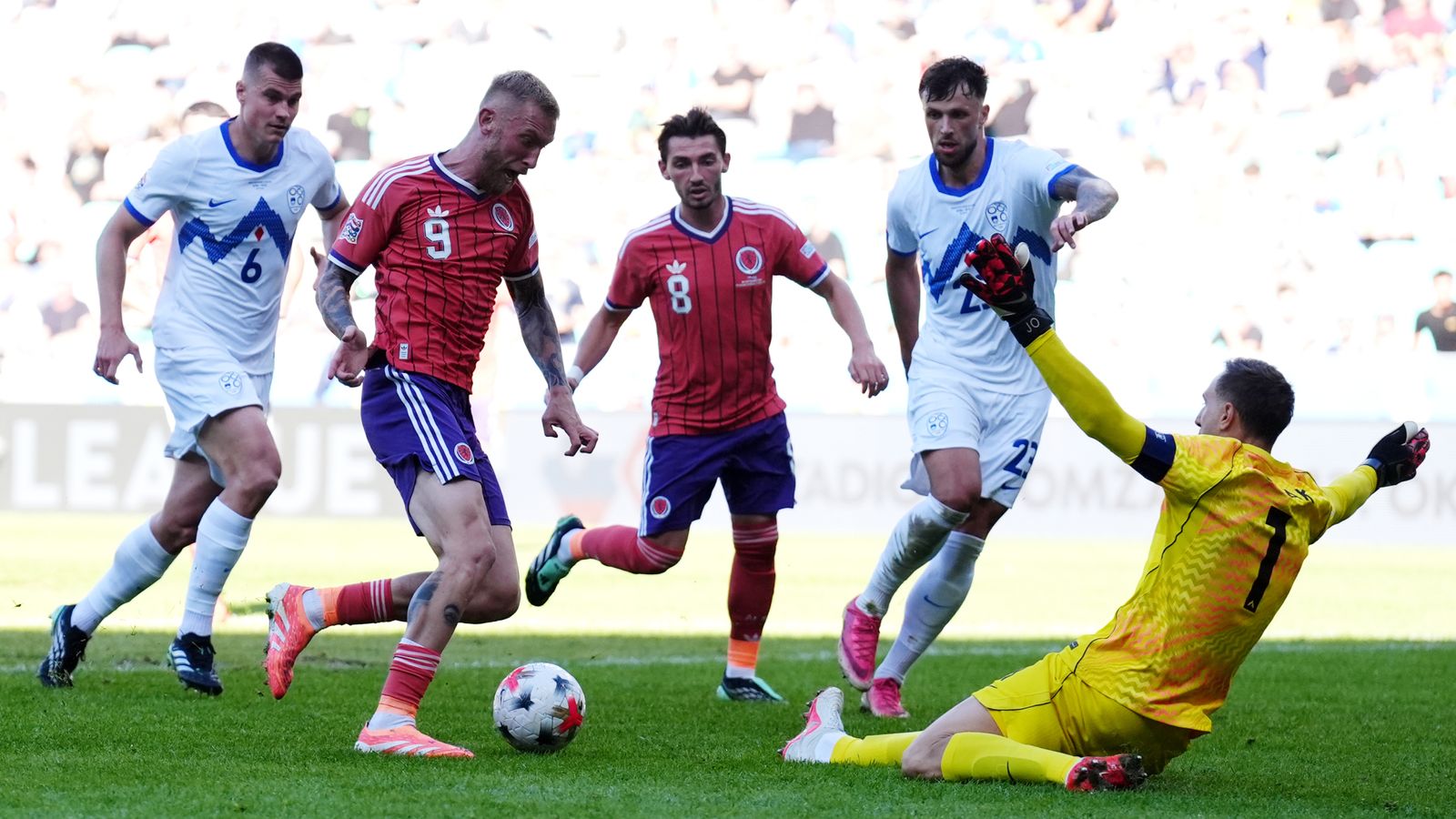
Robbie Ure's Scotland debut has scouts moving fast after Slovenia draw
4 hours agoChampions League Power Rankings: Real Madrid and Man City lead the pack
1 day, 15 hours agoShearer and Souness backing a £500k bookie fund is pure English football
2 days, 9 hours ago
Ireland face an impossible Nations League double-header against Israel
3 days, 8 hours ago
Top 10: Top Moments
4 days, 21 hours agoArgentina's obsession with 39-year-old Messi almost ruined their crown
6 days, 13 hours agoMore Analysis
Robbie Ure's Scotland debut has scouts moving fast after Slovenia draw
4 hours agoThese 10 unheralded stars could quietly decide the Premier League title race
2 weeks, 1 day ago
Why Carrick will be forced to abandon his Cunha false nine experiment
2 weeks, 6 days ago
Why Michael Carrick's Man United are getting bullied off the pitch
4 weeks ago
Sunderland finished 7th, but their underlying stats reveal a scary truth
1 month, 1 week ago