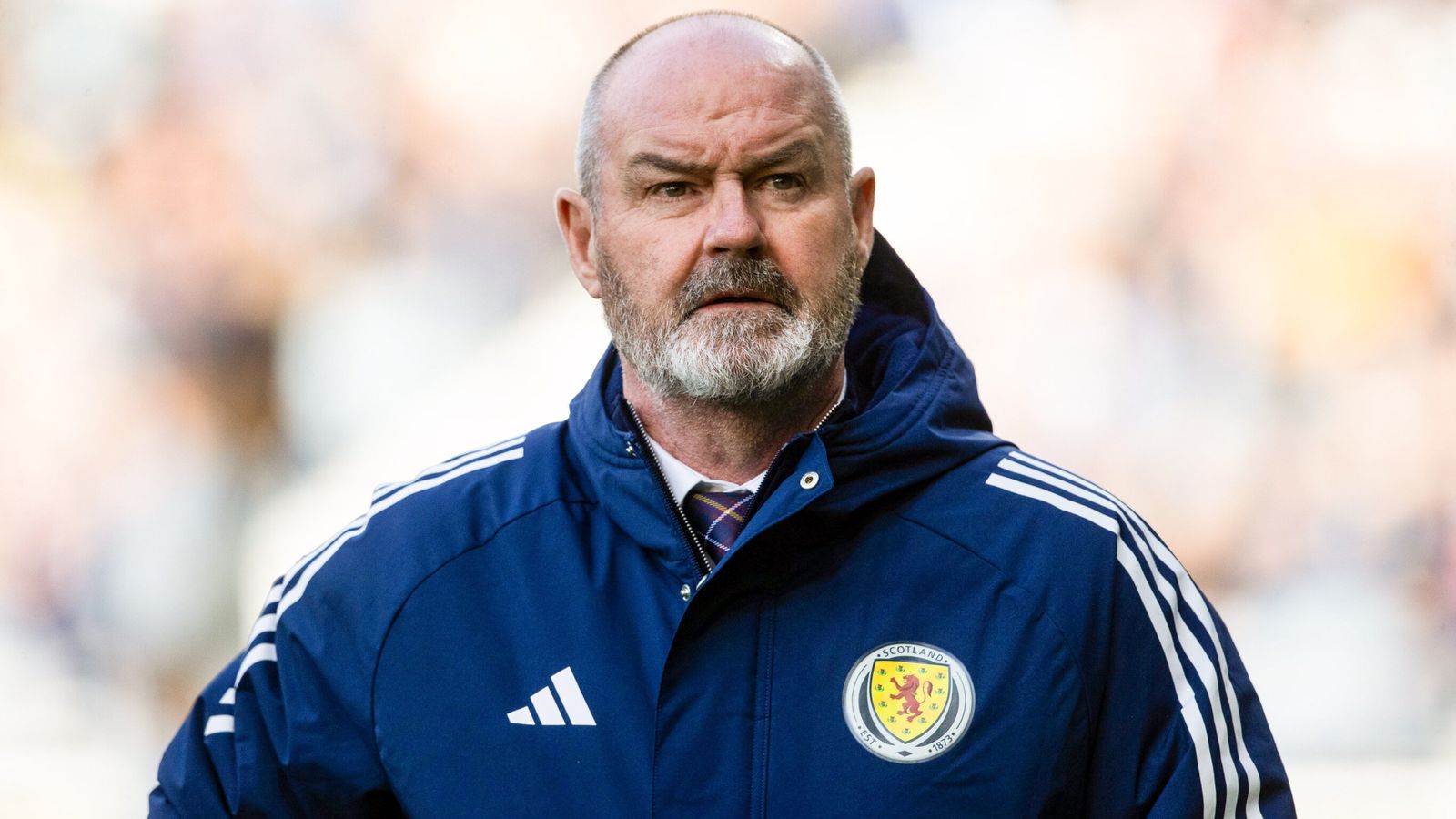
Nine major tournament matches. One single victory. Just three goals scored by Scottish players.
This is the cold, unvarnished statistical reality of Steve Clarke’s seven years in charge of Scotland. While his departure feels like the end of an era, the numbers suggest it was a necessary mercy.
Clarke leaves with his status as a historical outlier intact. He is the first man since Craig Brown to guide Scotland to a World Cup, ending a 28-year drought.
But the underlying data from the 2026 World Cup shows a team that had reached its absolute developmental ceiling. The style was no longer just conservative; it was statistically terminal.
The Haiti Illusion
Scotland's campaign in Group C began with what looked like a historic milestone. The 1-0 win over Haiti in Boston was Scotland's first-ever opening-match victory at a World Cup finals.
Yet, the data from that afternoon was deeply alarming. Haiti, ranked significantly lower in the FIFA standings, controlled 54% of the possession.
The Caribbean side registered 15 shots to Scotland's 9. Only a deflected effort from John McGinn in the 28th minute separated the teams, masking a performance that was structurally deficient.
Clarke’s side sat in a rigid low block, refusing to press or commit numbers forward. Scotland’s expected goals (xG) of 1.05 barely scraped past Haiti’s 0.71, demonstrating how little threat they posed from open play.
Against a team they should have dominated, Scotland looked terrified of the ball. This was not tactical discipline; it was a refusal to participate in the modern game.
Morocco and the Zero-Shot Disaster
If the Haiti match was a warning, the 1-0 defeat to Morocco in Foxborough was the tactical autopsy. Ismael Saibari scored for Morocco in the 2nd minute, and Scotland had no statistical answer.
Over the next 88 minutes, Scotland failed to record a single shot on target. Not one.
Scotland completed just 39% of the possession. Their possession in the attacking third was almost non-existent, averaging a meager 12% share of active play in the opposition half.
The midfield trio of Billy Gilmour, Callum McGregor, and John McGinn was completely bypassed. Morocco's mid-block squeezed the space, limiting Scotland to sideways passing between their three central defenders.
When they did progress the ball, it was via hopeful long balls to a stranded Che Adams. Of the 42 long passes Scotland attempted, only 11 found a teammate, a success rate of just 26%.
Scotland finished the match with an xG of 0.68, almost entirely generated by low-probability headers from set-pieces. Morocco, playing at half-speed, cruised to a victory with 1.21 xG and 12 shots.
The Brazilian Chasm
The final group game against Brazil in Miami was supposed to be a shot at redemption. Instead, it was a 3-0 demolition that exposed the massive gulf in quality.
Vinícius Júnior opened the scoring in the 7th minute, added a second in first-half stoppage time, and Matheus Cunha completed the scoring on the hour mark. The match was over as a contest before Scotland even registered a shot.
Brazil racked up an overwhelming 4.46 xG, according to Opta data. They took 21 shots, hitting the target 9 times, slicing through Clarke's five-man defense with ease.
Scotland did manage 14 shots and 5 on target, their highest attacking output of the tournament. But this was largely score-effect data, accumulated after Brazil had already established a comfortable cushion and retreated.
The defensive solidity that Clarke built his entire reputation on had completely disintegrated. Scotland conceded 6 big chances in a single match, more than they did during their entire Euro 2024 qualifying campaign.
Comparing the Decades of Decline
To understand why Clarke had to go, we must compare this tournament to Scotland's previous outings. The regression is clear and measurable.
At Euro 2020, Scotland managed a single point and scored one goal. At Euro 2024, they again took one point, scoring twice while recording just 17 shots across three games.
That 17-shot figure in Germany was the joint-lowest by any nation in a European Championship group stage since 1980. They also recorded a pathetic 0.14 xG in their do-or-die match against Hungary.
In the 2026 World Cup, they did manage 3 points, but their goal scoring remained stuck. One goal in three games means they averaged just 0.33 goals per match in North America.
Across 9 major tournament matches under Clarke, Scotland scored 4 goals, and one of those was an own goal by Germany's Antonio Rüdiger. That leaves 3 goals scored by Scottish players in 810 minutes of tournament football.
This is an average of one goal every 270 minutes. You cannot progress in international football when your team needs three full matches to score once from open play.
"Quitting Scotland was an easy decision," Clarke insisted after the team's exit was confirmed. "I’d also ticked all the boxes."
While Clarke felt he had achieved his goals, the timing of his departure leaves a bitter taste. The Scottish FA had handed him a four-year contract extension just a month before the tournament.
This decision looks increasingly foolish in hindsight, costing the association both leverage and momentum. As The Daily Mail reported, Clarke always intended to step away if they failed to progress, a detail the SFA apparently failed to account for.
The Succession Battle and SFA's Next Move
The hunt for a successor begins immediately, with several high-profile names linked to the vacancy. The SFA is under pressure to find a coach who can modernize Scotland's style.
According to a Sky Sports Q&A on the search, David Moyes and Ange Postecoglou are the early frontrunners. Both represent a departure from Clarke’s ultra-conservative approach.
Moyes offers Premier League pedigree and organizational strength, while Postecoglou's high-pressing, possession-dominant style is what many fans crave. But any new manager will have to address the structural issues in Scottish player development.
The current squad is aging. Key players like Andrew Robertson and John McGinn will be in their mid-thirties by the time the next European Championship cycle concludes.
The next manager will also inherit a team that has won only 3 of its last 18 competitive fixtures. The rebuild is not just tactical; it is psychological.
The Impending Nations League Test
Scotland’s next competitive matches are in the UEFA Nations League, starting in late September 2026. This gives the SFA less than three months to make an appointment and allow the new coach to implement their ideas.
As the Sky Sports live blog detailed, the players need stability quickly. The transition must be handled with care to avoid sliding back into the international wilderness.
Clarke did the hard work of making Scotland respectable again. But respectability is not enough when it is accompanied by a complete lack of attacking ambition.
The stats do not lie. Scotland's tournament campaigns under Clarke were exercises in survival, and eventually, the resources ran out.



.jpg)