The Fallout of Seattle and Dallas
The Battle in the Northwest
Yesterday in Seattle, Belgium did not just defeat the United States. They dismantled them. The final 4-1 scoreline was a product of tactical execution fueled by a bizarre pre-match controversy.
Hours before kickoff, FIFA made the unprecedented decision to suspend Folarin Balogun's red-card ban following intense public pressure. Yet, all the political noise could not save the co-hosts from a systematic clinic at Seattle Stadium.
Domenico Tedesco's side exposed the American defensive lines with ruthless efficiency, exploiting the space behind the full-backs. The US team, despite having Balogun lead the line, looked tactically naive and emotionally drained.
Charles De Ketelaere was the architect of the destruction. The young forward scored a brilliant brace, demonstrating the kind of spatial awareness that has made him one of Europe's most coveted assets.
Hans Vanaken controlled the midfield tempo, ensuring the US could never establish a foothold in transition. Romelu Lukaku added the final blow off the bench, highlighting the gulf in depth between the two squads.
Malik Tillman’s second-half goal was a minor consolation for a home crowd that expected a historic run. Instead, they got a stark lesson in elite European tactical organization as the tournament schedule moves inexorably toward its business end.
The Demolition of the Portuguese Old Guard
A Dynasty Ends in Tears
While Belgium was running riot in the Pacific Northwest, Spain was engaged in a tense, tactical chess match against Portugal in Dallas. The 1-0 victory for Luis de la Fuente’s men at AT&T Stadium was settled in the 91st minute.
Super-sub Mikel Merino found the net to send Spain into the quarterfinals. However, the real story was the tactical bankruptcy of Portugal's attack, which failed to register a single clear opportunity in transition.
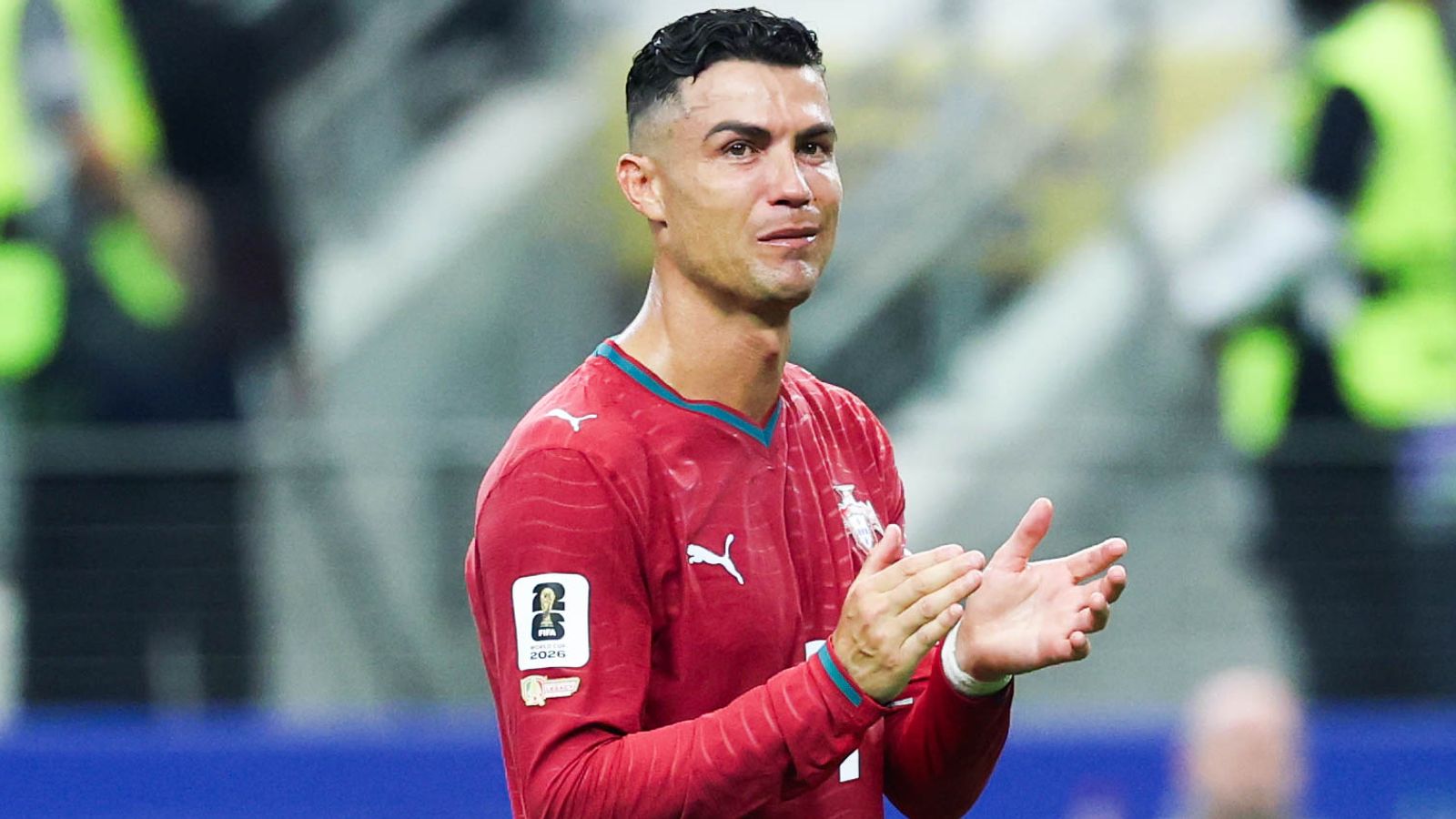
The presence of Cristiano Ronaldo has become a tactical anchor dragging down an otherwise elite group of players. Despite starting alongside Bruno Fernandes, Joao Neves, and Vitinha, the 41-year-old captain was a passenger.
The statistical reality of Ronaldo’s tournament is damning. The former Ballon d'Or winner did not attempt a single dribble in five matches.
Cape Verde goalkeeper Vozinha, who is also in his 40s, managed to record a successful dribble during his team's campaign. Ronaldo's lack of mobility meant Spain's central defenders had the easiest night of their tournament.
Ronaldo’s lack of output is not just about a drop in physical speed. It is his complete detachment from the team's build-up play, which starved Portugal of any fluid attacking sequences.
Before creating his first chance of the tournament, Ronaldo registered 17 shots. That lone chance came in the 75th minute against Spain, resulting in a blocked, low-risk effort from Vitinha.
An Expected Assists (xA) rating of just 0.01 across five matches reveals how isolated he has become from the modern game's demands. Elite modern forwards like Kylian Mbappe or Erling Haaland are expected to facilitate play, not just wait in the box.
Ronaldo's tournament was masked by a double against Uzbekistan in a comfortable 5-0 group-stage win. But Uzbekistan’s defense was notoriously weak, letting in goals at a rate surpassed only by Iraq and Tunisia.
"I'm back," Ronaldo shouted down the lens after scoring twice in the 5-0 win over Uzbekistan.
The display ended up being a complete anomaly in the summer. It was a brief flash of the past against a team making their tournament debut.
The warning signs were present earlier in the tournament. During the knockout clash against Croatia, Ronaldo scored a penalty but was hauled off in extra-time before the shootout.
Taking off your captain and primary penalty taker with a shootout looming would have been unthinkable five years ago. It showed that even Martinez recognized the physical limitations of his aging star.
With Portugal out, the focus now turns to a post-Ronaldo era that will define the national team for the next decade. As Ronaldo confirmed in a recent interview, he will not make rash decisions, but the pitch has made the choice for him.
Goncalo Ramos, who secured a big-money move to AC Milan during the tournament, stands ready as the natural heir. He will inherit the No 9 shirt, but also the massive pressure of succeeding Portugal’s greatest ever player.
The transition will not be smooth. The media will dissect every missed chance by Ramos through the lens of Ronaldo’s legacy.
Yet, Portugal’s midfield core is too talented to be held hostage by nostalgia. Moving on is the only way forward if they want to challenge for Euro 2028, and the match report of Spain's win shows why change is necessary.
Spain's Unbroken Wall
Simon's Record-Breaking Run
Spain's progression to the quarterfinals is built on a historically stingy defense. They have kept six consecutive clean sheets in this tournament.
Goalkeeper Unai Simón has now gone 609 minutes without conceding a goal at the World Cup. This run breaks Walter Zenga’s long-standing record of 517 minutes set in 1990.
The foundation of this defensive record is the partnership between Pau Cubarsí and Aymeric Laporte. Cubarsí's maturity at his age is remarkable, showing excellent positioning and composure on the ball.
Spain’s system is designed to choke opponents before they can even reach the final third. Pedro Porro and Marc Cucurella have been disciplined on the flanks, suppressing transitions early.
Rodri provides the shield in front of the back four, sweeping up second balls and recycling possession. Spain does not just defend; they starve opponents of the ball.
However, this defensive unit has not faced an attack with the dynamic variation of Belgium. While Portugal’s attack was static and predictable, Belgium is fluid and explosive.
The Tactical Standoff in Los Angeles
Pace vs. Possession
Domenico Tedesco has built a Belgian side that thrives on rapid vertical transitions. The pace of Jeremy Doku and Johan Bakayoko will put Porro and Cucurella under immense pressure.
Unlike Portugal, Belgium will not allow Spain to counter-press them with impunity. De Ketelaere's ability to drop deep and link play will force Cubarsí to make difficult decisions.
If the young Barcelona defender follows De Ketelaere into midfield, it opens up space for Lukaku or Doku to run into.
Spain's possession play must be precise to avoid cheap turnovers in the middle of the pitch. Rodri will need to monitor Hans Vanaken, who is excellent at finding pockets of space.
The match will likely be won or lost in the wide areas. If Spain can pin Doku back, they will limit Belgium’s primary outlet.
Lamine Yamal and Nico Williams must provide the attacking spark that was often missing against Portugal's deep block.
Spain’s reliance on a late Merino goal against Portugal shows they can struggle to convert dominance into goals. If they are wasteful against Belgium, they will be punished.
Tedesco's side is compact and disciplined in their mid-block, waiting for the right moment to strike. It will be a battle of Spain's structural patience against Belgium's direct aggression.
The Confident Prediction
The Verdict
This quarterfinal is the ultimate test of Spain’s defensive record. Belgium has the personnel to break Simón’s unbeaten streak.
However, Spain’s structural discipline under De la Fuente is too strong. They will choke the service to De Ketelaere and limit Doku's space to turn.
Expect a tight, tactical affair decided by the narrowest of margins in the second half. Spain will find a way through Nico Williams, securing a narrow victory.
My call is a 1-0 victory for Spain, extending their clean sheet record to seven matches. They will march into the semifinals in Los Angeles.
Read Next
- Spain's record-breaking defence is ready for the winner of USA vs Belgium
- Spain's perfect defense is about to face its ultimate test against Belgium
- Spain's perfect defense is about to face its ultimate test against Belgium
- Spain expose the cost of Portugal's deference to Cristiano Ronaldo
- 🏆 World Cup 2026 — Full Coverage Hub
- 🇪🇸 Spain World Cup 2026 — La Roja Hub
- 🇵🇹 Portugal World Cup 2026 — A Seleção Hub
- 🇧🇪 Belgium World Cup 2026 — Red Devils Hub