The Pass-You-To-Death Era Is Dead. Long Live Heavy Metal Spain.
Pour yourself a cold one and cast your mind back to Qatar 2022. Remember watching Luis Enrique’s Spain complete 1,019 passes against Morocco only to lose on penalties without scoring a single goal? It was like watching a guy at a bar talk for four hours without ever asking for a phone number. Pure, unadulterated footballing torture.
Fast forward to right now, and Luis de la Fuente has set that sleep-inducing playbook on fire. La Roja didn't just win Euro 2024 by going 7-0-0—they turned international football into a high-octane rock concert. And as we march toward the 2026 World Cup in North America, this new golden generation looks ready to drop an absolute hammer on the rest of the planet.
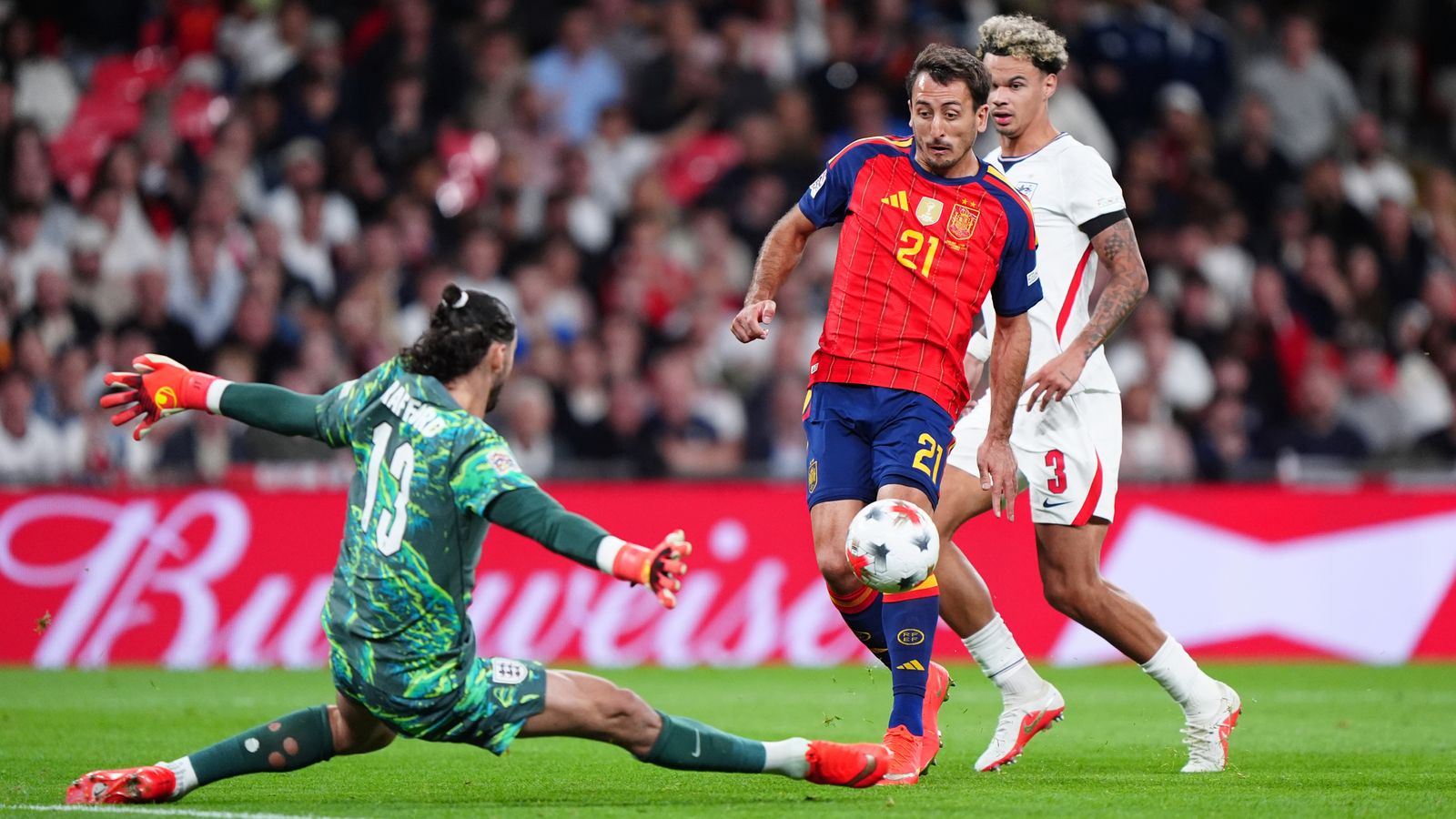
If you think Spain are still about soul-crushing possession for the sake of possession, you haven't been paying attention. This team plays with the throttle pinned to the floorboards. They sprint, they attack 1v1 on the flanks, and they finish games before the halftime whistle even blows. The rest of the world should be terrified.
The Teenage Mutants Running the Flanks
Let's talk about the two human cheat codes wearing Spain's wing shirts: Lamine Yamal and Nico Williams. For a decade, Spanish football was obsessed with tiny midfielders who played like chess grandmasters. Now? They have two teenage super-turbos who treat opposing full-backs like traffic cones on the highway.
Lamine Yamal isn't just a prodigy; he is doing things at 17 and 18 that sound like pure fiction. Remember that semi-final against France? Spain were down early, and this kid cut inside and launched a 25-yard curling missile into the top corner off the post. That wasn't just a goal—that was a generational torch-passing event live on global television. You couldn't replicate that shot on FIFA with the sliders maxed out.
On the opposite side, Nico Williams plays with the kind of ruthless velocity that makes defenders pull their hamstrings just watching the film. His combination play with Yamal is pure wrestling tag-team perfection, reminiscent of The Hardy Boyz jumping off ladders in 2000. When Williams scored the opener in Berlin to seal that 2-1 Euro final victory over England, it confirmed what every defender in Europe already feared: double-teaming one side just leaves the other side wide open to get torched.
Teams used to park the bus against Spain because they knew La Roja would pass sideways until everyone fell asleep. You try parking a bus against Yamal and Williams, and they will blow your tires out before you can put the handbrake on.
The Engine Room: Rodri and the Midfield Mob
Flashy wingers get the TikTok highlight reels, but every great engine needs a crankshaft that never snaps. That crankshaft is Rodri. The man won Euro 2024 Player of the Tournament while playing like a battle-hardened general who calculates eight moves ahead of everyone else on the pitch.
Having Rodri at the base of your midfield is like bringing a cheat sheet into a final exam. He wins every aerial duel, breaks up counter-attacks before they start, and passes out of pressure like he's strolling through a park. When the match turns into a chaotic street fight, Rodri simply puts his foot on the ball and decides what the tempo is going to be.
Around him, the dynamic has completely shifted from the Xavi and Iniesta days. Dani Olmo plays like a free-roaming offensive assassin, picking up spaces between the lines and delivering lethal final balls. Meanwhile, Fabián Ruiz transformed from a steady squad player into a goal-scoring powerhouse, driving past defenders with terrifying power.
And let's not ignore the absurd depth waiting in the wings. When Gavi returns to full throttle alongside Pedri and Fermín López, de la Fuente is sitting on a midfield rotation that would make any manager in world football green with envy. It’s an embarrassment of riches that allows Spain to play at 100 miles per hour for 90 minutes straight.
The Red Flags: Why North America Could Still Be a Trap
Before we start engraving Spain’s name on the 2026 World Cup trophy, let's take a loud sip of reality. No team is flawless, and anyone telling you La Roja has zero weak spots is sipping too much Kool-Aid at the bar.
First, look at the center-back position. Robin Le Normand and Aymeric Laporte held things together in Germany, but Laporte playing his club football in Saudi Arabia raises legitimate questions about match sharpness against top-tier international strikers. If Pau Cubarsí isn't fully ready to anchor a World Cup backline under extreme heat in Dallas or Miami, Spain could get caught out by physical, direct opposition like Uruguay or France.
Second, what happens if Rodri breaks down? We saw what happened to Manchester City when Rodri missed time—they looked like a luxury sports car missing its transmission. If Rodri takes a heavy tackle or gets gassed after an 80-game club calendar, Spain’s entire defensive structure loses its safety net. Martin Zubimendi is a brilliant backup, but replacing Rodri is like replacing Stone Cold Steve Austin with a mid-card wrestler—it's just not the same pop.
Finally, there's the ongoing Álvaro Morata paradox. Morata works his socks off pressing defenders and clearing space for Yamal and Williams, but he remains one of the most frustrating big-game strikers in modern history. When you reach the World Cup quarter-finals, you cannot afford to miss two golden chances in a 0-0 tight match. Spain needs a killer central striker, and right now, Morata is still playing Russian roulette with Spanish fans' blood pressure.
What La Roja Needs to Lock Down the World Cup
To turn this golden generation into World Cup champions in 2026, de la Fuente needs to focus on three non-negotiables:
- Defense: Fast-track Pau Cubarsí and Dean Huijsen into the starting rotation to build a long-term central defensive partnership.
- Rotations: Manage Rodri's minutes relentlessly during group stages to prevent mid-tournament burnout.
- Clinical Finishing: Develop secondary scoring threats so opponents can't simply double-team Yamal out of knockout games.
The blue-print is already drawn, and the talent is undeniable. La Roja has moved past the romantic nostalgia of 2010 and embraced a faster, meaner, and far more entertaining identity.
Final Verdict: The Cup Is Spain's to Lose
We spent a decade complaining that international football had gotten stale, predictable, and overly defensive. Then Spain showed up with two teenagers on the wings and a midfielder who operates like a mainframe computer, and suddenly football is fun again.
Compared to the 2010 squad that bled teams dry via 1,000 lateral passes, this 2026 group is built for the modern era. They hit you fast, they hit you hard, and they don't care about style points over goals. They want to blow you off the pitch before you even get your boots warm.
Barring a nightmare injury to Rodri or a total defensive collapse, Spain enters the 2026 World Cup cycle as the absolute gold standard. Get your popcorn ready, because La Roja’s new golden generation is about to put on a show that North America won't forget anytime soon.
Read Next
- Messi's Argentina retirement hurts, but we got the fairytale ending in Qatar
- Post-Ronaldo Portugal is a powerhouse — if Roberto Martinez doesn't ruin it
- The End of Dominance: Xabi Alonso, Pep’s Legacy, and Premier League Tactical Chaos
- The USMNT's Round of 16 Ceiling Was Never Going to Break in 2026
- 🏆 World Cup 2026 — Full Coverage Hub
- 🇪🇸 Spain World Cup 2026 — La Roja Hub