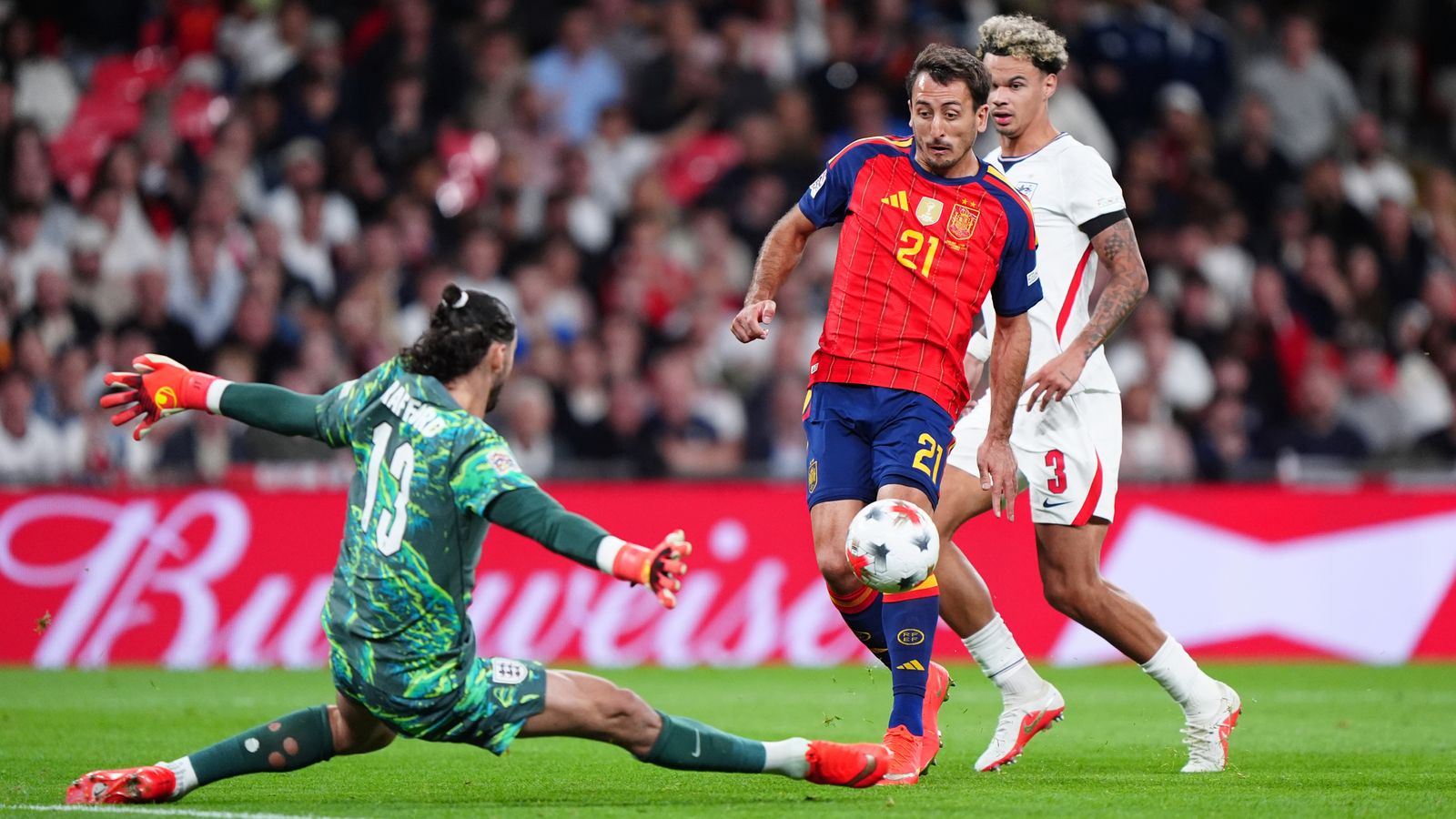
Spain lifted the World Cup trophy after conceding exactly one goal across seven matches in North America. This defensive record is not a byproduct of heroic goalkeeping or desperate last-ditch defending. Instead, it is the result of a systematic, risk-averse possession model designed by Luis de la Fuente to choke games to death, culminating in a 1-0 win over Argentina in the final, as reported in the match coverage.
The match at the MetLife Stadium was a tactical stalemate. Spain controlled the ball, but they did so in areas that offered little threat to Argentina’s defensive block. The tournament knockout stages had already revealed this trend, where the attacking fluidity of the group stage gave way to structured rigidity.
This approach left the global audience frustrated by the lack of direct attacking play. Yet, this was the logical conclusion of modern tournament football. Managers have realized that the margins in international tournaments are too thin to allow open, transitional games.
De la Fuente built a system where security was the primary objective. By denying the opponent any opportunity to transition, Spain walked away with the title.
The defensive wall in North America
Historically, World Cup winners have shown greater defensive fragility during their campaigns. The French side that won in 2018 conceded six goals, while Argentina conceded eight during their run in Qatar in 2022. Spain's defensive record of conceding just one goal matches the defensive benchmarks set by Italy in 2006 and Spain themselves in 2010.
However, Italy in 2006 relied on deep-block defending and last-ditch interventions. Spain in 2026 defended by keeping the ball far away from their goal. Their opponents averaged a mere 5.8 shots per 90 minutes.
Only 1.4 of those shots hit the target, representing the lowest numbers recorded in the modern era of the tournament. The statistical decline in attacking output was stark as the tournament progressed. During the group stage, matches featuring Spain averaged a combined expected goals (xG) value of 2.74.
Once the knockout rounds began, that combined xG crashed to 1.38 per game. As The Guardian reported, Spain’s triumph was a victory for a system that suffocated opponents. To understand Spain's defensive success, one must analyze where their passing sequences occurred.
Buildup as a defensive mechanism
Spain averaged 624 passes per 90 minutes during the tournament. However, 44% of those passes were played inside their own defensive third. This is the highest rate of defensive-third possession recorded by a tournament winner since statistical tracking began.
By keeping the ball in their own half, Spain drew opponents out of their defensive shape without risking turnovers in dangerous areas. This lateral circulation acted as a rest phase for De la Fuente's midfield. It also prevented opponents from launching quick vertical counter-attacks.
Spain’s field tilt dropped to just 52% in the knockout rounds, down from 67% in the group stage. This drop in field tilt indicates that Spain was no longer interested in pinning opponents in their own penalty box. Instead, they kept the ball in the middle third of the pitch to run down the clock and limit the number of active play phases.
It was a statistical decay of attacking intent, but highly effective for securing results.
The physical cost of lateral possession
Tournament conditions in North America during the summer of 2026 placed a massive physical burden on the players. Spain's solution to this physical challenge was to use possession as a recovery phase. By maintaining a slow tempo and circulating the ball across the back line, Spain forced their opponents to run while they rested in possession.
This rest-on-the-ball tactic had a direct impact on Argentina's physical output. By the 70th minute, Argentina's pressing intensity had dropped significantly due to fatigue. Their PPDA (Passes Allowed per Defensive Action) rose from 9.2 in the first half to 14.8 in the final twenty minutes.
This fatigue prevented Argentina from mounting any sustained pressure in the closing stages of the match. Spain simply kept the ball, passing it around their own midfield while Argentina's players chased in vain. It was a sterile, frustrating display for spectators, but a masterclass in physical conservation.
Choking the individual: The blueprint to stop Messi
In international tournament football, teams often rely on their individual stars to create magic out of nothing. Argentina, with Lionel Messi, expected to find space between Spain’s lines as they had against previous opponents. However, Luis de la Fuente’s system acted as a defensive cage that completely isolated Argentina’s playmaker.
Whenever Messi dropped deep to pick up the ball, Spain did not engage in aggressive pressuring. Instead, the Spanish midfield double pivot dropped back to compress the passing lanes, forcing Messi to distribute to the wings. This defensive discipline meant that Messi completed only 12 passes in the attacking half during the entire 90 minutes.
The lack of vertical central options forced Argentina to rely on low-percentage crosses into the box. Spain's center-backs cleared these crosses with ease, neutralizing Argentina's main outlet. This defensive coordination proved that a well-structured team shape can completely silence world-class individuals.
Deconstructing the final
Argentina entered the final hoping to use the vertical transition game that had served them well throughout the knockout rounds. Spain's mid-block completely neutralized this threat from the opening whistle. At the 14-minute mark, Argentina attempted their first counter-attack after a midfield turnover, but Spain’s double pivot quickly fouled to halt the play.
Spain's defensive line remained positioned exactly 38 yards from their own goal line. This line selection denied Argentina any space behind the defense for Julian Alvarez to run into. Simultaneously, it compressed the midfield space where Lionel Messi operates.
Messi was restricted to just 32 touches in the entire match, his lowest output in a World Cup fixture since 2010. De la Fuente made a tactical adjustment at the 58-minute mark, dropping his wingers deeper to form a temporary 4-5-1 out of possession. This adjustment forced Argentina to play wide, where they were forced to cross the ball.
Argentina attempted 24 crosses during the game, but only four found an attacking player in the box. The shot map of the final illustrates a game of low-quality chances. Spain registered 8 shots during the 90 minutes, while Argentina managed only 5.
The statistical reality of the final
Spain’s shots came from an average distance of 22.8 yards, meaning they rarely penetrated the penalty area. They finished the match averaging a measly 0.08 xG per shot. A surprising finding from the tracking data was Spain’s vertical progression rate.
They averaged only 1.2 yards of forward progression per pass during the final. This was the lowest verticality rate of any team in the knockout stages. It shows that Spain actively avoided playing forward passes unless the pass was completely risk-free.
The only goal of the match arrived in the 68th minute, coming from a deflected set-piece that beat Emi Martínez. After opening the scoring, Spain ceased all forward progression. Their possession rate climbed to 72% for the remainder of the match.
Spain completed 192 passes in the final 22 minutes, while Argentina was limited to just 38. This match did not offer the high-octane drama of the 2022 final in Lusail. Instead, it was a cold, calculated exhibition of game management. Spain proved that in modern international football, the best way to win is to make sure nothing happens at all.
Read Next
- Argentina and Spain are chasing the ultimate tactical prize in Jersey
- Spain and Argentina are forcing a tactical reset in New Jersey
- Argentina and Spain are redefining the tactical World Cup final
- Spain and Argentina meet in New Jersey for the highest stakes in football
- 🏆 World Cup 2026 — Full Coverage Hub
- 🇪🇸 Spain World Cup 2026 — La Roja Hub