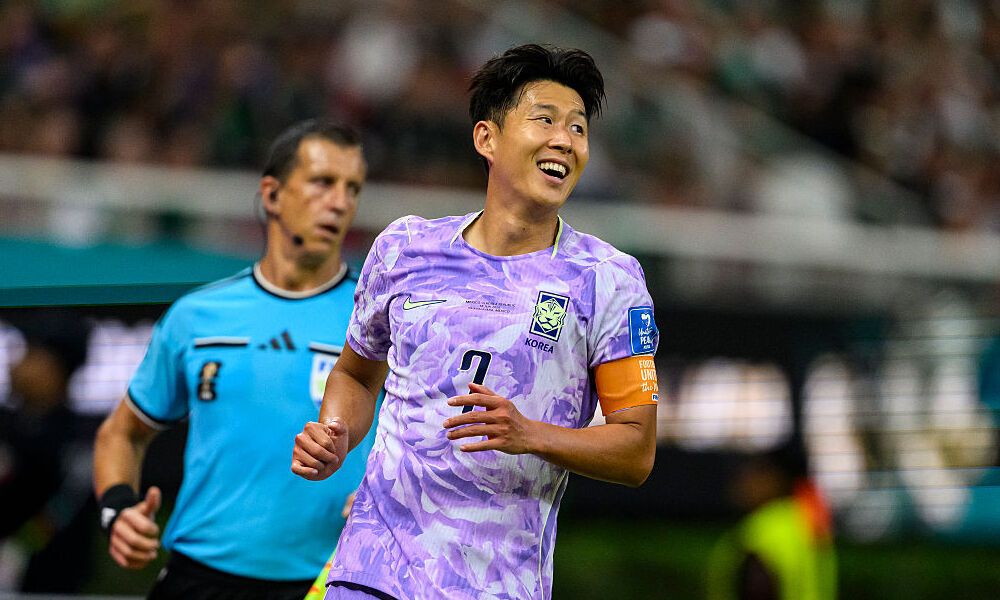
South Korea's World Cup disaster was written in corporate expense logs

The Tactical Disaster in North America Was Built on Compromise
South Korea’s early exit from the World Cup group stage across North America felt like a slow-motion car crash. On the pitch, head coach Hong Myung-bo watched his side wander through matches without shape or urgency. Opponents carved through central zones while Korea’s midfield chased ghosts.
The tactical breakdown was staggering. Defensive lines dropped into their own box while the forward line attempted disjointed pressing. The gap between the lines stretched to forty yards, giving opposing playmakers total freedom.
Many fans blamed the players for lacking fighting spirit. That critique misses the point. When an international side looks this lost, the problem lives in the front office.
Hong’s hiring in 2024 was flawed from day one. The Korea Football Association spent months claiming they were conducting a global search for an elite foreign manager. Then they abruptly dropped that search after a single brief meeting with Hong.
Domestic familiarity won out over tactical vision. Hong had already presided over a disastrous 2014 World Cup campaign. Bringing him back was an unforced error driven by internal politics.
When the group-stage disaster unfolded in Canada and Mexico, public anger boiled over. Hong resigned almost immediately upon returning to Seoul. The hostility was so severe that security personnel had to escort him through the airport following domestic death threats.
Sacking the coach satisfied the immediate appetite for blood. But removing Hong only scraped off the top layer of rust. The real wreckage sat inside KFA headquarters.
On Thursday, August 6, 2026, Seoul police officers marched into KFA offices with search warrants. The raid focused directly on irregularities surrounding Hong’s appointment. A sporting failure had officially turned into a police investigation.
Seven Matches, Ten Officials, and Corporate Card Receipts
Two days after the police raid, the scandal expanded from administrative favoritism to criminal misconduct. The KFA released a public statement apologizing for events that sound like a dark satire of sports administration.
Broadcaster JTBC uncovered a suppressed 2016 sports ministry audit detailing how KFA officials treated visiting match officials more than a decade ago. As reports from the Daily Mail revealed, corporate credit cards were used to pay for sexual services for foreign referees.
The illicit transactions occurred on seven occasions between March 2011 and March 2012. Audit records show that 10 foreign referees received entertainment at massage parlors in Seoul’s Gangnam district, Ulsan, and Changwon, with sexual services billed directly to association expense accounts.
These were not low-stakes local games. The list of fixtures includes 2014 World Cup qualifiers against Kuwait and 2012 London Olympic qualifiers against Qatar and Oman. Friendlies against Serbia, Poland, Honduras, and China’s Olympic side were also targeted.
Visiting referees were brought in from Japan, the United Arab Emirates, Bahrain, and Uzbekistan. KFA officials used corporate funds to compromise refereeing neutrality under the guise of hospitality. It was blatant corruption disguised as routine host management.
The KFA’s response on Saturday, August 8, 2026, was predictably defensive. Governing body executives issued a statement pleading historical ignorance.
blockquote>"We deeply apologise for causing concern over various issues involving the association, which emerged from a parliamentary hearing and an unprecedented search and seizure, and from reports about events from more than a decade ago, that even many within the organisation were unaware of."The association added that such practices are absolutely not taking place today. That defense is absurdly thin. Claiming current staff were unaware of corporate card receipts flowing through internal finance channels ignores basic institutional logic.
Expense accounts do not clear themselves. Senior officials had to review and approve those statements month after month. The culture permitted corruption because nobody at the top cared to stop it.
Parliamentary Heat, Police Raids, and Presidential Fury
The refereeing revelations landed right in the middle of a political reckoning. Last month, South Korea’s parliament held hearings to interrogate former KFA president Chung Mong-gyu and Hong Myung-bo. Lawmakers wanted answers about how national team hiring decisions were being made.
As details published by Mirror Football showed, the legislative testimony revealed an organization operating like a private fiefdom. Technical recommendations were ignored in favor of insider alliances.
South Korean President Lee Jae-myung took to social media to deliver a rare, direct condemnation of the association's leadership structure. His comments cut to the center of the breakdown.
blockquote>"I am not just taken aback by this unexpected outcome, I am utterly baffled. Once again, it has been proven that personnel decisions are everything. When loyalty and factionalism are valued over competence, and an incapable person is appointed as a leader, the outcome is as predictable as fire."President Lee’s diagnosis was spot on. When a federation picks leaders based on personal loyalty, the pitch product rots. Tactical failure is not bad luck; it is administrative design.
Some defenders of the KFA argue that historic referee entertainment has no bearing on current football operations. They point out that these matches took place fourteen years ago under previous management. They claim the current investigation is merely a political witch hunt driven by World Cup disappointment.
That counterargument ignores how institutional culture works. Bad habits do not vanish when executive suites swap nameplates. The line connecting 2011 corporate card abuse to the 2024 coaching hire is unbroken: a complete lack of external oversight.
Police raids on national sports federations are rare, drastic actions. Officers do not execute search warrants at headquarters over minor paperwork errors. Law enforcement is pulling back the curtain on decades of unaccountable power.
Why South Korean Football Cannot Fix Itself With Half-Measures
Asian football has moved fast over the last decade. Competitors across the continent invested in modern coaching frameworks, analytical tools, and professional governance. South Korea spent that same period managing scandals and burying internal audit files.
Look at the tactical gap. Modern squads build out with rigid positional discipline and pressing triggers. South Korea relied on individual star power to mask structural defects. When individual brilliance failed, the system collapsed completely.
The fix will not come from hiring another big-name foreign manager as a public relations shield. Planting a high-profile coach atop a corrupted administrative structure changes nothing.
First, the KFA needs independent financial oversight. Corporate card accounts, international hospitality spending, and match hosting budgets must undergo full public audits. An organization receiving government support cannot run as a secret club.
Second, national team selection committees must operate independently from executive influence. Technical directors should evaluate candidates on tactical systems and modern metrics, not personal relationships.
Third, domestic youth coaching must abandon outdated methods. Players are still developed under rigid physical frameworks rather than spatial awareness and tactical flexibility. That failure shows up clearly on the international stage.
The events of August 2026 are painful for South Korean football fans. Watching police raid federation offices while international media dissects massage parlor receipts is humiliating. Yet this public unraveling is necessary.
You cannot rebuild a house on a rotten foundation. For fifteen years, KFA leadership assumed internal corruption could be swept under the rug with vague statements. That era is over.
If South Korea wants to remain a serious football nation, it must dismantle this broken apparatus. Real reform starts by sweeping out the administrators who burned the house down.
Read Next
- Portugal is finally free from the Cristiano Ronaldo circus
- Trent Alexander-Arnold's fitness fight could define Real Madrid's season
- Sunday League Survival Kit: Pitch-Testing adidas Tiro League Guards & Starlancer Ball
- Barcelona are gambling everything on Rodri while Tottenham push for Savinho
- 🏆 World Cup 2026 — Full Coverage Hub
- 🇰🇷 South Korea World Cup 2026 — Taeguk Warriors Hub
Adidas Unisex Adults' Starlancer Club Soccer Ball
A durable, stylish ball that's perfect for casual park kickabouts.
Frequently Asked Questions
Why did Hong Myung-bo resign as South Korea head coach?
Why did police raid the Korea Football Association in August 2026?
What match official scandal was uncovered at the KFA?
What matches were targeted in the KFA referee entertainment scandal?
How was Hong Myung-bo hired as South Korea head coach in 2024?
More Coverage
.jpg)
Anatomy of Anxious Excellence: Arteta, Geopolitics, and FIFA's Moral Vacuum
2 days, 22 hours ago
Son Heung-min changed what it means to be an elite Premier League forward
6 days, 14 hours ago
The DP Bottleneck, Cavan Sullivan, and Tactical Realism: Marlon LeBlanc's Masterclass
1 week ago
The Analytics of Anarchy: Tactical Pivots & Model Disruption in the NWSL
1 week, 3 days ago
The Great Realignment: Guardiola's City Exit, Alonso's Chelsea & World Cup 2026 Fallout
1 week, 6 days ago
The Corporate Buyout of Football's Crown Jewels: Inside FIFA's Wall Street Gamble
2 weeks, 4 days agoMore Analysis
Son Heung-min changed what it means to be an elite Premier League forward
6 days, 14 hours ago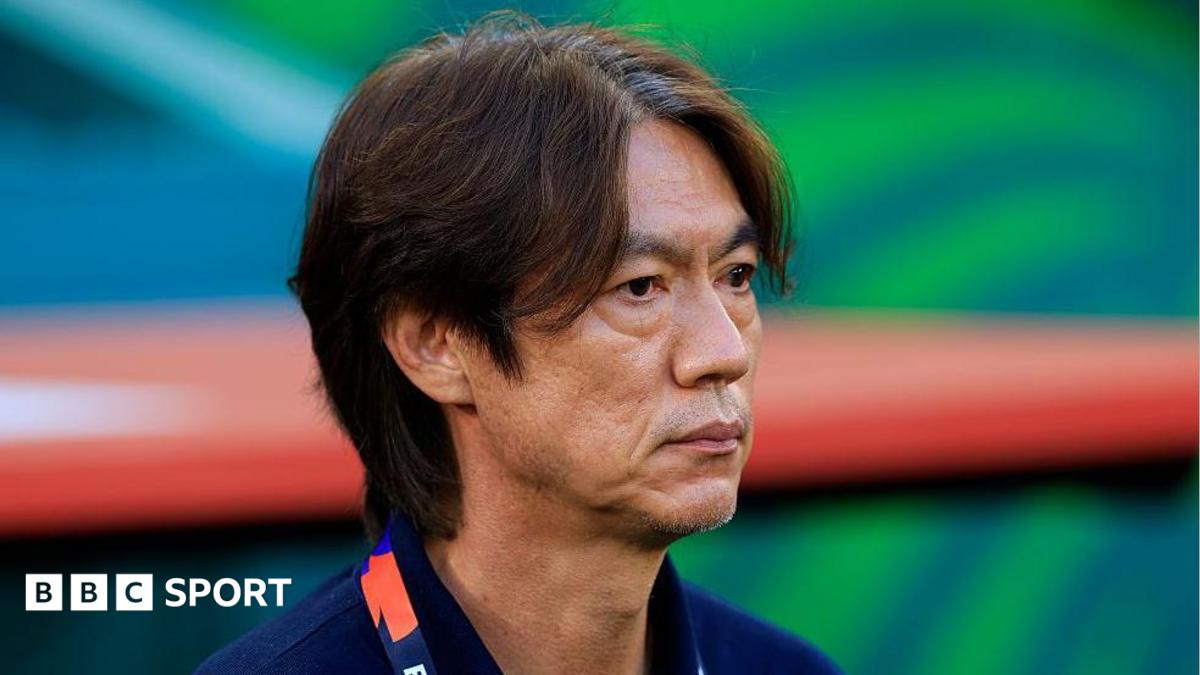
Top 10: Top Moments
2 months, 3 weeks ago
Africa's World Cup rise leaves Asia facing a brutal reality check
2 months, 3 weeks ago
The KFA circus finally catches fire after South Korea's World Cup disaster
2 months, 3 weeks agoSouth Korea's benching of Son Heung-min is a sad end to a legendary run
2 months, 3 weeks ago