Tactical geometry under the new regime
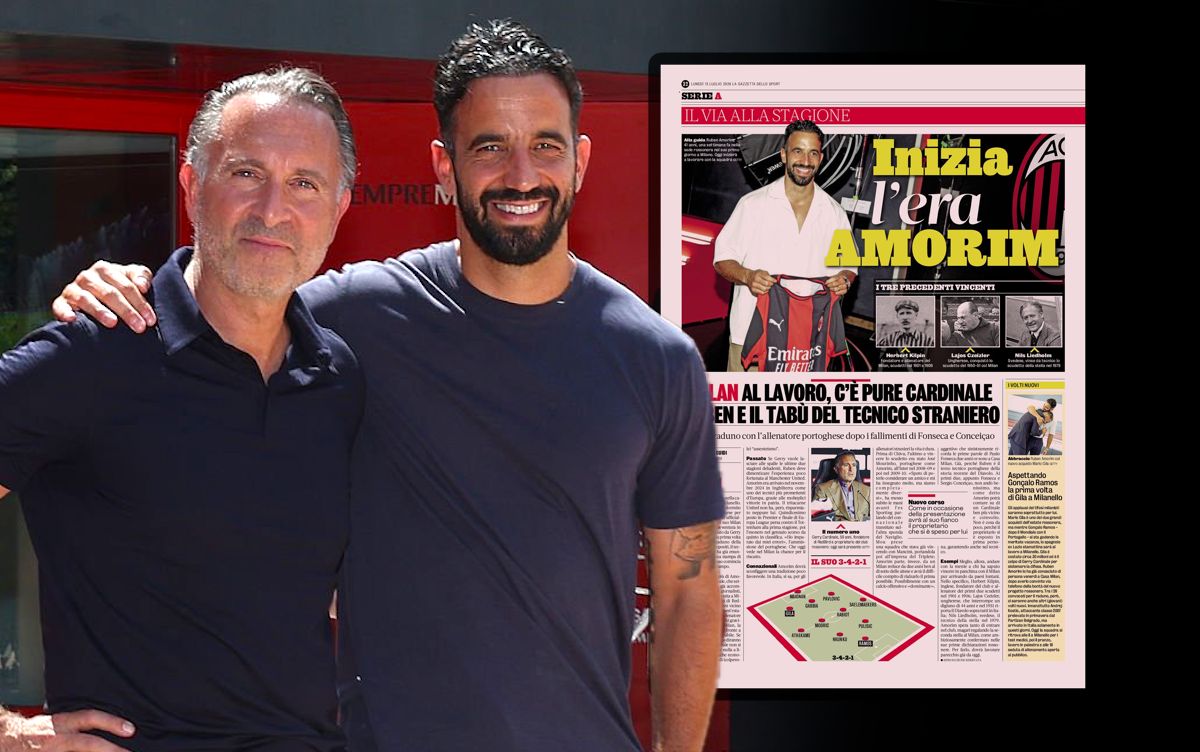
Ruben Amorim has arrived at Milanello with a definitive blueprint. After years of tactical flux under various managers, the club is pivoting toward a system that demands absolute physical output from the wide areas. Watching his sessions through the early July reports, it is clear he intends to drill a 3-4-2-1 structure that prioritizes positional discipline over individual improvisation.
The defensive transition is the clear priority. Amorim struggled with leaky numbers during moments of high turnovers at previous clubs, and his focus on compactness in the half-spaces indicates he wants to minimize the counter-attacking lanes that teams exposed last season. He is not looking for traditional wingers; he wants hybrid athletes who can cover 70 yards of turf.
The Chukwueze experiment and the Kostic arrival
The most intriguing development is the news that Amorim wants to retain Samuel Chukwueze. Conventional wisdom suggested the winger would be surplus to requirements in a formation lacking 'true' wide forwards. However, reports suggest a dual-role plan that utilizes Chukwueze as an inverted wing-back or a wide playmaker depending on which phase of the match is active.
It is a high-risk gamble. Chukwueze lacks the defensive pedigree of a natural full-back, and asking him to backtrack against Serie A’s elite overlaps could leave Milan’s back three isolated in the channels. Still, the upside in high-possession matches is clear: he adds a creative pivot that most back lines are built to ignore.
On the opposite flank, the pursuit of Filip Kostic makes perfect sense as a compensatory move. Kostic brings a proven engine and a delivery profile that fits the 3-4-2-1 wing-back template perfectly. As reported by La Gazzetta dello Sport, the mutual interest confirms that Amorim views this position as the starting point for his offensive output.
The fatal flaw in the wing-back strategy
Despite the enthusiasm, the roster construction remains disjointed. Relying on Kostic's crossing accuracy and Chukwueze's dribbling to balance a system that requires a high defensive line is asking for trouble. If the wing-backs fail to track back, the center-backs will be forced into wide isolation, inevitably leading to fouls in dangerous areas.
We have seen this movie before in Milan. When the transitions are not synchronized, the midfield becomes a vacuum, forcing central players to overcompensate. The tactical shift outlined by GdS sounds robust on a whiteboard, but finding the personnel to run the flank for 90 minutes is a different challenge entirely.
Kostic is the anchor of this plan, while Chukwueze provides the flair. With the club exploring this dual-role strategy, Amorim is essentially betting that he can coach defensive awareness into attacking players. It is an ambitious pivot that will define his first six months at the San Siro.
Prediction: A top-four finish with defensive struggles
Amorim will bring order to the chaos of last year, but expect a turbulent start. The defensive gaps will be visible in the first 10 matches of the campaign. The squad will likely finalize a transition toward a more conservative mid-block by October once the reality of Serie A’s vertical play sets in.
My prognosis remains firm: Milan secures 4th place. They will be formidable in possession, yet they will concede far too many shots on target due to their aggressive wing-back positioning. They will not challenge for the Scudetto until they sign a defensive-minded fullback to balance the Kostic-Chukwueze pairing.