The physical toll of Spain’s title run
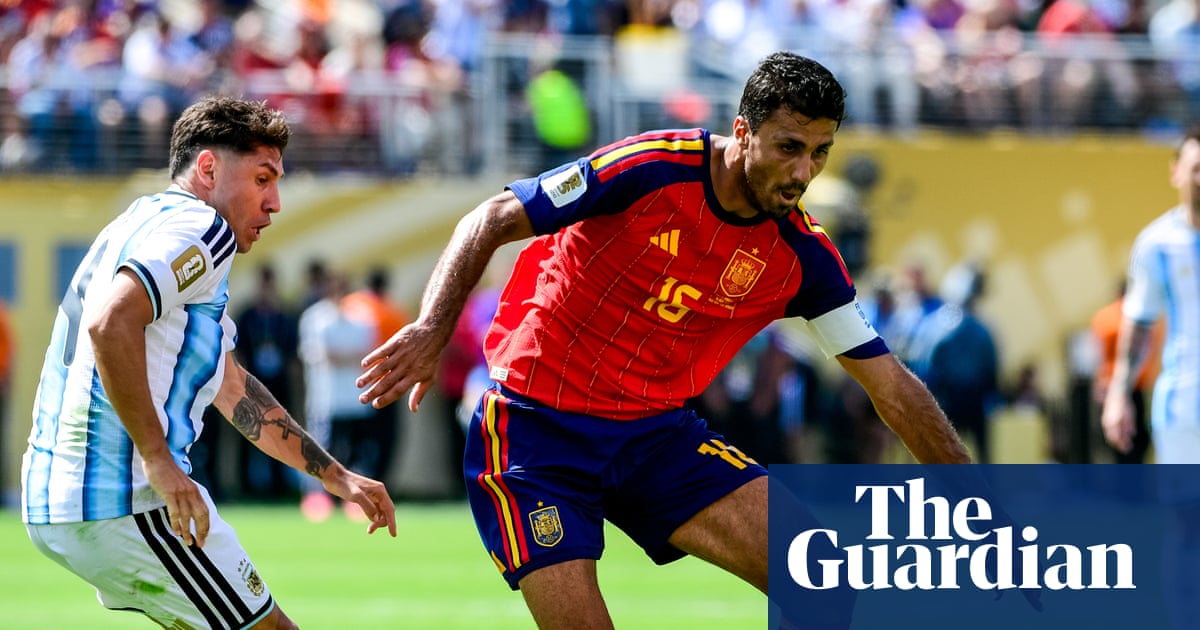
Rodri played 120 minutes of high-intensity football in the 2026 World Cup final against Argentina. He dictated the tempo from the base of midfield, completing high-volume passing sequences that suffocated the Argentine counter-attack. The match ended in a victory for Spain, yet observers are looking past the trophy to the midfielder’s durability.
This performance represents a massive milestone for the Spaniard. The 30-year-old has endured a grueling rehabilitation cycle following his ACL rupture in September 2024. He has been carefully managed at the club level, starting just 22 games over the past two seasons as medical staff prioritized his structural integrity over heavy match loads.
The math behind his limited availability
The statistical profile of Rodri’s return is unconventional for a player of his standing. While he remains elite in defensive transition, the limitations placed on his minutes suggest a lingering lack of trust in his knee’s threshold for repetitive high-impact stress.
Managing a career-defining injury requires brutal honesty regarding recovery windows. Rodri’s limited appearance count since late 2024 acts as a functional ceiling for his output. If his clubs continue to cap his involvement to avoid re-injury, he faces a future where he is a specialist player rather than the engine of a domestic title contender.
Strategic risks for the upcoming season
The decision to play him for the full duration of a World Cup final adds a variable to the Premier League season ahead. Modern physiological data suggests that the physiological cost of a 120-minute match is roughly double that of a standard 90-minute encounter. This is a significant workload for a player who has already struggled to maintain a consistent starting rhythm.
As The Guardian reported, while his passing accuracy and tactical positioning were impeccable, the long-term impact on his recovery timeline remains the primary concern for coaching staff. Relying on an aging midfielder coming off major surgery to anchor a championship-winning side is a gamble that rarely pays out over a 38-game schedule.
Lingering mechanical issues
There is a noticeable difference in his lateral agility compared to his pre-2024 form. While he compensates with excellent anticipation, he no longer relies on the explosive recovery pace that defined his early career. This forces his defensive partners to shift further wide, creating gaps in the middle channel that opponents can exploit if he gets beat on the first turn.
The club medical team deserves credit for shielding him from burnout, but the burden has now shifted to the player to handle the intensity of a return to full-time status. If he attempts to replicate this World Cup form across a full campaign, the risk of a secondary soft-tissue injury becomes statistically significant. There is no historical blueprint for an elite holding midfielder returning to peak form after an ACL procedure at 30, and the caution seen throughout 2025 remains warranted.
Read Next
- A 1-0 goal that meant more than just a trophy
- Spain’s golden generation isn't slowing down after the Argentina triumph
- Spain’s dominance is no fluke and the rest of the world should be scared
- Spain’s World Cup triumph highlights a tactical shift in possession play
- 🏆 World Cup 2026 — Full Coverage Hub
- 🇪🇸 Spain World Cup 2026 — La Roja Hub
- 🏆 World Cup 2026 Final — MetLife Stadium Hub