Nagelsmann's Spacing Crisis
Germany enters the Round of 32 looking like a team built in a lab but run by a faulty algorithm. The tournament has had its share of controversy off the pitch, as reported by The Guardian, but the football is now taking center stage. Julian Nagelsmann has spent the last eighteen months trying to balance the creative genius of Jamal Musiala and Florian Wirtz with a functional defensive transition.
The group stage showed he has failed. A 2-2 draw against Switzerland and a sluggish 1-0 win over Hungary exposed a midfield that is wide open to counter-attacks. The numbers do not lie.
Germany allowed 1.45 expected goals (xG) per ninety minutes in the group stage. That is a shocking figure for a team aspiring to win the trophy. Their defensive transition is non-existent when Robert Andrich is caught high up the pitch.
Aleksandar Pavlović is a tidy passer but lacks the physical presence to cover the enormous gaps behind Wirtz and Musiala. When Germany lose possession, they do not counter-press. They panic.
Switzerland exploited this repeatedly by hitting the space behind Joshua Kimmich, who continues to drift inside from right-back. If Paraguay watch the tape of that Switzerland match, they will see a clear blueprint. Germany’s central progression is too slow, and their rest defense is a disaster waiting to happen.
Germany's build-up usually follows a clear 3-2-5 shape. Joshua Kimmich drops into the right half-space, while David Raum pushes high on the left. This leaves Robert Andrich and Aleksandar Pavlović to form the double pivot.
But Paraguay’s mid-block is designed to exploit this exact structure. Alfaro instructs his wingers, Almirón and Ramón Sosa, to sit narrow and block the passing lanes to Musiala and Wirtz. This forces Germany's center-backs to make low-value lateral passes.
Antonio Rüdiger is a fine defender, but his long-range distribution is erratic. In the group stage, Rüdiger attempted 14 long balls, completing just six. Paraguay will happily let Rüdiger launch long diagonals toward Raum, knowing their wing-backs can easily match them in the air.
Paraguay's press is trigger-based rather than continuous. They do not hunt the ball in Germany's third. Instead, they wait for the ball to enter the middle third before initiating their traps.
The trigger is usually a pass into the double pivot. When Pavlović receives the ball with his back to goal, Paraguay's central midfielders, Andrés Cubas and Mathías Villasanti, snap into challenges. Cubas is particularly relentless in these situations.
In the group stage, Cubas won 73% of his ground duels. He does not just win the ball; he immediately looks to transition. His first pass is always vertical, targeting the space vacated by Germany's advanced full-backs.
Paraguay's Low Block is a Different Beast
Paraguay are not here to entertain. They finished their group with five points, scoring only two goals but conceding just 1. Their defensive organization under Gustavo Alfaro is a masterclass in frustration.
They defend in a strict 5-4-1 mid-block that shifts into a 6-3-1 when pushed deep. It is ugly, brutal, and highly effective. In their final group game against Colombia, Paraguay recorded 28 tackles and 19 interceptions.
Paraguay’s defensive solidity is built on three core pillars:
- Aggressive central compression that forces opponents wide.
- A strict zonal marking system that minimizes space between lines.
- An immediate vertical transition trigger after winning possession.
They allowed just three shots from inside the penalty area. Their center-backs, led by Gustavo Gómez, do not leave their zone. They invite you to cross the ball and then dominate the air.
Germany’s lack of a traditional, physical center-forward makes this defensive strategy even more potent. Kai Havertz is a brilliant space-interpreter, but he is not a physical battering ram. Against Switzerland, Havertz won exactly zero aerial duels.
When Germany get frustrated, they start crossing from deep areas. That is exactly what Paraguay want. They eat aimless crosses for breakfast, lunch, and dinner.
Furthermore, Paraguay possess a genuine transition threat in Julio Enciso. The Brighton attacker has been given complete freedom to stay high. He occupies the space left behind by advancing full-backs.
In the 34th minute against Colombia, Enciso picked up the ball on the left wing, drove past two defenders, and set up a near-miss that showed how dangerous he can be. Germany cannot afford to let Kimmich wander into midfield when Enciso is lurking on the flank.
Almirón’s role is key in these transitions. He is no longer the raw speedster who runs into blind alleys. Under Alfaro, he has developed a sophisticated understanding of space.
He waits for the transition phase, then sprints into the channel between Germany's left center-back and the left wing-back. Because Raum is often pushed high into the attacking line, Jonathan Tah is forced to cover wide. Tah is excellent in central duels but struggles when forced to defend in open space against agile wingers.
This is where Paraguay will find their joy. Almirón’s diagonal runs will drag Germany's defense out of shape, creating space for Enciso to exploit from the opposite side.
The Midfield Conundrum
Nagelsmann must decide whether to stick with his favored lineup or make a change. Sticking with the Wirtz-Musiala-Havertz front three is suicide against a team that clogs the central zones. Musiala needs space to turn and run at defenders.
In the group stage, his pass completion rate in the final third dropped from 88% in the first match to 71% against Switzerland. That is because the Swiss congested the middle of the pitch, forcing Musiala into tight spaces where he was repeatedly dispossessed.
Germany needs width. They need to stretch Paraguay's back five to create lanes for third-man runs. Nagelsmann’s refusal to start Leroy Sané or Maximilian Beier is baffling.
Sané’s pace on the right wing would force Paraguay’s left-back to stay home, opening up space for Kimmich to overlap or underlap. Instead, Nagelsmann has preferred a narrow, patient approach that plays directly into Paraguay's hands.
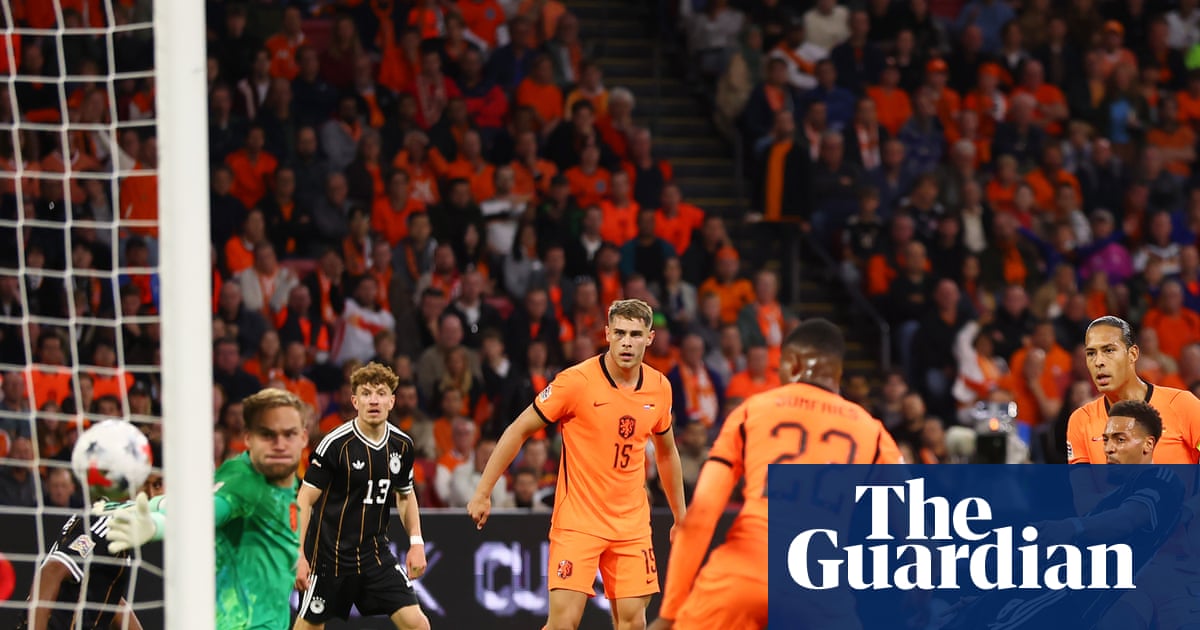
Even as Jonathan Wilson noted in his tournament analysis, the off-field noise has been constant. Yet on the pitch, the tactical variety remains fascinating. This clash of styles in the knockout rounds is as pure as it gets.
One team wants to pass you to death, while the other wants to kick you until you give up. And make no mistake, Paraguay will kick. They committed 18 fouls per game in the group stage.
They break up the rhythm of the game. If Germany cannot find a quick opening goal, the frustration will mount. We saw this in the Euro 2024 quarter-final against Spain.
When Germany cannot control the tempo, they resort to long balls and hope for a mistake. Paraguay do not make those mistakes. This match is going to be a slog.
The Prediction: A Stunner in Dallas
Germany will dominate possession, likely holding around 70% of the ball. They will pass side-to-side, trying to find a gap that Paraguay will refuse to open. Musiala will try to dribble through three players and get dispossessed.
Wirtz will play a few clever passes, but Havertz will be marked out of the game by Gómez. Paraguay will score on a counter-attack. It will happen in the second half, around the 67th minute.
Enciso will exploit the space behind a recovery-sluggish Kimmich. He will drive inside, draw the center-backs, and lay it off for Miguel Almirón to slot home. Germany will throw everything forward, but it will be too late.
Their lack of a plan B will doom them. Germany will exit the tournament in the Round of 32. It will be another post-mortem for German football, another tournament where tactical arrogance overcame defensive common sense.
Nagelsmann will face intense criticism for his stubborn refusal to adapt his midfield structure. Paraguay will march on, having executed a perfect defensive plan. Expect a final score of 1-0 to Paraguay.
They will win it in normal time. Germany's possession will lead to nothing but frustration and a plane ride home. Back the South Americans to pull off the shock of the tournament.
Read Next
- Why Barcelona's chase for Harry Kane looms over England's World Cup run
- England's attack is broken, but they will still crawl past the DRC in Atlanta
- Tuchel needs Anderson focused as England face a tactical trap against DR Congo
- Thomas Tuchel's right-back crisis gives DR Congo a shot at a World Cup upset
- 🏆 World Cup 2026 — Full Coverage Hub
- 🇩🇪 Germany World Cup 2026 — Die Mannschaft Hub
- 🇵🇾 Paraguay World Cup 2026 — La Albirroja Hub
- 🇺🇸 WC 2026 Group D — USA, Paraguay, Australia